
Corn Cob Mushroom Substrate: What Growers Should Know Before They Buy
Mushroom farms live and die by their substrate. Spawn, climate control and hygiene matter, but if the growing medium is […]
Mushroom farms live and die by their substrate. Spawn, climate control and hygiene matter, but if the growing medium is […]
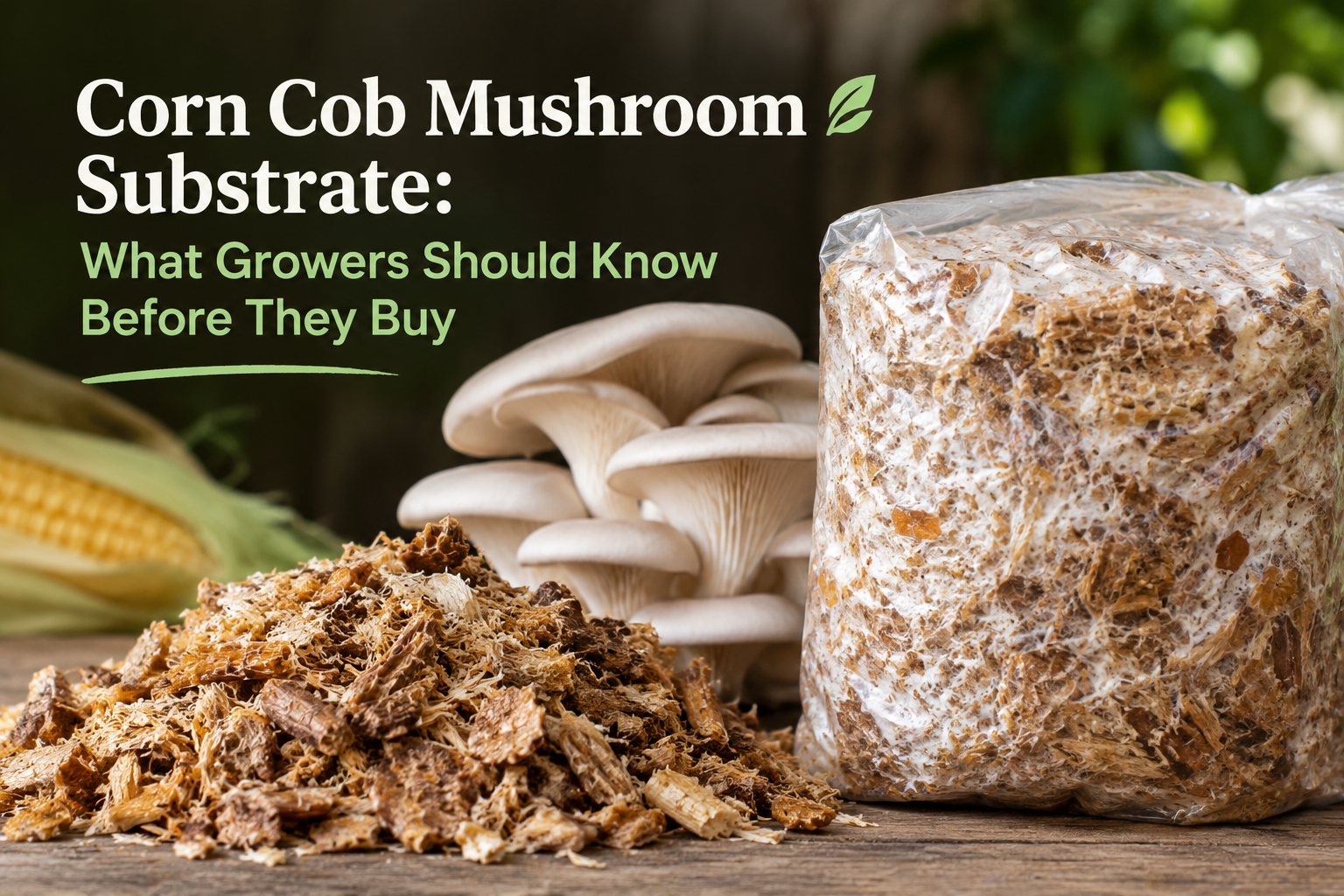
Mushroom farms live and die by their substrate. Spawn, climate control and hygiene matter, but if the growing medium is poorly structured, too wet or inconsistent from one batch to the next, no amount of care at the fruiting stage will rescue the crop. Corn cob mushroom substrate has attracted steady interest from growers because it is a plentiful agricultural by-product that fungi can colonise readily.
This guide looks at what research says about corn cob as a substrate, which properties growers should specify when buying, and how to evaluate a supplier before committing to a bulk order.
Why Corn Cob Works as a Substrate
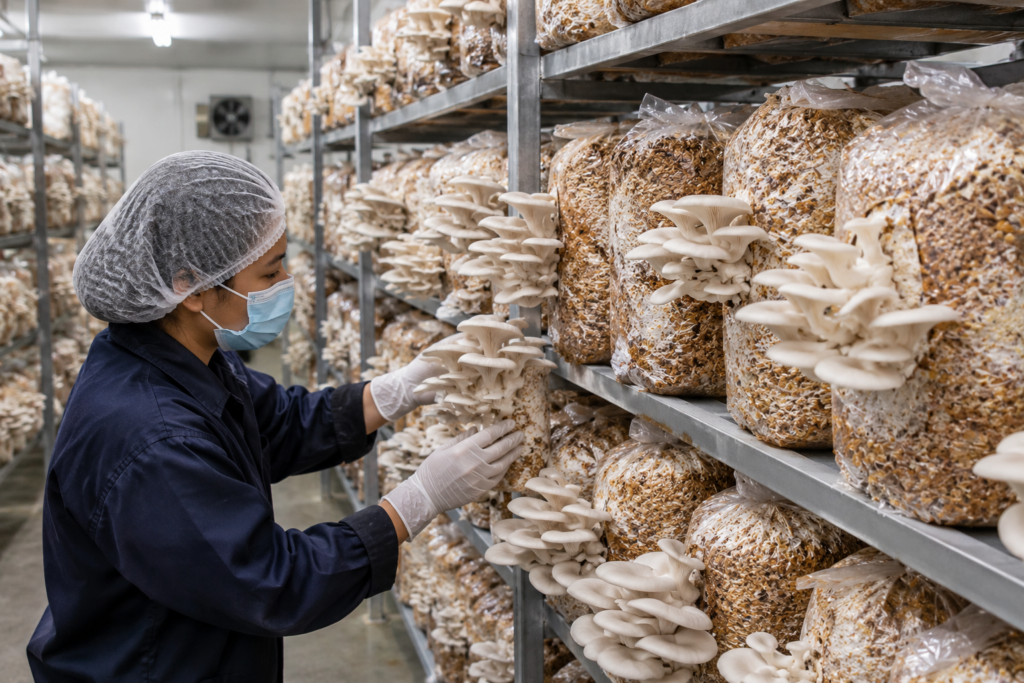
Mushrooms such as oyster and shiitake are wood- and residue-degrading fungi. They need a lignocellulosic material, meaning plant matter rich in cellulose and lignin, that holds moisture but still lets air reach the mycelium. Corn cob fits that description. It is fibrous, carbon-rich, and structurally open, and it remains in large quantities wherever maize is shelled.
Research across several species supports the idea:
- A Brazilian study examined shiitake production in corn cob substrates, using both ground and whole cob in polypropylene bags, and noted that supplements added to the substrate affected how quickly mycelium established.
- A trial in the Philippines reported that using 100 percent corncob gave faster colonisation and better oyster mushroom results compared with rice husk in that experiment.
- Work from Nepal found that corn cob supplemented with rice bran performed best among the residues tested for oyster mushrooms.
- Chinese researchers concluded that corn cob can substitute for sawdust as a main substrate for the edible and medicinal mushroom Grifola frondosa.
- An Italian study characterised maize cobs from different genotypes as substrates for medicinal mushrooms, finding that Pleurotus ostreatus and Ganoderma annularis performed most strongly among the species tested.
These are trial results in specific conditions, not guarantees. Recipe, supplementation, sterilisation method and species all change the outcome, so treat published results as a reason to run your own test, not as a promise.
Corn Cob Compared with Other Substrates
Growers often mix materials rather than use one alone. Sawdust, straw, rice husk, bagasse and bran all appear in recipes. An Indonesian study looked at combinations of corn cob and bagasse as alternative media for white oyster mushrooms, which illustrates how widely growers experiment with blends.
Where corn cob tends to attract interest is as a base ingredient: it is available in volume, can be ground to a chosen size and can reduce reliance on sawdust where sawdust is scarce or expensive. Whether it suits your farm depends on your species, water source, sterilisation setup and supplements.
What to Specify When Buying Mushroom-Grade Corn Cob
Particle size
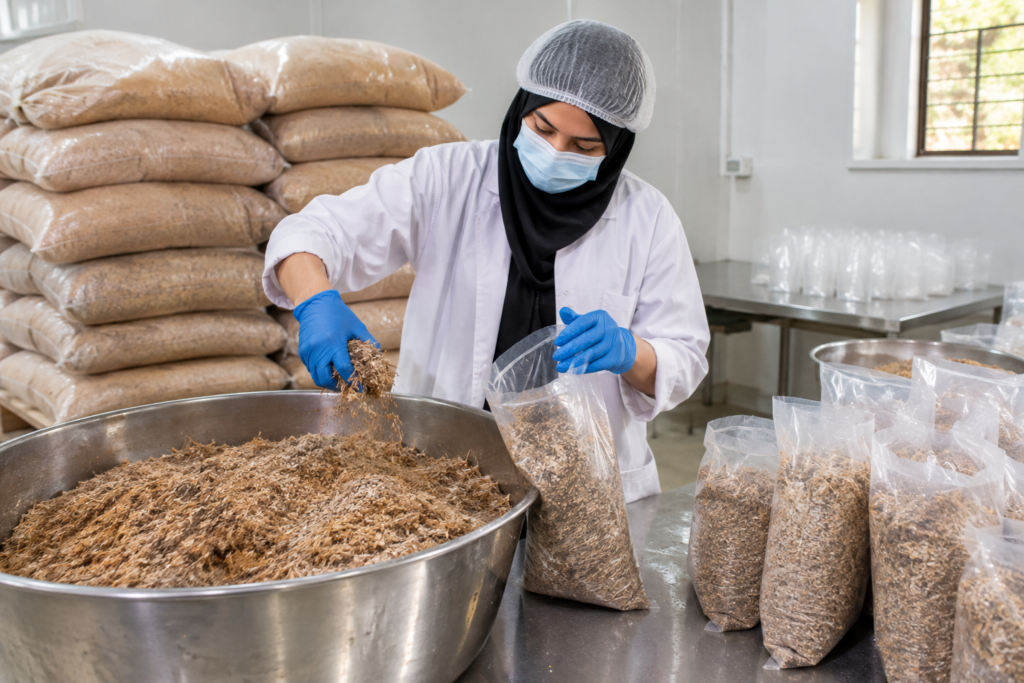
Size controls aeration and water-holding. Very fine material can pack tightly and restrict airflow, while very coarse pieces may leave gaps that dry out or colonise unevenly. There is no universal ideal. Agree on a range with your supplier, request a sample and test it with your own spawn and recipe.
Moisture
Dry material stores better and ships more cheaply per usable tonne, but your recipe will rehydrate it anyway. What matters is that moisture at delivery is low and consistent. Damp or mouldy lots introduce contaminants before your process even begins.
Cleanliness
Soil, dust and foreign matter bring unwanted organisms into the substrate. Ask how the supplier removes them before grinding.
Consistency between lots
A recipe that works on one batch can fail on the next if size or moisture drifts. Ask how the supplier keeps lots uniform and whether retained samples are kept.
Freedom from mould and odour
Open a sample and smell it. Musty, sour or heated material is a warning.
| Property | Why it matters to a grower |
|---|---|
| Particle size | Aeration and water retention |
| Moisture at delivery | Storage stability and contamination risk |
| Cleanliness | Fewer contaminants entering the substrate |
| Lot consistency | Repeatable colonisation and yield |
Running a Sensible Trial
Before switching a whole production cycle, trial the material:
- Request a sample from the supplier.
- Prepare small batches using your normal recipe and sterilisation method.
- Run corn cob alongside your current substrate, on the same spawn.
- Record colonisation time, contamination rate and harvest weight.
- Repeat with a second lot to check consistency.
Ask for the supplier’s specification in writing before the trial so you know exactly what you are testing.
Logistics for Bulk Buyers
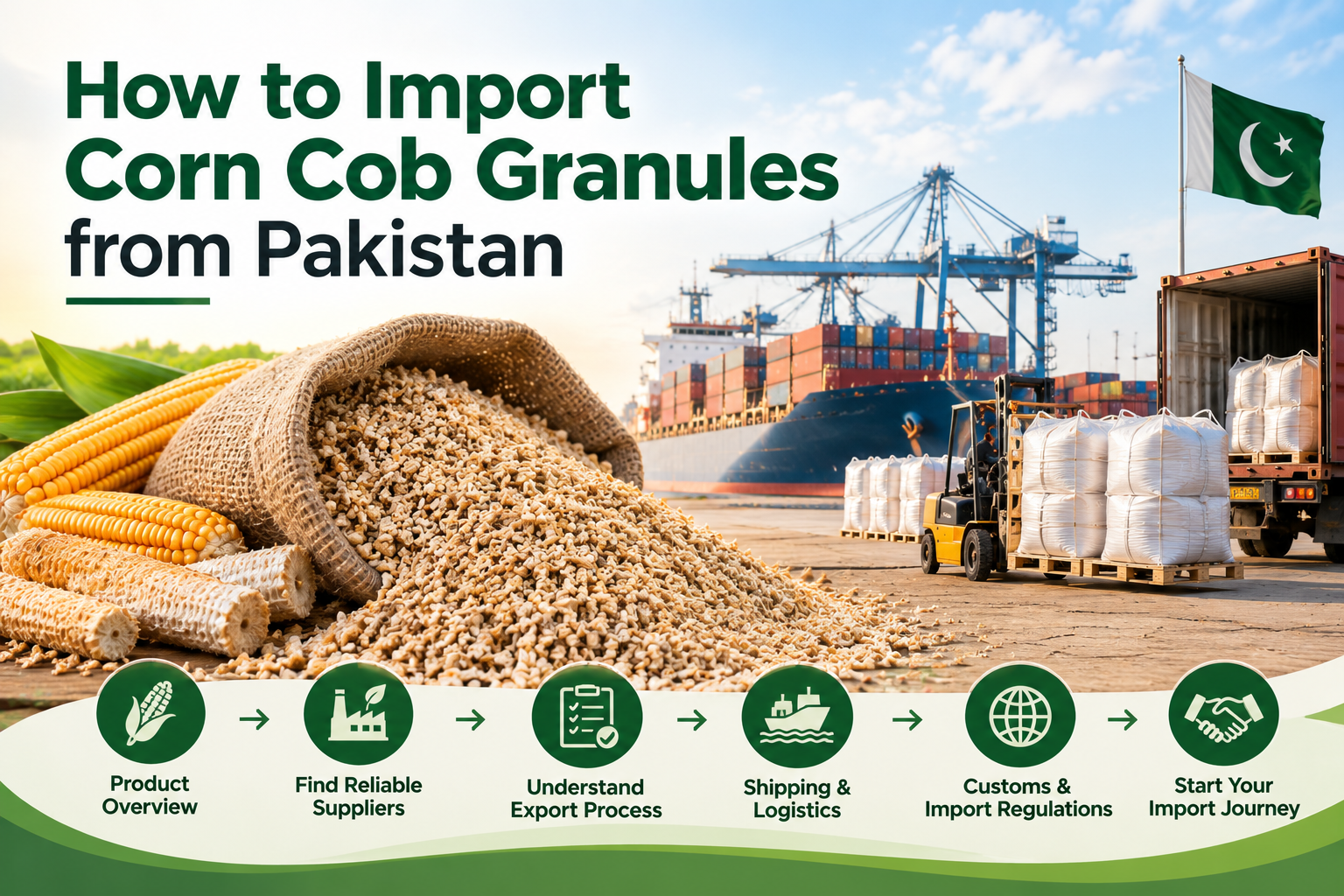
Substrate is bulky, so freight affects cost. PP bags and jumbo bags are the usual packing formats, and your farm or warehouse handling equipment should determine which suits you. Keep stock dry and off the floor, and use older lots first. If you import, agree on an Incoterm early. The Trade Development Authority of Pakistan explains that terms such as FOB and CIF set out who carries cost and risk at each stage. Confirm import requirements with your customs broker, since rules differ by country.
Mushroom-Grade Corn Cob from Daa Agri Limited
Daa Agri Limited is a Pakistan-based agricultural processing and export company. Its company profile lists corn cob meal in feed-grade and mushroom-grade forms across various mesh sizes as its flagship product, and names mushroom cultivation as an industry it serves, describing the meal as a growing substrate for oyster and specialty mushrooms and a moisture-retention base.
The profile describes sourcing across Punjab, cleaning and sorting, sun drying, grinding to uniform mesh sizes, moisture checks and export packing in PP or jumbo bags with containerized export handling. Growers and distributors can share their species, recipe needs and preferred particle size to discuss availability and request a sample.
Conclusion
Corn cob mushroom substrate is a practical, well-studied option, but its performance depends on how you prepare it and how well it matches your recipe. Specify particle size, moisture and cleanliness; test a sample against your current substrate; and build volume only after a second lot confirms consistency.For more information about our products, services, and export solutions, please visit Daa Trade.
To discuss mushroom-grade corn cob or request a sample and quotation, contact Daa Agri Limited at info@daaagri.com.

Turn industry knowledge into a supply conversation.
Contact GreenCore for product availability, specifications, bulk packaging and export support.