
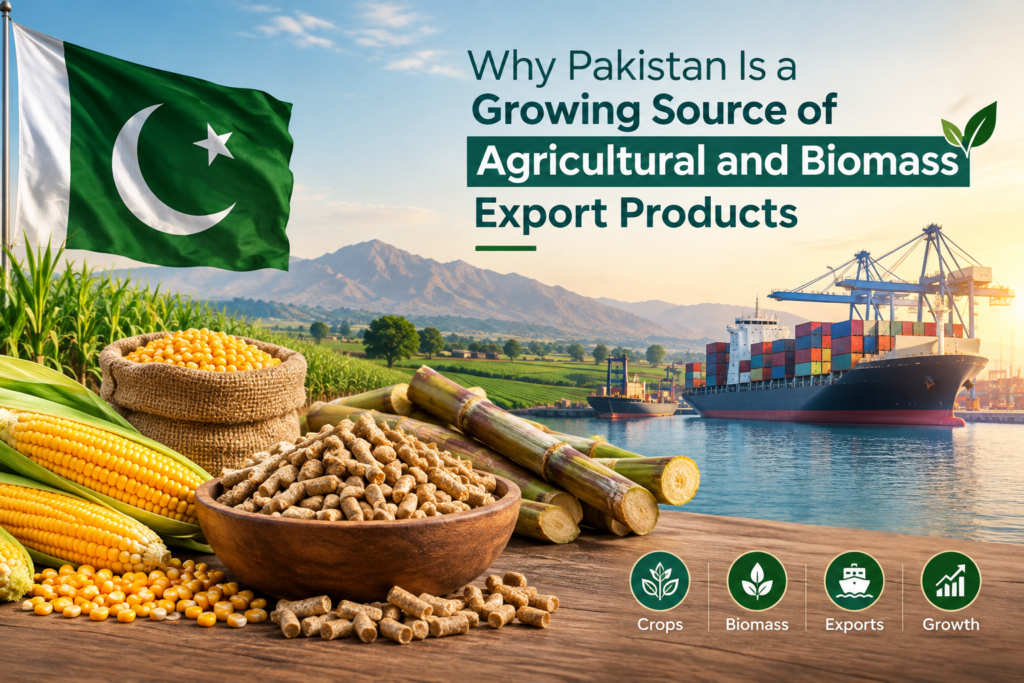
Why Pakistan Is a Growing Source of Agricultural and Biomass Export Products
Pakistan doesn’t usually come up first when procurement teams think about diversifying their supply base. India, Vietnam, and Thailand tend

Pakistan doesn’t usually come up first when procurement teams think about diversifying their supply base. India, Vietnam, and Thailand tend
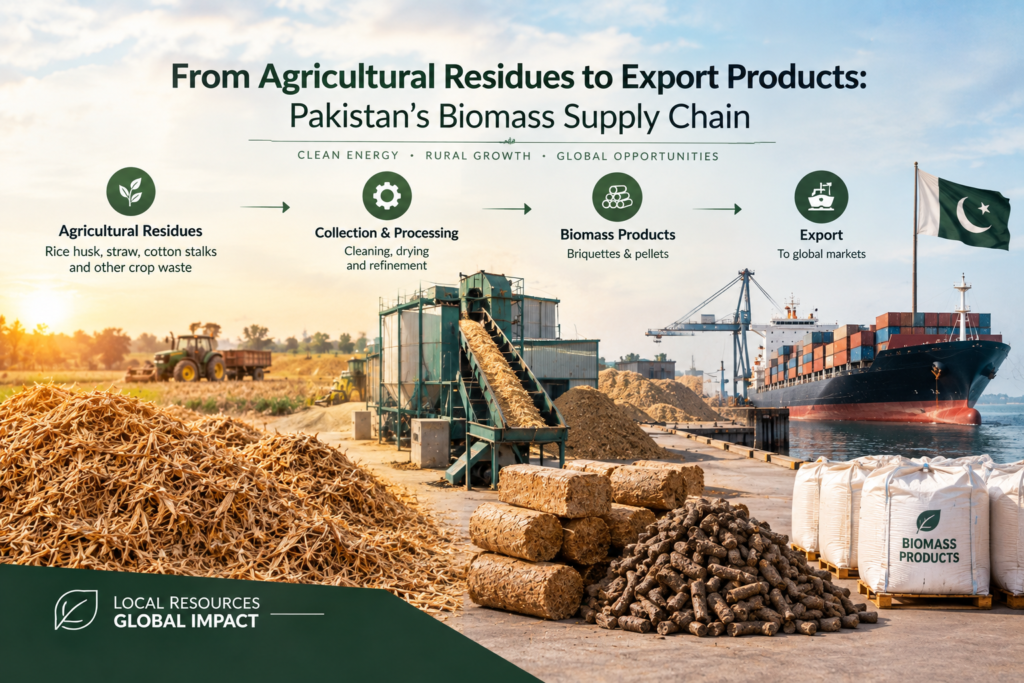
Every wheat harvest in Punjab leaves behind straw. Every rice mill in Sindh produces husk by the truckload. Every sugar
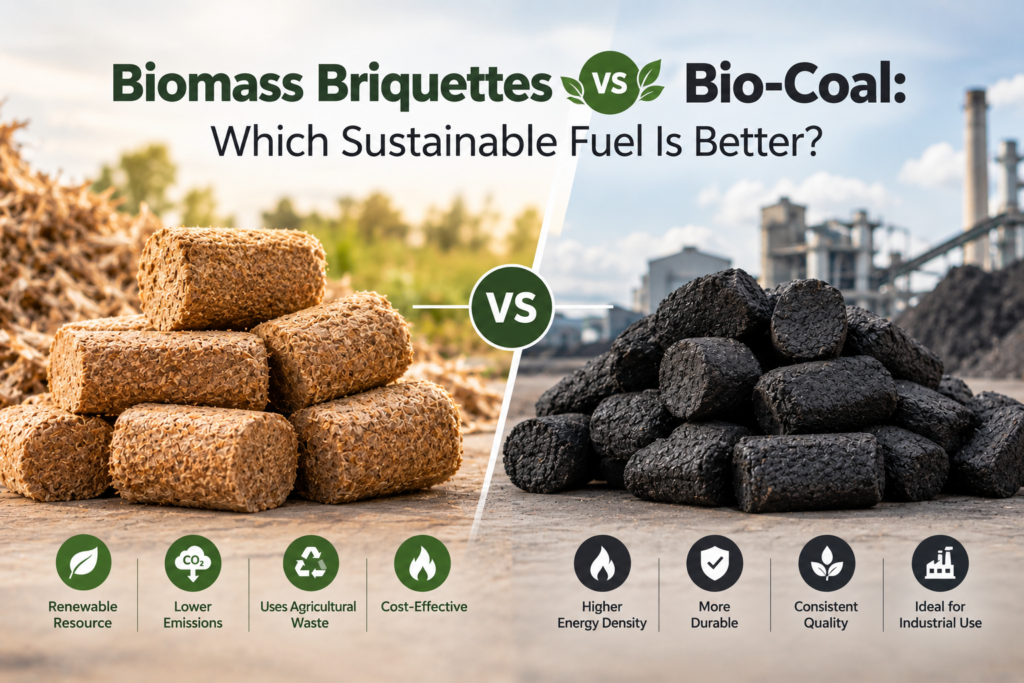
Pakistan’s industrial boilers, brick kilns, and textile units burn through a lot of fuel every winter, and a growing share
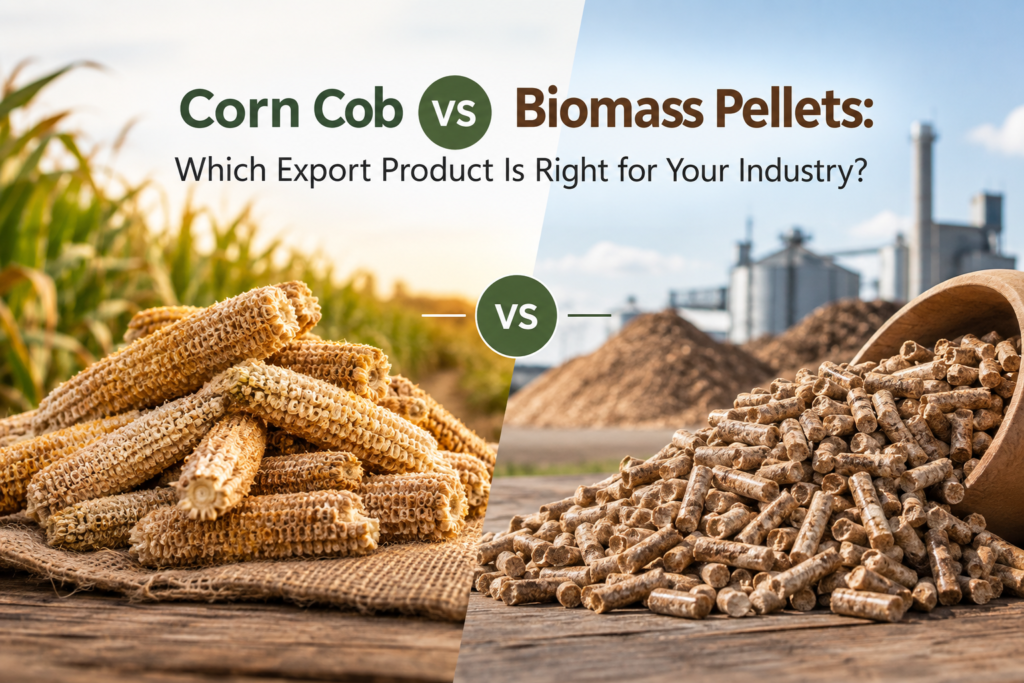
Buyers sourcing solid biofuel from Pakistan often start with a simple question and end up more confused than when they
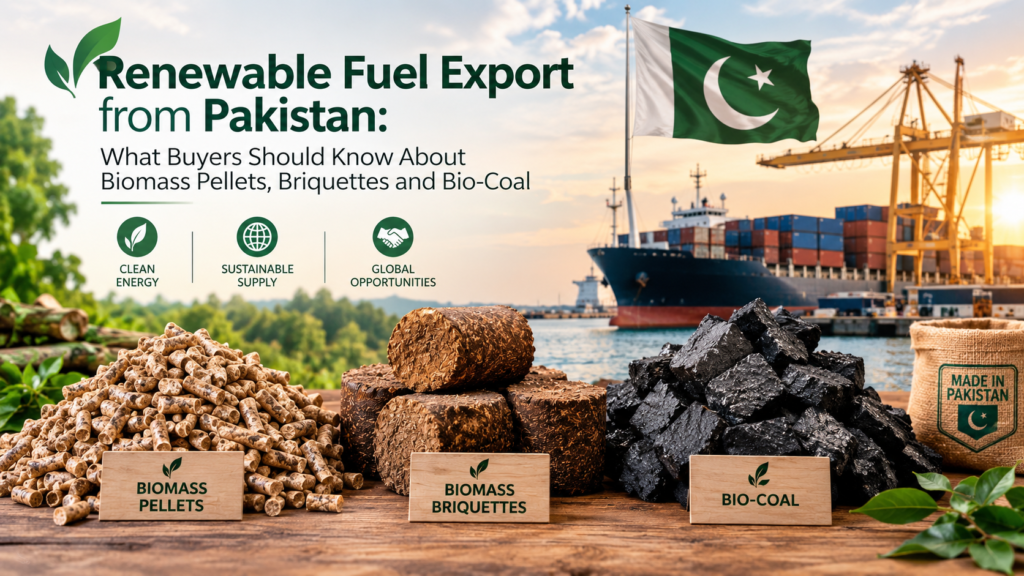
Rising energy costs and tightening emissions targets have pushed a lot of industrial buyers — cement plants, textile boiler operators,
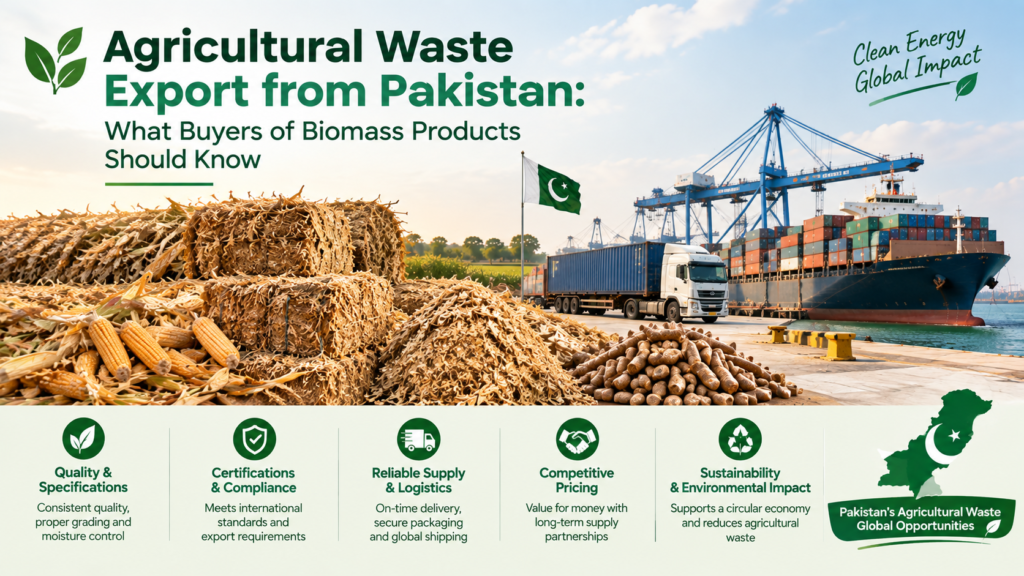
Pakistan produces enormous volumes of crop residue every harvest season — rice husk, cotton stalk, wheat straw, sugarcane bagasse, and
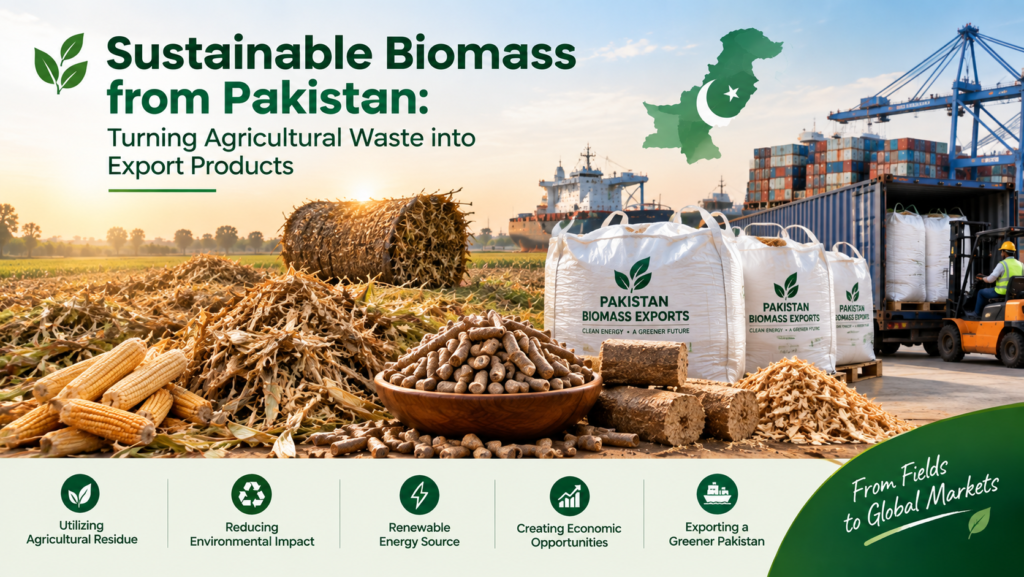
Pakistan’s farms don’t stop producing once the grain leaves the field. Every corn harvest leaves behind cobs and stalks. Every
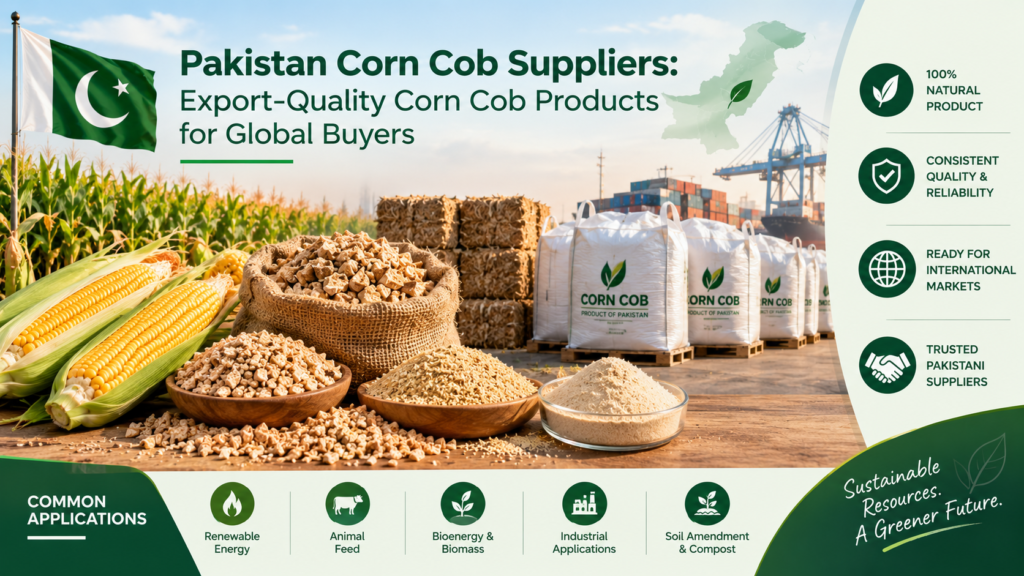
Corn cob might look like an agricultural leftover. Still, for buyers in animal bedding, industrial abrasives, biomass energy, and specialty
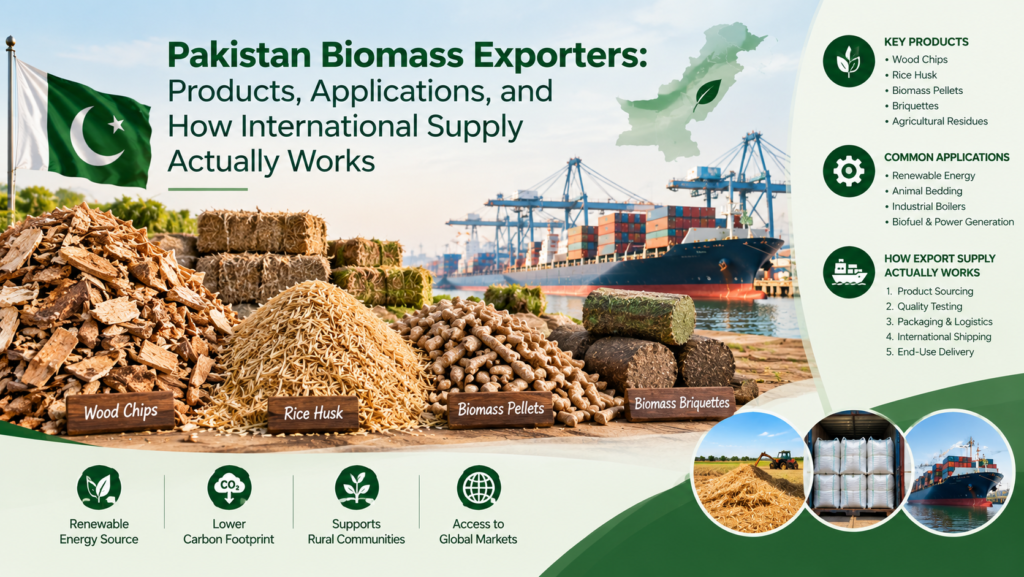
If you’re sourcing biomass from Pakistan for the first time, the hardest part usually isn’t finding a supplier — a
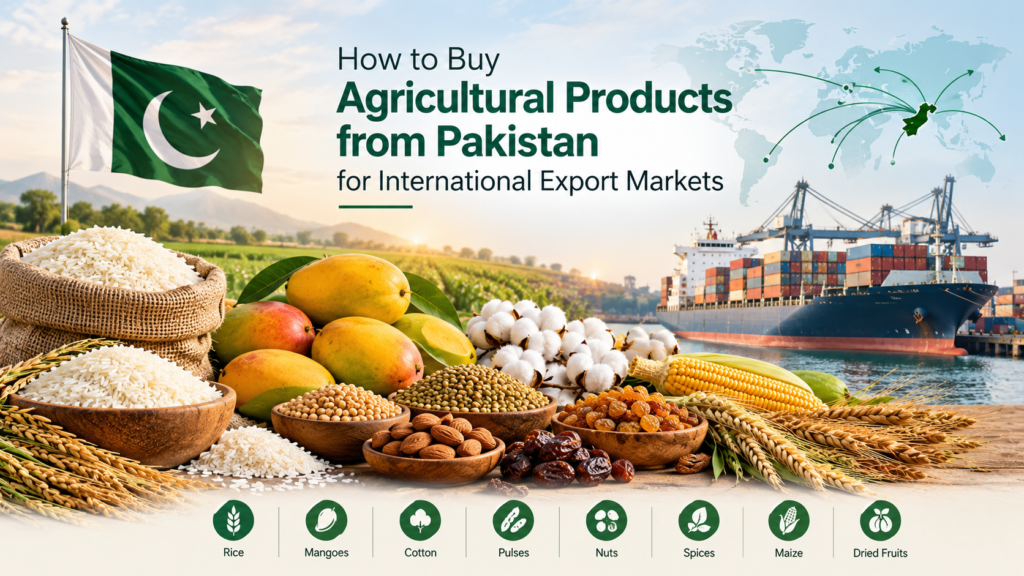
Pakistan sits at an interesting crossroads for international buyers. It is among the world’s top producers of rice, wheat, mangoes,