
Corn Cob vs Biomass Pellets: Which Export Product Is Right for Your Industry?
Buyers sourcing solid biofuel from Pakistan often start with a simple question and end up more confused than when they […]
Buyers sourcing solid biofuel from Pakistan often start with a simple question and end up more confused than when they […]
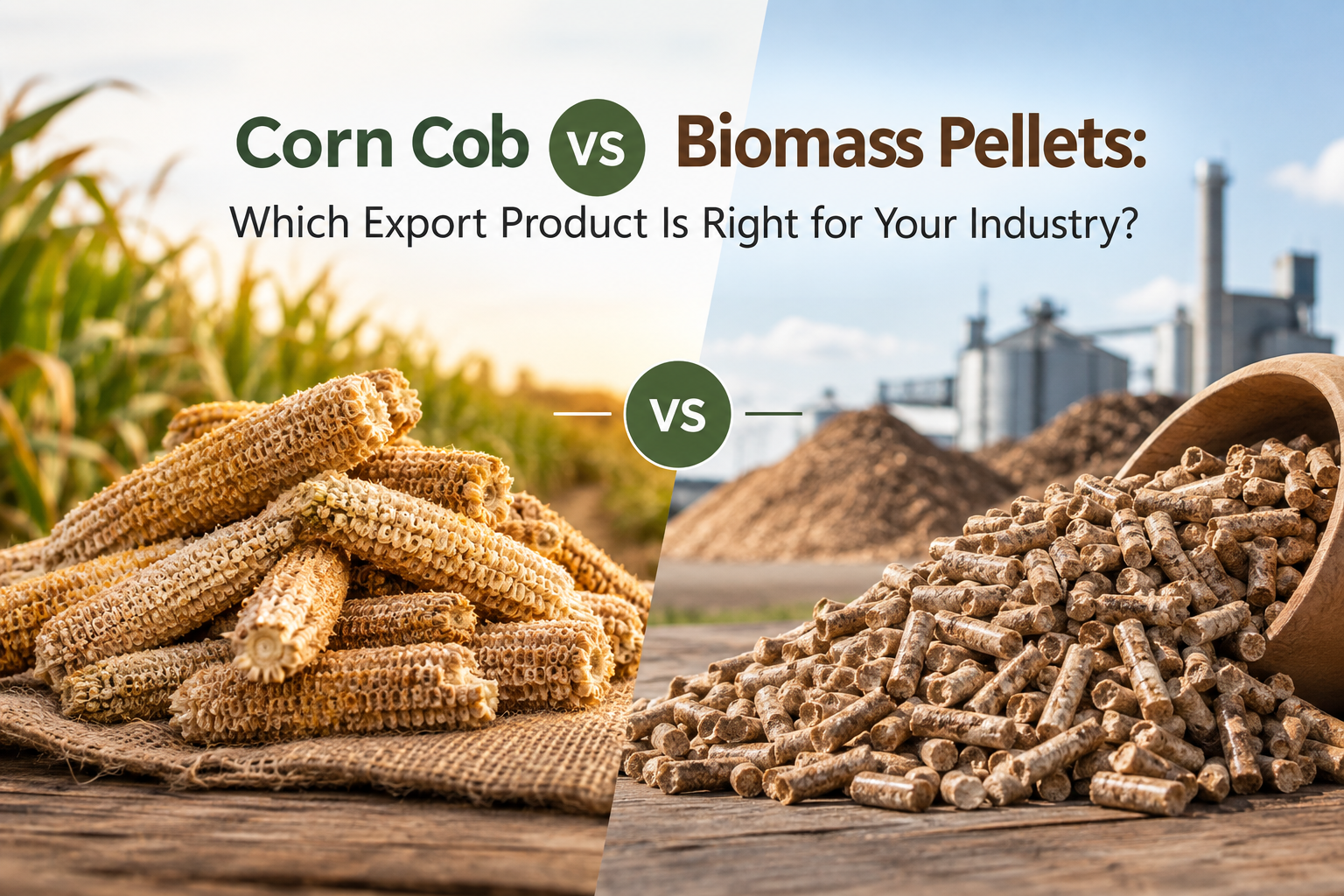
Buyers sourcing solid biofuel from Pakistan often start with a simple question and end up more confused than when they began: is corn cob the product they need, or should they be asking suppliers about biomass pellets instead? The confusion is understandable. Both come from agricultural residue. Both are marketed as sustainable fuel. Both show up in the same supplier catalogs, sometimes on the same page, described in language that makes them sound almost interchangeable.
They are not interchangeable. Corn cob vs. biomass pellets explains how they differ in being processed, how they burn, what equipment they suit, and what a buyer should expect to pay for freight per unit of usable energy. Getting this wrong before signing a purchase order tends to cost more than getting it wrong after — a container of the wrong product doesn’t just sit unused; it usually needs re-export, resale at a discount, or costly on-site workarounds.
This guide walks through what separates the two, how each is actually produced, and which one fits which kind of industrial buyer.
What Corn Cob Actually Is, Once It Leaves the Field
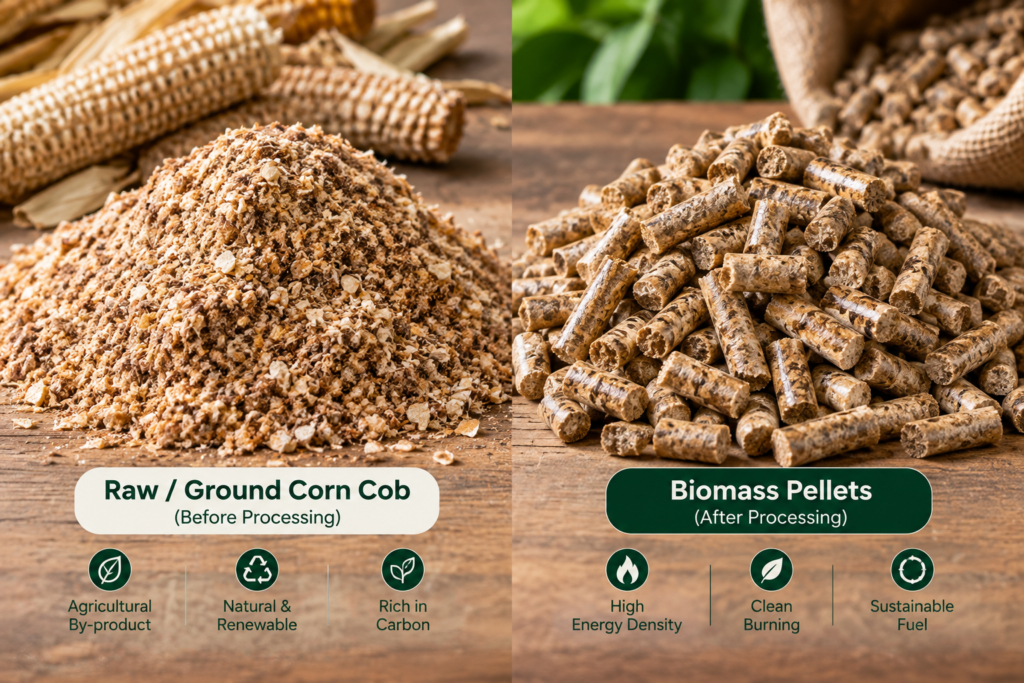
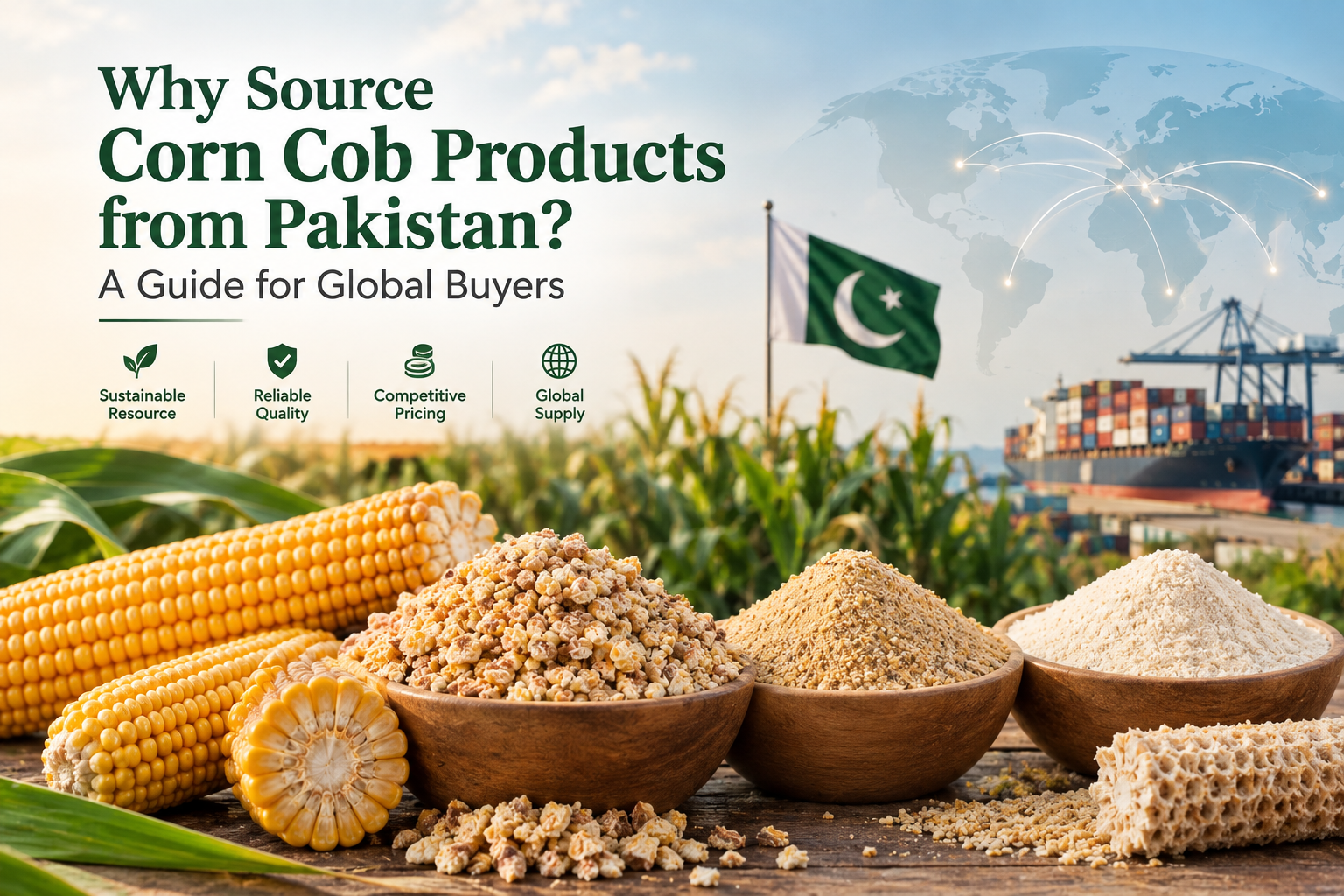
Corn cob is the woody core that remains after the kernels are removed from an ear of maize. On its own, a raw cob is bulky, irregular, and full of moisture — not something anyone would want to load into a container as-is. What gets exported is processed corn cob: dried, cleaned of foreign material, and typically ground or crushed to a controlled particle size depending on the buyer’s end use.
That end use varies more than people expect. Ground corn cob is used as a carrier and absorbent base in the mushroom-growing industry, as bedding and absorbent material in animal facilities, and as a raw industrial input in a handful of other processes where a hard, fibrous, absorbent grit is useful. It also has a place in solid-fuel applications, but in its ground or crushed form it is not automatically ready to be shoveled into a boiler the way a densified pellet is — moisture content, bulk density, and combustion behavior are simply less consistent than they are in a manufactured pellet.
Academic testing on corn cob backs this up. A peer-reviewed study published in BioResources using flat-die pelletizing equipment found that making pellets from corn cobs was motivated by the abundance of vegetable biomass, since corn is used in both animal and human food and its cob waste is left over after that use. The same research measured the raw material’s underlying energy content and found a high calorific value of 20.0 MJ per kilogram and a calorific density of 19.8 MJ per cubic metre — values notably higher than the wood species currently used in combustion. That is a meaningful data point: corn cob residue, on paper, carries more energy per kilogram than many wood fuels. But raw or ground cob doesn’t deliver that energy consistently in a burner the way a pellet does, which is exactly why densification exists as a separate processing step.
What Biomass Pellets Actually Are
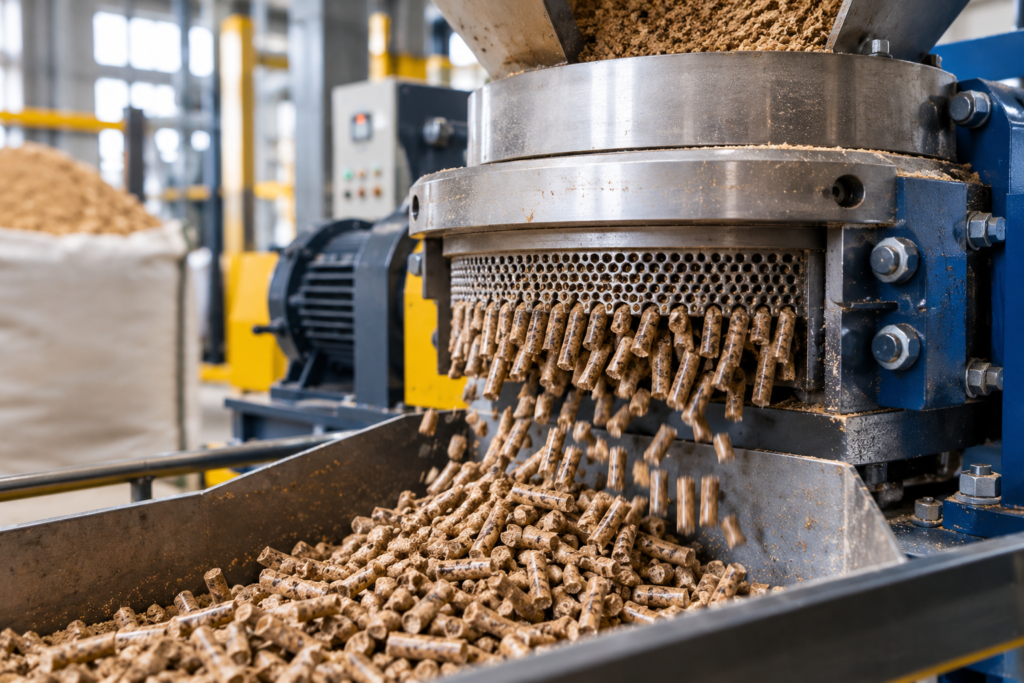
A biomass pellet is not a raw material — it’s a manufactured fuel product. Agricultural or forestry residue (corn cob, sawdust, crop stalks, husks, and similar feedstocks) is dried, ground down to a fine, uniform particle size, and then forced through a die under heat and pressure. The natural lignin in the plant material softens and acts as a binder, so the pellet holds its cylindrical shape without needing added glue in most cases.
The point of this extra manufacturing step is consistency. A raw agricultural residue varies in moisture, density, and shape from batch to batch. A pellet is engineered to a target moisture level (commonly under 10%), a standard diameter, and a controlled bulk density — which is exactly what an automated boiler, stoker, or industrial furnace needs to feed fuel reliably without jamming or producing wildly inconsistent heat output. Research on corn-cob-based pellets published in Biomass and Bioenergy has shown they can reach bulk densities of roughly 548 to 720 kilograms per cubic metre with mechanical durability between 88% and nearly 99%, meaning the pellets hold together through handling, shipping, and automated feeding rather than crumbling into dust in the hold of a ship.
That durability difference is the whole commercial argument for paying more to have material pelletized in the first place. A buyer isn’t just paying for fuel value — they’re paying for a product that survives a multi-week ocean voyage, gets unloaded without turning into powder, and feeds through mechanical equipment without constant operator intervention.
The Real Difference for a Buyer: Application, Not Just Product Name
Once the production difference is clear, the buying decision usually comes down to what the material is going to do once it arrives.
Choose ground or processed corn cob when:
- The end use is mushroom substrate, animal bedding, absorbent material, or another application built around the raw material’s fibrous, absorbent structure rather than its combustion behavior.
- Your process can handle variability in moisture and particle consistency, or you have your own downstream processing (drying, grinding, blending) already in place.
- You’re sourcing an input for further manufacturing rather than a finished fuel that goes straight into a burner.
Choose biomass pellets when:
- The material is going directly into an industrial boiler, stoker furnace, or automated heating system that depends on uniform fuel size and moisture content to run efficiently.
- Freight economics matter — pellets pack denser and more predictably per container than loose or ground residue, which matters when you’re paying for ocean freight by volume and weight.
- You need documented, repeatable combustion performance for a facility where fuel switching or blending with coal is part of an energy strategy, since a reliable energy supply is essential for heating, industrial equipment, and other core operations, and inconsistent fuel undermines that reliability.
There’s a third scenario worth naming honestly. Some buyers ask for “corn cob” when what actually solves their problem is a pelletized product, simply because corn cob is the feedstock name they’ve heard associated with agricultural biofuel from Pakistan. If your facility runs on solid fuel and needs predictable heat output, it’s worth confirming with your supplier whether you need the raw processed residue or the pelletized version of it — the feedstock can be the same. Still, the finished product you actually load into your equipment is not.
What to Ask a Supplier Before You Commit
Regardless of which product fits your operation, a few questions should be non-negotiable in supplier conversations:
- Moisture content at the point of loading. Both corn cob and pellets degrade in fuel value and shipping stability if moisture is too high. Ask for the tested figure, not an estimate.
- Particle size or pellet diameter, and how consistent it is batch to batch. This affects whether the material will actually run through your specific equipment.
- Ash content. Higher ash content generally means more residue buildup in boilers and more maintenance downtime — a real operating cost, not a cosmetic detail.
- Packaging format. Bulk, jumbo bags, or smaller export bags all affect handling at your port of discharge, and how much rehandling labor you’ll need on arrival.
- Contamination control during sourcing and processing. Since both products originate from farm residue collected across many growers, ask how the supplier screens out foreign material, mold, or inconsistent batches before export.
None of these questions require you to trust a supplier’s marketing language — they’re the kind of specification detail a legitimate exporter should be able to answer directly and, ideally, back with test data.
Where Daa Agri Fits Into This
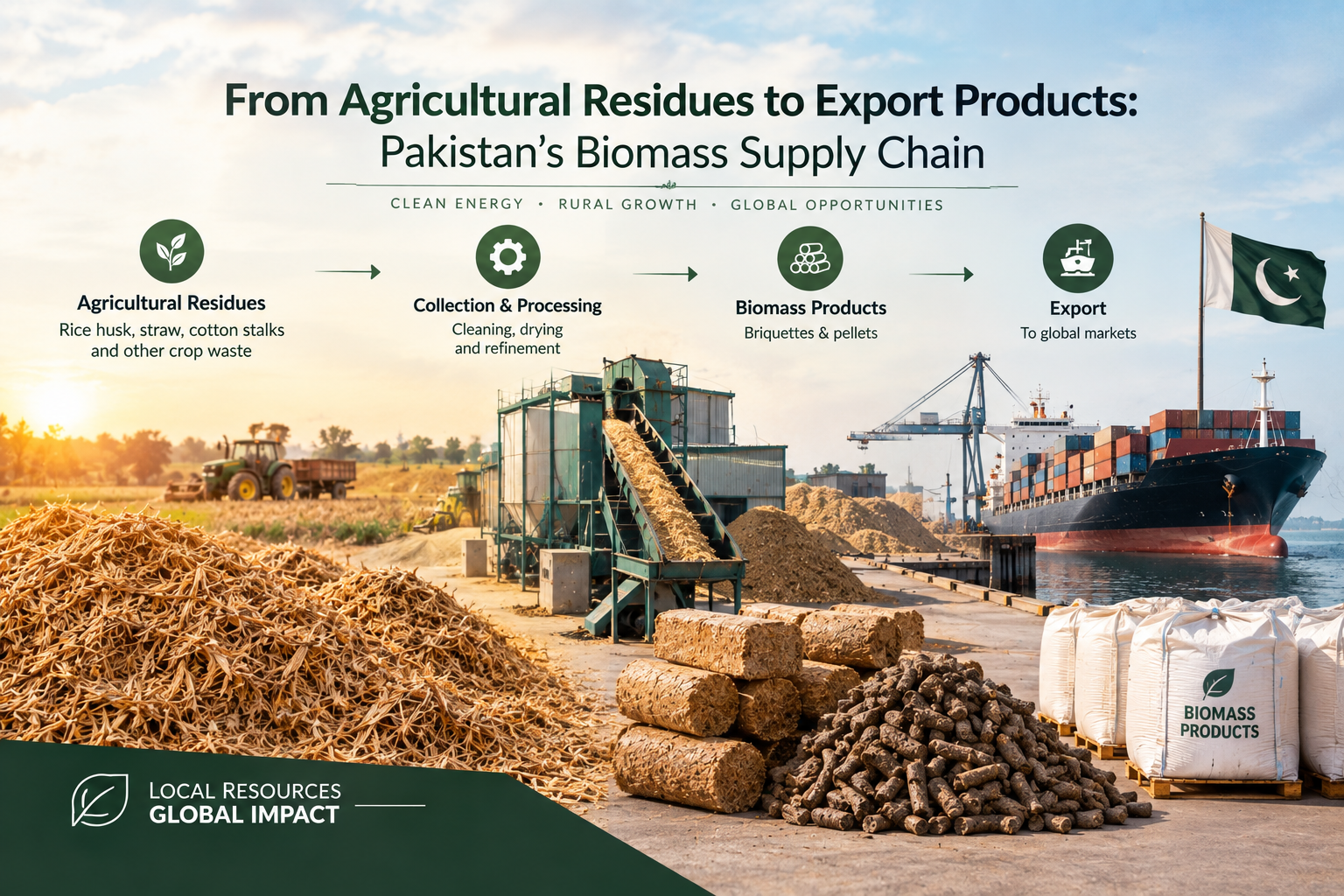
Daa Agri Limited works from the Pakistani side of exactly this supply chain. We operate in a circular agricultural value chain, collecting, cleaning, processing, and converting farm residues into export-grade raw materials for international industries, with a core focus on corn cob processing and sugarcane-derived residues. On the biomass side, its offering spans export-grade biomass products sourced, processed and supplied from Pakistan for energy systems, industrial heating, boilers, power plants, and commercial use — including compressed biomass pellets, processed sawdust used as fuel feedstock, solid fuel briquettes, and high-density carbonized biomass as a clean coal alternative. On the corn cob side, the company processes ground corn cob material for mushroom cultivation, animal feed support, absorbent use, and industrial raw material supply.
In practice, that means Daa Agri sits on both sides of the comparison this article has been making: buyers who need pelletized fuel and buyers who need processed ground corn cob for a non-combustion application are sourcing from the same regional supply base, just different finished products within it. You can see the full breakdown of Daa Agri’s biomass and corn cob product range directly, or read more about how the company structures its sourcing and processing model before reaching out with specification questions.
FAQ
Is corn cob the same thing as biomass pellets?
No. Corn cob is a raw or minimally processed agricultural residue — dried, cleaned, and often ground to a specific size. Biomass pellets are a manufactured product made by compressing ground biomass (which can include corn cob as one of several possible feedstocks) into a dense, uniform cylindrical shape under heat and pressure.
Which one is better for fuel use?
It depends on the equipment. Pellets are generally preferred for automated boilers and stoker furnaces because of their consistent size, lower moisture, and higher mechanical durability during shipping and handling. Raw or ground corn cob can still be combusted. Still, it’s more commonly used in Pakistan for non-fuel applications like mushroom substrate and animal bedding, where its fibrous, absorbent structure is the point rather than its burn characteristics.
Does corn cob have a lower energy content than wood-based pellets?
Not necessarily. Peer-reviewed testing on corn cob feedstock found a calorific value of 20.0 MJ per kilogram, higher than many wood species currently used in combustion. The difference between corn cob and pellets is less about raw energy content and more about consistency, density, and how easily the material feeds through mechanical equipment.
What packaging is typically used for export shipments of these products?
Export packaging generally depends on the buyer’s handling setup at the destination port, and can range from bulk loading to jumbo bags to smaller standard bags. It’s worth confirming this directly with your supplier against your own unloading and storage capability before finalizing an order.
Can the same supplier provide both corn cob and biomass pellets?
Yes — since both products often originate from the same regional agricultural residue supply chain, exporters that process corn cob frequently also handle pelletized biomass products, sometimes producing pellets from corn cob feedstock itself or from other residues like sawdust and rice husk.
What should I check before placing a bulk export order for either product?
At minimum: moisture content, particle size or pellet diameter consistency, ash content, contamination screening during sourcing, and packaging format. Ask your supplier for tested figures rather than general marketing claims.
Before You Place an Order
The right product isn’t the one with the more familiar name — it’s the one that matches what your equipment or process actually needs. If you’re still deciding which fits your operation, our team can review your specifications and confirm whether corn cob or pelletized biomass is the better match before you commit to a shipment.

Turn industry knowledge into a supply conversation.
Contact GreenCore for product availability, specifications, bulk packaging and export support.