
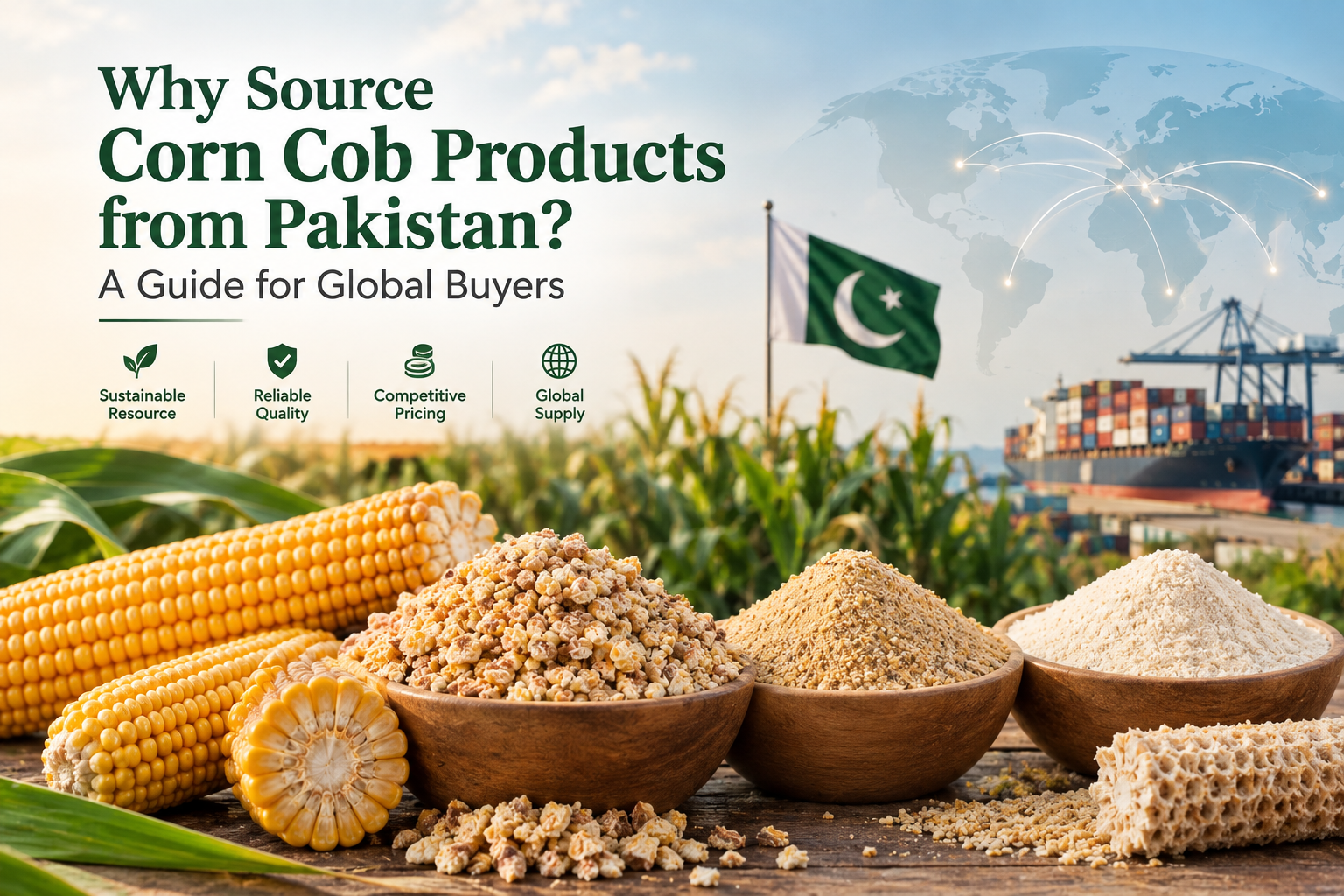
Why Source Corn Cob Products from Pakistan? A Guide for Global Buyers
If you’re evaluating suppliers of corn cob meal, granules, or crushed corn cob for animal bedding, blasting media, absorbents, or […]
If you’re evaluating suppliers of corn cob meal, granules, or crushed corn cob for animal bedding, blasting media, absorbents, or […]
If you’re evaluating suppliers of corn cob meal, granules, or crushed corn cob for animal bedding, blasting media, absorbents, or agricultural inputs, you’ve probably noticed that Pakistan comes up more often than it used to in supplier searches. That’s not a coincidence, and it’s not just marketing language from exporters. It comes down to a fairly simple combination of raw material availability, climate, and processing economics — along with a few real trade-offs buyers should understand before signing a purchase order.
This guide walks through what corn cob products actually are, why Pakistan has become a relevant sourcing origin, and what a procurement manager, importer, or private-label buyer should check before committing to a supplier.
What Are Corn Cob Products, and Why Do Buyers Want Them?
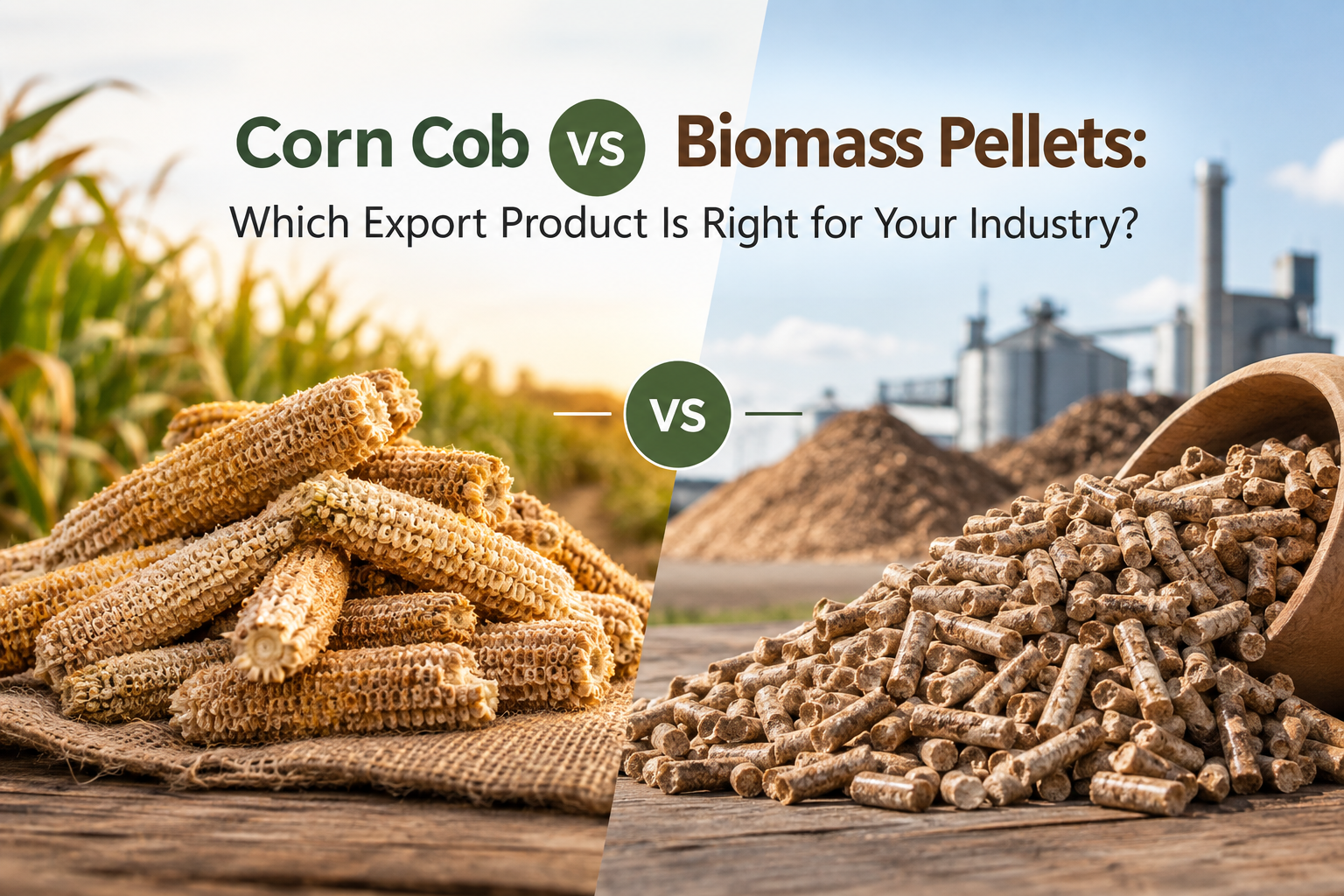
A corn cob is the central fibrous core of a maize ear — the part left over once the kernels are removed. It’s mostly cellulose, hemicellulose, and lignin, which gives it a dense, fibrous structure that behaves very differently from the grain itself. That structure is exactly why it’s useful across such a wide range of industries.
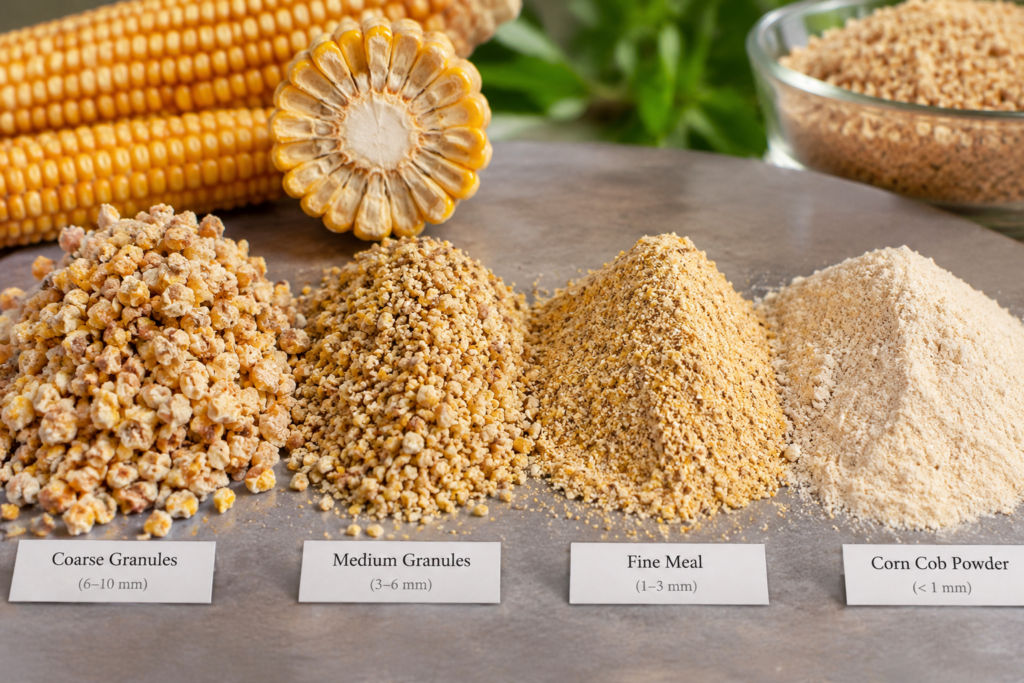
Depending on how it’s processed, corn cob becomes several distinct commercial products:
- Corn cob meal or powder — ground to a fine or coarse texture, used as a carrier for pesticides and fertilizers, an abrasive in tumbling and polishing, or a base material in some industrial formulations
- Corn cob granules — sized and graded for absorbent applications, substrate blending, and animal bedding
- Crushed corn cob — coarser material used for bulk industrial input and biomass applications
Buyers typically fall into a few categories: animal bedding and pet product manufacturers, agrochemical carriers and formulators, abrasive blasting operations, biomass and renewable fuel buyers, and general industrial raw material purchasers who need a consistent, low-cost fibrous input. Each of these buyers cares about slightly different specifications — mesh size and absorbency matter most for bedding, while particle consistency and moisture content matter more for carriers and abrasives.
Why Pakistan Has Become a Relevant Sourcing Origin
Raw Material Availability
Maize is the third most important cereal crop in Pakistan after wheat and rice, cultivated across Punjab and Khyber Pakhtunkhwa as a multipurpose crop for food, feed, and fodder, according to Pakistan’s Ministry of National Food Security & Research, which reported maize production at 9.0 million tonnes in 2024–25. That scale of cultivation means a large, recurring volume of cob residue is generated every season as a natural by-product of grain processing — which is the raw material base that corn cob processors work from. This isn’t a niche crop grown specifically for cob extraction; it’s a genuine agricultural residue stream tied to Pakistan’s food and feed supply chain, which is part of why sourcing at volume is realistic here rather than dependent on a single harvest or region.
Climate Conditions That Reduce Processing Costs
Pakistan’s dry climate across much of the maize-growing belt supports natural sun-drying of agricultural residues before mechanical processing even begins. That matters more than it might sound. Moisture content is one of the most important quality variables in corn cob products — too much moisture leads to mold risk, weight inconsistency, and shipping problems, while proper drying stabilizes the material for storage and export. A climate that supports pre-drying at low cost, rather than relying entirely on energy-intensive mechanical drying, has a direct effect on what a processor can offer at a competitive price without cutting corners on moisture control.
A Growing Export Infrastructure
Pakistan’s government has been actively working to reduce friction in export documentation over the past decade. The Pakistan Single Window initiative, led by Pakistan Customs, was built to digitalize cross-border trade and eliminate paper-based manual processes by giving traders a single electronic entry point for import, export, and transit regulatory requirements. In practice, this means export documentation such as certificates of origin can now be requested and processed electronically rather than through repeated in-person office visits — the Trade Development Authority of Pakistan’s electronic Certificate of Origin module allows end-to-end digital application, processing, and issuance, replacing wet seals and stamps with digital signatures and QR verification. For an overseas buyer, this doesn’t change the product itself, but it does affect how quickly and reliably documentation reaches you, which matters when you’re trying to plan container schedules or meet a customer’s delivery window.
Cost Structure
Lower land, labor, and production costs relative to several alternative sourcing markets are a genuine part of Pakistan’s appeal for bulk agricultural residue products. This is a real advantage, but it’s worth being clear-eyed about it: a lower base cost only translates into a good deal if the supplier’s quality control, packaging, and logistics are dependable. A cheap price on a material with inconsistent moisture or contamination isn’t actually cheap once you account for rejected shipments or downstream processing problems.
What to Evaluate Before Choosing a Corn Cob Supplier
Sourcing raw agricultural residue products isn’t like ordering a manufactured good with a fixed spec sheet. Quality can vary batch to batch depending on how well a supplier controls moisture, sorting, and contamination. Before committing to a supplier — in Pakistan or anywhere else — it’s worth asking a few direct questions.
Moisture Content and Drying Process
Ask exactly how the material is dried and what moisture percentage it’s typically brought down to before packaging. Corn cob products that are packed too wet are prone to mold and weight loss in transit, which can turn into a dispute over short-shipment if it isn’t addressed upfront. A supplier who can describe their drying and moisture-checking process specifically — rather than giving a vague assurance — is usually a better sign than one who can’t.
Grading and Particle Consistency
Mesh size and particle consistency matter differently depending on end use. A buyer sourcing for animal bedding needs a certain absorbency and particle range; a buyer sourcing for abrasive blasting needs tighter consistency in particle hardness and size. Ask for a sample and specification sheet before placing a bulk order, and confirm whether the supplier can hold consistent grading across repeat shipments — not just the first sample batch.
Contamination Control
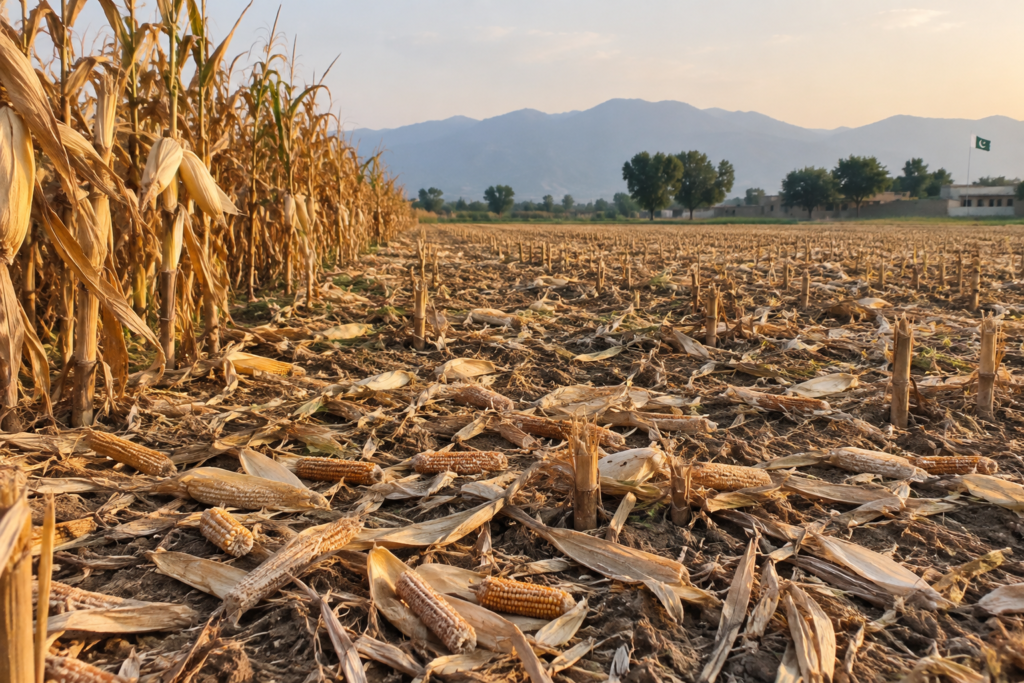
Because corn cob is an agricultural residue rather than a manufactured product, foreign material — soil, plant debris, or other crop residue — is a real risk if sorting isn’t rigorous. Ask what sorting and contamination-control steps happen before packaging, and whether the supplier can provide inspection documentation or allow third-party pre-shipment inspection.
Packaging for Export
Corn cob products are typically shipped in PP (polypropylene) woven bags or jumbo bags depending on order volume and buyer preference. Confirm bag specifications, whether liners are used to control moisture re-absorption during transit, and how the supplier palletizes or containerizes for the specific shipping route involved. Long ocean transit times mean packaging decisions made at the point of origin have a real effect on what arrives at the destination port.
Documentation and Certificates of Origin
If your import market requires a certificate of origin or specific phytosanitary documentation, confirm early in the conversation whether the supplier is registered to process these through Pakistan’s official channels, and what lead time to expect. Documentation delays are one of the more common — and avoidable — causes of shipment delay in agricultural exports.
Minimum Order Quantities and Lead Time
MOQs and lead times vary by supplier and by product grade, and they’re worth confirming directly with any supplier you’re evaluating rather than assuming a standard figure applies across the industry.
Where Daa Agri Limited Fits Into This
Daa Agri Limited is a Pakistan-based agricultural processing and export company focused on corn cob processing and sugarcane-derived residues, operating within what the company describes as a circular agricultural value chain — collecting farm residues, cleaning and grading them, and converting them into export-grade raw material. Its product range spans corn cob meal, corn cob granules, and crushed corn cob, alongside sugarcane residue and other biomass materials, processed with moisture checks, sorting, and contamination control ahead of export, and packed in PP or jumbo bags for international logistics.
That combination — sourcing tied directly to Pakistan’s maize-growing regions, drying supported by the region’s climate, and processing built around export-grade consistency — is a reasonably direct illustration of the sourcing advantages discussed above, rather than an abstract argument. You can read more about the company’s approach and sourcing base on its About page.
Frequently Asked Questions
What is corn cob meal used for? Corn cob meal is commonly used as a carrier for agricultural chemicals such as pesticides and fertilizers, as an abrasive in metal polishing and tumbling processes, and as an absorbent material. The right grade depends on the intended industrial or agricultural application.
Is Pakistan a reliable long-term sourcing origin for corn cob products? Pakistan has a large, recurring maize crop that generates a steady supply of cob residue, along with a climate that supports low-cost natural drying and a government-backed push toward digital export documentation. As with any sourcing origin, reliability ultimately depends on the specific supplier’s processing and quality control, not the country alone.
What packaging is standard for corn cob product exports? PP woven bags and jumbo bags are the most common packaging formats for bulk corn cob exports, with the specific bag size and liner choice depending on the buyer’s volume requirements and shipping route.
How do I know if a corn cob supplier’s moisture control is adequate? Ask directly what moisture percentage the material is dried to and how it’s verified before packaging. Request a current sample rather than relying on historic specification sheets, since moisture and grading can vary by batch and season.
Do corn cob exports from Pakistan require special certification? Requirements vary by destination market and product use. Buyers should confirm with their supplier whether a certificate of origin or phytosanitary documentation applies to their specific shipment, and check that the supplier can process this through Pakistan’s official export channels.
What’s the difference between corn cob granules and corn cob meal? Granules are typically sized and graded for absorbent and bedding applications, while meal is ground finer and more commonly used as a carrier material or abrasive. The right choice depends on your end application, not just cost per ton.
Final Thoughts
Sourcing corn cob products isn’t a decision that should be made on price alone, even when the cost advantage is real. The buyers who avoid problems are the ones who ask specific questions about moisture, grading, contamination control, and documentation before the first order ships — not after a container arrives with inconsistent material. Pakistan’s combination of maize volume, dry climate, and improving export infrastructure makes it a legitimate origin to evaluate, provided the supplier you choose can back up those advantages with real process control.
If you’re evaluating suppliers for your next corn cob program, you can explore Daa Agri Limited’s product range or get in touch through the company’s site to discuss your specific grade, packaging, and volume requirements.
info@daaagri.com
Turn industry knowledge into a supply conversation.
Contact GreenCore for product availability, specifications, bulk packaging and export support.