
Renewable Fuel Export from Pakistan: What Buyers Should Know About Biomass Pellets, Briquettes and Bio-Coal
Rising energy costs and tightening emissions targets have pushed a lot of industrial buyers — cement plants, textile boiler operators, […]
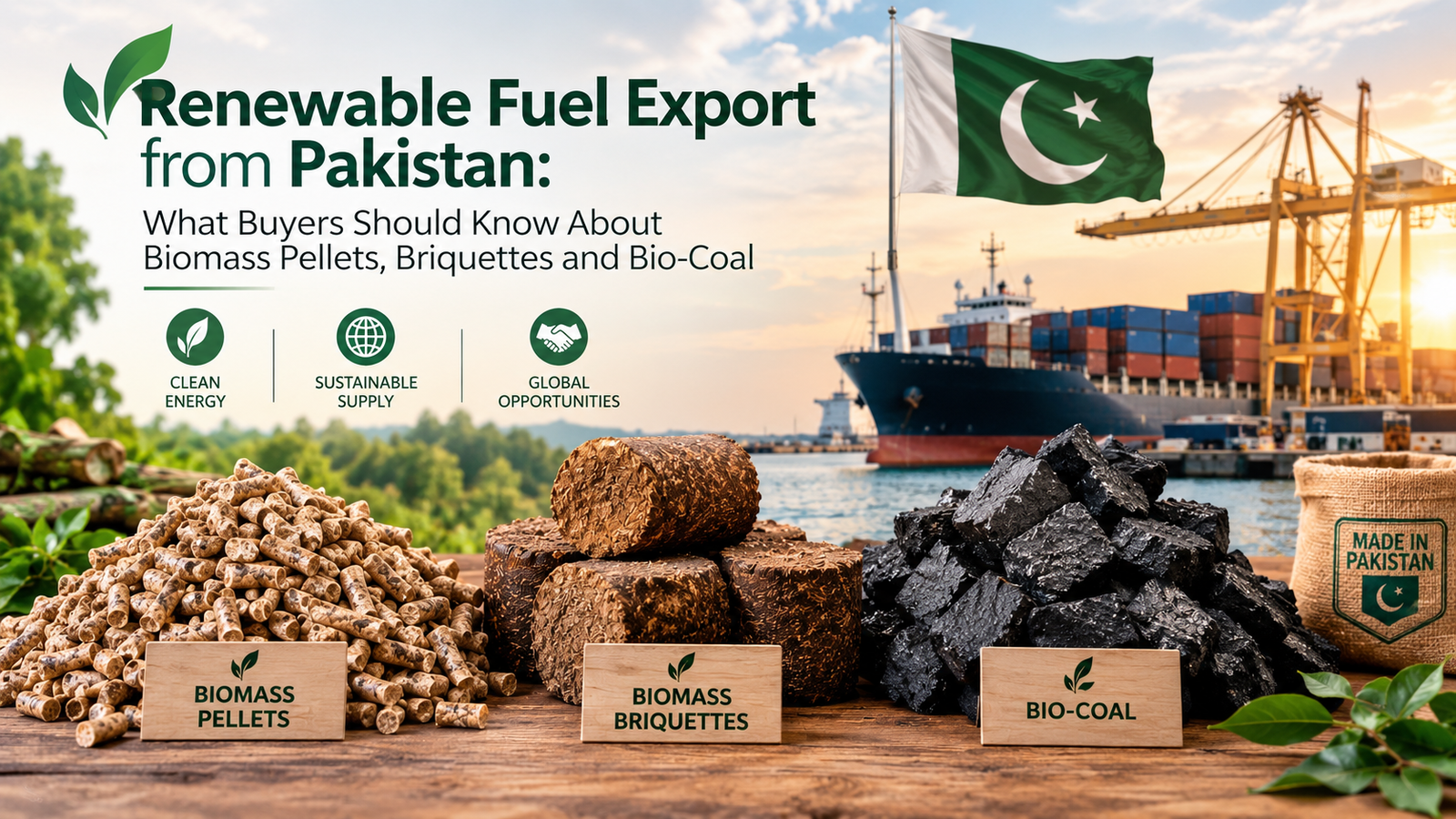
Rising energy costs and tightening emissions targets have pushed a lot of industrial buyers — cement plants, textile boiler operators, […]
Rising energy costs and tightening emissions targets have pushed a lot of industrial buyers — cement plants, textile boiler operators, brick kilns, power utilities — to look outside conventional coal and furnace oil for their thermal energy needs. Pakistan has quietly become part of that conversation, mainly because it produces enormous volumes of agricultural residue every harvest season, and that residue is now finding a second life as densified solid fuel.
If you’re researching renewable fuel export from Pakistan for the first time, this guide walks through what biomass pellets, briquettes and bio-coal actually are, why Pakistan’s agricultural base makes it a realistic sourcing location, and what a procurement team should check before signing a supply agreement.
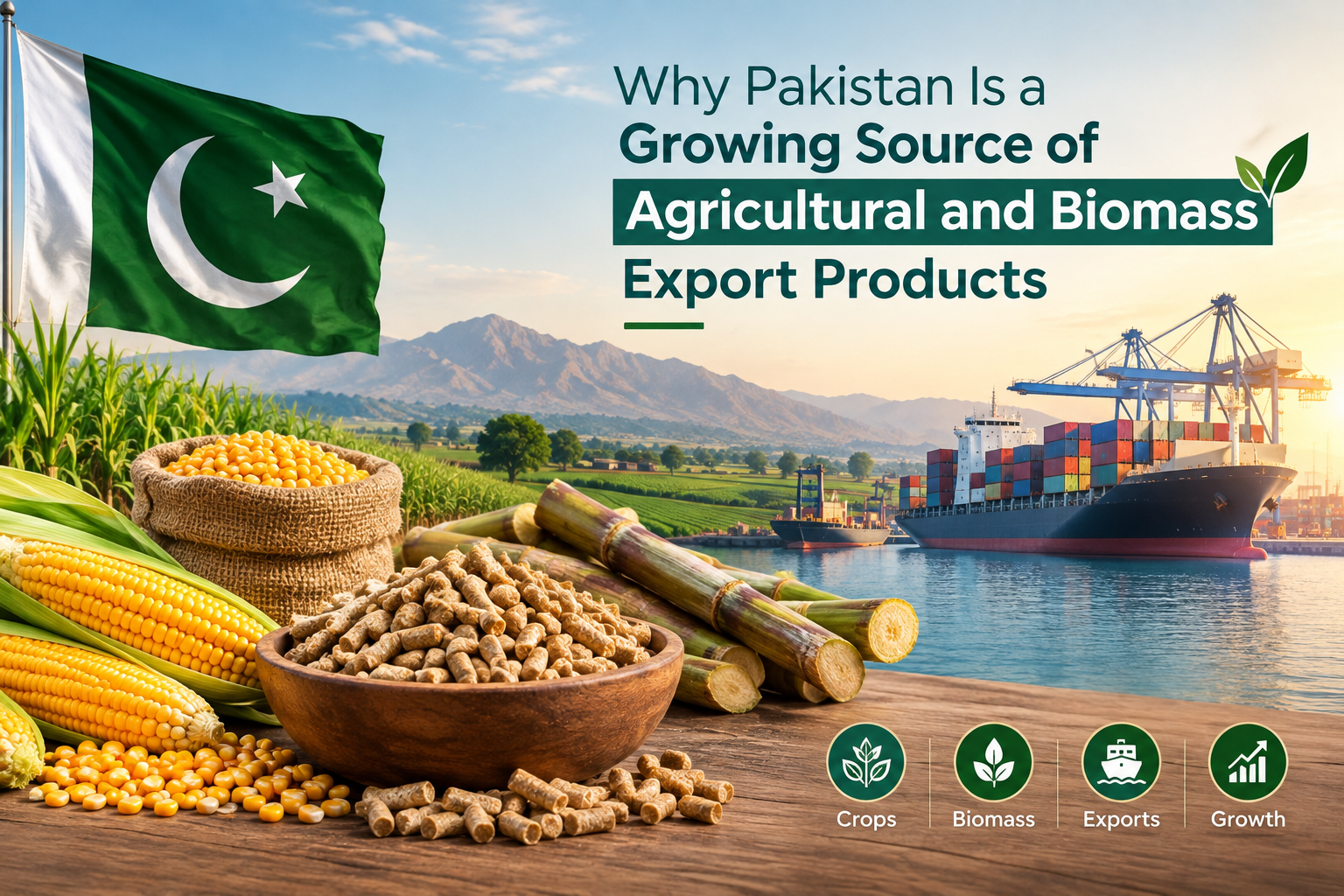
Why Pakistan Has Become a Source for Biomass Fuel
Pakistan grows large volumes of corn (maize), sugarcane, cotton, rice and wheat, and each of these crops leaves behind a residue stream — corn cobs, sugarcane bagasse and trash, cotton stalks, rice husk, wheat straw — that historically had limited commercial use. A lot of it was burned in the field or left to decompose.
Densification technology changes that equation. Once residues are cleaned, dried and compressed under heat and pressure, they turn into a fuel product with a much higher energy density per unit volume than loose biomass, which makes it economical to bag, containerize and ship internationally. The FAO and the European Bank for Reconstruction and Development have pointed to converting unused agricultural residues into bioenergy as a promising option for meeting growing energy needs while reducing dependence on fossil fuels, and Pakistan’s crop mix and dry climate are well suited to that model — sun-drying reduces the energy cost of moisture removal before processing even begins.
That combination of raw material volume and processing cost advantage is the underlying reason renewable fuel exporters have started to emerge from Pakistan’s agricultural regions, including companies like Daa Agri Limited, which processes corn cob and sugarcane-derived residues into export-grade biomass materials.
Biomass Pellets, Briquettes and Bio-Coal: What’s the Difference?
These three terms get used loosely in trade conversations, so it’s worth being precise, because the difference affects handling, storage and which boiler or furnace a buyer can actually use the fuel in.
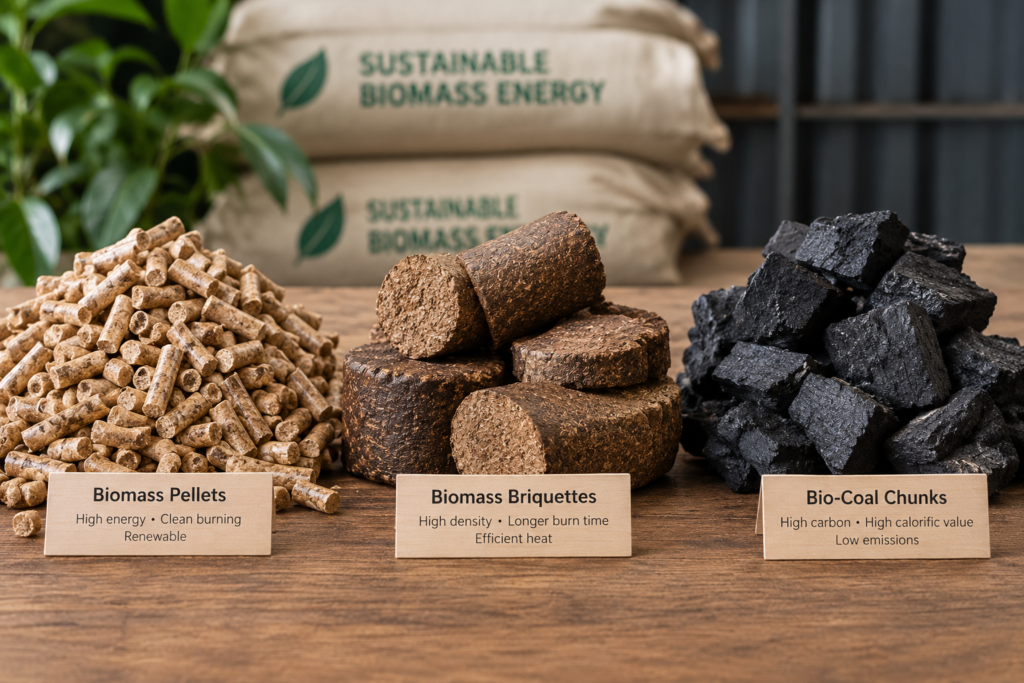
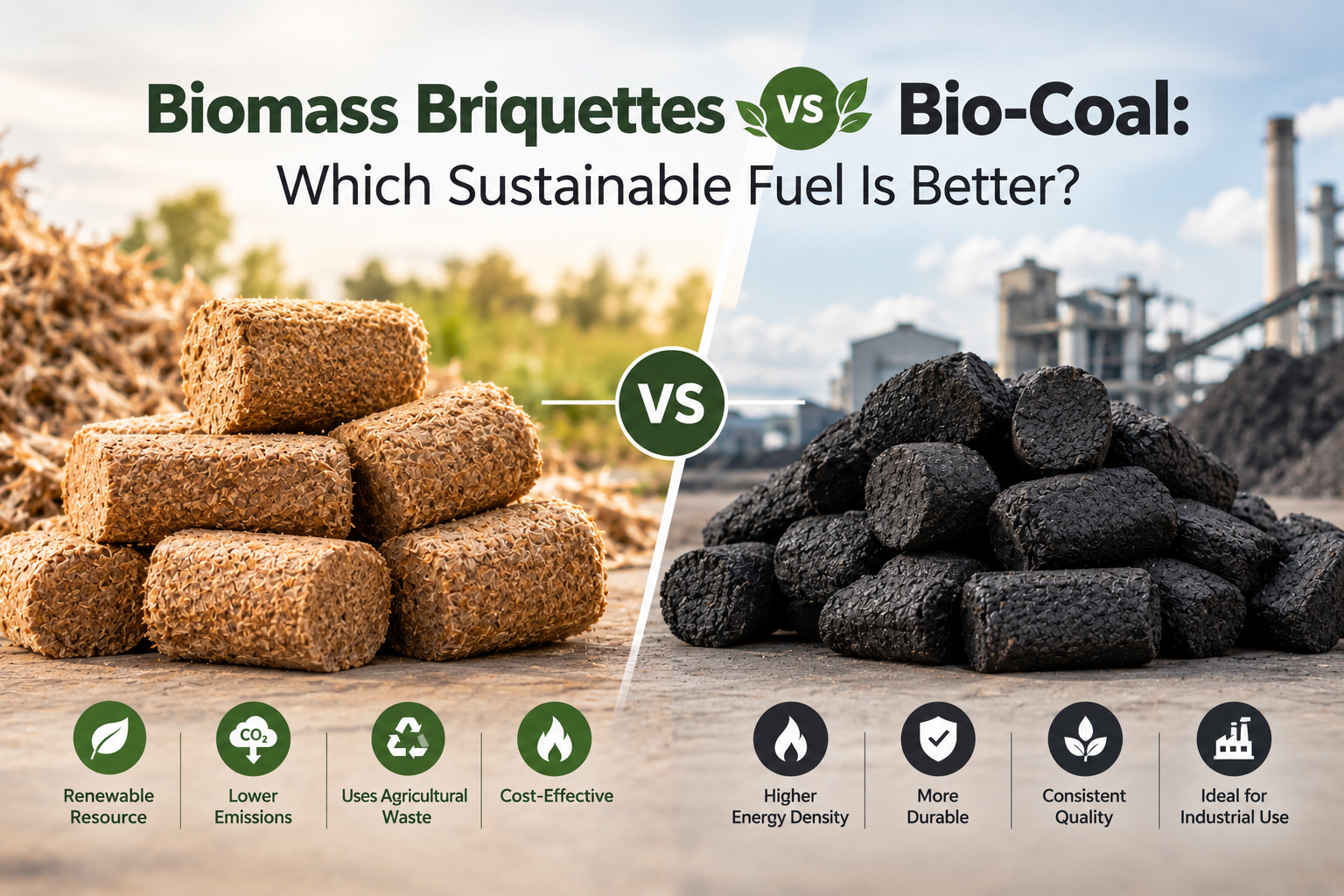
Biomass pellets are small, cylindrical, extruded units, typically produced by forcing ground and dried biomass through a die under pressure. Pellets are dense, flow well through automated feed systems, and are commonly used in pellet-fed boilers, stoves and some power generation setups where consistent, small-diameter fuel is required.
Biomass briquettes are larger, usually cylindrical or block-shaped, and made through a similar compression process but without necessarily grinding the material as finely. Briquettes suit manual or semi-automated feeding into industrial boilers, brick kilns and furnaces where very fine, free-flowing fuel isn’t a requirement.
Bio-coal generally refers to biomass that has undergone additional thermal treatment — commonly a process called torrefaction — which drives off moisture and volatile compounds, leaving a darker, more carbon-dense material that behaves more like coal in terms of burn characteristics and calorific value. A 2023 study published in the peer-reviewed journal Energies examined bio-coal briquettes produced from mixes of agricultural biomass and coal industry waste, finding that blending improves several fuel-quality characteristics compared to biomass alone, which is part of why bio-coal is often marketed as a closer drop-in replacement for coal in existing combustion equipment.
In practice, a buyer’s choice between the three usually comes down to what their existing burner or boiler was designed for, rather than which one is “better” in the abstract.
Why Industrial Buyers Are Switching to Biomass Fuel
Cost is usually the entry point into this conversation, but it’s rarely the only reason a procurement manager ends up switching a boiler over to biomass fuel.
Fuel cost stability. Agricultural residue prices don’t track oil markets the way furnace oil or imported coal does, which gives buyers a hedge against energy price volatility tied to global crude and coal benchmarks.
Emissions and compliance pressure. Many manufacturers, particularly those exporting to the EU or working with multinational buyers who track supplier emissions, are under pressure to lower the carbon intensity of their operations. Swapping a boiler’s fuel source from coal to biomass is one of the more accessible ways to make progress on that without a full capital equipment overhaul.
Waste-to-value economics on the supply side. For the exporting country, converting agricultural residue that would otherwise be burned in the field or left to rot turns an environmental liability into a traded commodity — which is part of why agricultural residues such as nutshells, maize cobs, sunflower heads and livestock manure are increasingly being looked at as a source of bioenergy rather than waste.
None of this means biomass fuel is a universal substitute for coal or furnace oil. Calorific value per kilogram is generally lower than coal, moisture sensitivity requires proper storage, and combustion equipment sometimes needs minor adjustment. A buyer evaluating a switch should get real specification data from a supplier rather than assuming biomass fuel behaves identically to what they’re currently burning.
What to Ask a Renewable Fuel Exporter Before You Order
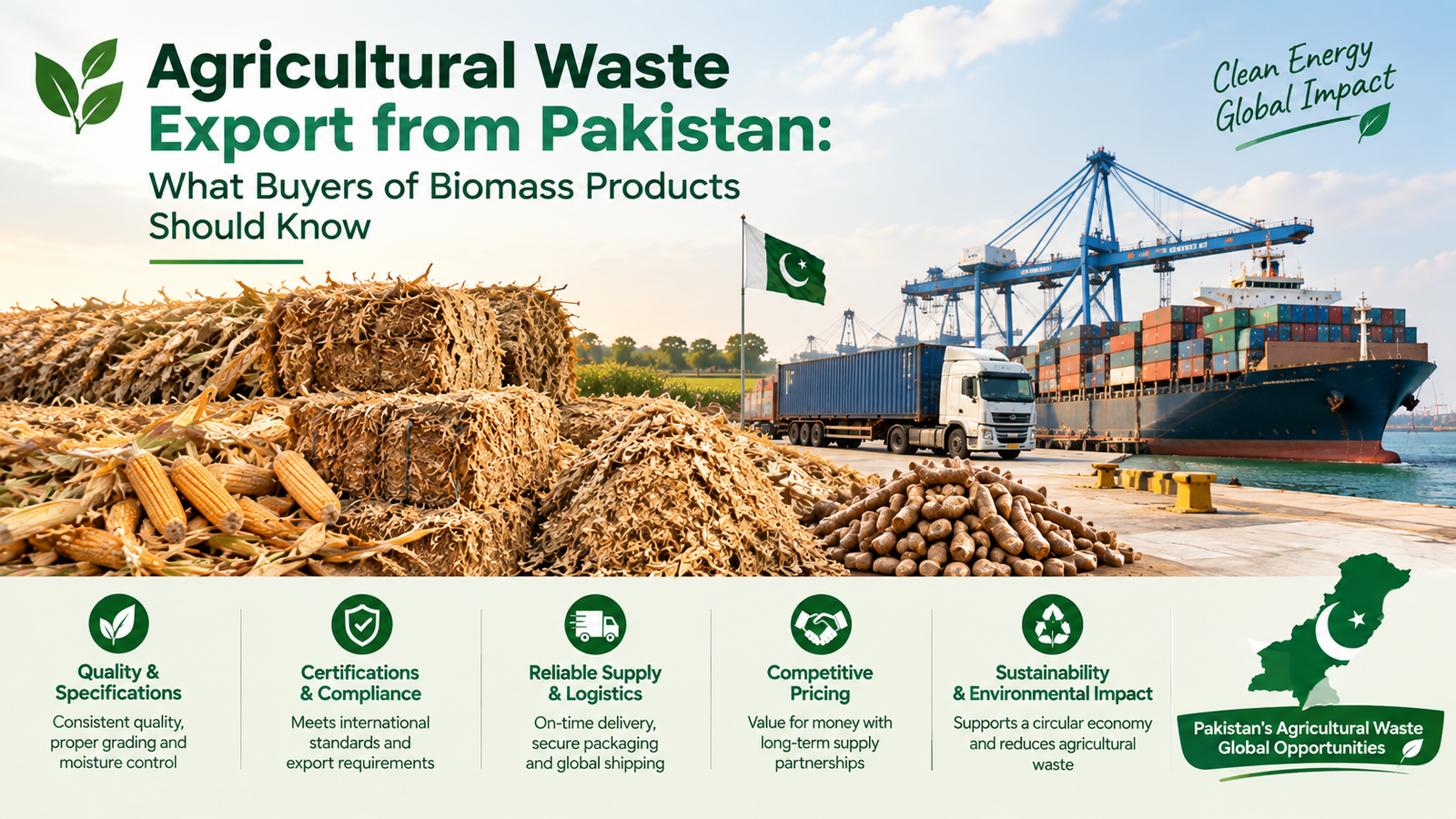
This is the part that tends to get skipped when buyers are moving fast, and it’s usually where problems show up later. A few areas worth asking about directly:
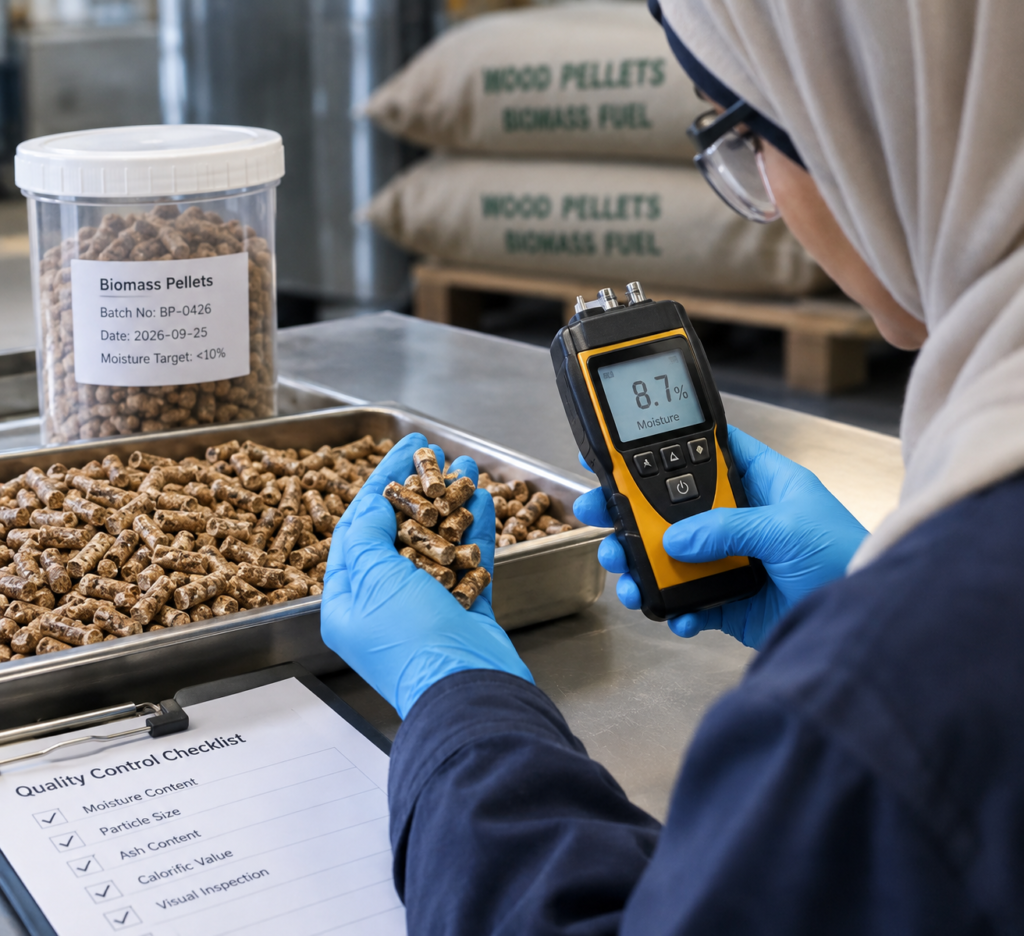
Moisture content. Moisture is the single biggest variable in solid biomass fuel — it affects calorific value, storage life and shipping weight. Ask for the moisture percentage the supplier is guaranteeing, not just an average.
Calorific value (CV/GCV). Ask what calorific value figure the supplier tests to, and how consistently that figure holds across batches. A supplier who can only quote a general range without batch-level testing data is worth pressing further.
Ash content and contamination control. Soil, sand and foreign material picked up during residue collection can raise ash content and cause problems in combustion equipment. Ask what sorting and contamination-control steps happen before packaging.
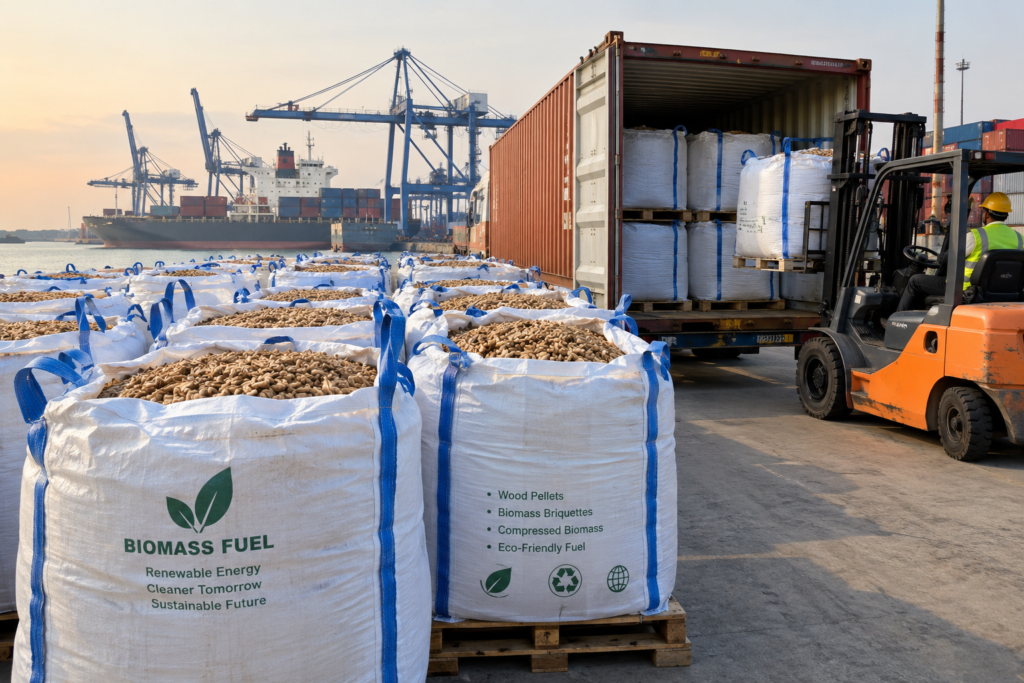
Packaging format. Biomass fuel is commonly supplied in PP bags, jumbo bags or bulk, depending on the buyer’s handling setup and container logistics. Please confirm the packaging matches what your receiving facility can handle.
Sampling and pre-shipment inspection. Ask whether the supplier allows third-party inspection or provides samples before a full container order, especially on a first transaction.
Documentation for customs clearance. Cross-border shipments of agricultural and biomass products typically require export documentation processed through Pakistan’s official trade channels. The Pakistan Single Window platform lets parties involved in trade and transport lodge standardized information and documents through a single digital entry point to fulfil import, export and transit-related regulatory requirements. Exporters generally handle this as part of the shipment process — it’s reasonable to ask a supplier how they manage this step rather than assuming it’s automatic.
Where This Fits in Pakistan’s Broader Export Picture
Renewable and agricultural by-product exports are still a smaller category compared to Pakistan’s traditional textile and rice exports, but trade promotion infrastructure exists to support it. The Trade Development Authority of Pakistan (TDAP) provides facilitation to exporters and importers. It works under the Ministry of Commerce to support the country’s export base more broadly, which is part of the institutional backdrop that lets smaller processing and export companies bring products like agricultural by-products and biomass fuel to international buyers.
For a company like Daa Agri Limited, this sits within a wider circular agriculture approach, where farm residues — corn cobs and sugarcane-derived material in particular — are collected, cleaned and processed into export-ready material rather than treated as waste. The company’s product range spans corn cob meal and granules, sugarcane residues, and the densified biomass fuel formats discussed in this article: biomass sawdust, biomass briquettes, biomass pellets and bio-coal.
Frequently Asked Questions
Is biomass fuel a direct replacement for coal in an existing boiler?
Not always without adjustment. Biomass fuel generally has a lower calorific value per kilogram than coal, and some boilers are configured specifically for coal’s burn characteristics. Many buyers run a co-firing trial — blending biomass with existing fuel — before switching over completely.
What’s the shelf life of biomass pellets or briquettes?
It depends heavily on moisture content and storage conditions. Properly dried and sealed biomass fuel can be stored for extended periods. Still, exposure to humidity or water can cause the material to break down or lose calorific value, so covered, dry storage is important.
Do biomass pellets, briquettes and bio-coal require different import permits?
Import requirements vary by destination country and are set by that country’s own customs and agricultural authorities, so this should be confirmed with your local customs broker or import authority rather than assumed to be uniform.
What documentation should I expect from a Pakistani biomass fuel exporter?
At minimum, expect commercial invoices, packing lists, and any export certification processed through Pakistan’s official trade and customs channels, such as the Pakistan Single Window system. Buyers should ask their supplier directly which documents will accompany a specific shipment.
Can biomass fuel be shipped in standard containers?
Yes — biomass pellets, briquettes and bio-coal are commonly packed in PP bags or jumbo bags for containerized ocean freight, similar to other bulk agricultural commodities.
Looking to Source Renewable Fuel from Pakistan?
If you’re evaluating suppliers for biomass pellets, briquettes or bio-coal, it’s worth going through the questions above with any exporter before committing to a full container order. You can learn more about Daa Agri Limited’s agricultural by-products and biomass fuel offerings or get in touch through the company’s website to discuss specifications and export requirements for your program.
Turn industry knowledge into a supply conversation.
Contact GreenCore for product availability, specifications, bulk packaging and export support.