
Pakistan Biomass Exporters: Products, Applications, and How International Supply Actually Works
If you’re sourcing biomass from Pakistan for the first time, the hardest part usually isn’t finding a supplier — a […]
If you’re sourcing biomass from Pakistan for the first time, the hardest part usually isn’t finding a supplier — a […]
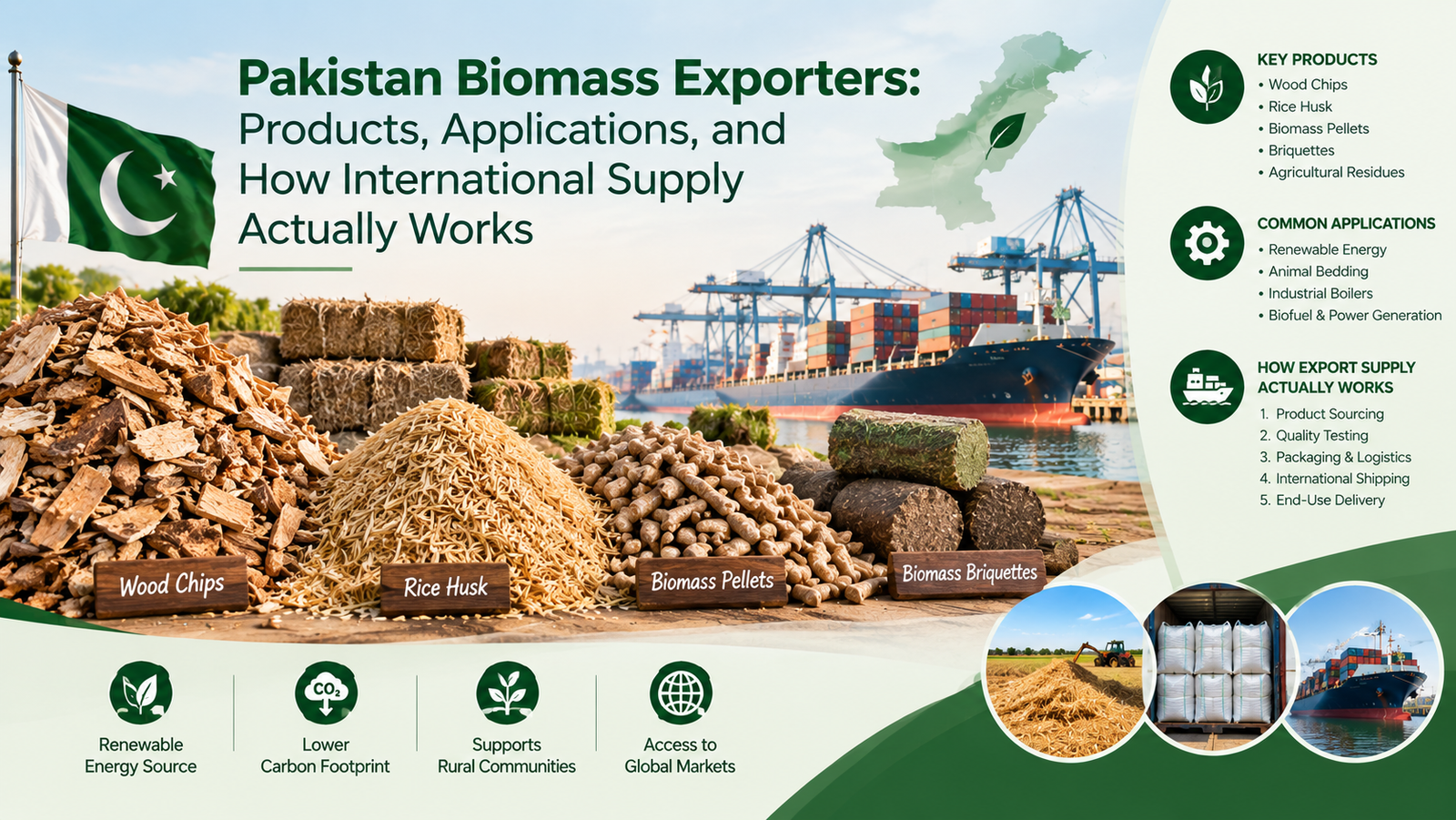
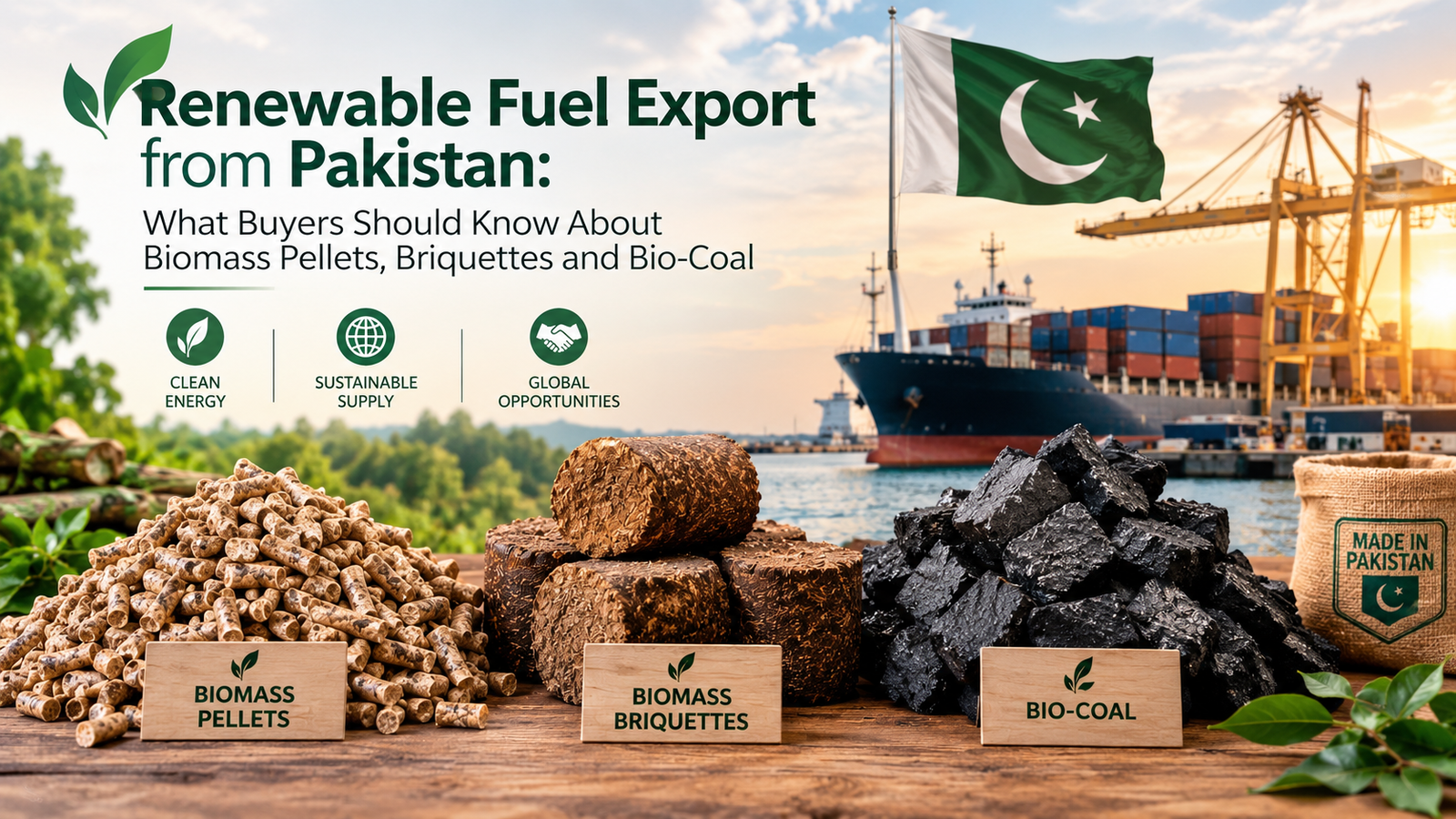
If you’re sourcing biomass from Pakistan for the first time, the hardest part usually isn’t finding a supplier — a search on any B2B platform returns dozens. The hard part is figuring out which biomass material actually fits your furnace, boiler, or process, and whether the supplier you’re talking to can deliver it consistently at export scale. This guide is for Pakistan biomass exporters and walks through what Pakistan actually produces, where each material is used, and what to check before you commit to an order.
Why Pakistan Shows Up on Biomass Buyers’ Radar
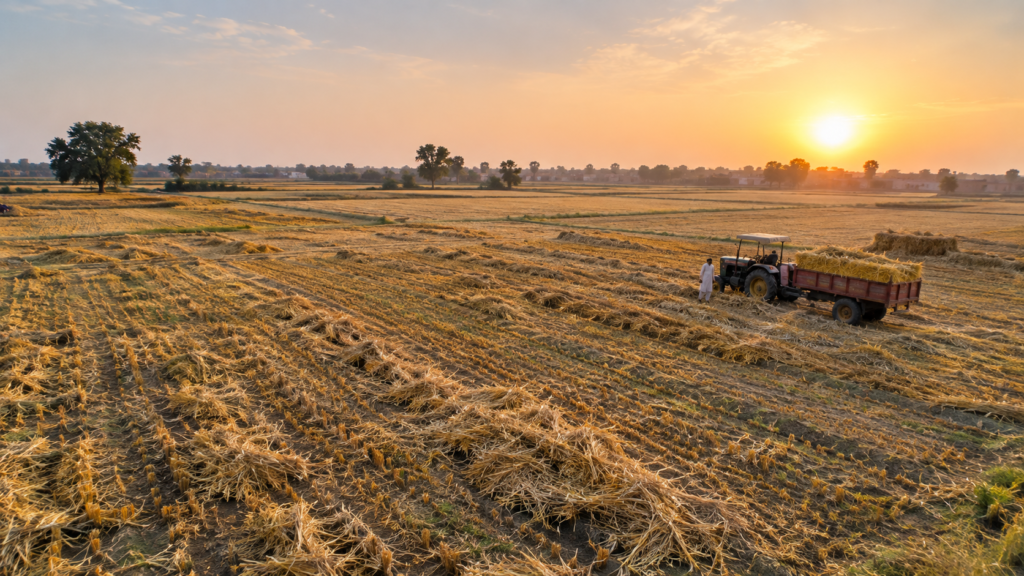
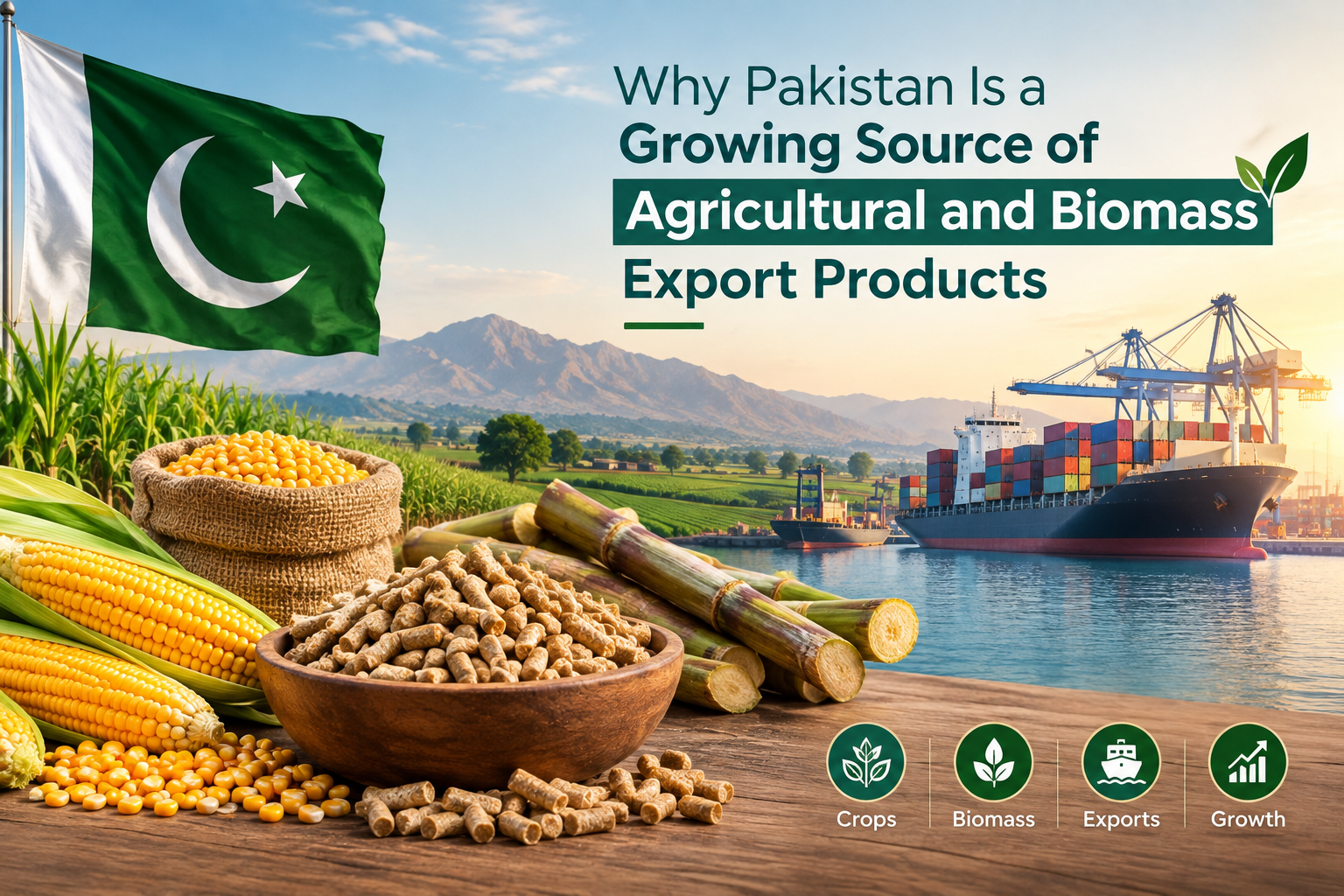
Pakistan is a large agricultural economy, and agriculture leaves behind a lot of residue. A peer-reviewed review of Pakistan’s biomass energy potential found that crop residues alone — cotton stalks, wheat straw, rice straw, corn stalks, and sugarcane trash — add up to tens of millions of tonnes a year, with wheat straw and cotton stalks making up the largest share by volume. The same review notes that Pakistan’s roughly 85 sugar mills generate enough bagasse to support close to 5,800 gigawatt-hours of power generation potential if fully utilized. District-level residue volumes have also been mapped independently through the World Bank–funded Pakistan Biomass Feedstock Crop Yield dataset, which breaks down annual crop-residue tonnage by region and crop type. This is where biomass export interest starts: not from a single flagship product, but from the sheer scale of agricultural byproduct the country generates every harvest season.
That scale doesn’t automatically translate into export readiness, though. A lot of this residue is still burned in the field, used informally as household fuel, or left to decompose, because collecting, drying, and processing it into an export-grade product takes infrastructure that not every region has built yet. That gap is exactly why the difference between a genuine exporter and a reseller matters so much to a buyer overseas.
The Main Biomass Products Coming Out of Pakistan
“Biomass” is a broad word, and buyers new to the category sometimes assume it refers to one interchangeable commodity. It doesn’t. Each of the following materials has a different moisture profile, calorific value, ash content, and typical end use.
Rice Husk
Rice husk is one of Pakistan’s most consistently available biomass byproducts, generated wherever paddy is milled. It’s used raw as a boiler fuel, densified into husk-based pellets or briquettes, or processed further into husk ash for construction and insulation applications. Rice husk is classified internationally under HS code 1213 (cereal straw and husks, including in pellet form), and Pakistan is a meaningful global supplier in this category — trade data aggregated from UN Comtrade puts Pakistan’s rice husk export volume at roughly 783 million kilograms in 2023, giving it around a 15% share of global rice husk export volume that year, according to trade-data platform Tridge. Because husk has relatively low bulk density in its raw form, buyers importing it in volume usually ask about densification (pelletizing or briquetting) rather than shipping loose husk, simply because loose husk is expensive to move relative to its energy content.
Rice Bran and Rice Bran–Derived Residue
Not all rice byproducts are burned. Rice bran, the layer removed during milling, has both a food/feed market and an industrial one. It’s classified under HS code 230240, and Pakistan ranked among the top exporters of rice bran globally in 2023, with export value that had grown roughly fourfold over the preceding five years according to the same Tridge trade-data analysis. Buyers sourcing rice bran should be clear with suppliers about which grade they need — feed-grade versus oil-extraction-grade bran are priced and specified differently.
Cotton Stalk
Cotton is one of Pakistan’s dominant crops, and the stalk left behind after picking is a major, underused biomass resource. Cotton stalk has good calorific value and is increasingly processed into briquettes or pellets for industrial boiler use, both domestically and for export. Because cotton stalk is fibrous and bulky, the practical bottleneck is almost always collection and chipping infrastructure near the growing regions rather than demand.
Wheat Straw and Sugarcane Bagasse
Wheat straw is the single largest crop residue stream in the country by tonnage, and bagasse — the fibrous leftover from sugarcane crushing — is concentrated around Pakistan’s sugar-producing belt. Both are used for on-site power and steam generation by the mills themselves, and both are also candidates for pelletizing when a supplier has the processing capacity to turn a low-density residue into a transportable, higher-density fuel product. A buyer evaluating either material should ask specifically whether they’re being offered raw baled material or a densified pellet/briquette, since freight economics differ enormously between the two.
Biomass Pellets and Briquettes (Mixed-Feedstock)
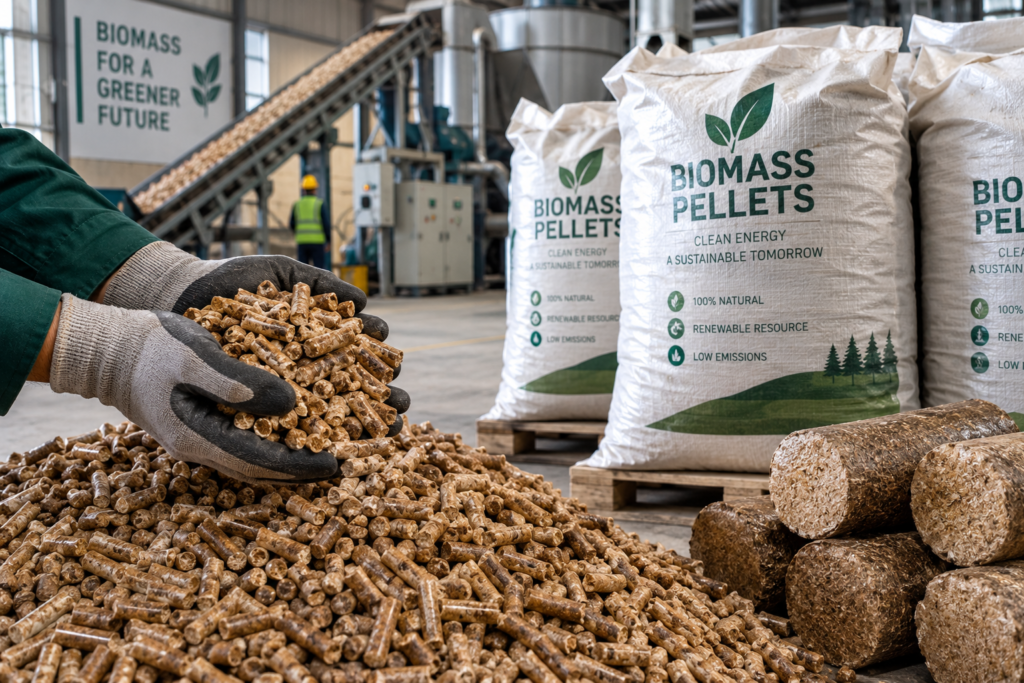
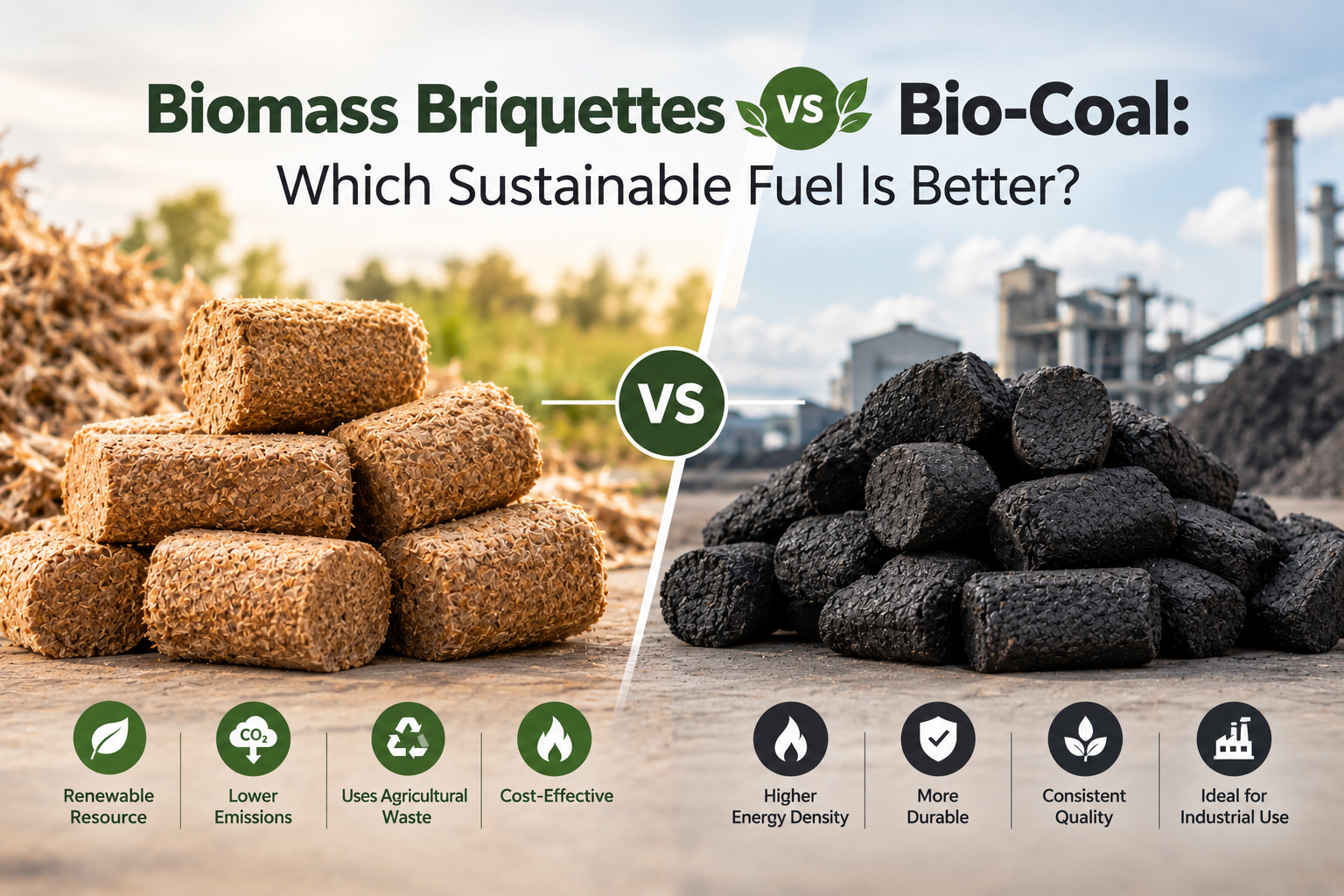
A growing share of what Pakistani suppliers export isn’t a single raw residue but a manufactured pellet or briquette, often blended from more than one feedstock — husk, sawdust, agricultural waste, or a mix — pressed into a uniform size and moisture content. This is generally what industrial buyers in markets with strict biomass-fuel specifications are actually looking for, because raw residue varies batch to batch in moisture and ash content in a way that finished pellets are designed to correct.
What These Products Are Actually Used For
Buyers reach out to Pakistani biomass suppliers for a handful of recurring applications, and it’s worth being specific about them because the specification a buyer needs changes with the end use.
Industrial boiler and power-plant fuel. This is the largest use case globally for densified agricultural biomass — replacing or supplementing coal in industrial steam boilers, and in some markets, dedicated biomass power generation. Buyers in this category usually care most about calorific value, moisture content, and ash content, and often require consistency across shipments more than they care about the specific feedstock blend.
Residential and commercial heating. In colder markets, densified biomass — particularly wood or agricultural-waste pellets — is burned in stoves and small boilers. This segment tends to be pickier about pellet uniformity, dust content, and packaging, since the end user is often a household rather than an industrial operator.
Animal bedding and agricultural use. Rice husk in particular is used as livestock bedding and as a soil amendment, separate from its fuel applications.
Construction and industrial materials. Rice husk ash, produced by controlled combustion of husk, is used in some construction applications as a pozzolanic material. This is a more specialized, lower-volume use case than fuel applications but comes up often enough that it’s worth knowing it exists as a category.
What International Buyers Should Actually Check Before Ordering
Sourcing biomass across borders comes with more moving parts than sourcing a manufactured good, because the raw material is variable and seasonal. A few things worth confirming directly with any supplier, Pakistani or otherwise:
- Moisture content and how it’s measured. Ask for the testing method and whether results are per-shipment or based on an average. Moisture swings affect both calorific value and the risk of the cargo heating or degrading in transit.
- Calorific value (net and gross) relevant to your equipment’s fuel specification.
- Ash content, particularly if your boiler or furnace has tight tolerances.
- Packaging format — bulk in bags, bulk in a container liner, or baled — since this affects both freight cost and how the material handles at the receiving port.
- Consistency across harvest seasons. Agricultural residue supply is seasonal by nature. Ask how a supplier manages supply continuity in the off-season, whether through storage, blending, or sourcing from multiple regions.
- Export documentation. Standard trade documentation — commercial invoice, packing list, certificate of origin, and phytosanitary certificate where applicable for agricultural-origin goods — should be something a genuine exporter can produce without difficulty. If a supplier is vague about documentation, treat that as a signal to dig deeper before committing to volume.
- Port and logistics familiarity. Pakistan’s main ports for bulk agricultural and industrial cargo are Karachi and Port Qasim; a supplier who regularly exports should be able to speak concretely about container availability, loading lead times, and typical transit routes rather than in generalities.
None of this replaces due diligence specific to your own equipment and destination-market import rules, but it’s a reasonable starting checklist for a first conversation with any biomass supplier.
Where Daa Agri Limited Fits In
Daa Agri Limited works within Pakistan’s agricultural export sector, and biomass byproducts are part of the broader agricultural supply chain the company operates in. If you’re evaluating Pakistan as a biomass sourcing origin and want to talk through product availability, specifications, or shipment logistics for your specific requirement, you can get in touch through Daa Agri Limited’s website to start that conversation directly.
Frequently Asked Questions
Is Pakistan a major global biomass exporter?
Pakistan is a significant source of specific biomass byproducts — rice husk and rice bran in particular show meaningful export volumes in international trade data — rather than being the single largest global biomass exporter overall. Its strength comes from the scale of its agricultural sector, especially rice and cotton production, rather than a dedicated biomass-fuel industry built from scratch.
What’s the difference between raw biomass and biomass pellets?
Raw biomass (loose husk, baled straw, unprocessed stalks) is the material as it comes off the field or mill. Pellets and briquettes are that same material compressed into a uniform, denser form, usually with more consistent moisture and calorific value. Pellets generally cost more per tonne but ship more efficiently and burn more predictably, which is why most industrial buyers prefer them over raw residue for anything beyond very short shipping distances.
Which Pakistani biomass products have the strongest export track record?
Based on international trade data, rice husk and rice bran have the clearest, most measurable export history among Pakistan’s biomass byproducts. Cotton stalk and bagasse are used extensively domestically and are increasingly processed for export, but with less standardized trade-data visibility than the rice byproducts.
What certifications should I ask a Pakistani biomass supplier about?
This depends heavily on your destination market. Some markets and buyers require sustainability or chain-of-custody certification for biomass fuel; others don’t. Rather than assuming a certification applies, ask the supplier directly which certifications, if any, they currently hold, and verify any claim independently rather than taking it at face value.
Can I get a sample before placing a bulk order?
Most established exporters can arrange a sample shipment or, at minimum, detailed lab test results for a representative batch. If a supplier resists providing either, that’s worth treating as a red flag rather than a minor inconvenience.
How is Pakistani biomass typically shipped internationally?
Bulk biomass exports from Pakistan generally move by sea through Karachi or Port Qasim, either in bulk containers with liners or in bagged form on pallets, depending on the product and buyer preference. Ask your supplier which method they use for your specific product, since it affects both cost and how the cargo needs to be handled at the destination port.
Have a specific biomass requirement — feedstock type, volume, or destination market? Reach out to Daa Agri Limited to discuss what’s realistically available and how sourcing would work for your case.
Turn industry knowledge into a supply conversation.
Contact GreenCore for product availability, specifications, bulk packaging and export support.