
Pakistan Corn Cob Suppliers: Export-Quality Corn Cob Products for Global Buyers
Corn cob might look like an agricultural leftover. Still, for buyers in animal bedding, industrial abrasives, biomass energy, and specialty […]
Corn cob might look like an agricultural leftover. Still, for buyers in animal bedding, industrial abrasives, biomass energy, and specialty […]
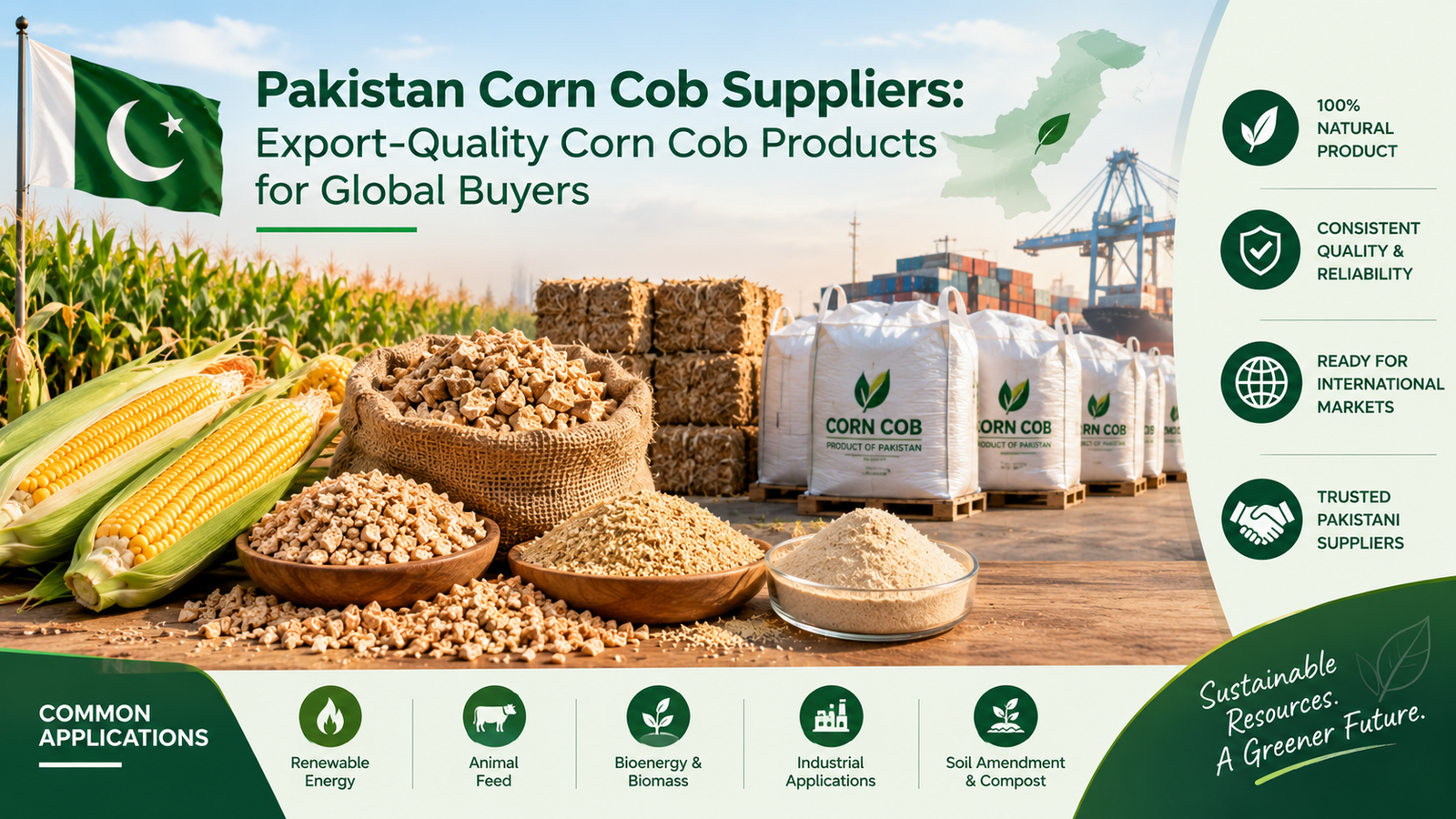
Corn cob might look like an agricultural leftover. Still, for buyers in animal bedding, industrial abrasives, biomass energy, and specialty carbon markets, it’s a raw material with very specific quality requirements. If you’re sourcing from Pakistan, understanding how the crop moves from field to export container will save you from costly surprises later — inconsistent moisture content, mixed particle sizes, or shipments that get held up because documentation wasn’t in order.
This guide walks through what corn cob actually is as a traded commodity, where it comes from in Pakistan, what buyers should check before placing an order, and how the export process typically works.
What Buyers Actually Mean by “Corn Cob” as a Product
The term covers more ground than most first-time buyers expect. Depending on processing, “corn cob” as a commercial product can mean:
- Whole dried cobs — used mainly as biomass fuel or animal feed roughage
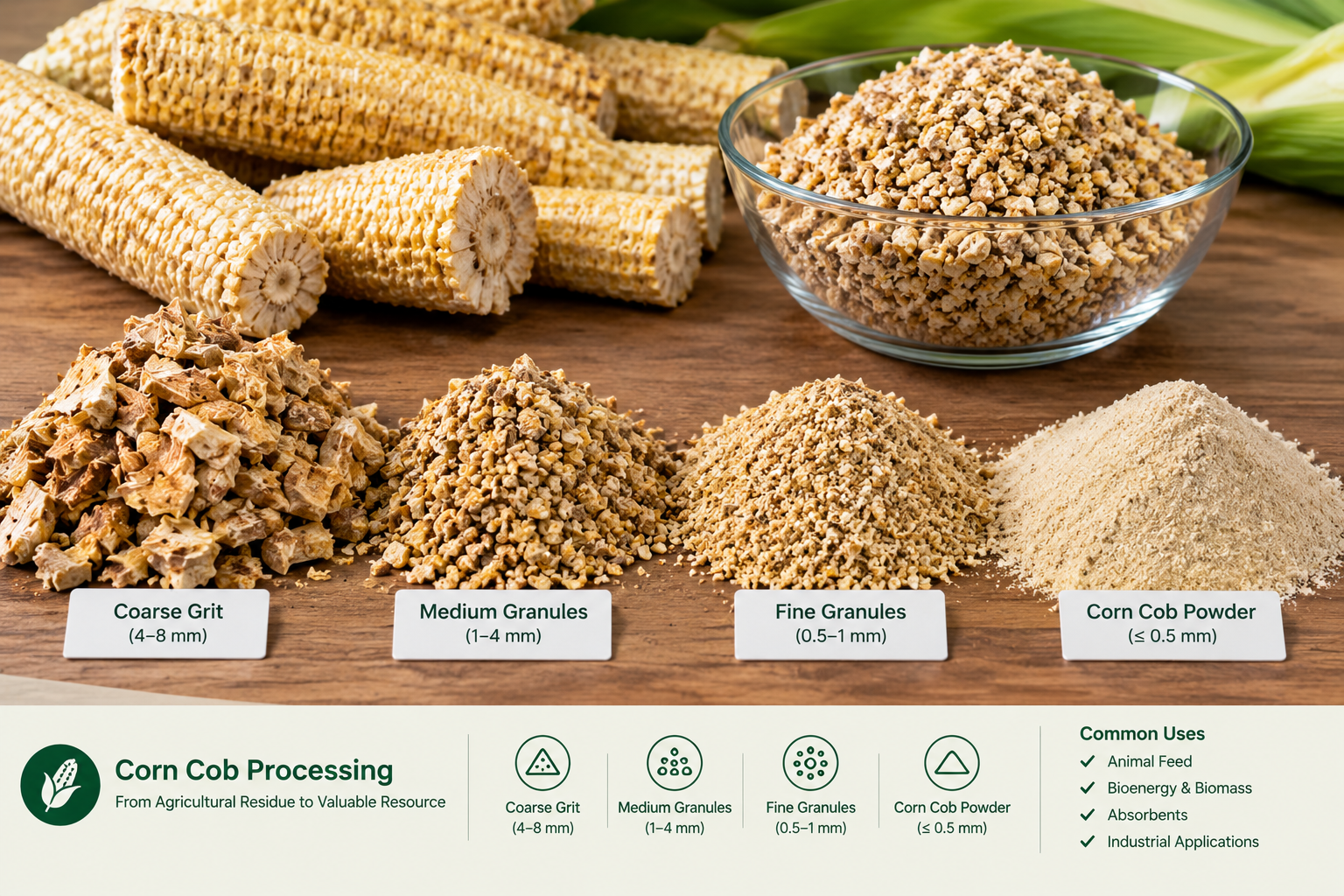
- Crushed or granulated cob — sorted by particle size (mesh grade) for applications like animal bedding, absorbents, or blasting media
- Cob grit — taken specifically from the dense, woody ring of the cob, prized for industrial polishing and surface cleaning because it’s harder and denser than the soft pith
- Cob meal or powder — fine-ground material used as a carrier for pesticides, fertilizers, and some feed formulations
Each of these has different moisture, density, and screening specifications, and a supplier who understands the difference will ask which grade you need before quoting a price — a useful signal when you’re vetting who to work with.
Where Pakistan’s Corn Cob Supply Actually Comes From
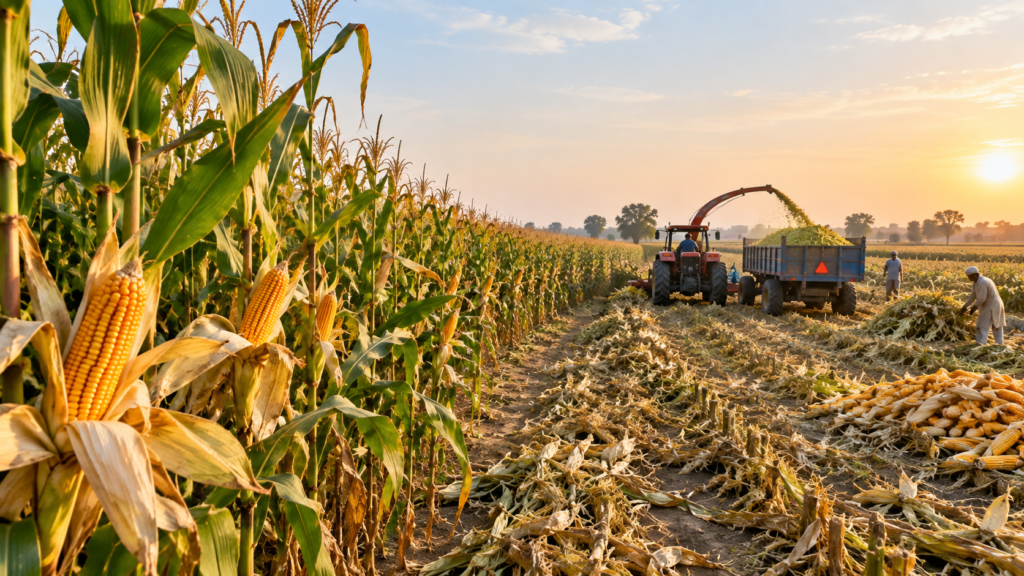
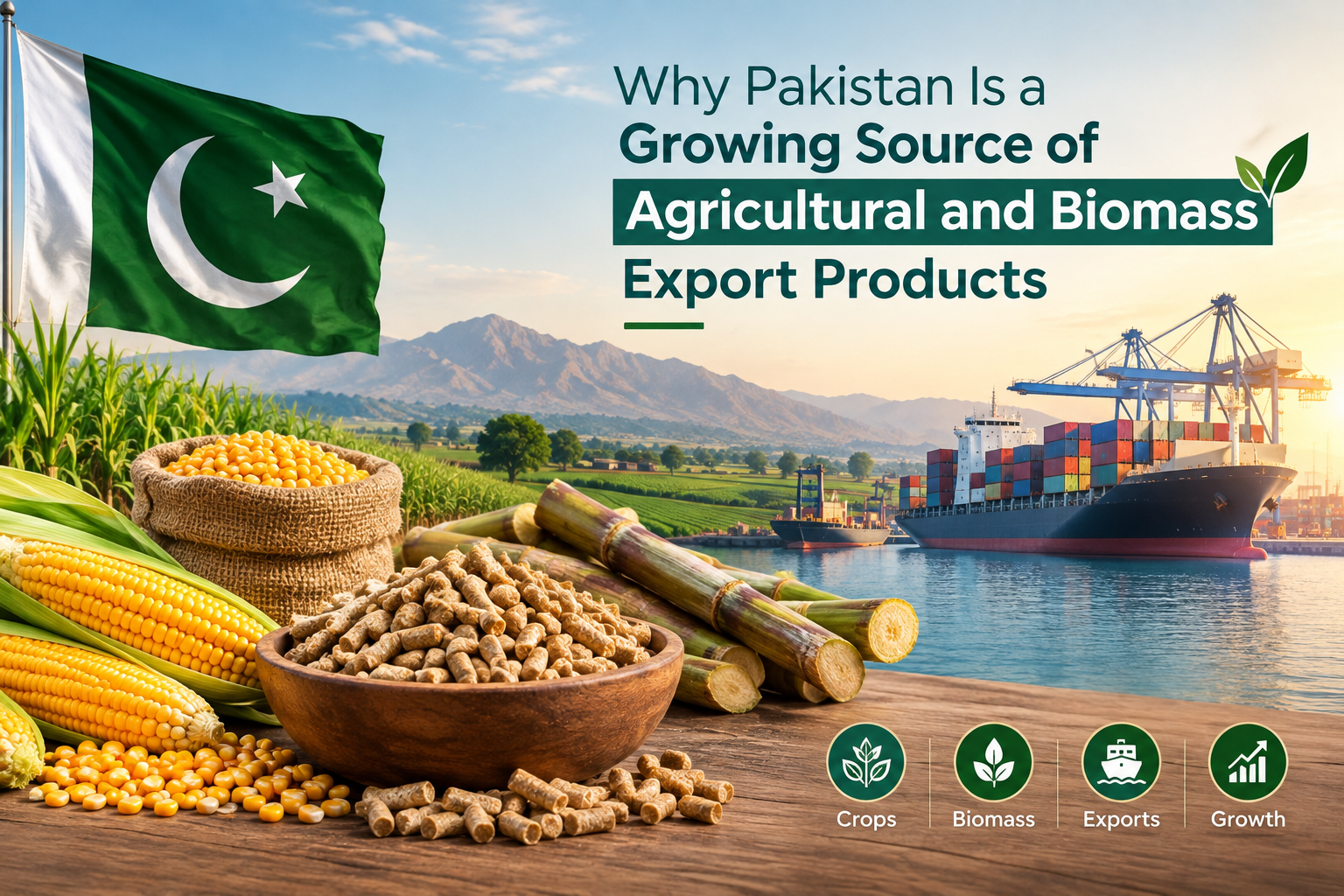
Corn cob is a byproduct of maize (corn) grain production, so supply availability tracks the maize harvest. Pakistan grows maize primarily in two seasons — spring and the larger autumn (kharif) crop — with Punjab producing roughly 85% of the country’s corn and Khyber Pakhtunkhwa contributing most of the remainder. National output has generally run in the range of 9 to 9.6 million tonnes in recent years. However, the 2024/2025 season saw a lower estimate of around 9.0 million tonnes due to a dry spell and irrigation shortages.
Most of that grain feeds Pakistan’s poultry industry, which is by far the largest domestic user of corn, with roughly 70% going to poultry feed, about 20% to wet milling, and the rest split between food and seed use. The cob itself — separated from the kernels during processing — is what becomes available as a distinct commodity for buyers outside the feed and food chain.
This matters practically for buyers: cob supply is seasonal and tied to harvest timing in these regions, so lead times and pricing can shift depending on when in the crop cycle you’re placing an order. A supplier who can speak to their sourcing regions and processing schedule is generally easier to plan around than one who can’t.
What Corn Cob Is Actually Used For
Understanding end-use helps buyers specify what they need more precisely, since different applications tolerate different impurities, moisture levels, and particle consistency.
Animal bedding and absorbents. Ground cob has good absorbency — the softer pith portion can hold several times its own weight in moisture, while the denser woody ring absorbs less but wears better under mechanical stress. This makes different cob fractions suited to different bedding and litter applications.
Industrial blasting and polishing media. Corncob-based media is lighter than traditional sandblasting materials like glass beads or sand and has lower hardness, making it suitable for gentle surface cleaning where the substrate shouldn’t be damaged — commonly used for polishing metal components, electronics, and other delicate surfaces.
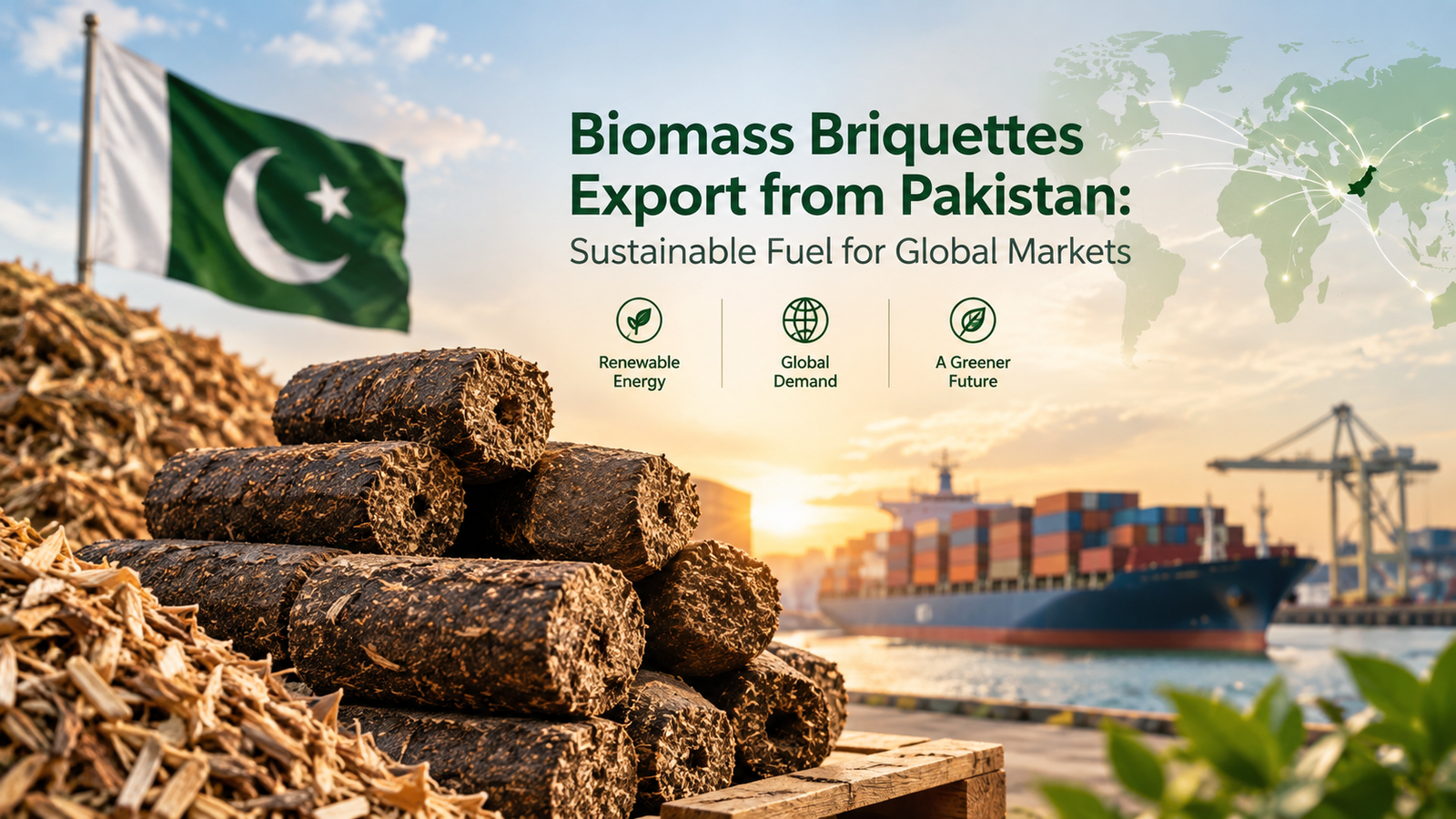
Biomass fuel. Dried cob can be compressed into pellets or briquettes and burned as a renewable alternative to coal or wood. On a dry matter basis, cob yield is around 14% of grain yield, making it a meaningful byproduct volume from any given harvest.
Activated carbon and filtration. Cob can be processed into activated carbon for water purification, air filtration, and gas adsorption applications — an area of active research because converting cob waste into value-added adsorbent materials helps reduce landfill accumulation while providing a renewable alternative to fossil-derived carbon.
Carrier material. Fine-ground cob is used as a neutral carrier for agricultural fertilizers and pesticides, since it’s biodegradable and doesn’t react with most active ingredients.
Not every supplier processes cob to the specification every one of these end-uses requires, so it’s worth being specific with your supplier about which application you’re buying for.
What to Evaluate Before Choosing a Supplier
If you’re a first-time importer or distributor sourcing corn cob from Pakistan, a few practical questions will tell you more than a glossy product sheet will:
Moisture content. This is probably the single biggest quality variable. Cob that isn’t dried properly can mold in transit or degrade before it reaches you, especially on longer sea freight routes. Ask for the moisture percentage at the time of shipment and how it’s measured.
Particle size consistency. If you need a specific mesh or grit size, ask how the supplier screens and grades their output, and whether they can provide a sample batch before a full order.
Contamination control. Cobs sourced from mechanized harvest can pick up soil, stalk fragments, or foreign material. Ask what cleaning or sorting steps are applied before packing.
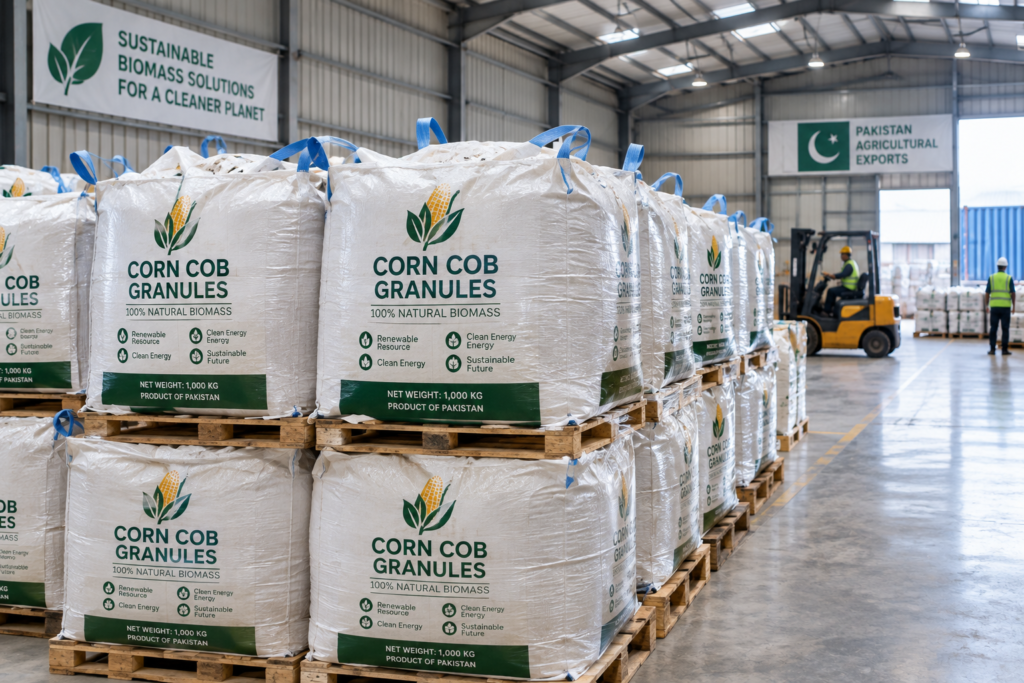
Packaging format. Corn cob is typically shipped in bulk bags, woven polypropylene sacks, or loose in bulk containers depending on volume and end-use. Confirm packaging matches how you intend to handle the material on arrival — bulk bag handling equipment differs from pallet-based sack handling.
Consistency across shipments. For buyers running a continuous production line (bedding manufacturers, blasting media distributors), month-to-month consistency in grade and moisture matters more than a single good sample. Ask about their quality control process across batches, not just for one order.
Communication and sampling. A supplier willing to send physical samples before a commercial order, and who responds clearly to specification questions, is generally a better long-term partner than one who only quotes price.
Export Documentation and Process
Exporting agricultural byproducts from Pakistan follows the country’s standard trade documentation framework. A key document for many international buyers is the Certificate of Origin, which confirms where goods were produced — often required to access preferential tariff treatment under trade agreements. Pakistan has digitized this process: exporters now apply for the Electronic Certificate of Origin through the Pakistan Single Window portal, which integrates with the Trade Development Authority of Pakistan (TDAP) and replaces the need to visit TDAP offices in person, using digital signatures and QR codes in place of physical seals.
For buyers, this means a legitimate exporter should be able to provide a verifiable digital Certificate of Origin rather than a hand-stamped paper document — a good thing to confirm during due diligence, especially if you’re relying on preferential duty rates in your own country.
Agriculture and agro-food exports are a meaningful part of Pakistan’s trade profile more broadly — agro-food exports contribute around 17% of the country’s total exports, supported by 22.1 million hectares of cultivated land across the country’s growing regions. Corn cob sits within this wider agricultural export base as a byproduct commodity rather than a headline export crop, which is part of why sourcing it well depends more on finding a processor who handles it carefully than on any single standardized grading system.
Reducing Risk on Your First Order
A few practical habits reduce avoidable problems when working with a new supplier:
- Request a small sample shipment before committing to full container volumes so that you can verify moisture, grade, and cleanliness on your own equipment
- Get packaging and labeling requirements confirmed in writing, especially if your destination market has specific import labeling rules
- Clarify Incoterms (FOB, CIF, etc.) early, since this affects who is responsible for freight and insurance
- Ask about typical lead time from order confirmation to shipment, particularly around Pakistan’s harvest windows when raw material availability can shift
- Keep communication in writing for specification agreements, so there’s a clear reference point if a shipment doesn’t match what was discussed
None of this eliminates risk, but it shifts the odds meaningfully in your favor compared to ordering on price alone.
FAQ
Is corn cob the same as corn husk?
No. The husk is the leafy outer covering of the corn ear; the cob is the woody core the kernels grow on. They have different densities and different end-uses, and suppliers typically process and sell them separately.
What’s the difference between corn cob grit and corn cob meal?
Grit is coarser and comes primarily from the dense woody ring of the cob, used in blasting and polishing applications. Meal is finer-ground material, more commonly used as a carrier for fertilizers or pesticides, or in some feed and bedding applications.
How is corn cob typically packaged for export?
Depending on volume and buyer requirements, it’s shipped in bulk bags (jumbo bags), woven polypropylene sacks, or as loose bulk cargo in containers. The right format depends on how you plan to handle and store it on arrival.
Does corn cob require special import certifications?
Requirements vary by destination country and end-use. Buyers should check their own country’s import rules for agricultural byproducts, and confirm the exporter can provide standard trade documentation such as a Certificate of Origin and commercial invoice.
Why does moisture content matter so much for corn cob shipments?
Cob that retains too much moisture is prone to mold and degradation during transit, particularly on longer shipping routes. Buyers should always ask for moisture specifications and, where possible, test incoming shipments on arrival.
Can corn cob be sourced year-round from Pakistan?
Supply is tied to the maize harvest cycle, with the main kharif crop harvested in autumn. Suppliers who process and store cob after harvest can typically supply through the year, but it’s worth asking how a given supplier manages inventory between harvest windows.
Sourcing From Pakistan
Corn cob is a straightforward commodity in concept but one where quality control separates a workable supplier relationship from a frustrating one. If you’re evaluating Pakistan-based agricultural suppliers for corn cob or related agricultural products, it’s worth asking direct questions about grading, moisture control, and documentation before committing to a full order — the answers you get will tell you more than any spec sheet. You can reach out directly to discuss your specific volume, grade, and destination requirements.
Turn industry knowledge into a supply conversation.
Contact GreenCore for product availability, specifications, bulk packaging and export support.