
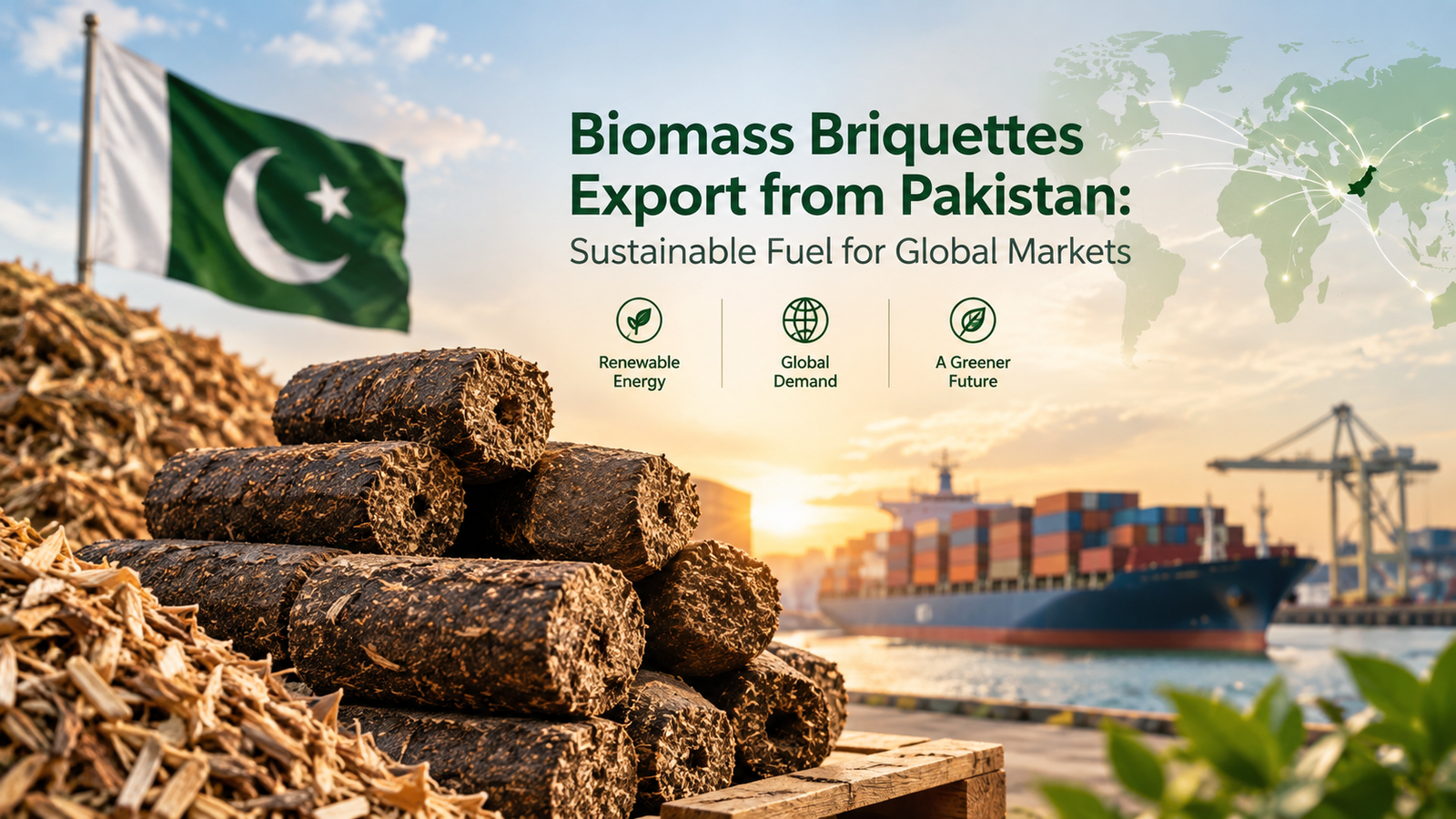
Biomass Briquettes Export from Pakistan: Sustainable Fuel for Global Markets
Buyers researching biomass briquettes from Pakistan are usually trying to solve a specific problem: they need a stable, renewable solid […]
Buyers researching biomass briquettes from Pakistan are usually trying to solve a specific problem: they need a stable, renewable solid […]
Buyers researching biomass briquettes from Pakistan are usually trying to solve a specific problem: they need a stable, renewable solid fuel to replace or supplement coal, and they want to know whether a Pakistani supplier can deliver it reliably, at the right specification, with the paperwork that customs will actually accept. This article walks through what biomass briquettes are, why Biomass Briquettes Export from Pakistan, and what a procurement manager or importer should check before placing an order.
What Biomass Briquettes Actually Are
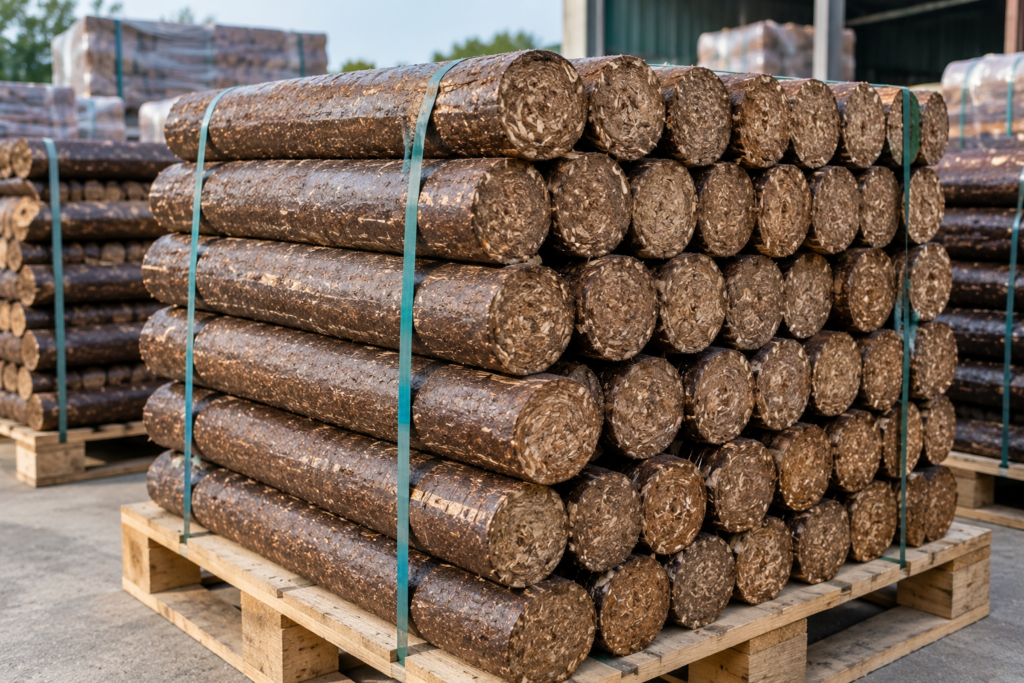
A biomass briquette is compressed agricultural or forestry residue — things like rice husk, sugarcane bagasse, cotton stalks, groundnut shells, or sawdust — pressed under high pressure into a dense block or cylinder, usually without added chemical binders. The industry association Bioenergy Europe describes briquettes as cubiform, prismatic, or cylindrical units, generally more than 25 mm in diameter, made by compressing milled biomass so that the raw material’s natural binders hold the shape together. That density is the whole point: loose husk or straw is bulky, inconsistent, and expensive to transport, while a briquette packs the same energy into a fraction of the volume and burns far more predictably.
This matters for buyers because two briquettes that look identical can behave very differently in a boiler if the moisture content, ash content, or raw material mix isn’t controlled. A batch with high moisture won’t reach full combustion temperature; a batch with high mineral content leaves more ash and can clog feed systems. None of this is visible from a photograph, which is why specification sheets and third-party testing matter more than marketing claims when you’re sourcing at container volumes.
Why Pakistan Is Relevant as a Sourcing Country
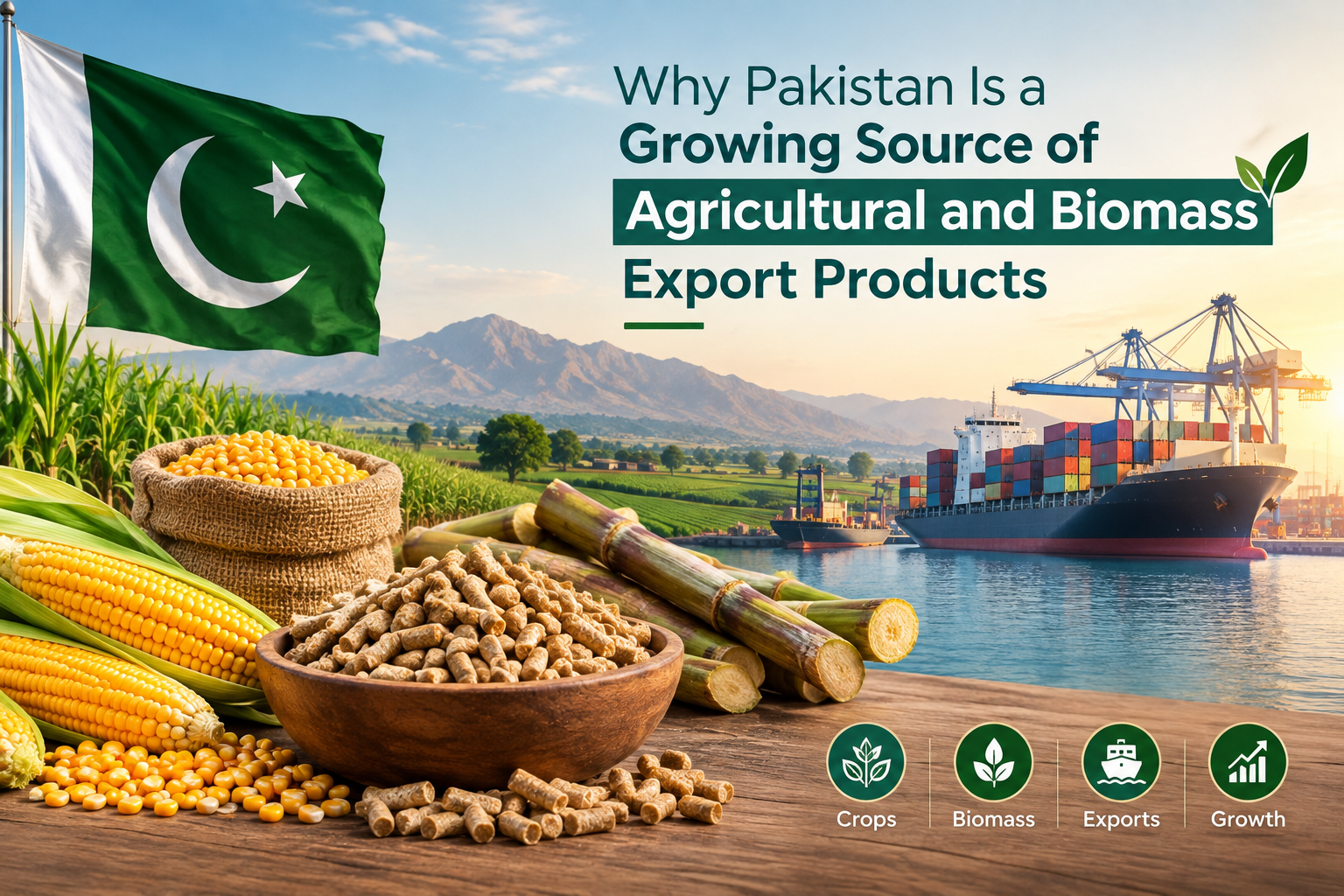
Pakistan is a large agricultural economy, and that agriculture generates significant volumes of residue every year — rice husk from the paddy belt, cotton stalks and ginning waste from the cotton zones, sugarcane bagasse from the sugar mills, and wheat straw after harvest. Historically, much of this residue was burned in the field, left to rot, or used inefficiently as low-grade fuel. Converting it into briquettes gives it a second economic life and reduces the open burning that contributes to seasonal air quality problems in parts of the country.
For overseas buyers, this residue base is the actual reason Pakistan shows up as a sourcing option at all — briquette production only makes commercial sense where there’s a steady, low-cost stream of raw material nearby, because feedstock and transport are the biggest cost components in the finished price. A briquette plant built near a rice-processing cluster, for example, has a very different cost structure than one that has to truck in husk from hundreds of kilometers away. That difference shows up directly in the FOB price a supplier can offer.
What Buyers Are Actually Trying to Confirm
Most people researching this topic aren’t looking for a definition of biomass energy — they already know they want a solid fuel alternative to coal or firewood. What they need to confirm before committing to a supplier is more practical:
Raw material and consistency: Ask exactly which residues go into the briquette, and whether the mix is fixed batch to batch or varies with whatever is cheapest that month. A supplier who can name the feedstock and hold it consistent is easier to plan around than one who blends opportunistically.
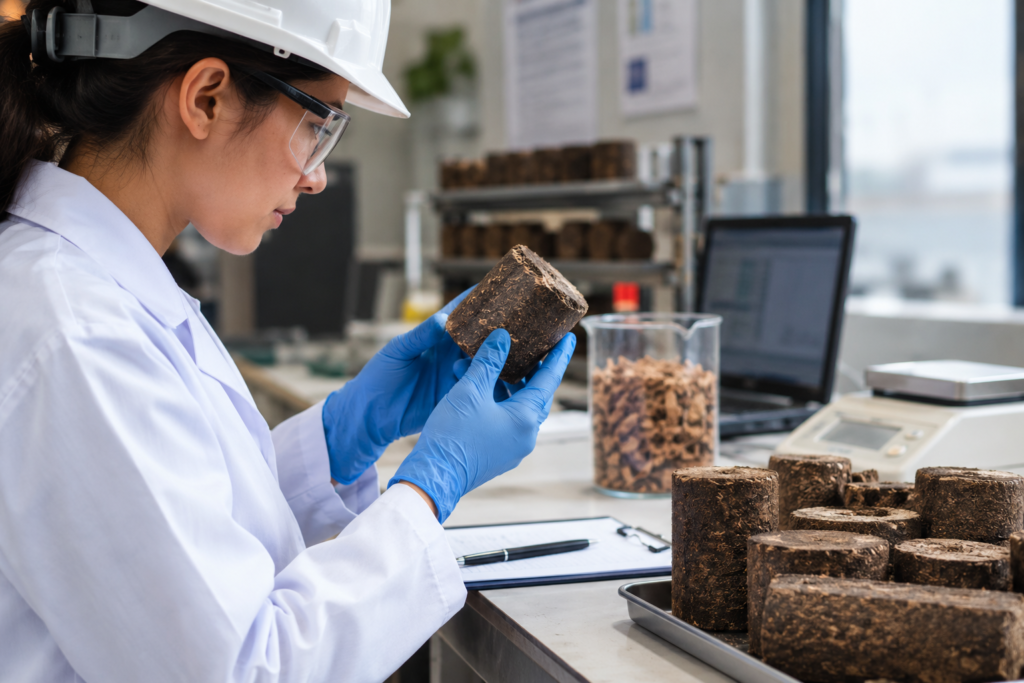
Calorific value and moisture: These two figures drive how much fuel you actually need to deliver a given amount of heat. Ask for a lab test report rather than a number on a brochure, and ask when the sample was tested — biomass moisture drifts with storage conditions and season.
Binder-free compression: Since briquettes are usually held together mechanically rather than chemically, ask how the supplier prevents crumbling during a multi-week sea voyage. Briquettes that arrive as a bag of fines instead of intact blocks are a real and common complaint in this trade.
Packaging and container loading: Loose bulk, woven bags, or shrink-wrapped pallets all behave differently in a container over a long transit, especially with humidity changes. Let’s discuss this before the first order, not after a damaged shipment.
Documentation: Export shipments from Pakistan move through the government’s digital trade platform, Pakistan Single Window, which consolidates customs declarations and regulatory approvals into a single electronic filing rather than separate paper submissions to each agency. Buyers don’t file this themselves, but it’s reasonable to ask a supplier whether they’re set up on PSW, since it affects how smoothly documentation moves.
How Biomass Briquettes Are Classified for Customs
Solid biofuels made from compressed wood waste, sawdust, or similar residues generally fall under Chapter 44 of the Harmonized System, in the 4401 series covering fuel wood, wood chips, and agglomerated wood waste. Briquettes made specifically from wood or sawdust residue typically sit under the wood-briquette subheading within that chapter. Agricultural-residue briquettes made from non-wood material such as rice husk or bagasse can sometimes be classified differently depending on composition and the importing country’s own tariff schedule, so the exact code should always be confirmed with the shipper’s customs broker or the buyer’s own import authority rather than assumed from a general reference — HS interpretation is one of the areas where getting it wrong causes real delays at the port.
Where Daa Agri Fits Into This
Daa Agri Limited works within Pakistan’s agricultural export space, and biomass briquettes sit naturally alongside that focus — the same residue streams that feed agri-processing are the ones that feed briquette production. For a buyer evaluating suppliers, the practical takeaway is the same regardless of which company you’re talking to: ask for verified specifications, ask for a sample before committing to a container-size order, and confirm documentation readiness before you assume a shipment date.
If you’re comparing suppliers and want to understand what’s currently available, the most direct way to get accurate, current answers — pricing, minimum order quantities, lead times, and packaging options — is to raise your specific requirements directly rather than relying on generic product pages, since these details change with feedstock season and order volume. You can reach the Daa Agri team through their contact page to discuss a specification against your own boiler or furnace requirements.
Frequently Asked Questions
Are biomass briquettes the same as wood pellets?
No. Pellets are smaller, more uniform, and produced through a different extrusion process, usually from finely ground sawdust. Briquettes are larger, denser, and can be made from a wider range of coarser residues, which generally makes them cheaper to produce but slightly less uniform than pellets.
Can biomass briquettes fully replace coal in an industrial boiler?
In many cases, briquettes can substitute for coal or be co-fired alongside it. Still, the exact ratio depends on the boiler design and the briquette’s calorific value and ash behavior. Please confirm this with your boiler manufacturer or an energy engineer rather than assuming a one-to-one swap.
What causes biomass briquettes to break apart during shipping?
The most common causes are excess moisture absorbed during storage, insufficient compression density at the point of manufacture, and rough handling during loading. Asking a supplier for their moisture control and compression specifications before ordering reduces this risk.
Do biomass briquettes require any certification to be imported?
Requirements vary by destination country and by end use (industrial fuel versus residential heating, for example). There’s no single global certification that applies everywhere, so buyers should check their own country’s import and biofuel regulations rather than assume a certificate obtained for one market automatically satisfies another.
How is the price of biomass briquettes usually determined?
Feedstock availability, moisture content, calorific value, packaging, and shipping distance are the main variables. Because raw material supply is seasonal in agricultural residue markets, pricing can shift over the year, which is why it’s worth requesting a current quote rather than relying on older published figures.
A Practical Starting Point
Biomass briquettes are a genuinely useful fuel category for buyers trying to reduce coal dependence without a complete equipment overhaul, but the category only delivers on that promise when the specification is verified rather than assumed. Before signing off on a supplier, get a lab-tested sample, confirm the HS classification with your own customs broker, and ask direct questions about feedstock consistency and packaging.
If you’re evaluating Pakistan as a sourcing origin for an upcoming fuel program, Daa Agri Limited is a reasonable starting point to compare specifications against — reach out through their contact page with your boiler requirements and target volume, and you’ll get a clearer picture of what’s realistically available for your timeline.
Turn industry knowledge into a supply conversation.
Contact GreenCore for product availability, specifications, bulk packaging and export support.