
Bio-Coal Export from Pakistan: What International Buyers Should Check Before They Order
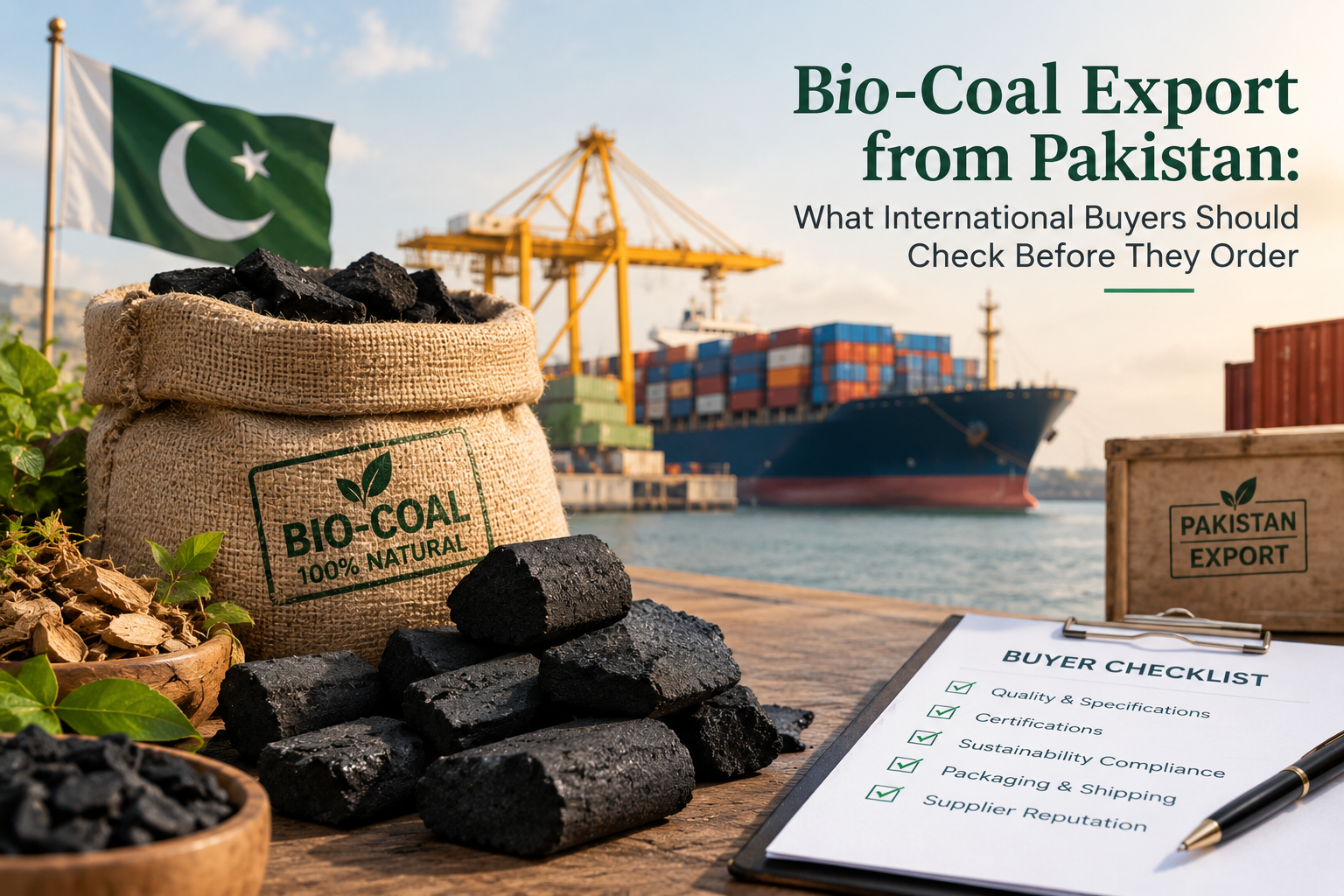
A shipment of “bio-coal” can mean three different products depending on who is selling it. It might be a plain […]
A shipment of “bio-coal” can mean three different products depending on who is selling it. It might be a plain […]
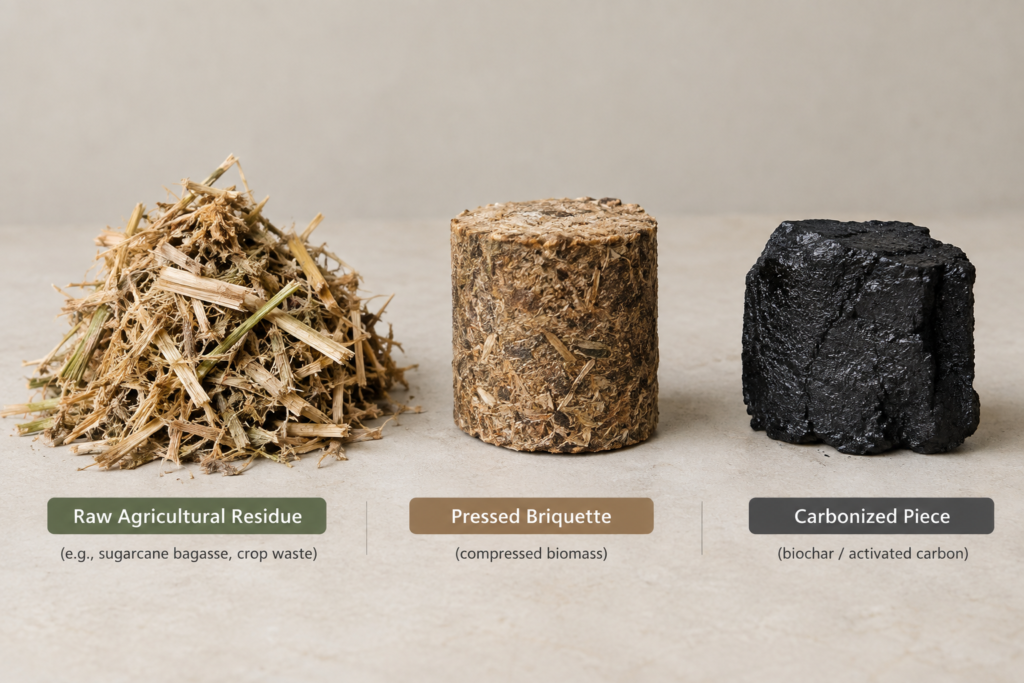
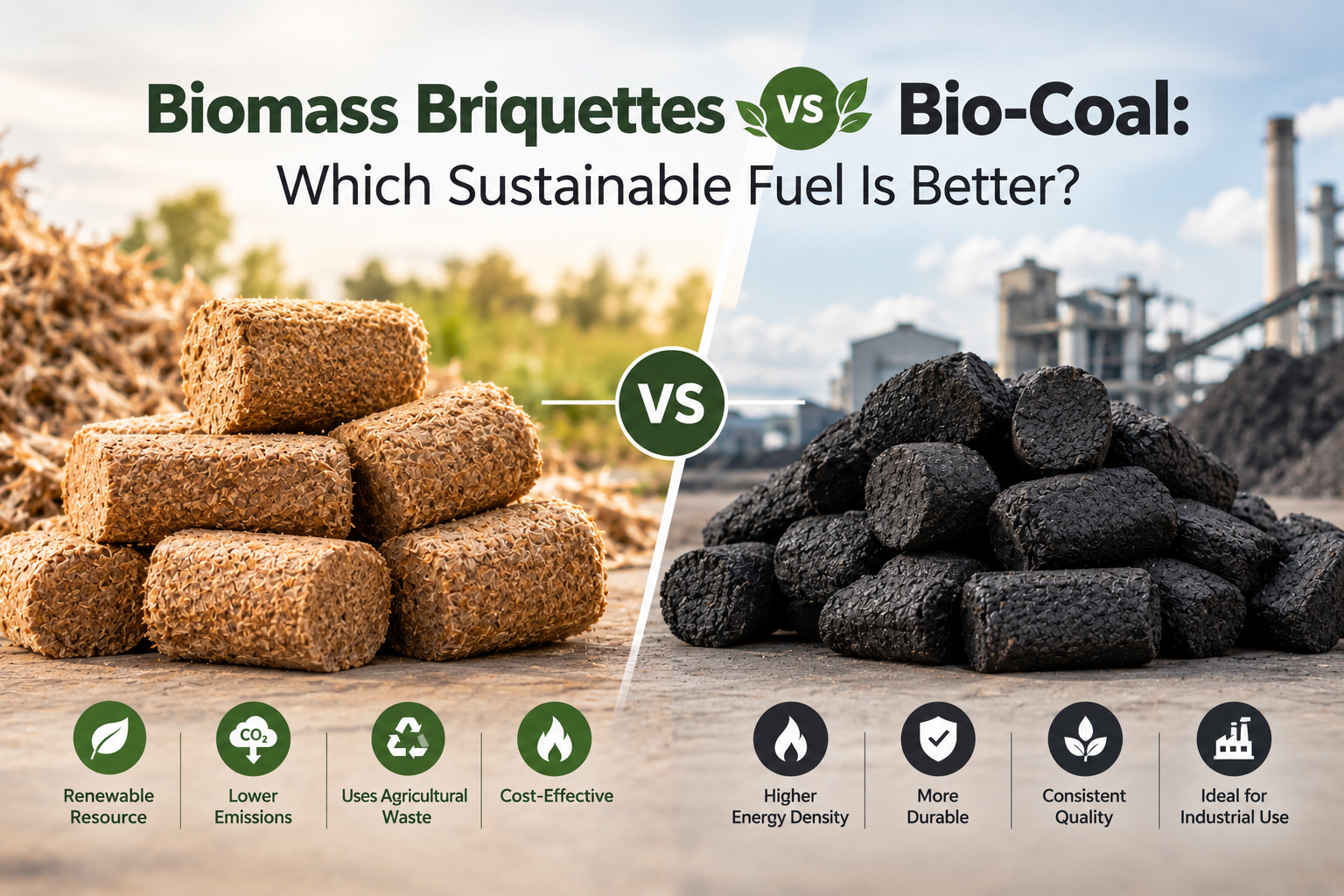
A shipment of “bio-coal” can mean three different products depending on who is selling it. It might be a plain briquette pressed from crop residue. It might be a pellet that has been heat-treated first. It might be a dense carbonized fuel. They burn differently, store differently and cost different amounts. Many purchase orders go wrong at exactly this point, so the sections below start there.
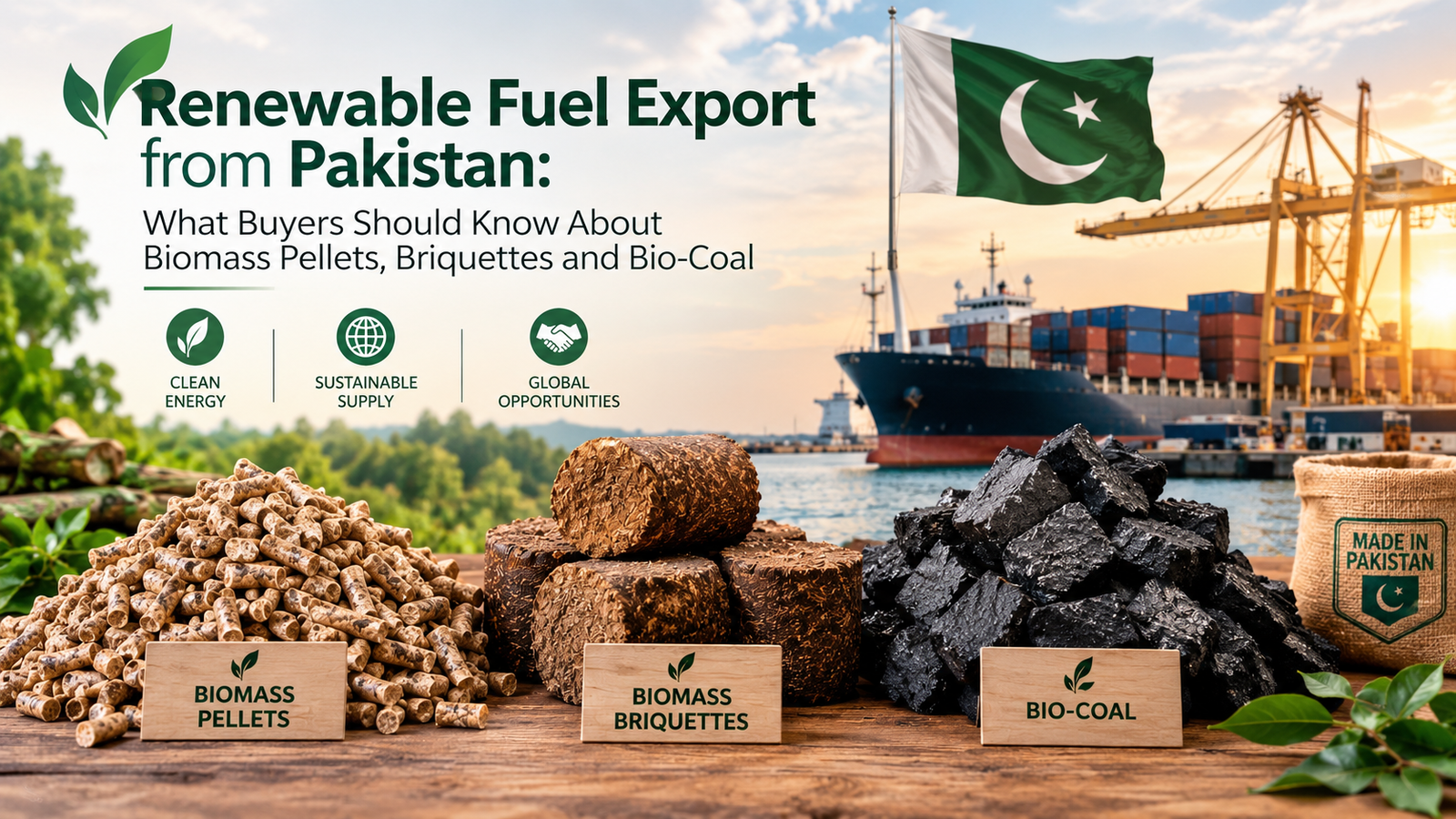
Pakistan is a plausible origin for this kind of fuel. A peer-reviewed assessment of the country’s biomass energy prospects counts corn stalk, sugarcane trash, rice straw, wheat straw and cotton stalks among its major crop residues. It puts their annual output at anywhere from about 6 million tonnes (corn stalk) to over 50 million tonnes (cotton stalks). Cheap feedstock does not make a good fuel, though. What matters is whether a particular supplier can turn it into something consistent that survives a sea voyage and meets your boiler’s needs.
What “bio-coal” actually means
There is no single trade definition. In practice, the term covers solid fuels made from biomass that are meant to stand in for, or be blended with, fossil coal.
Some suppliers use it for ordinary briquettes made of agricultural residue. Others mean a thermally treated product. Research literature describes several routes: pyrolysis of agro-food by-products and hydrothermal carbonization. The pyrolysis study found that heat treatment raised energy density substantially. In its tests, spruce wood reached about 31.6 MJ/kg and spent coffee grounds about 31.3 MJ/kg, at different optimal temperatures. Separate laboratory work on hydrothermally carbonized palm shell reached a heating value of 27.9 MJ/kg, which the authors compare to high-volatile bituminous coal.
These are lab results on specific feedstocks. A supplier’s product will not necessarily match them, which is why the specification sheet matters more than the product name.
What Pakistani suppliers can offer
Daa Agri Limited is one Pakistan-based exporter working in this space. According to its company profile, it sources, processes and exports agricultural by-products, with a core focus on corn cob and sugarcane-derived residues. Its product range lists biomass sawdust, biomass briquettes, biomass pellets and bio-coal alongside corn cob products. The homepage describes its bio-coal as high-density carbonized biomass positioned as a cleaner alternative to coal.
The site also mentions moisture checks, sorting and contamination control before export, and packing in PP bags or jumbo bags for international shipping. The published pages do not state calorific values, ash limits, minimum order quantities, certifications or lead times. A serious buyer should ask for those in writing before ordering, from this supplier or any other.
The specifications that decide whether a fuel works
Ask for a certificate of analysis from an independent laboratory, not only a brochure. These are the parameters to look for:
- Calorific value. This is the energy content per kilogram. Ask whether it is quoted on an as-received or dry basis, because the two differ.
- Moisture. Moisture lowers usable energy, raises freight cost per unit of heat, and can promote mold in storage.
- Ash content and ash melting behavior. Crop residues tend to be ashier than wood. Ash that softens at low temperatures can foul boilers.
- Mechanical durability and fines. Pellets and briquettes that crumble in transit arrive as dust and cause handling problems.
- Size and bulk density. These affect feeding systems, storage volume and freight economics.
- Chlorine, sulfur and nitrogen. These influence corrosion and emissions, and some plants have limits on them.
- Feedstock declaration. The supplier should state exactly what the fuel is made from, and whether any binder or chemically treated material is present.
A common language for this already exists. The ISO 17225 series sets classification principles for solid biofuels. According to FAO’s wood energy portal, its aim is to make trading easier and to help buyers and sellers understand each other. Different parts cover different products. ISO 17225-6 applies to non-woody pellets and ISO 17225-7 to non-woody briquettes. Thermally treated, densified fuels fall under ISO/TS 17225-8, which is a technical specification. The wood pellet and wood briquette parts explicitly exclude thermally treated products, so it is worth asking which part a supplier’s figures refer to. Asking for test results measured to these methods is a reasonable way to compare offers.
Sampling and inspection
Approve a sample before you approve a contract, and keep a retained sample from what you approved. A shipment that tests differently from the sample is far easier to dispute when you can show what you agreed to.
For larger orders, many buyers arrange independent inspection at loading and lab testing of the loaded batch, agreed in the contract along with tolerances and what happens if the results fall outside them. Ask how the supplier controls moisture between production and loading. Fuel that is fine at the factory can pick up water during storage or port transit, especially in monsoon months.
Packaging and shipping
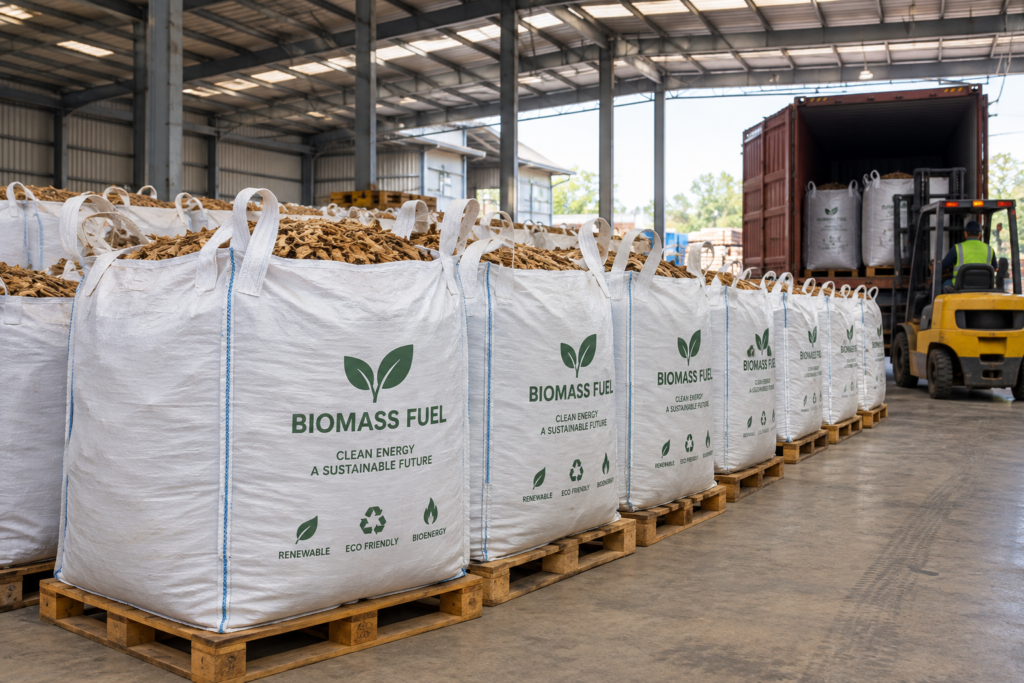
Bulk fuel is usually shipped in jumbo bags, standard woven bags or, for very large volumes, loose in bulk. Bags protect against handling loss but add cost. Bulk is cheaper per tonne but demands more from the port and the receiving site. Ask what the supplier’s packaging protects against: moisture, breakage, or both.
Also confirm early how the cargo is classified for shipping. Some carbonized and heat-treated biomass can self-heat, and carriers may ask for specific information about the material. Get the supplier’s answer, and your freight forwarder’s, before you commit to a schedule.
Export paperwork on the Pakistan side
Pakistani exporters file customs declarations electronically. The Single Declaration Export module of the Pakistan Single Window is designed so that traders submit information once and it is routed to Customs and to any other agency whose action is needed. The exact requirements depend on the commodity and destination, so ask the supplier which agencies review your product and which documents will accompany the shipment. Typical paperwork includes a commercial invoice, packing list and certificate of origin, and your destination country may require more.
Rules in the destination market
Sustainability requirements can matter as much as fuel quality, particularly for European buyers. The EU’s Renewable Energy Directive attaches sustainability and greenhouse-gas criteria to biomass fuels, as set out in Commission guidance on biomass under EU rules. Whether these apply to you depends on your installation, the scheme you report under, and your national rules. Agricultural residues are treated differently from other feedstocks. If you are buying for a regulated plant, check with your compliance team or a certification body whether you need documented feedstock traceability, and ask the supplier whether it can provide it.
For markets outside the EU, the rules vary widely. Confirm import conditions, plant health or fumigation requirements, and any fuel-quality limits with the relevant authority in your country before you place an order.
Questions to put to any supplier
- Which feedstock is used, and is it the same in every batch?
- Can you provide an independent lab report, and to which ISO methods?
- What are the guaranteed limits for moisture, ash and calorific value, and what happens if a shipment falls outside them?
- How is the product stored and packed, and how long is it held before loading?
- Can you supply a sample, and will you accept third-party inspection?
- Which documents accompany the shipment, and can you support the sustainability documentation my market requires?
Vague or evasive answers to these are informative in themselves.
Frequently asked questions
Is bio-coal the same as biomass briquettes or pellets?
Not always. Briquettes and pellets are shapes. Bio-coal usually implies a fuel meant to replace coal, and often a heat-treated one, but suppliers use the word loosely. Ask for the process and the test results.
Can bio-coal replace coal completely?
Sometimes, and often only partly. Many plants blend biomass with coal because their equipment is designed for coal’s ash and combustion behavior. Test with your own boiler or kiln operator before committing to volume.
What should a buyer ask for first?
A sample and a laboratory certificate of analysis for that sample. These tell you far more than a price list.
Does a buyer need special certification to import biomass fuel?
It depends on the destination country and the end use. Some markets, especially in the EU, attach sustainability requirements for regulated installations. Others mainly check customs and plant-health documents. Confirm locally.
Which Pakistani crops supply the residues?
Studies list wheat, rice, corn, sugarcane and cotton residues among the main sources. Daa Agri Limited’s own materials emphasize corn cob and sugarcane-derived residues.
Getting started
If you are comparing origins, start with a written specification and a sample. Daa Agri Limited invites buyers to share product type, quantity, destination and packaging needs through its About page, and you can browse its biomass and bio-coal listings first to see what is on offer.
Turn industry knowledge into a supply conversation.
Contact GreenCore for product availability, specifications, bulk packaging and export support.