
Biomass Pellets Export from Pakistan: Quality, Uses & Global Demand
A biomass pellet order can go wrong before the cargo leaves port. The seller says “premium pellets,” the buyer’s boiler […]
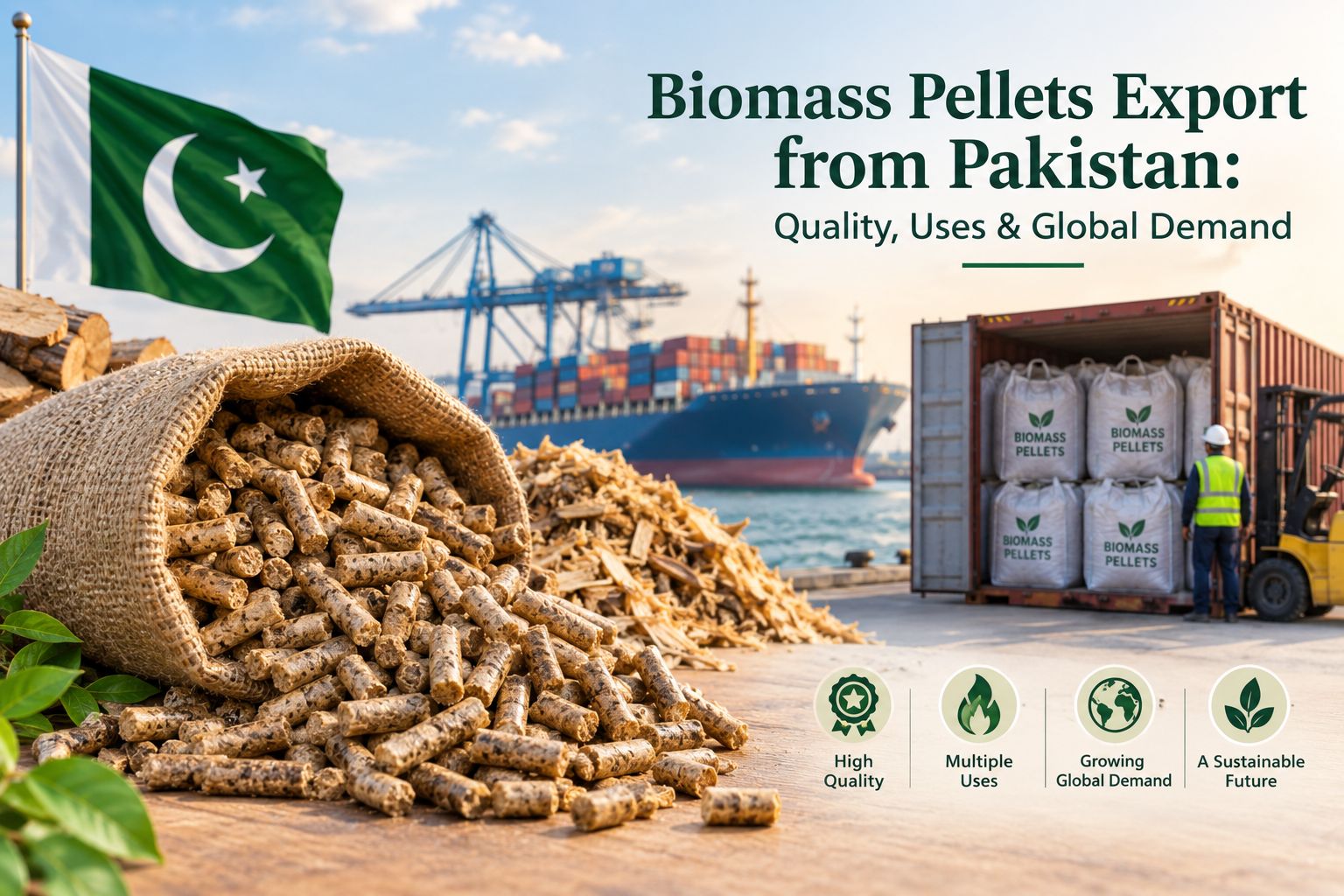
A biomass pellet order can go wrong before the cargo leaves port. The seller says “premium pellets,” the buyer’s boiler […]
A biomass pellet order can go wrong before the cargo leaves port. The seller says “premium pellets,” the buyer’s boiler expects a very different fuel, and nobody wrote the difference into the contract. Most disputes in this trade come from unclear specifications, not from bad intent.
This guide is for buyers looking at biomass pellets export from Pakistan. It covers what the product is, which quality numbers to fix in writing, where demand comes from, and what the export paperwork involves.
What “Biomass Pellets” Actually Means in a Purchase Order
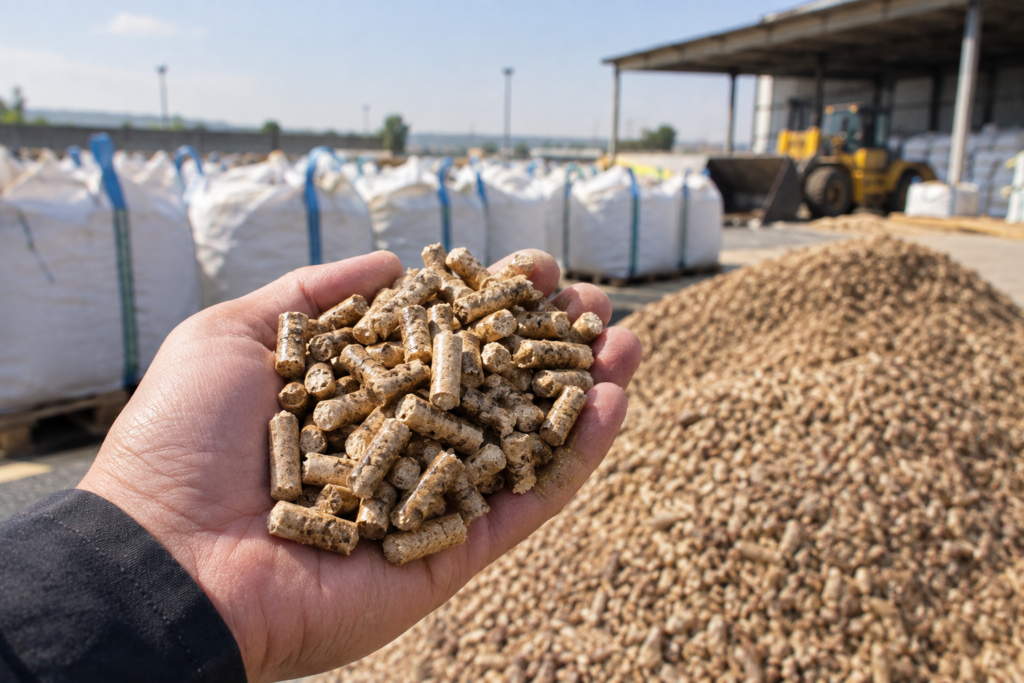
Biomass pellets are small cylinders made by drying and grinding organic material, then compressing it, usually without a chemical binder. What matters is the raw material, and that splits the market in two.
Wood pellets come from sawdust, shavings and other woody residues. This is the category most people picture when they search for wood biomass pellets, and it has the most mature buyer base worldwide.
Non-woody (agricultural) pellets come from crop residues such as straw, husks, cobs and sugarcane fibre. They burn differently. They generally carry more ash and more chlorine, nitrogen and sulphur than clean wood. That is why the international fuel standards treat them separately: ISO 17225-2 covers graded wood pellets, while ISO 17225-6 covers graded non-woody pellets, including those from herbaceous material and cereal by-products.
This matters when you shortlist a supplier. A boiler built for premium wood pellets may not tolerate a high-ash agricultural pellet. If a quote says “biomass pellets,” ask which raw material and which standard the product is measured against.
Why Pakistan Is Worth Considering as a Source
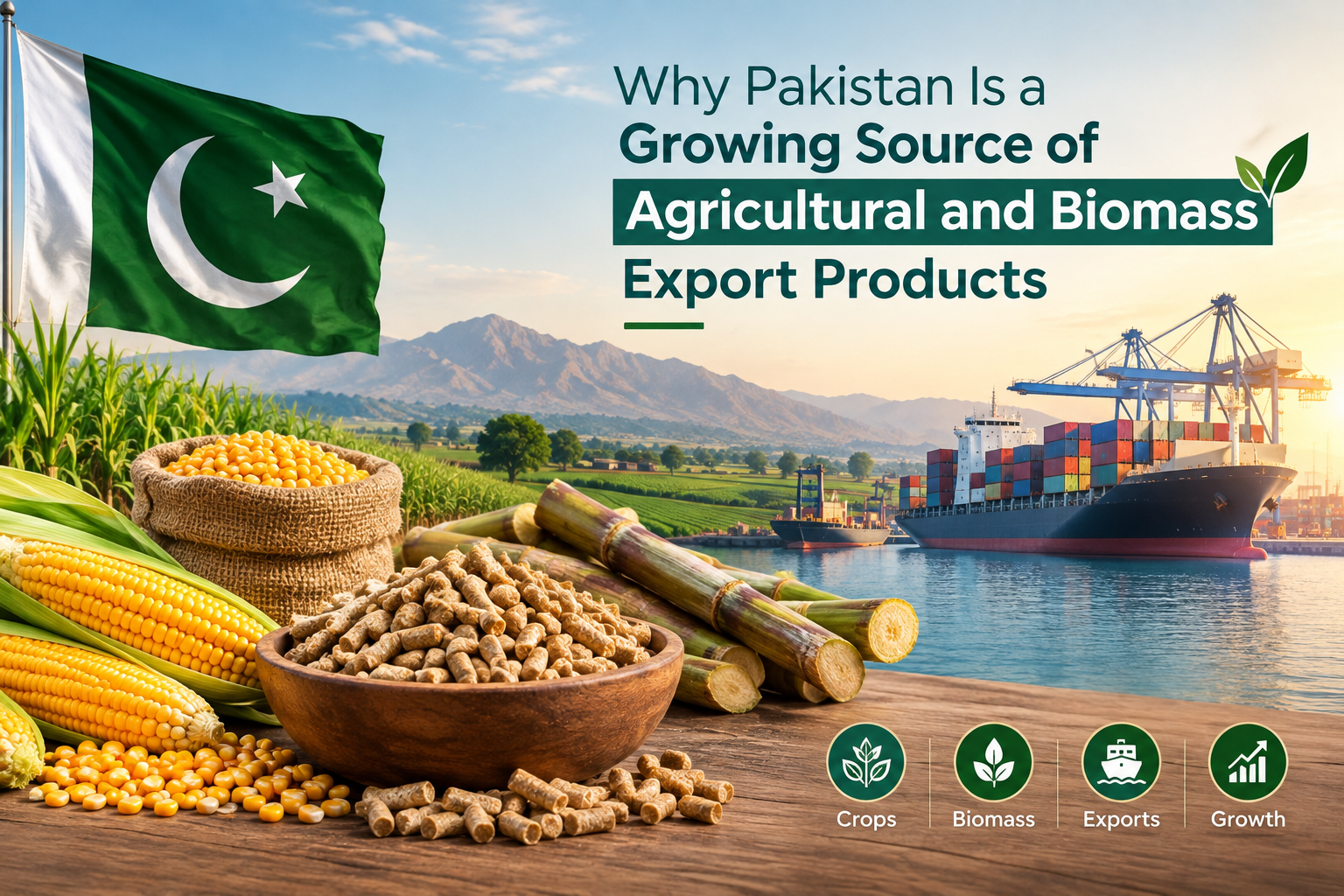
Pakistan grows a lot of sugarcane, maize, wheat and rice, and each crop leaves residue behind. Corn cobs, bagasse and other farm by-products are cheap feedstock for densified fuel, which is why the country appears in sourcing conversations for agricultural pellets rather than only wood pellets.
Daa Agri Limited, a Pakistan-based processing and export company, describes its core focus as corn cob and sugarcane-derived residues. It also lists compressed biomass pellets for industrial and commercial energy use among its products. Its site describes sourcing through Punjab, cleaning and drying, moisture checks and containerised export handling. As with any supplier, buyers should ask for the actual specification sheet for a given pellet type. A product listing is not the same as a lab report.
The Quality Specifications That Decide Whether a Shipment Works
Ask a supplier for figures on each of these, ideally from an independent laboratory test on the product you will actually receive.
- Moisture content. Wet pellets lose heating value, crumble more easily and can degrade in storage.
- Ash content. Ash affects boiler cleaning and slagging. Agricultural pellets usually sit higher than premium wood pellets.
- Net calorific value. This is the energy you are paying for, so compare it on the same basis across quotes.
- Diameter and length. Feeding systems are designed around a specific size.
- Mechanical durability and fines. Pellets break down during loading, shipping and handling. Excess dust wastes fuel and creates housekeeping problems.
- Chlorine, nitrogen and sulphur. These drive corrosion and emissions, and matter most for agricultural feedstocks.
- Raw material and additives. The ISO 17225 series is meant to give sellers and buyers a shared language for classifying solid biofuels. Stating the origin of the material is part of that approach, and so is declaring any chemically treated content.
One practical tip: write the test method, the testing laboratory and the sampling point (at loading or at discharge) into the contract. A number without a method behind it is easy to dispute.
Where Exported Biomass Pellets End Up
Buyers use pellets in a few main ways:
- Industrial boilers and process heat, for factories that want to reduce coal or fuel-oil use.
- Power generation, either co-fired with coal or burned alone in converted plants.
- Commercial and residential heating, where fuel standards tend to be strictest.
- Niche uses, such as animal bedding, depending on the material.
On the demand side, Asia has been a major growth area. An industry analysis of wood pellet imports into Japan and South Korea notes that both markets remain important for large producers even as questions about environmental footprint continue. Research on South Korea’s import allocation suggests that source countries gain or lose share depending on price and on changes in the renewable portfolio standard. In short, policy moves demand, and demand can shift when policy shifts.
Sustainability paperwork is the other side of this. Buyers in regulated markets, particularly subsidised ones, may ask for proof of where the biomass came from and how it was produced. Confirm the requirements in your destination country before you commit to a supplier, because they vary and change.
The Export Side: Paperwork From Pakistan
Anyone exporting from Pakistan has to register as a trader on the Pakistan Single Window. According to the Pakistan Trade Facilitation Portal, that registration is mandatory, and the bank-issued financial instrument (Form E) is generally required for each consignment. Pakistan’s Single Window platform brings customs and other government agencies onto one digital system.
Where a certificate of origin is needed, TDAP issues them electronically through the Single Window. Exporters share these with overseas buyers for customs clearance, and they are tied to the rules of origin of the relevant trade arrangement.
The exact document set depends on the commodity, HS code and destination. Ask your supplier to list every document they will issue and every one you will need to arrange at your end. Commercial invoice, packing list and bill of lading are typical starting points, but do not assume that list is complete.
Packaging, Loading and Shipping
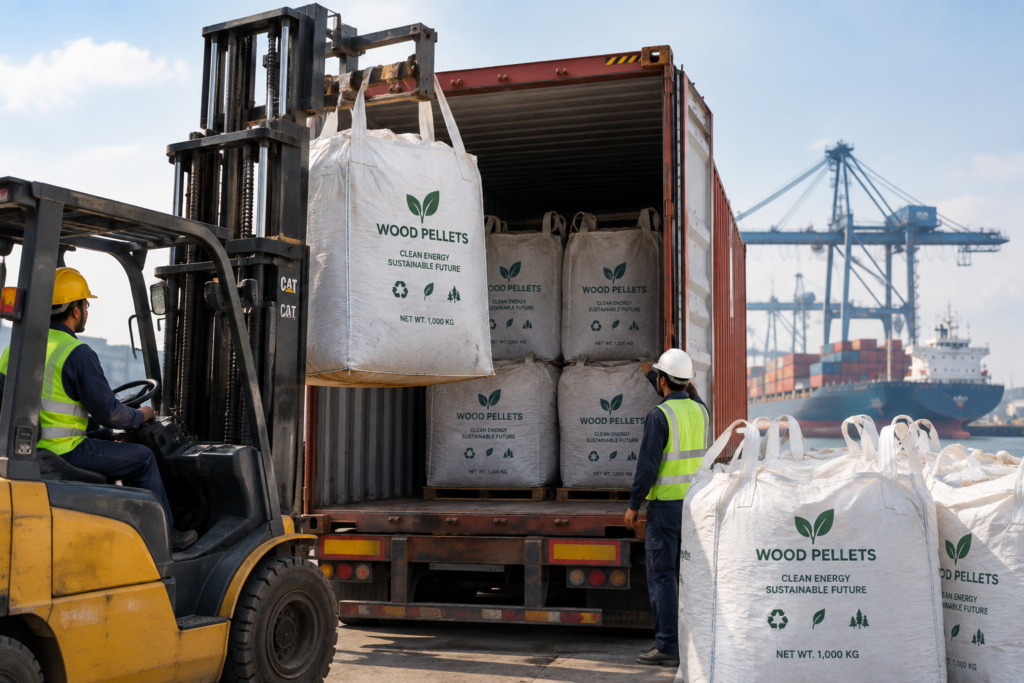
Pellets are sensitive to moisture and rough handling, so packaging and storage are part of quality, not an afterthought. Daa Agri‘s site describes PP bags and jumbo bags with containerised export handling. Confirm with any supplier:
- bag type and weight, and whether liners are used
- whether cargo is loaded into containers or shipped in bulk
- how pellets are protected from condensation in transit
- who arranges the pre-shipment inspection
Also agree on what happens if pellets arrive with excessive fines or above the agreed moisture limit. A short clause on rejection, re-testing and remedy avoids arguments later.
How to Vet a Biomass Pellet Exporter
Every supplier can say “high quality.” Ask questions that need specific answers:
- Which raw material is each pellet grade made from?
- Which standard, if any, is the product tested against?
- Can I see a recent third-party test report, and can I arrange my own sampling?
- How much can you supply per month, and how consistent is the feedstock across seasons?
- Which documents come with each shipment?
- What are your payment terms, and what does the delivery schedule look like?
Start with a sample or a trial shipment before scaling up. Treat any supplier who avoids specifics as a warning sign.
Where Daa Agri Fits
Daa Agri Limited works with agricultural by-products and lists biomass pellets, briquettes, sawdust and bio-coal alongside its corn cob and sugarcane residue lines in its product range. Buyers who need a specific pellet grade, quantity or packaging format can share those requirements with the team and ask for the matching specification. The company’s About page outlines how it describes its sourcing, processing and buyer support.
Frequently Asked Questions
Are wood biomass pellets and agricultural pellets interchangeable?
Not always. They differ in ash, chlorine and other properties, and equipment is often designed for one or the other. Check your boiler manufacturer’s fuel requirements first.
What standard should I ask a biomass pellet supplier to follow?
ISO 17225-2 is the reference for graded wood pellets and ISO 17225-6 for graded non-woody pellets. Ask which one applies and request test results against it.
What documents does a Pakistani exporter need?
Registration on the Pakistan Single Window is mandatory, and certificates of origin can be issued through TDAP where required. Other documents depend on the product and destination, so confirm the full list with your supplier and freight forwarder.
How do I check quality before a large order?
Request a sample, have it tested at an independent laboratory, and agree in writing on the test method and the point at which sampling happens.
Is demand for biomass pellets growing?
It has grown in several regions, particularly in Japan and South Korea, but demand depends on government policy and sustainability rules, which can change.
Final Thoughts
Good biomass pellet sourcing comes down to specifications, documentation and a supplier willing to put both in writing. If you are comparing options for a biomass pellet program, you can review the products on the Daa Agri website and send your requirements to the team to discuss quantities, packaging and destination.
Turn industry knowledge into a supply conversation.
Contact GreenCore for product availability, specifications, bulk packaging and export support.