
Biomass Fuel Export from Pakistan: Pellets, Briquettes & Bio-Coal Explained
Ask three biomass suppliers for a quote, and you may get three different product names: pellets, briquettes and “bio-coal”. The […]
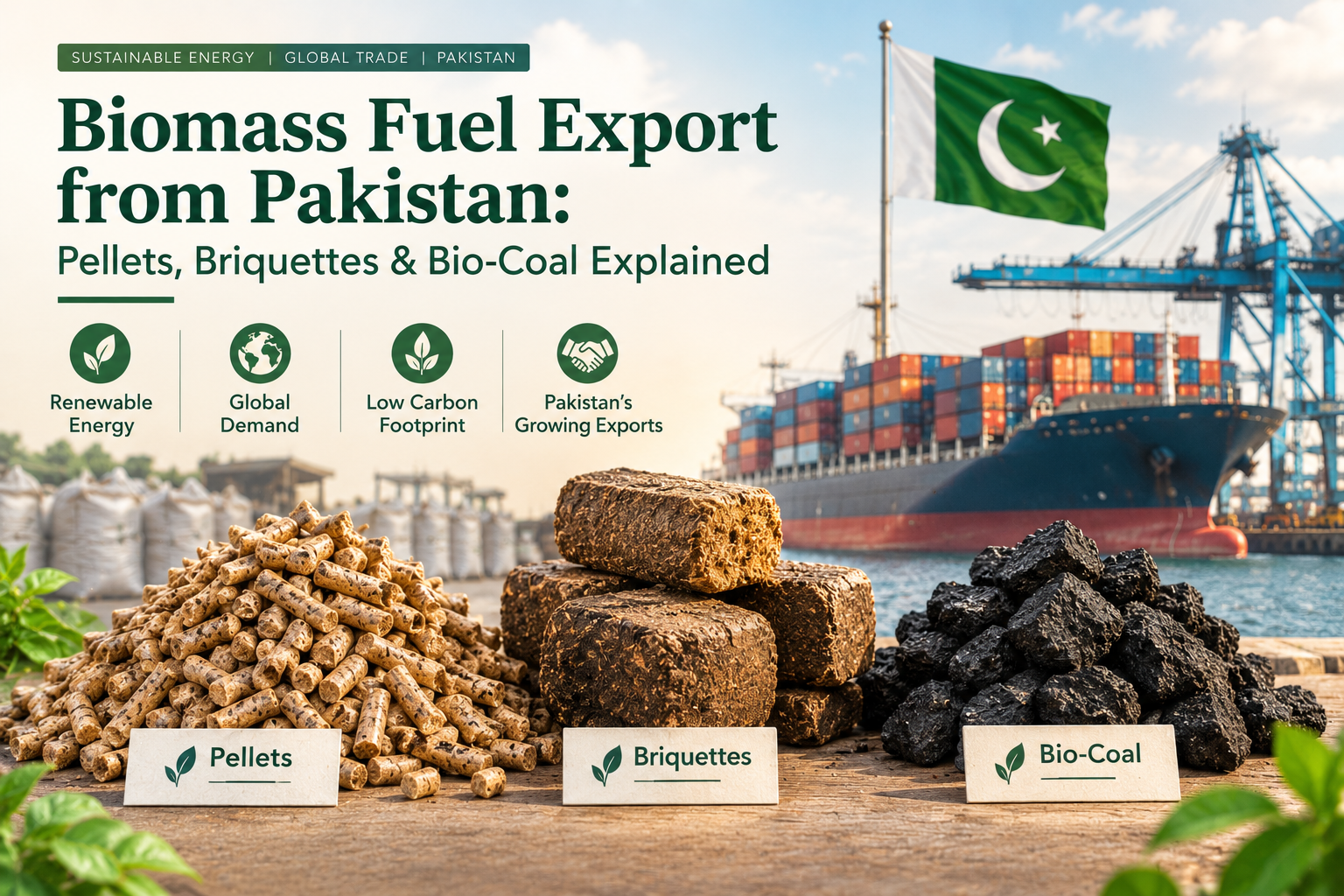
Ask three biomass suppliers for a quote, and you may get three different product names: pellets, briquettes and “bio-coal”. The […]
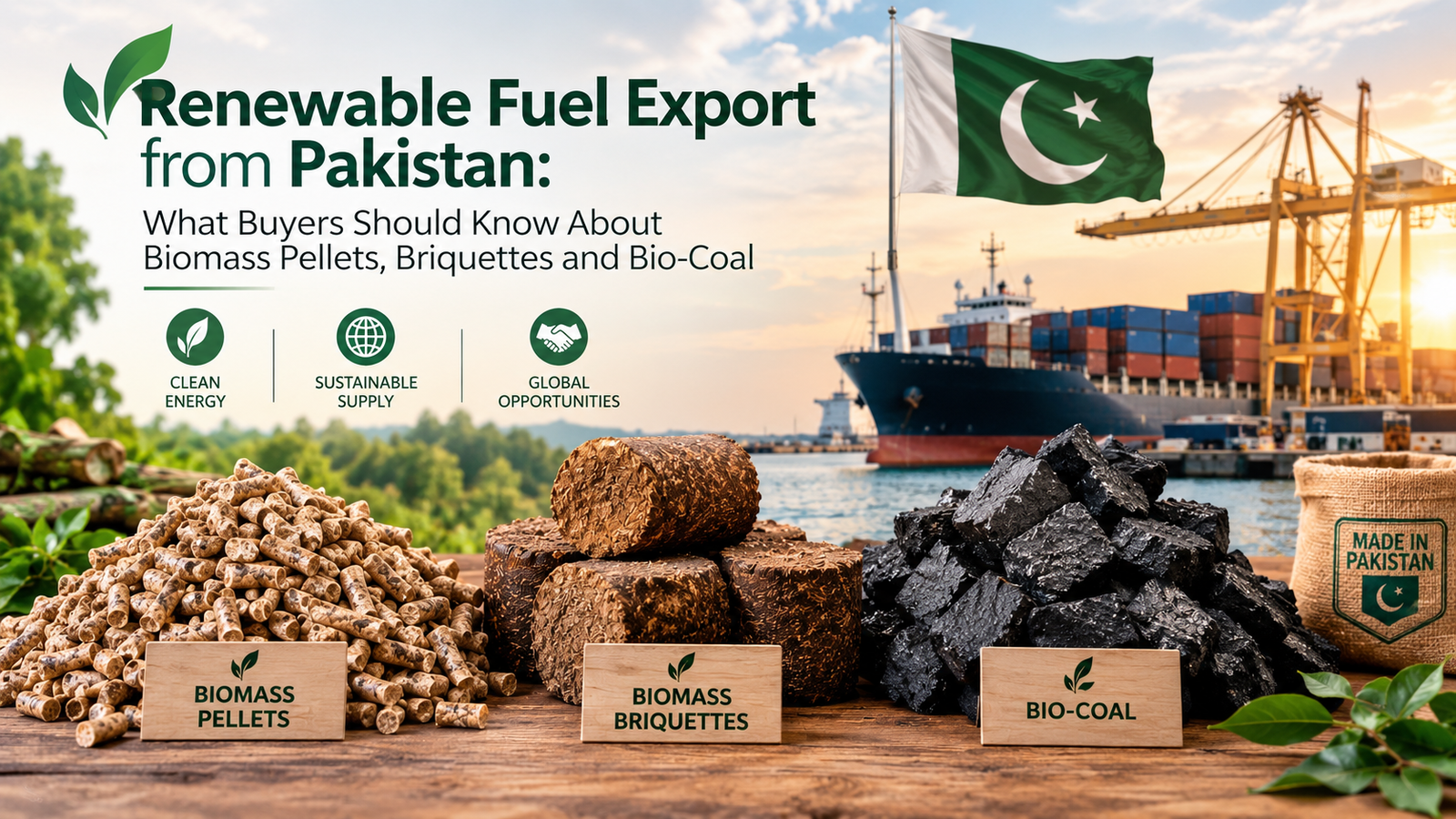
Ask three biomass suppliers for a quote, and you may get three different product names: pellets, briquettes and “bio-coal”. The prices won’t line up, and neither will the specifications. Before comparing offers, it helps to know what each product is, how it behaves in a boiler, and what has to happen before a container leaves a Pakistani port. This guide covers those three things for buyers looking at biomass fuel export from Pakistan.
Why buyers look at Pakistan for biomass fuel
Pakistan grows wheat, rice, sugarcane, cotton and maize on a large scale, and each crop leaves residue behind. Researchers who have mapped the resource, including a study of agricultural residues in Punjab, describe a wide mix of crop residues, stalks, shells and agro-industrial waste that could be used for energy.
Residue in a field is not an export product, though. It has to be collected, cleaned, dried, sized, and often compressed before it behaves like a fuel a plant can burn predictably. That processing step is what separates a genuine biomass fuel exporter from a trader with a sample bag. It is also why supplier questions matter more than the country of origin.
Daa Agri Limited, for example, describes itself as a Pakistan-based agricultural processing and export company that collects farm residues, cleans and processes them, and packs them for international buyers. Its sourcing is centred on Punjab.
Pellets, briquettes and bio-coal: what actually differs
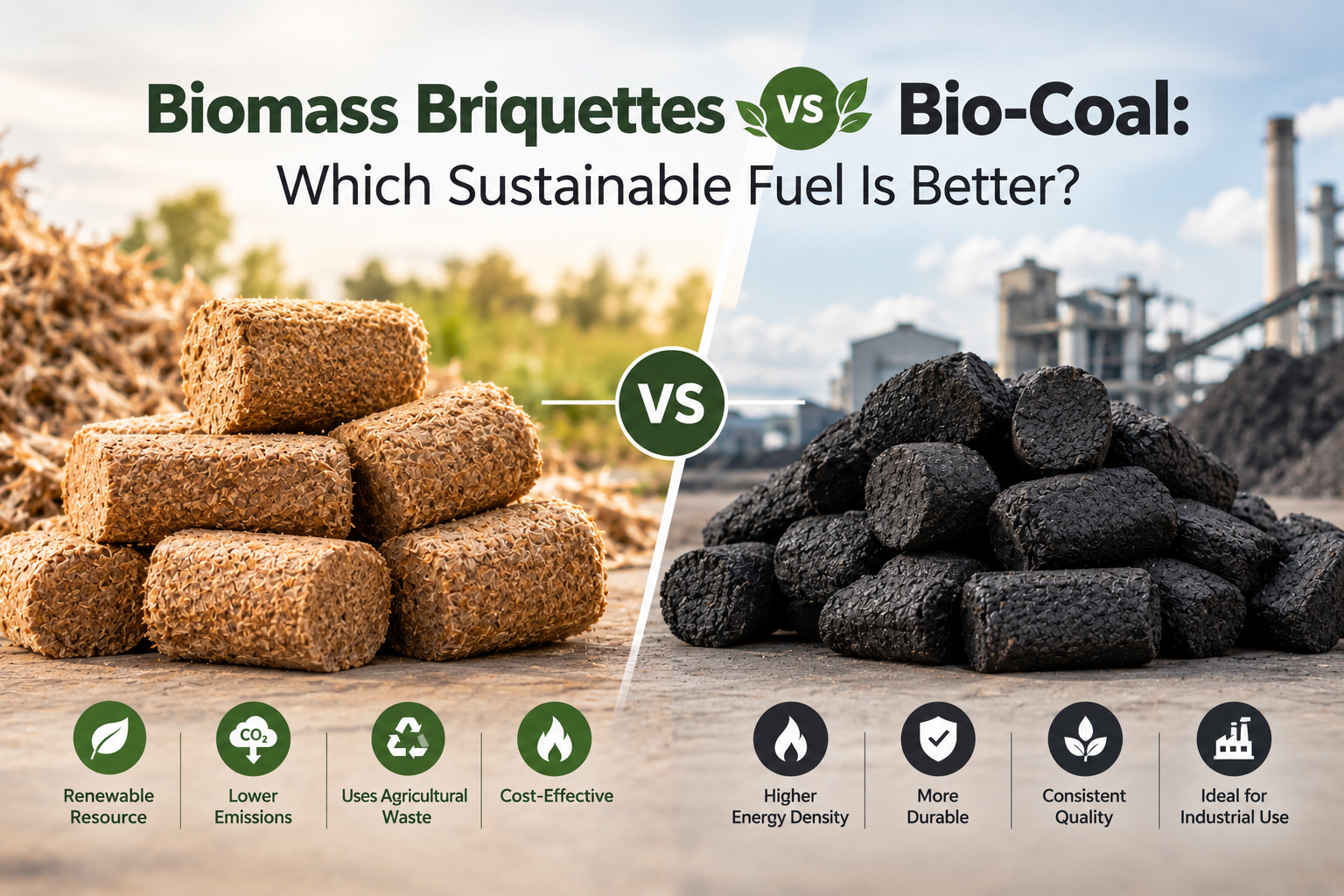
All three are densified or upgraded biomass, but they are not interchangeable. Which one suits you depends on your equipment.
| Product | What it is | Best matched to | Main thing to check |
|---|---|---|---|
| Pellets | Small compressed cylinders | Automated feeding systems, co-firing | Durability and fines |
| Briquettes | Larger compressed blocks | Boilers and furnaces built for bigger fuel pieces | Density and size consistency |
| Bio-coal | Thermally treated, carbonized biomass | Coal-replacement applications | What process made it |
Biomass pellets
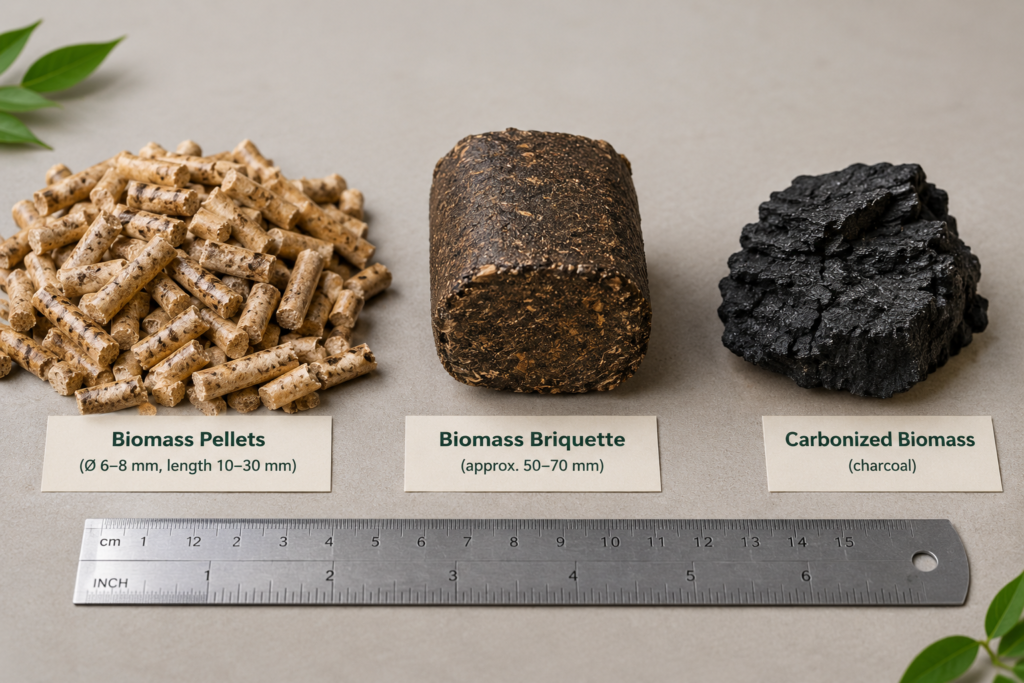
Pellets are made by milling biomass and pressing it through a die. The ISO definition describes them as usually cylindrical, with random lengths of roughly 5 to 40 mm and diameters up to 25 mm. Their small, even size makes them easy to move on conveyors and augers.
Pellets from crop residues fall under a different standard than wood pellets. ISO 17225-6 covers graded non-woody pellets, and that is the one to reference when the raw material is corn cob, straw or bagasse rather than sawdust.
Biomass briquettes
Briquettes are the same idea at a larger scale. Compressed biomass is formed into thicker blocks that suit equipment built for bigger fuel pieces. The non-woody category has its own standard, ISO 17225-7, which is worth requesting alongside test data if your boilers were designed around briquettes.
Bio-coal
This is where the vocabulary gets loose. “Bio-coal” is a trade name, not a standardized grade, and suppliers use it for different things. Most commonly it means biomass that has been carbonized or thermally treated to bring it closer to coal in behavior.
The best-documented version is torrefaction. IEA Bioenergy’s policy report on biomass pre-treatment explains that biomass is heated to roughly 225–275 °C. It loses a substantial share of its mass, up to about half, but keeps most of its energy. After densification, the result is more water-resistant and easier to grind than ordinary pellets, which is why it attracts coal-plant operators.
Because the term is unregulated, the useful question is simple: what process produced it, and what do the lab results say?
What to ask a biomass fuel supplier before ordering
Fuel quality is what you are buying, so it should be spelled out in writing. A few questions do most of the work.
What is it made from? Corn cob, sugarcane residue, sawdust and mixed residues burn differently. The ISO framework distinguishes intentional blends from accidental mixtures and expects chemically treated material to be declared. A supplier who can name the feedstock and its share is usually one who tracks it.
Which properties are tested, and how? The ISO test methods referenced in ISO 17225-2 cover the properties that matter for solid biofuels: moisture, ash content, calorific value, bulk density, pellet dimensions and mechanical durability. Ask for a lab report that reports these, and find out whether testing is done on every shipment or occasionally.
How clean is the raw material? This matters more for agricultural residues than for clean wood. A study of sugarcane residues found that field residues carried much higher ash, up to 34%, because soil and mud cling to the material during harvest and collection. Finished fuel is not the same as raw field residue, but the finding explains why cleaning and contamination control before densification affect your ash handling costs later.
Will it suit your equipment? Herbaceous fuels do not behave like wood in a furnace. Share your boiler type and feeding system with the supplier, and ask your boiler manufacturer whether the fuel is approved.
How is it packed? Bag type, bag size and moisture protection all affect what arrives. Pellets that are roughly handled can produce more fines, meaning broken pieces and dust, which ISO also defines as a measurable property.
Can you get a sample and inspect before shipment? This is standard buyer practice. Agree on sampling and inspection terms before the first order, and confirm them directly with the supplier.
How biomass export from Pakistan works
Exports from Pakistan run through digital systems. The Pakistan Single Window export declaration process lets an exporter or customs agent file one declaration that reaches customs and other agencies through a single interface, with the financial settlement handled by the bank after clearance.
Beyond the declaration, a typical shipment needs the usual trade paperwork: commercial invoice, packing list and bill of lading. Depending on the destination and the product, a buyer may also ask for a certificate of origin, a lab report or another certificate. Requirements differ by importing country, so confirm them with your freight forwarder and customs broker rather than assuming.
Two logistics points are worth raising early. First, bagged or jumbo-bag cargo in containers is a different handling job from bulk shipping, so confirm which the supplier is quoting. Second, some biomass cargoes carry classification and handling rules at sea, so ask your forwarder to check the specific product before booking.
Some import markets also attach sustainability or origin documentation rules to solid biomass used for energy. If you are buying for a regulated market, check this with your compliance team before you sign.
Where Daa Agri fits
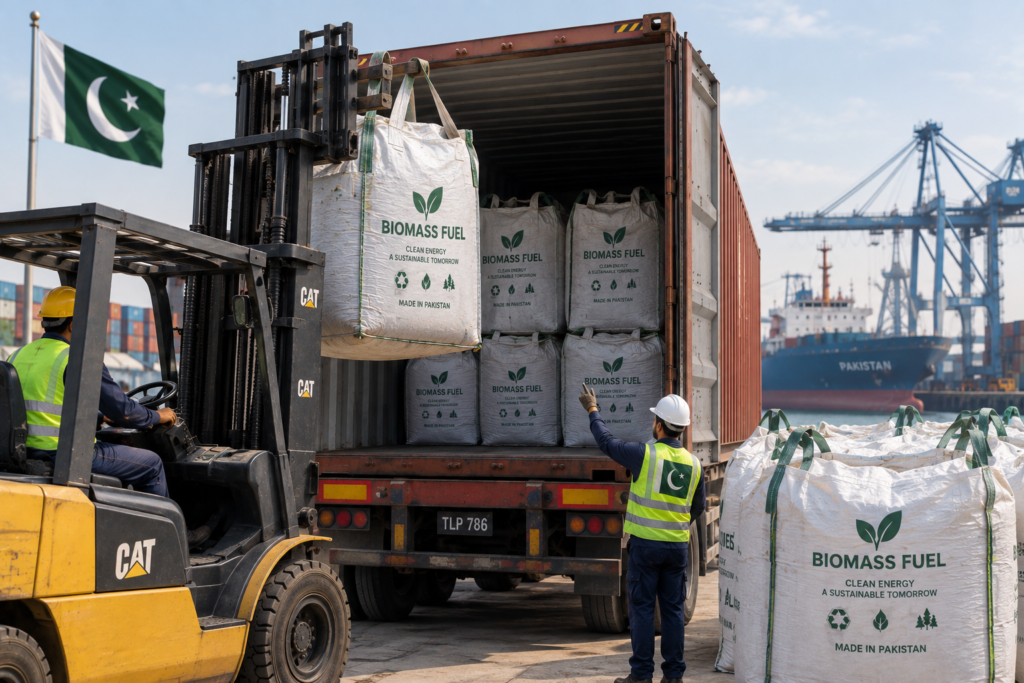
As a biomass fuel supplier in Pakistan, Daa Agri lists a biomass range covering sawdust, briquettes, pellets and bio-coal alongside corn cob and sugarcane residue products. Its site describes moisture checks, sorting and contamination control before export, and packing in PP and jumbo bags for containerized shipment.
It does not publish calorific values, ash limits or minimum order quantities on the pages available for this guide. Ask for those directly. Any credible alternative fuel supplier in Pakistan should be ready to answer them in writing.
Frequently asked questions
Is bio-coal the same as coal?
No. Bio-coal is made from biomass, not fossil coal. The term doesn’t have a single definition, so please ask how it is produced and request test results.
Should I choose pellets or briquettes?
Start with your equipment. Automated feeders generally suit pellets. Furnaces designed for larger fuel pieces may suit briquettes. Confirm with your boiler manufacturer.
What documents are needed for biomass fuel export from Pakistan?
An export declaration filed through the Pakistan Single Window system, plus a commercial invoice, packing list and transport document. Additional certificates depend on the product and the importing country.
Can I get a sample before placing an order?
It is reasonable to ask. Agree on sample size, testing and inspection terms with the supplier before committing to a shipment.
What should be written into the purchase contract?
Feedstock, form, size, moisture, ash and calorific value ranges, test method, packaging, inspection rights and what happens if a delivery misses specification.
Choosing a biomass supplier with confidence
The right supplier is the one that can name its feedstock, show its test reports and explain its packing and shipping process without vagueness. Compare offers on those points rather than on price alone.
If you are working out a fuel requirement, you can share your product, quantity, destination and packaging needs with Daa Agri to see what fits.
Turn industry knowledge into a supply conversation.
Contact GreenCore for product availability, specifications, bulk packaging and export support.