
Agricultural Waste Export from Pakistan: What Buyers of Biomass Products Should Know
Pakistan produces enormous volumes of crop residue every harvest season — rice husk, cotton stalk, wheat straw, sugarcane bagasse, and […]
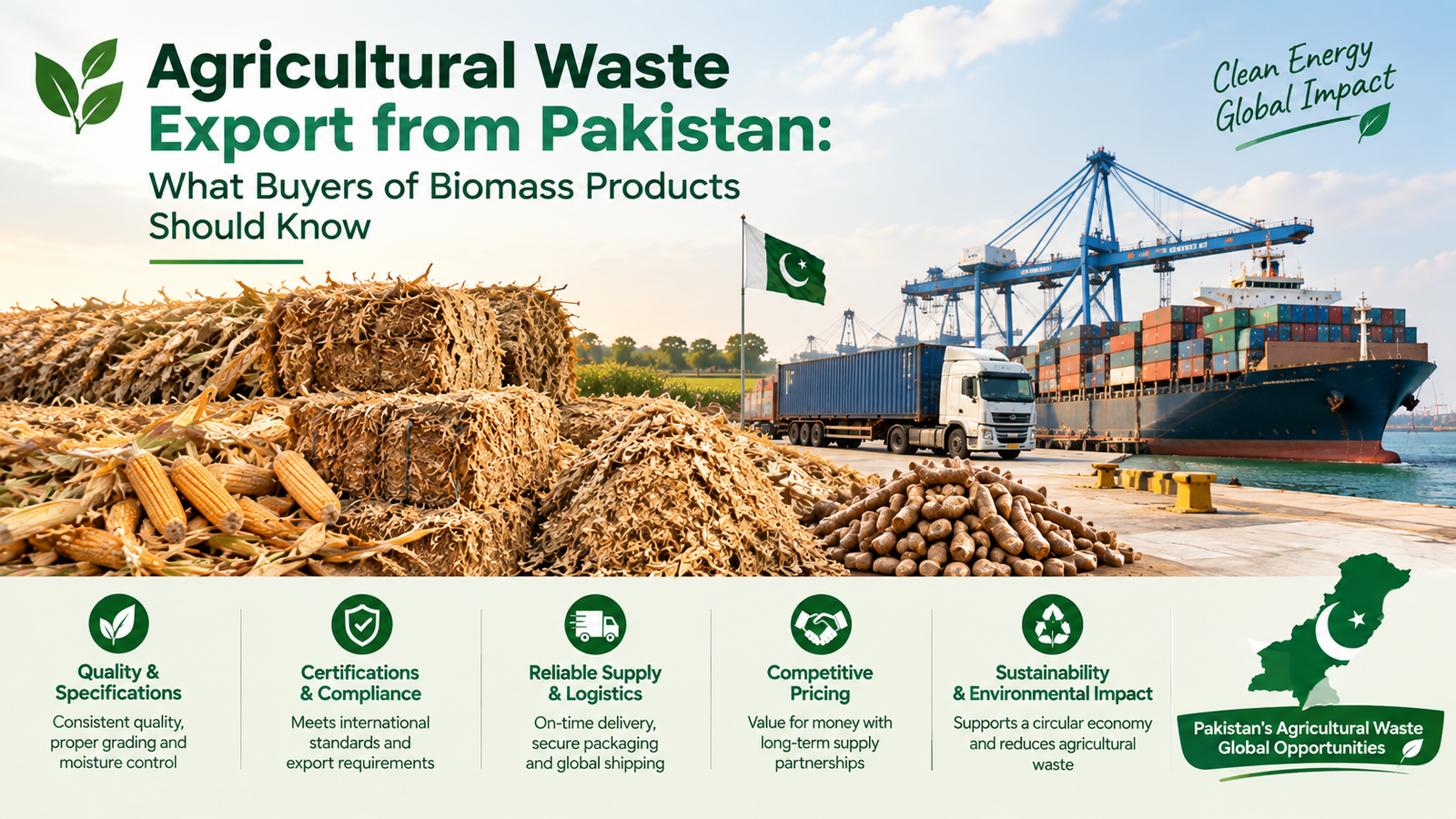
Pakistan produces enormous volumes of crop residue every harvest season — rice husk, cotton stalk, wheat straw, sugarcane bagasse, and […]
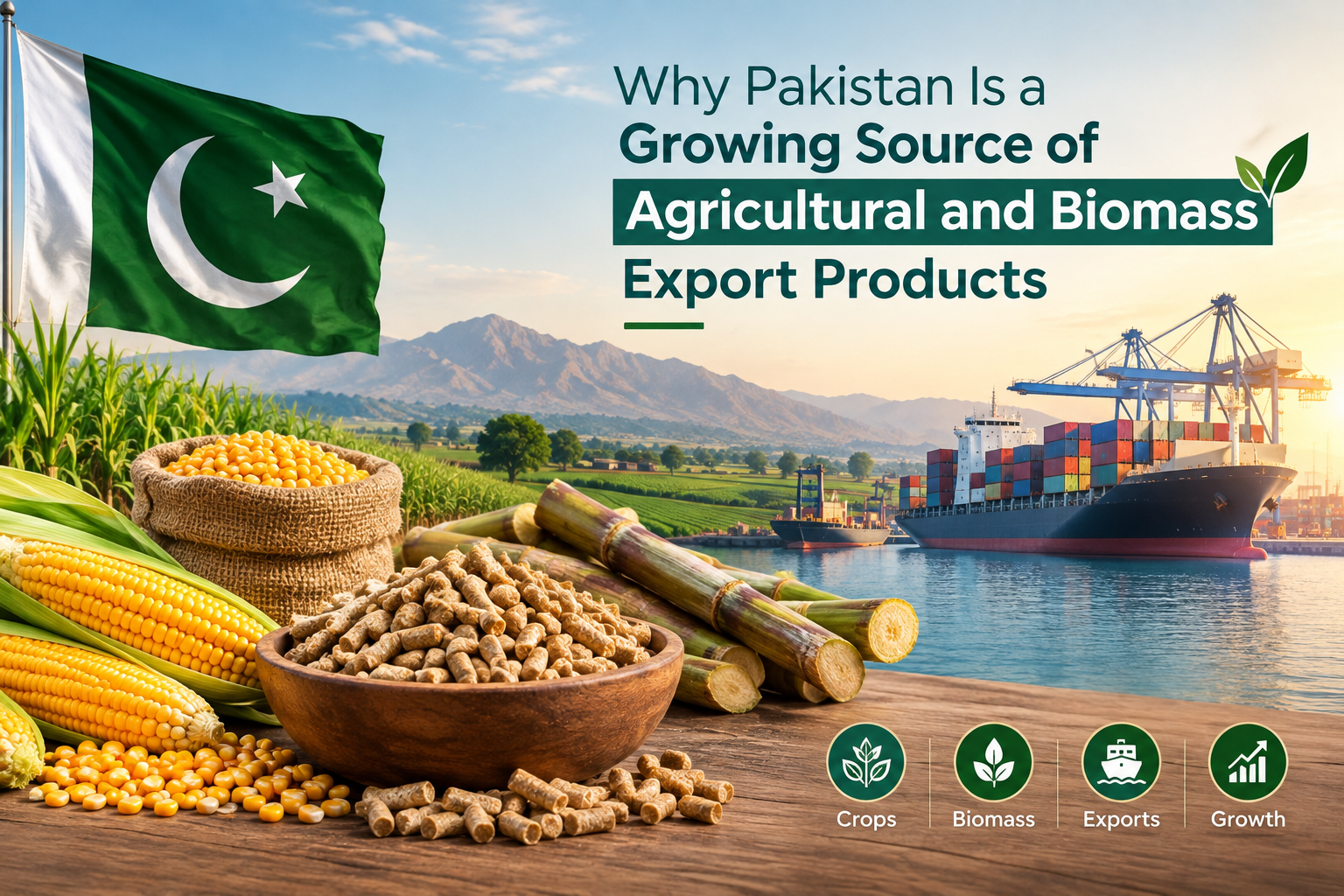
Pakistan produces enormous volumes of crop residue every harvest season — rice husk, cotton stalk, wheat straw, sugarcane bagasse, and maize stover, among others. Most of it used to be burned in the field or left to rot. Today, a growing share of it is baled, processed, and shipped to buyers in the energy, packaging, animal feed, and manufacturing industries abroad. If you’re a procurement manager, importer, or distributor researching agricultural waste export from Pakistan, this guide walks through what these materials actually are, how the export process works, and what to check before signing a contract with a supplier.
What Counts as Agricultural Waste in an Export Context
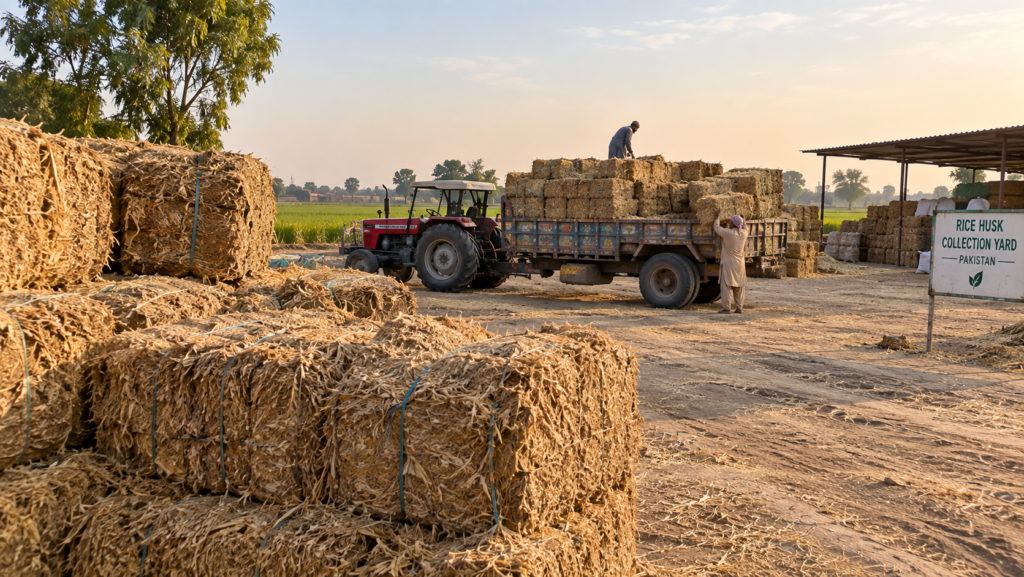
“Agricultural waste” is a broad label, and it helps to be precise about what’s actually being traded. In the biomass trade, the term generally covers crop residues — commonly defined as any biomass left in the field once the principal economic part of a crop has been harvested, per the Food and Agriculture Organization’s glossary of agricultural terms. Practically, that means:
- Rice husk and rice straw — the outer shell removed during milling, and the stalk left after harvest
- Cotton stalk — the woody stem left standing after the cotton boll is picked
- Wheat straw — the dried stem and leaf material remaining after grain threshing
- Sugarcane bagasse — the fibrous pulp left after cane is crushed for juice
- Maize stover and cobs — stalks, leaves, and cobs left after the corn kernel is removed
Not all of these residues are traded in the same form. Rice husk is usually exported loose, pelletized, or as husk ash; cotton stalk and wheat straw are typically baled; bagasse is sometimes further processed into board or pulp before it leaves the country. Buyers should ask suppliers exactly which processing stage a shipment is in, because “biomass” quoted at a low price per ton can mean raw, unbaled material that costs far more to handle and ship than a densified pellet or briquette.
It’s worth separating this category from purpose-grown energy crops. As Bioenergy Europe explains in its sector primer on agricultural biomass, agricultural residues are distinct from dedicated energy crops, and within residues there’s a further split between primary residues left in the field after harvest and secondary residues discarded during processing — husks, shells, and similar byproducts. That distinction matters commercially: primary field residues (straw, stalks) usually need baling and dust removal before export, while secondary residues (husk, bagasse) often arrive at the exporter already separated from the crop and closer to a usable form.
Why Global Industries Buy Pakistani Agricultural Residue
The demand side isn’t hypothetical. A handful of industries consistently source this material:
Biomass power and heat generation. Rice husk in particular has been studied as a power-generation feedstock in Pakistan itself. Research published in the peer-reviewed journal Cogent Engineering estimated that if 70% of Pakistan’s rice husk residues were utilized, the country could generate roughly 1,328 GWh of electricity annually, at a lower per-unit cost than coal-fired generation. The same logic — a dense, combustible, low-cost fuel — applies to buyers in Europe and East Asia who blend agricultural residue into co-firing plants or district heating systems, alongside wood pellets.
Particleboard, panel, and packaging manufacturing. Rice husk and bagasse are used as raw material or filler in composite board, and cotton stalk fiber has industrial applications in fiberboard production. Manufacturers value these residues because they’re a byproduct rather than a purpose-grown input, which keeps raw material costs lower than virgin wood fiber.
Animal bedding and feed-adjacent uses. Certain straw and husk grades are bought for livestock bedding or as a bulking agent in feed. However, buyers should confirm with any supplier — including through their own testing — whether a specific lot meets the moisture, contamination, and pesticide-residue thresholds required for feed-related use in the destination country, since these vary by market.
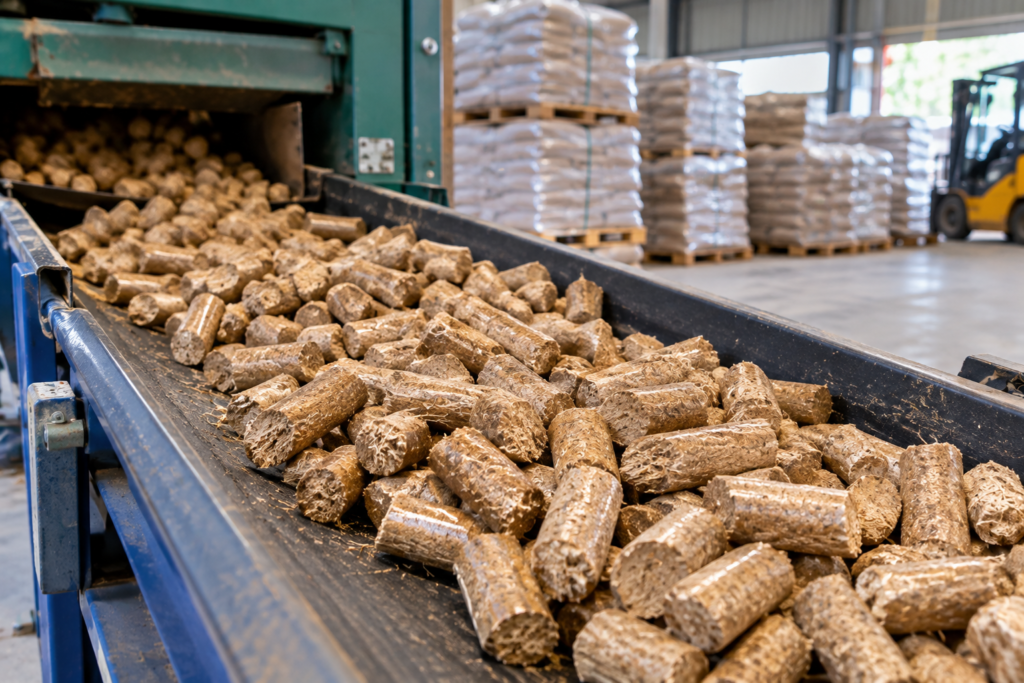
Briquette and pellet producers. Densified biomass fuel (briquettes, pellets) made from agricultural residue is exported to industrial boiler operators and, in some markets, to residential heating buyers. This is generally the highest-value form of the material because densification reduces shipping volume and improves combustion consistency.
Pakistan’s broader agricultural export base gives some sense of scale and reach: in the 2023–24 fiscal year, the country’s agricultural exports reached roughly $8 billion, with cereal exports — particularly rice — generating about $4.3 billion and reaching markets in the European Union, GACC-covered countries, the Gulf, and elsewhere, according to figures cited by Pakistan’s Trade Development Authority. Agricultural waste and biomass exports sit downstream of that same crop base — wherever Pakistan grows and processes large volumes of rice, cotton, wheat, or sugarcane, there’s a residue stream that can be aggregated for export.
How the Export Process Actually Works
For a buyer who has never sourced from Pakistan before, the mechanics matter as much as the product spec. A few things are worth understanding before you request a quote.
Phytosanitary certification. Because agricultural residue is a plant-derived product, most shipments require a phytosanitary certificate issued by Pakistan’s Department of Plant Protection (DPP). Pakistan has moved this process onto the Pakistan Single Window (PSW) platform and connected it to the International Plant Protection Convention’s electronic certificate exchange: PSW has been sending electronic phytosanitary certificates since November 2023, and by the time of its most recent public update, had dispatched more than 10,000 e-Phytos to 77 countries for Pakistani export consignments. In practical terms, this means the certificate is now issued and verified electronically, which removes a common bottleneck — lost or delayed paper documents at the port of entry.
Single Declaration filing. Export consignments falling under DPP jurisdiction are processed through PSW’s Single Declaration system rather than older customs channels, with the phytosanitary certificate issued electronically as part of that filing. Buyers don’t need to manage this themselves. Still, it’s a reasonable question to ask a prospective supplier: are your export filings going through PSW, and can you provide the e-Phyto certificate number for a shipment before it leaves port?
HS code accuracy. Agricultural residues fall under different Harmonized System codes depending on the specific material and its processing stage (raw stalk versus pellet versus ash, for example). Getting this wrong can delay customs clearance at the buyer’s end or trigger the wrong duty rate. It’s worth confirming the HS code a supplier intends to declare before shipment, particularly if you’re importing into a market with residue-specific tariff lines.
Export promotion support. Pakistan’s Trade Development Authority (TDAP) is the government body responsible for supporting exporters across agricultural and industrial categories, including organizing trade delegations and market access initiatives for the broader agri-export sector. Its involvement is more relevant to Pakistani exporters seeking new markets than to individual buyers. Still, it’s a useful reference point if you want to verify a supplier’s standing or look for sector-wide trade data.
What to Evaluate Before Choosing a Supplier
Sourcing agricultural waste and biomass products from a new country carries the same risks as any new commodity relationship, plus a few specific to residue materials.
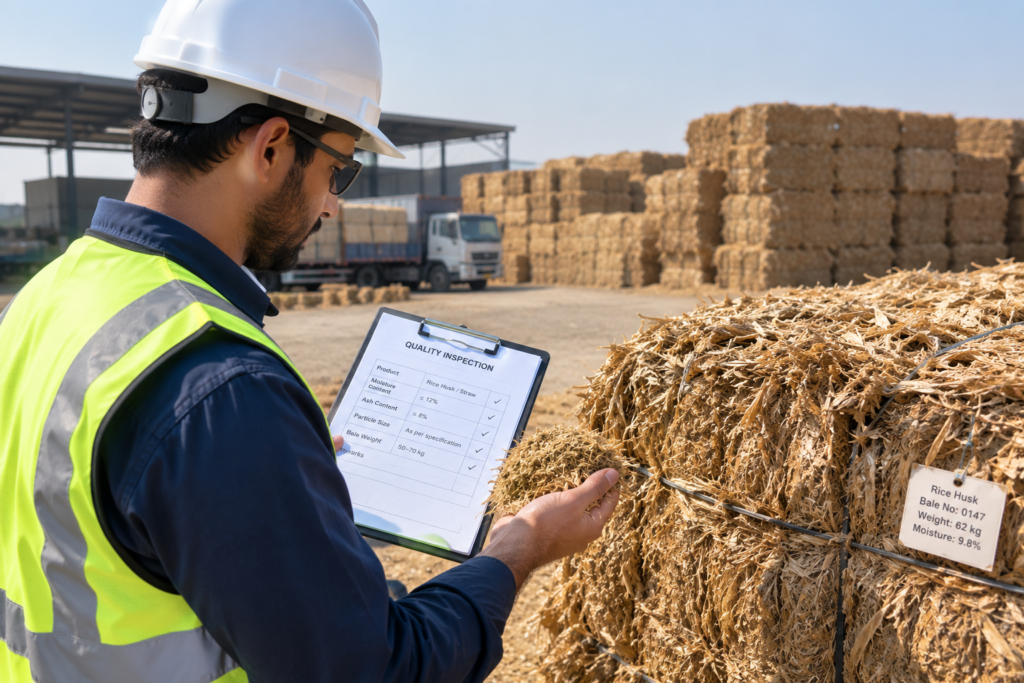
Moisture content. This is the single biggest quality variable in baled or loose residue. High moisture adds shipping weight without adding usable fuel or fiber value, and it increases the risk of mold or spontaneous combustion in transit. Ask for a moisture percentage specification in writing, and ask how it’s tested — by whom, and at what point in the supply chain.
Ash content and contamination. For fuel-grade material, ash content affects combustion efficiency and equipment wear. For fiber or board applications, contamination with soil, plastic twine, or foreign matter affects processing yield. A reputable supplier should be able to provide a specification sheet with these figures rather than vague quality assurance, and should be willing to provide sample material ahead of a bulk order.
Packaging and baling format. Compressed bales, loose bulk, bagged pellets, and jumbo bags all have different freight economics. Confirm bale density and dimensions match what your receiving equipment or storage facility can handle — this is a common source of unplanned cost on the buyer’s side.
Consistency across shipments. A single good sample doesn’t guarantee a consistent supply. Ask how the supplier aggregates material — from a single processing facility, or pooled from multiple farms and intermediaries — since the aggregation method affects how uniform successive shipments will be.
Documentation lead time. Ask how far in advance of loading the phytosanitary certificate and other export documents are typically ready, so you can plan your own import clearance timeline realistically rather than assuming instant turnaround.
Sourcing from Pakistan: A Practical Starting Point
Pakistan’s position as a major producer of rice, cotton, wheat, and sugarcane means the raw material base for agricultural waste export is not going away — the residue is generated every season regardless of whether it’s exported or burned. The trade infrastructure has also matured in the last few years, with electronic phytosanitary certification reducing one of the more common friction points for international buyers.
Daa Agri Limited works within this space, aggregating and preparing agricultural residue and biomass material from Pakistan’s crop base for buyers abroad. If you’re evaluating suppliers for a biomass or residue program, it’s worth requesting a specification sheet, sample, and documentation timeline before committing to a volume order — the questions above apply regardless of which supplier you eventually choose.
Frequently Asked Questions
What is the difference between agricultural waste and biomass? In practice, the terms overlap. “Agricultural waste” usually refers to the residue itself — husk, stalk, straw, bagasse — as it comes off the field or mill. “Biomass” is the broader commercial term used once that residue is being sold as an energy or industrial feedstock, sometimes after processing into pellets, briquettes, or board-ready fiber.
Does agricultural residue require a phytosanitary certificate to be exported from Pakistan? Most plant-derived residue exports fall under the Department of Plant Protection’s jurisdiction and require a phytosanitary certificate, now issued electronically through the Pakistan Single Window platform. Buyers should confirm this documentation is in place before shipment rather than assuming it by default, since specific requirements can depend on the material and destination country.
Can rice husk or cotton stalk be used directly as fuel, or does it need processing first? It depends on the buyer’s equipment. Loose or baled residue can be burned directly in some biomass boilers. Still, many industrial buyers prefer pelletized or briquetted material because it’s denser, easier to store, and burns more consistently. Ask a supplier which form they can supply before assuming raw material will work for your setup.
What is a typical minimum order quantity for agricultural waste exports from Pakistan? This varies significantly by supplier, material type, and processing stage, and shouldn’t be assumed from general industry figures. Buyers should request MOQ, pricing, and lead-time information directly from a prospective supplier for the specific material and format they need.
Are agricultural residue exports from Pakistan seasonal? Yes, generally. Since these materials are byproducts of specific harvests — rice, wheat, cotton, sugarcane — availability and pricing can fluctuate with harvest timing. Buyers planning a long-term supply program should ask suppliers how they manage inventory and storage between harvest cycles to maintain year-round availability.
Where can I verify current Pakistani export regulations for agricultural products? The Pakistan Single Window portal and the Trade Development Authority of Pakistan are the primary official sources for current export documentation and trade-facilitation requirements.
Looking to source agricultural residue or biomass material from Pakistan for your next program? You can learn more about Daa Agri Limited and get in touch to discuss your specification and volume requirements.
Turn industry knowledge into a supply conversation.
Contact GreenCore for product availability, specifications, bulk packaging and export support.