
Sugarcane Residues Export from Pakistan: Complete Buyer’s Guide
Every sugarcane harvest leaves behind more than sweet juice. Tops, leaves and field trash accumulate across the fields of Punjab […]
Every sugarcane harvest leaves behind more than sweet juice. Tops, leaves and field trash accumulate across the fields of Punjab […]
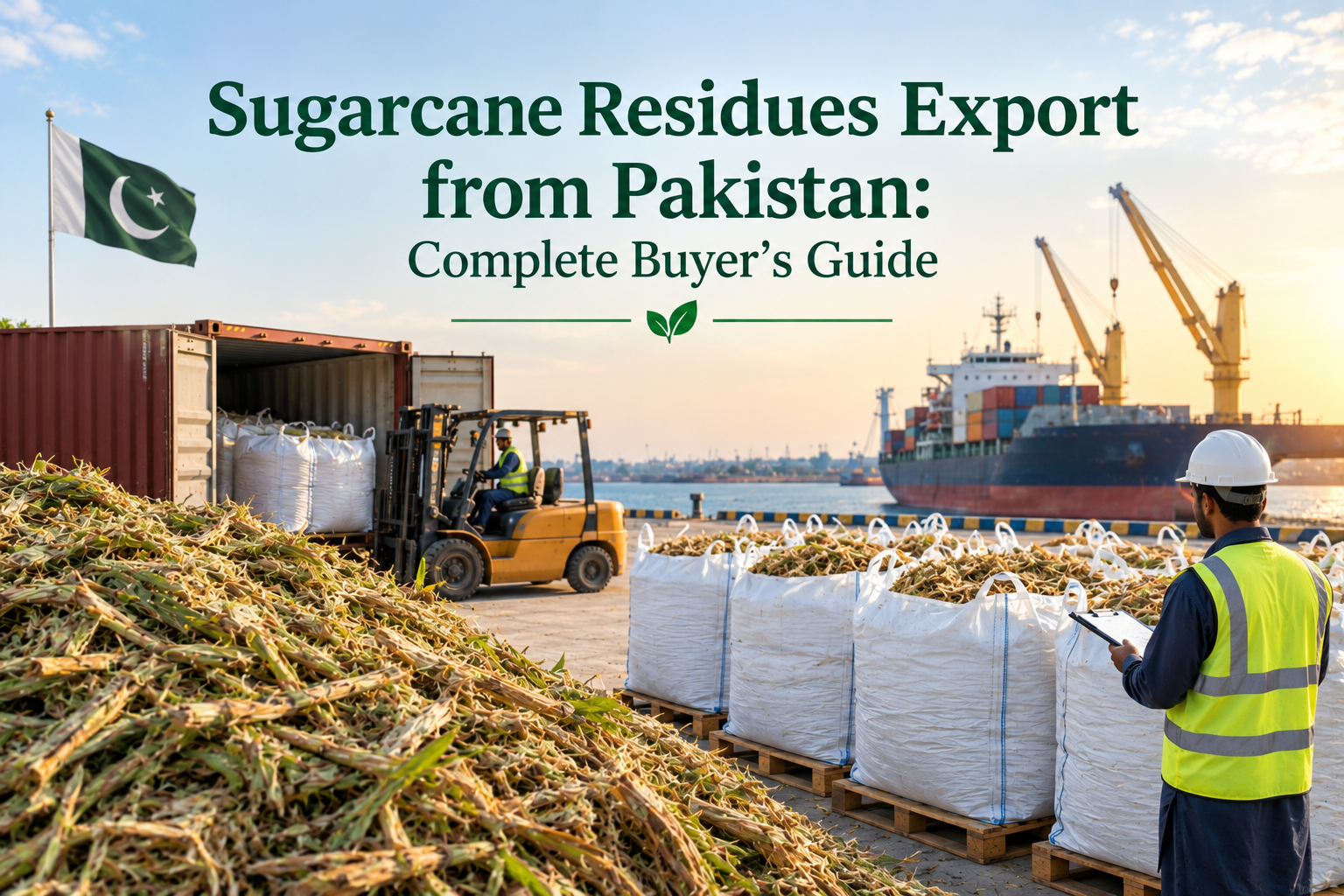
Every sugarcane harvest leaves behind more than sweet juice. Tops, leaves and field trash accumulate across the fields of Punjab and Sindh, and until recently much of it had no market beyond the nearest fire pit. Sugarcane residues export from Pakistan is part of a wider shift in which agricultural by-products are cleaned, dried, processed and shipped as raw materials.
For an importer, though, buying a by-product is different from buying a graded grain. Specifications are less standardised, quality depends heavily on handling, and the gap between a good shipment and a bad one often comes down to moisture and cleanliness. This guide covers Sugarcane Residues Export from Pakistan, what you are buying, why Pakistan is a logical origin, and how an export order should work from first inquiry to arrival.
Why Pakistan Is a Source of Sugarcane Residues
Sugarcane production in Pakistan is concentrated geographically. A USDA Foreign Agricultural Service report notes that Punjab and Sindh together account for about 93 percent of production, which means residue availability clusters in the same regions. A dry climate also helps: sun-drying is practical for much of the year, which supports moisture control without heavy energy costs.
Availability still follows the cane calendar, so buyers who need steady volumes should ask how a supplier plans collection and storage across the season.
What “Sugarcane Residues” Means in Trade
The term covers several materials, and exporters sometimes use it loosely.
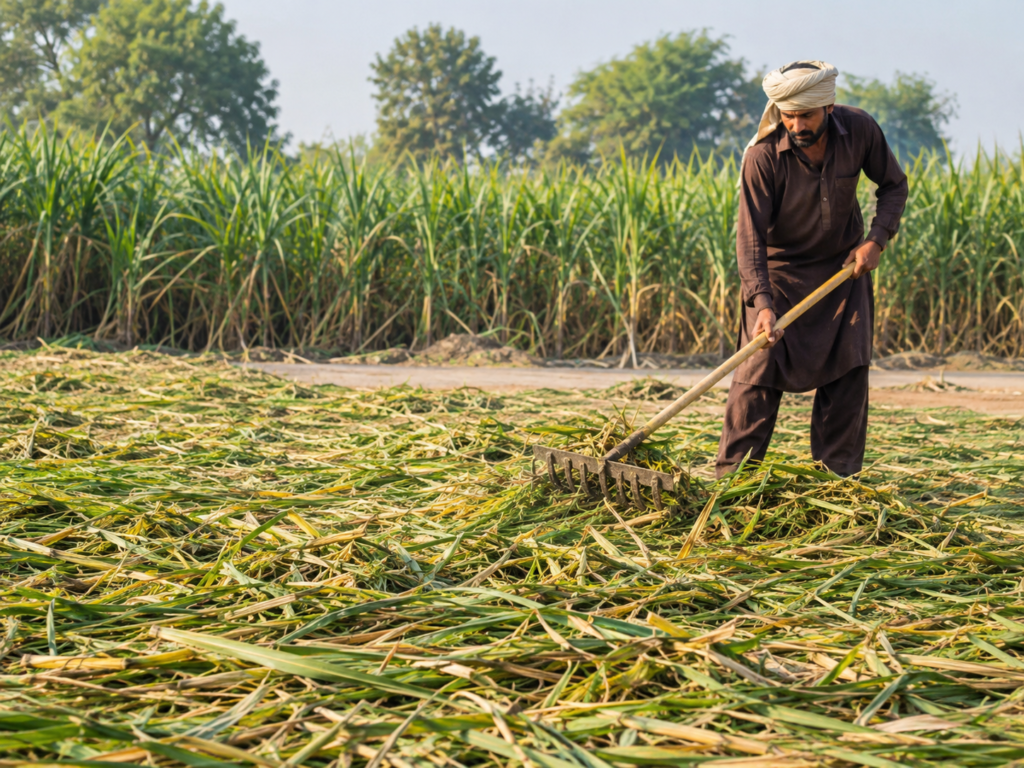
- Tops and leaves. FAO’s Feedipedia describes sugarcane tops as roughly 15 to 25 percent of the plant’s above-ground portion, typically left in the field at harvest.
- Dry trash and field residues. Leaf litter and stubble remaining after cutting.
- Bagasse. The fibre left at the mill after juice extraction. It is a separate by-product with its own supply chain, mainly used as mill fuel.
- Press mud. A mill by-product commonly used as an organic amendment.
Always name the exact material in your inquiry. “Sugarcane residue” alone leaves too much room for interpretation.
Main Applications Driving Export Demand
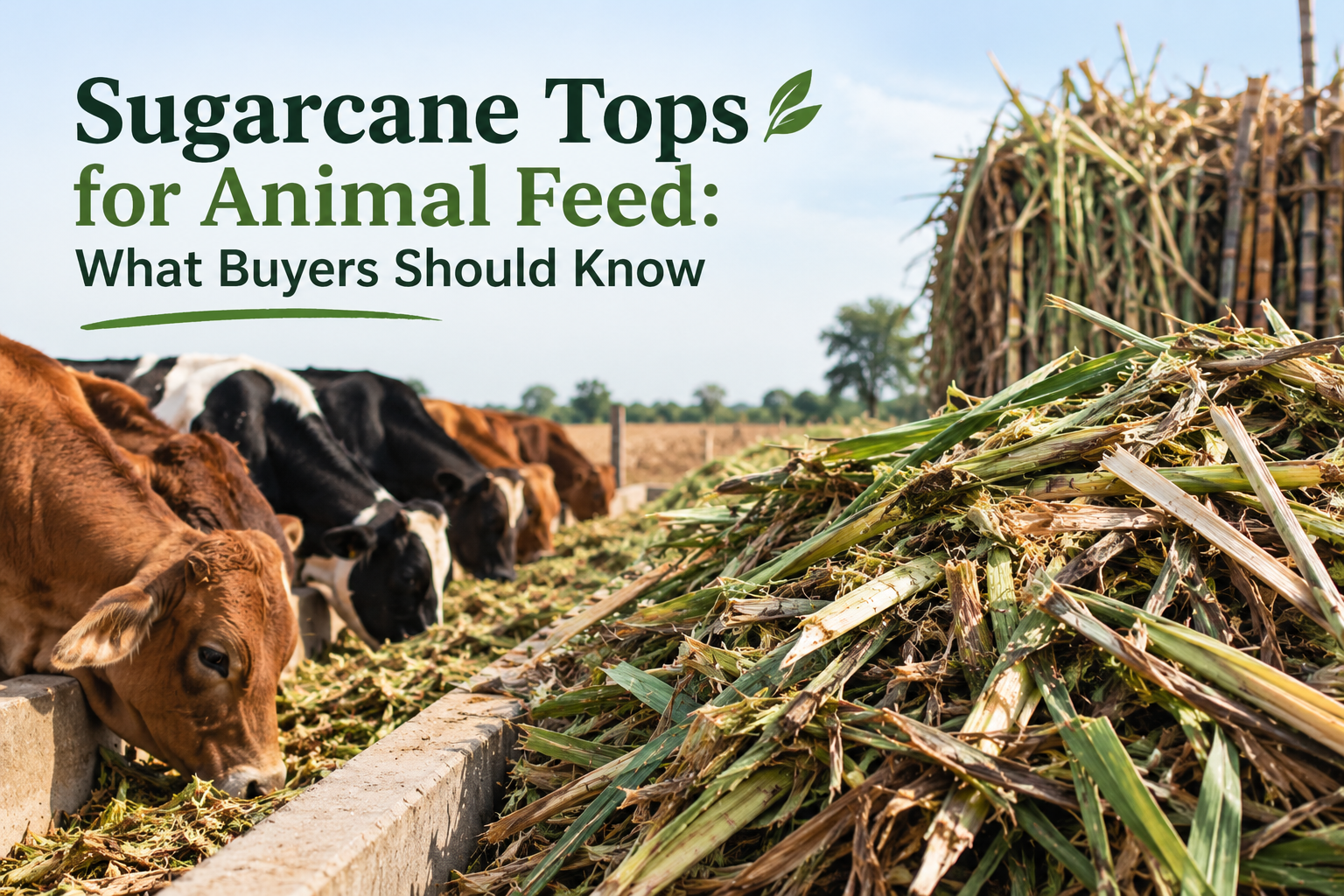
Animal feed fibre. Tops have long been used as ruminant roughage, fresh, dried or ensiled. Because their nutritional value is modest, they are usually blended or supplemented. A review of sugarcane and its by-products in ruminant diets describes flours, silage and supplementary blocks made from the crop’s co-products. Feed buyers should request lot analysis and nutritional guidance instead of relying on generic composition numbers.
Composting and soil enrichment. Cane residues are carbon-rich and useful as a bulking material in compost.
Industrial raw material. Processed residues can feed industrial supply chains, depending on particle size, cleanliness and moisture.
Quality Factors That Matter Before Export
Moisture is the headline risk. Material shipped too damp can heat and spoil in a container, so ask for the maximum moisture level and how it is measured. Beyond that, check:
- Cleanliness: soil, stones and foreign matter should be removed.
- Consistency: size and appearance should be uniform from bag to bag and shipment to shipment.
- Form: chopped, ground or otherwise processed, matched to your use.
- Odour and appearance: signs of mould or heating are red flags.
| Check | What to ask the exporter |
|---|---|
| Moisture | Stated limit and test method |
| Cleaning | Steps used to remove soil and debris |
| Processing form | Chopped or ground, and target size |
| Packing | Bag type, bag weight, loading method |
How an Export-Ready Process Looks
A credible exporter will describe a sequence rather than a slogan: collection from farms and local markets, cleaning and sorting, drying, size reduction where required, moisture checking and packing. The company profile of Daa Agri Limited describes this kind of chain for its agricultural by-products, including direct farm and mandi sourcing across Punjab, cleaning and sorting, sun drying, moisture checks and export packaging.
Packing, Shipping and Terms
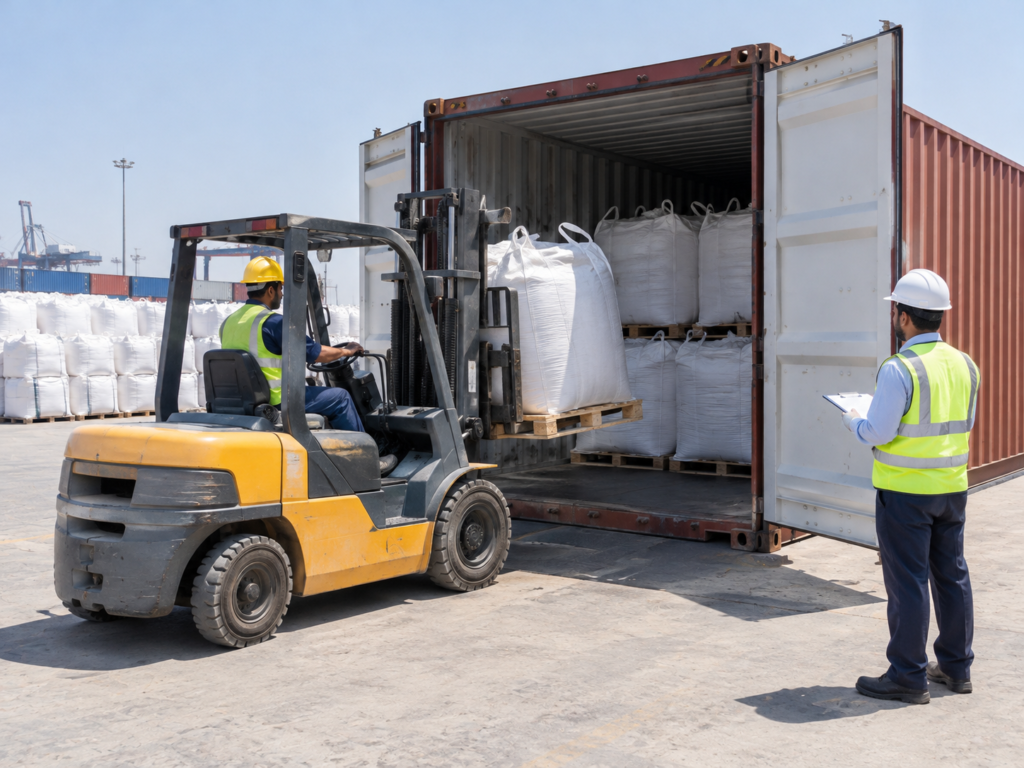
Plant residues are bulky, so container utilisation affects your freight cost. PP bags and jumbo bags are the usual packing choices, and the best option depends on how you unload and handle cargo at your end. Daa Agri’s profile lists PP and jumbo bag packaging with containerized export handling.
Keep the cargo dry from loading to unloading. Ask how you inspect and seal containers, and whether you use moisture-protection measures for your route and season.
On pricing terms, settle an Incoterm early. The Trade Development Authority of Pakistan explains that FOB, CIF and similar terms are standard in international trade and define who carries cost and risk. General exporter and buyer resources are available through TDAP. Your freight forwarder or customs broker should confirm the import requirements in your country, including any rules that apply to feed or plant-derived materials.
A Sensible Order Sequence
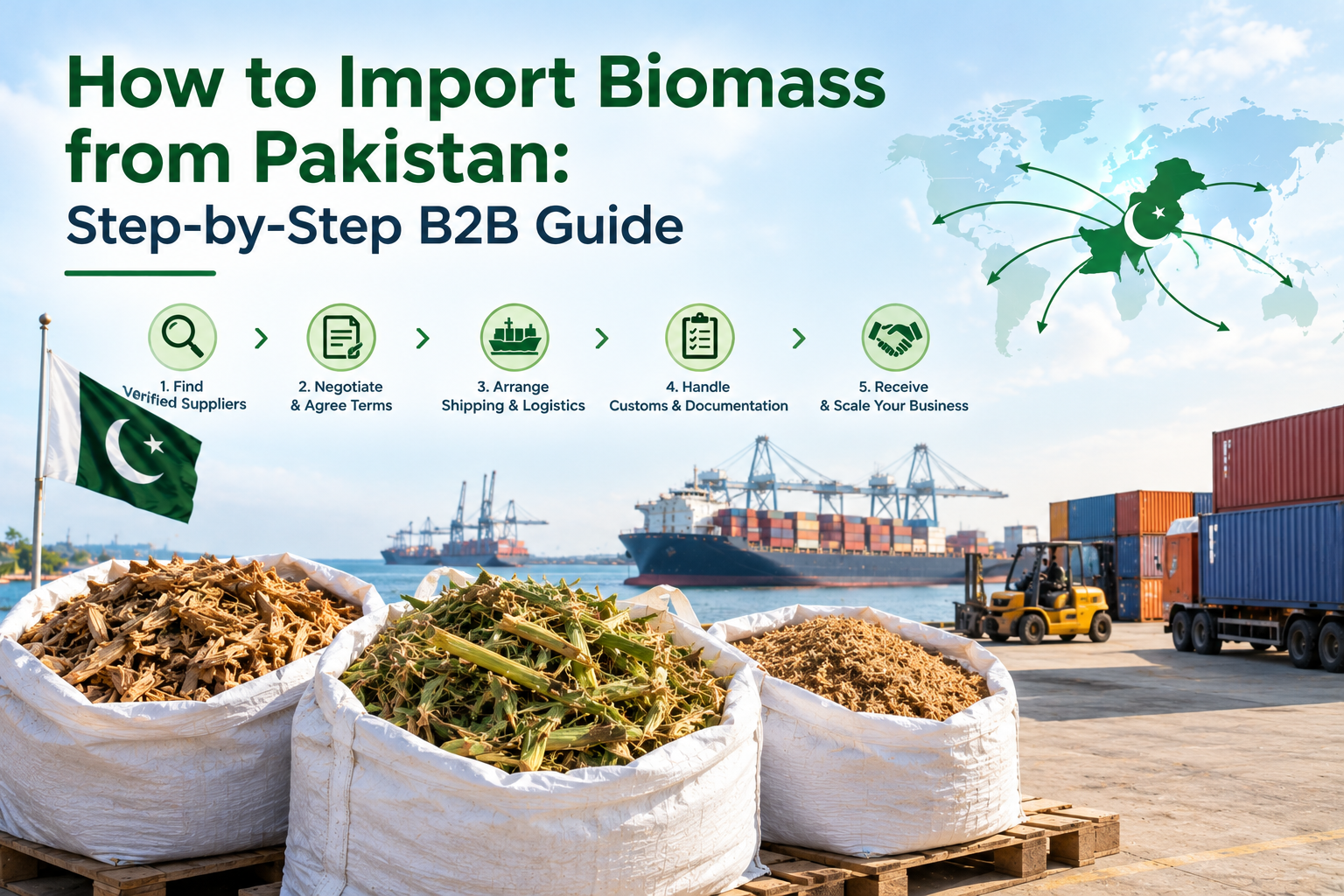
- Send your use, preferred form, packing, volume and destination port.
- Request a sample and test it in your own process.
- Confirm the specification in writing, including moisture and packing.
- Agree on the Incoterm, payment terms and shipment window.
- Consider a smaller trial shipment before scaling up.
- Inspect on arrival and report any differences promptly.
Working with Daa Agri Limited
Daa Agri Limited is a Pakistan-based agricultural processing and export company working across a circular agricultural value chain. Its company profile lists processed sugarcane tops and field residues as a core export product, positioned for animal feed fibre, agricultural composting inputs and industrial raw material supply chains.
Interested buyers can share their application, preferred form, packing preference and estimated volume to discuss availability.
Conclusion
Sugarcane residues export from Pakistan can give importers a renewable, cost-conscious fibre source, but only if the material is clearly defined, properly dried and well packed. Insist on written specifications, test samples before committing and compare quotes on the same delivery terms. For more information about our products, services, and export solutions, please visit Daa Trade.
To discuss specifications or request a quotation, contact Daa Agri Limited at info@daaagri.com.
Turn industry knowledge into a supply conversation.
Contact GreenCore for product availability, specifications, bulk packaging and export support.