
Biomass Suppliers for International Buyers: Sourcing from Pakistan
An importer reading about Pakistan’s agricultural residues faces a practical problem: abundant material does not mean reliable suppliers. When you […]
An importer reading about Pakistan’s agricultural residues faces a practical problem: abundant material does not mean reliable suppliers. When you […]
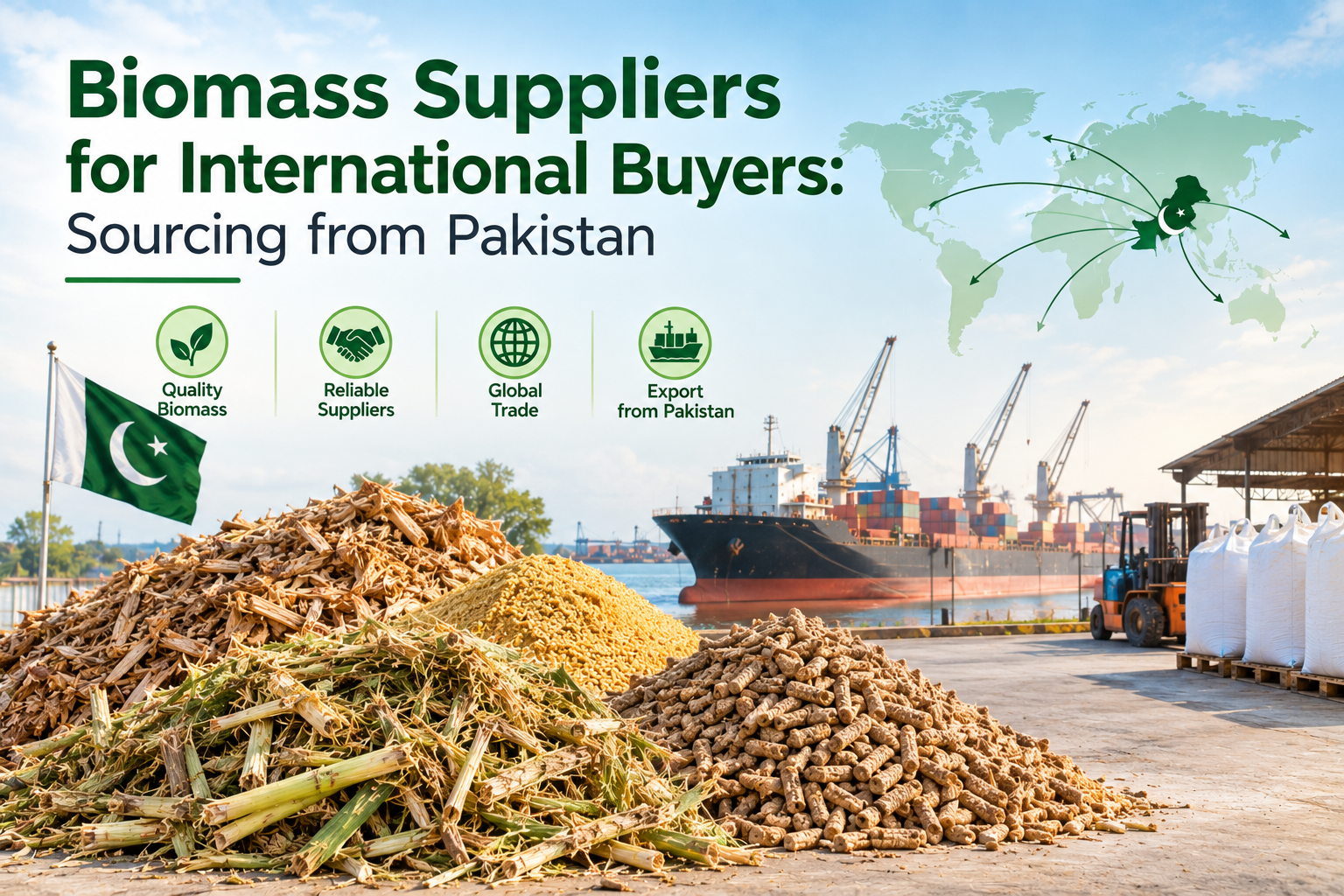
An importer reading about Pakistan’s agricultural residues faces a practical problem: abundant material does not mean reliable suppliers. When you buy across borders, often without visiting a yard, the difference between a trustworthy partner and an opportunist is hard to spot over email. This guide is for international buyers looking to source from biomass suppliers in Pakistan with fewer surprises.
It covers Biomass Suppliers for International Buyers, how the supply side is organised, how to vet a supplier remotely, what to check in samples and contracts and where international buyers most often go wrong.
How the Supply Side Is Organised
Residues in Pakistan come from many small farms, so aggregation is the real business. A World Bank-supported mapping project on ENERGYDATA.info covers wheat straw, cotton stalk, rice straw and husk, maize stalk, cob and husk, sugarcane trash and bagasse. It separates theoretical volumes from what is actually available given current uses and farmers’ willingness to supply. For you as a buyer, that means supplier claims about volume deserve scrutiny: ask where the material is collected and how steady that supply is.
Supply also follows harvest calendars. Sugar mills, for example, use bagasse mainly during crushing, and Dawn notes that nearly all mills run their own bagasse-based cogeneration plants, so mill bagasse seldom reaches the open market in quantity.
Supplier Types an International Buyer Will Meet
- Brokers and traders: fast and flexible, but they may not control drying, cleaning or consistency.
- Small local processors: can offer decent quality at low prices, but export packing and documentation may be limited.
- Export-oriented processors: run collection, cleaning, drying, processing, packing and loading as one chain, giving a single point of accountability.
For a first purchase from abroad, the third group usually carries the least risk, though no label replaces verification.
Vetting a Supplier Remotely
Ask for a clear process description.
A serious supplier can explain how they collect, clean, dry, process and pack the material. Vague phrases like “premium quality” are not a process.
Request specific numbers in writing.
Moisture limit, size range, packing type, bag weight and minimum order should all be stated clearly.
Check responsiveness
Prompt, precise answers to technical questions during the quotation stage predict how problems will be handled later.
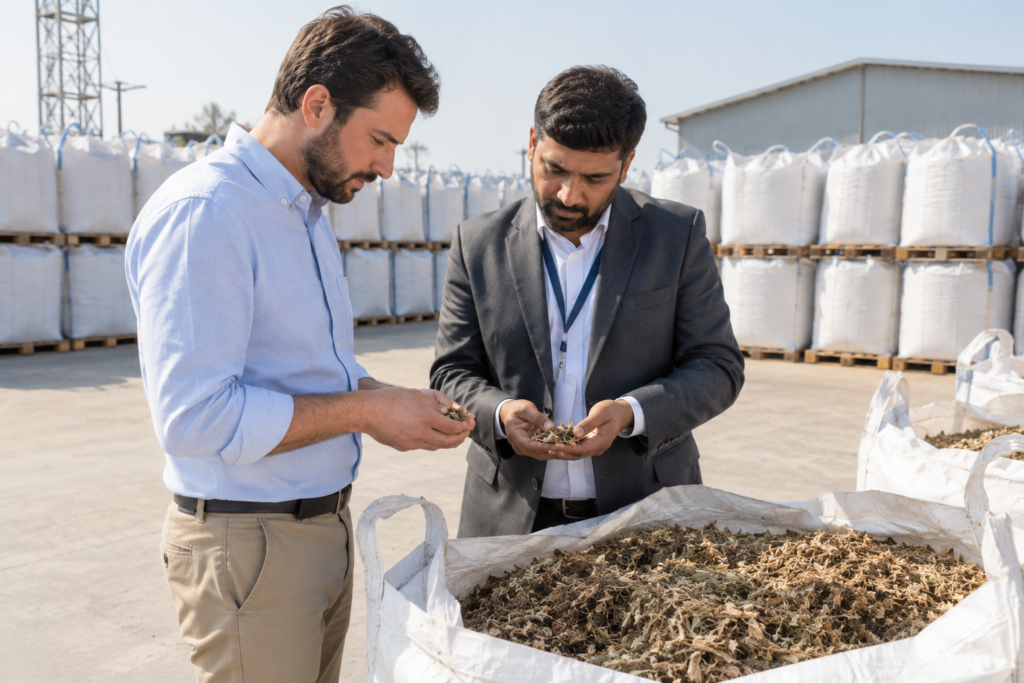
Ask for photographs and, if possible, a video call
Photos of the yard, material and packing help. A live walkthrough is better. Where practical, appoint an independent inspection company to verify goods before loading.
Samples and Testing
Never buy a first order without a sample. Test it for the properties that matter to you.
- Feed fibre buyers should seek lot analysis and nutritional advice, since published values for plant residues vary. A review in the Journal of Microbiology, Biotechnology and Food Sciences noted inconsistent nutritive values reported for corn and cob meal.
- Substrate buyers should trial the material in their own recipe.
- Energy buyers should commission independent laboratory analysis of moisture, ash and calorific value. The ISO 17225 series provides fuel specifications and classes for solid biofuels, and its non-woody pellet part notes that agricultural biomass tends to have higher ash, chlorine, nitrogen and sulfur contents.
The Contract: What to Fix in Writing
- Product description and form.
- Moisture limit and test method.
- Size range and tolerance.
- Cleanliness expectations.
- Packing and bag weight.
- Quantity and tolerance.
- Delivery term and named port.
- Documents to be supplied.
- Inspection rights and what happens if goods miss specification.
Terms, Logistics and Payment
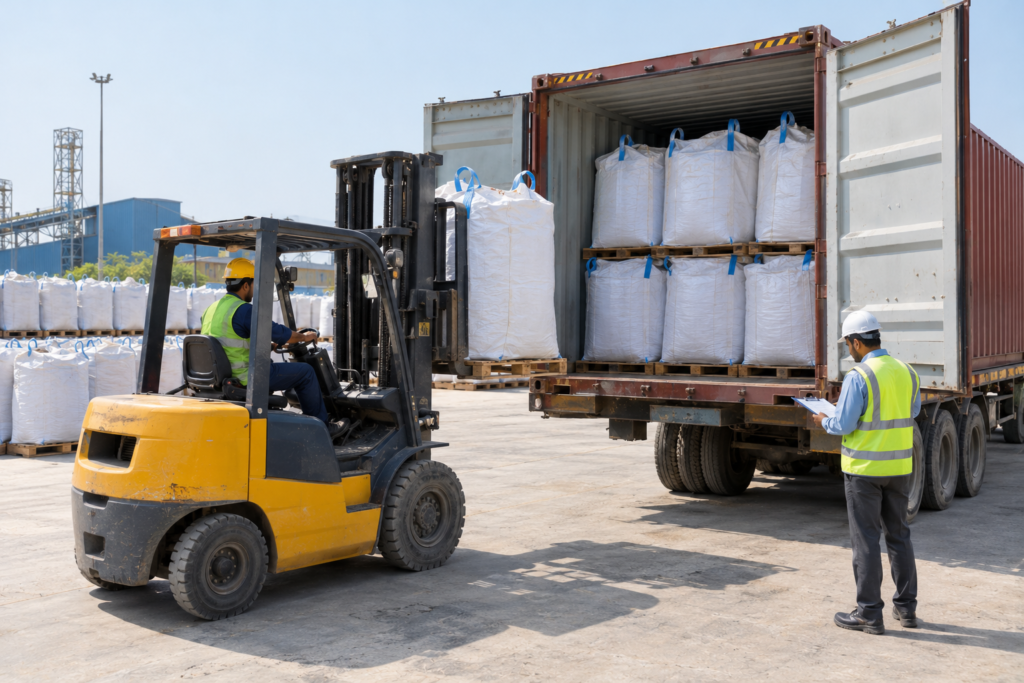
Choose an Incoterm early. The Trade Development Authority of Pakistan explains that FOB, CIF and related terms are standard in international trade and define who carries cost and risk. TDAP also publishes general information for foreign buyers on its official website. Residues are bulky, so ask how many tonnes fit in a container with your chosen packing and how containers are loaded and sealed.
Payment method should be discussed with your bank, and the first order is best kept modest.
Common Mistakes by First-Time Buyers
- Buying on price alone without a specification.
- Skipping the sample stage.
- Accepting verbal promises on moisture.
- Comparing quotes with different Incoterms.
- Ordering a large first shipment.
- Overlooking destination-country import rules.
Sourcing from Daa Agri Limited
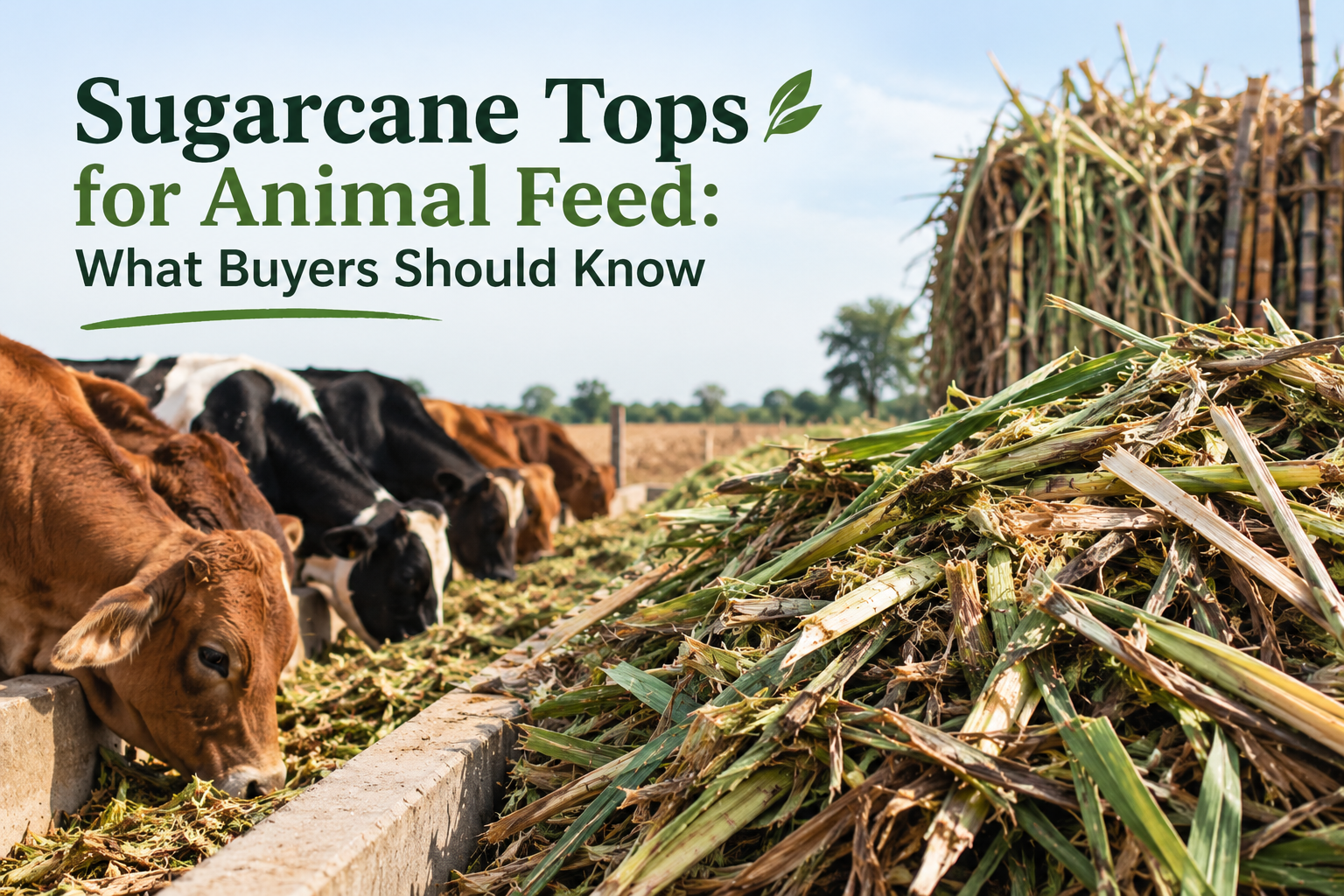
Daa Agri Limited is a Pakistan-based agricultural processing and export company working across a circular agricultural value chain. Its company profile lists corn cob meal, corn cob granules and processed sugarcane tops and field residues as core export products, with a supplier network across Punjab and surrounding regions, flexible bulk supply, sun drying, moisture checks, PP and jumbo bag packing and containerized export handling.
The company names mushroom cultivation, animal feed and organic agriculture as the industries it serves. Buyers with other uses, particularly energy, should discuss specifications with the team directly and verify suitability through laboratory testing.
Conclusion
For international buyers, good sourcing from biomass suppliers in Pakistan means verifying more than you trust: process, numbers, samples and contract terms. Start small, test thoroughly and scale once consistency is proven.
To discuss requirements or request a quotation, contact Daa Agri Limited at info@daaagri.com.
Turn industry knowledge into a supply conversation.
Contact GreenCore for product availability, specifications, bulk packaging and export support.