
Corn Cob Granules from Pakistan: Uses, Sizes, Quality and Applications
Corn cob granules are one of the more practical outcomes of the circular approach to agriculture: take the hard core […]
Corn cob granules are one of the more practical outcomes of the circular approach to agriculture: take the hard core […]
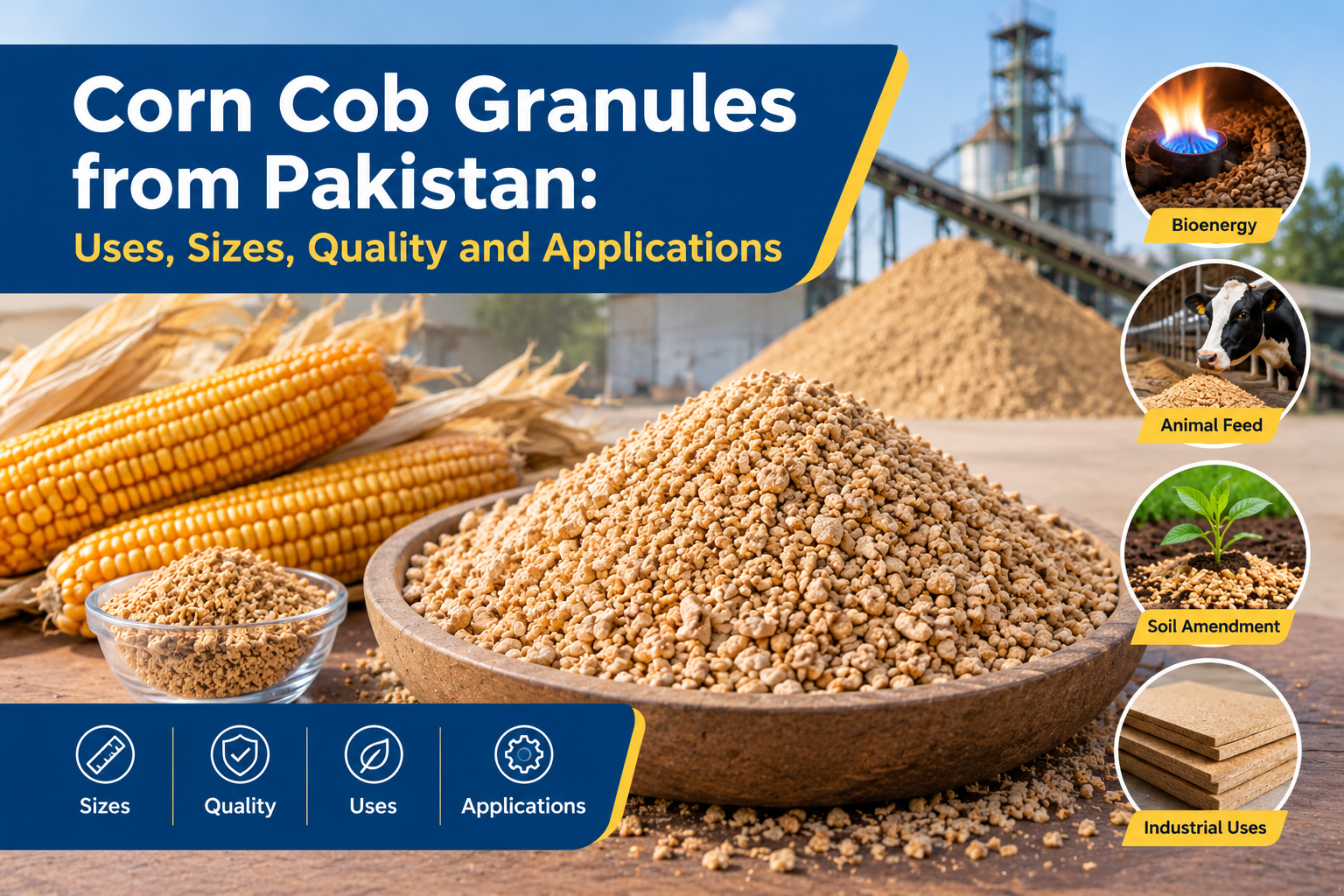
Corn cob granules are one of the more practical outcomes of the circular approach to agriculture: take the hard core left after maize is shelled, clean it, crush it, screen it, and you have a uniform, plant-based granule with several working uses. Corn cob granules from Pakistan are now traded for industrial, agricultural and feed-related applications.
This article focuses on what buyers want to understand before ordering: where granules are used, how particle size shapes performance, what quality means and how to pick a grade for a particular job.
What Corn Cob Granules Are
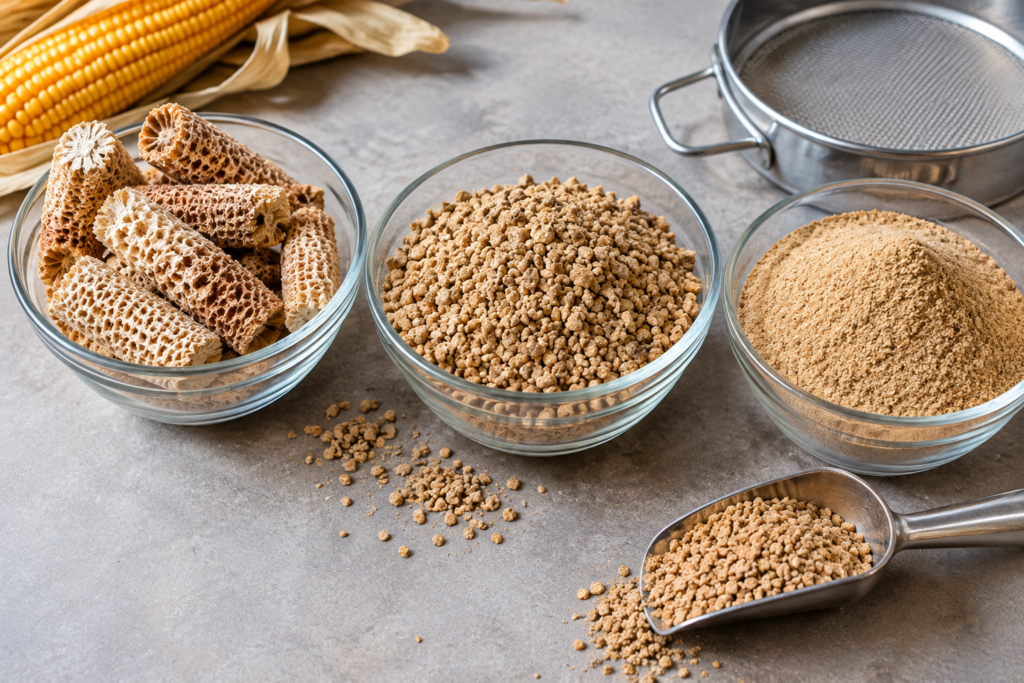
The cob is made of several tissues. The woody ring is dense and hard. Inside and around it are softer tissues: pith, chaff and beaks. Technical literature explains that corncob particles can be obtained from the woody ring as broken granules called grit, or from the pith, chaff and beaks. Which fraction a granule comes from affects its density, hardness and absorbency, so it is worth asking.
Granules differ from corn cob meal. Meal is generally ground finer, while granules are screened into a more uniform, coarser size.
Main Applications
Absorbent applications
Cob granules are used where liquid absorption is needed. Patent literature on animal litter describes cob grit and other plant granules in animal bedding and litter, where particle size is tuned to how the product must behave. Absorbent-grade performance depends on size, density and dryness, so test the lot against your requirements.
Substrate blending
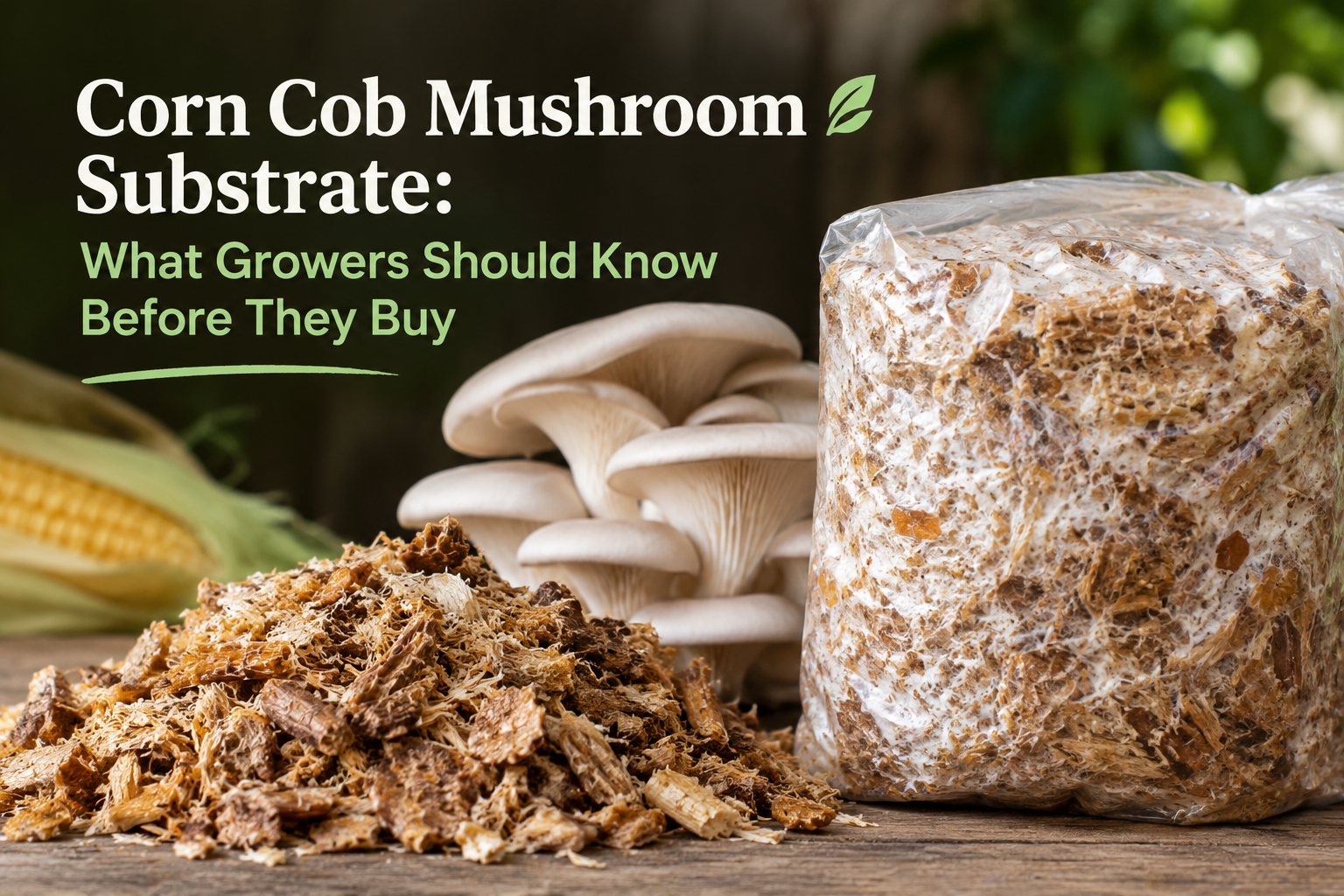
Granules can be blended into growing media and mushroom substrates. Corn cob is a recognised lignocellulosic substrate material, and research includes a Brazilian study of shiitake production on corn cob substrates and a Nepalese trial reporting that corn cob with rice bran gave the best oyster mushroom results among the residues compared. Recipes differ widely, so trial before scaling.
Livestock fibre feed
Cob material serves as roughage in some feed formulations. The nutritional value is modest and reported figures vary, as one review of corn and cob meal highlights, noting inconsistent published nutritive values. Request lot analysis and consult a nutritionist before formulating diets.
Other industrial uses
Cob granules also appear in various industrial and agricultural supply chains. Whether a given lot suits a specific process depends on size, hardness and cleanliness, so confirm suitability through your own testing.
Why Size Matters
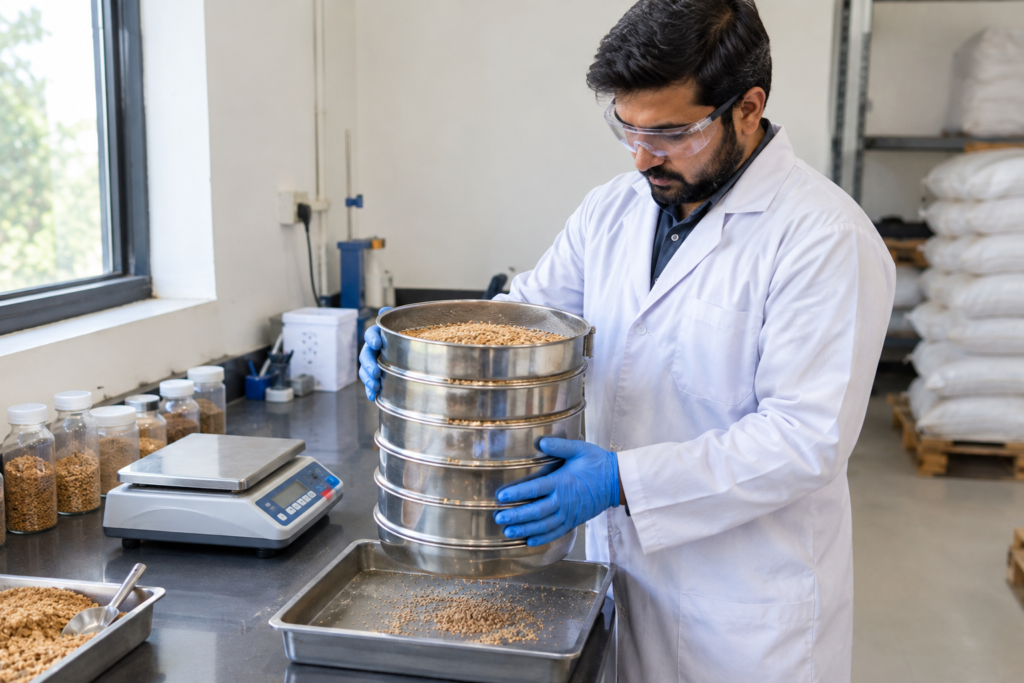
Particle size controls how a granule behaves: how fast it absorbs liquid, how it packs, how it blends with other materials and how it flows through equipment. Mesh sizes in the literature vary widely by use. One patent on cob-based litter, for instance, discusses granule sizes ranging from about 8 to 40 mesh depending on the design. Instead of assuming a standard, agree on a target range and tolerance with your supplier, then check a sample with a sieve.
| Use | Why size matters |
|---|---|
| Absorbent products | Affects absorption rate and handling |
| Substrate blending | Influences structure, aeration and water retention |
| Feed fibre | Affects mixing and intake |
| Industrial uses | Affects flow and process performance |
Quality Factors
Moisture
Granules shipped or stored damp can heat and develop mould. Ask for the maximum moisture level and the test method.
Cleanliness
Soil, dust and foreign matter should be removed before grinding. Cleaner lots cause fewer problems downstream.
Uniformity
Uniform size and appearance matter in blending and automated handling. Ask how the supplier screens material and how consistent lots are.
Fraction and hardness
Woody-ring granules and softer fractions differ. If hardness or density matters to you, specify it.
Packing
PP and jumbo bags are common. Dry storage is essential for all grades.
Storage and Handling
Store granules dry, off the floor and away from moisture sources. Stack bags with ventilation, and check periodically for dampness or odours if stored long-term.
Why Source Corn Cob Granules from Pakistan
Pakistan grows maize widely, so cobs are available after each harvest. A dry climate supports natural sun-drying, which helps with moisture control. Local agricultural costs are competitive, and the country has container export infrastructure. These advantages matter most when paired with a supplier who actually controls drying, cleaning and screening.
Corn Cob Granules from Daa Agri Limited
Daa Agri Limited is a Pakistan-based agricultural processing and export company working across a circular agricultural value chain. Its company profile lists corn cob granules as a high-demand core export product: cleaned, uniform granules processed to industrial grade and used for absorbent applications, substrate blending and livestock fibre feed, available for bulk export.
The profile describes cleaning and sorting, sun drying, size reduction, moisture checks and export packing in PP or jumbo bags, with containerized export handling. Buyers can share their application and preferred size range to discuss availability.
Conclusion
Corn cob granules from Pakistan are valued for being renewable, uniform and versatile, but the details decide whether a lot suits your job: size range, moisture, cleanliness and consistency. Test a sample, put the specification in writing and start with a trial order. For more information about our products, services, and export solutions, please visit Daa Trade.
For specifications or a quotation, contact Daa Agri Limited at info@daaagri.com.

Turn industry knowledge into a supply conversation.
Contact GreenCore for product availability, specifications, bulk packaging and export support.