
Corn Cob Granules Suppliers in Pakistan: Wholesale and Bulk Supply
A bag of corn cob granules looks simple. The differences only show up once you pour it out: some lots […]
A bag of corn cob granules looks simple. The differences only show up once you pour it out: some lots […]
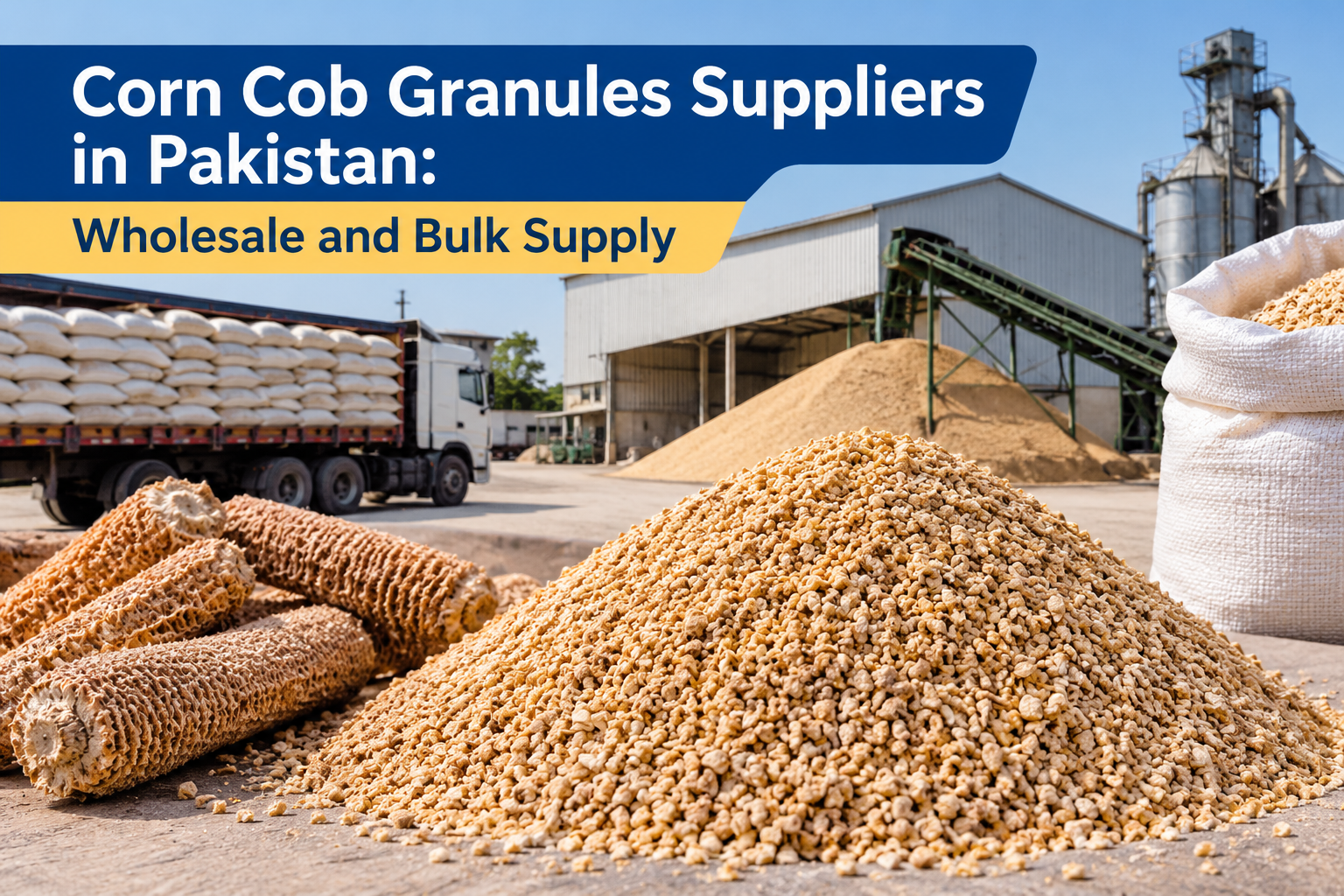
A bag of corn cob granules looks simple. The differences only show up once you pour it out: some lots flow evenly and feel dry; others are dusty, uneven or faintly damp. If you plan to buy in volume, the quality of your supplier matters far more than the price per tonne.
This guide is for wholesalers, blenders and industrial buyers looking at corn cob granules suppliers in Pakistan. It explains the kinds of suppliers you will meet, how to compare them, what to ask and how to protect a bulk order.
Where the Material Comes From
Maize is grown widely in Pakistan, and cobs are left over after shelling. The cobs are cleaned, dried, ground and screened into granules. How carefully those steps are done determines whether the finished product is uniform and dry. A supplier that controls them can offer repeatable quality, while one that resells lots from several small mills often cannot.
Types of Suppliers
Traders and brokers. They buy from several sources and resell. They can be quick and flexible, but may not know how each lot was dried or screened.
Small mills. They grind cobs locally. Quality can be good, but batch consistency and export packing are common weak points.
Export-oriented processors. They handle collection, cleaning, drying, grinding, screening, packing and shipment as a single chain, which gives you one point of accountability.
What to Compare
Granule definition
Ask exactly what is being sold. Technical literature explains that corncob particles can come from the dense woody ring, as grit, or from softer parts such as pith, chaff and beaks. Those fractions behave differently, so a supplier should be able to say which one the product contains.
Size and uniformity
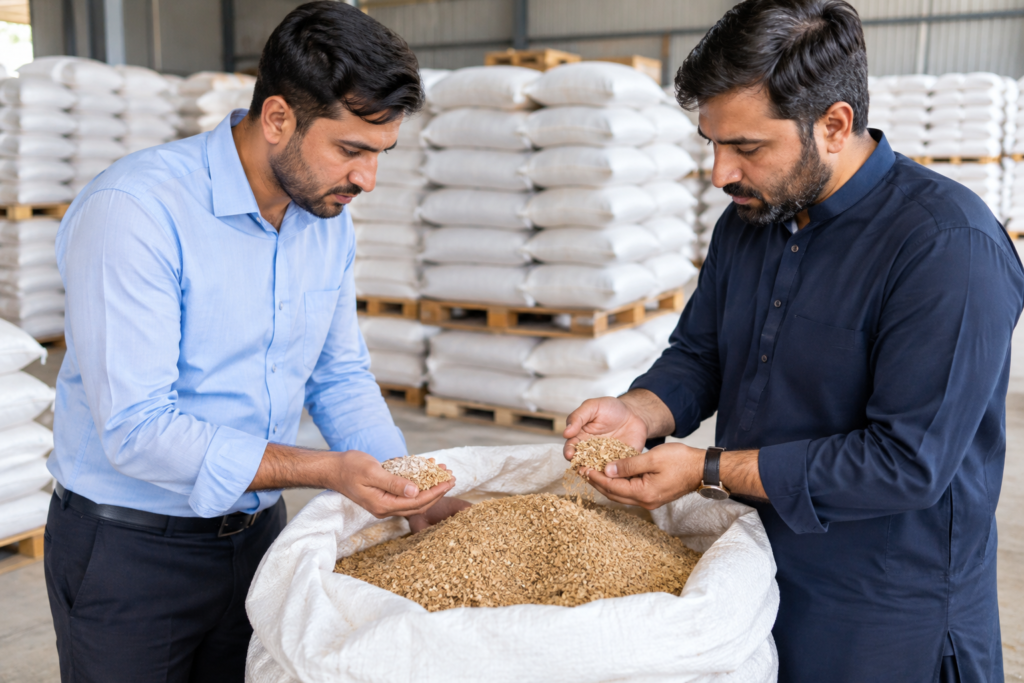
Agree on a target size range, the tolerance and how the supplier screens material. Request a sieve analysis for your sample if sizing is critical.
Moisture
Ask for the maximum moisture level and how it is measured. Damp granules are the most common cause of rejected lots.
Cleanliness
Soil, dust and foreign matter should be removed. Ask what cleaning happens before grinding and whether lots are checked before loading.
Consistency across lots
One good sample proves little. Ask how the supplier keeps lots uniform and whether retained samples are kept from each shipment.
Packing and loading
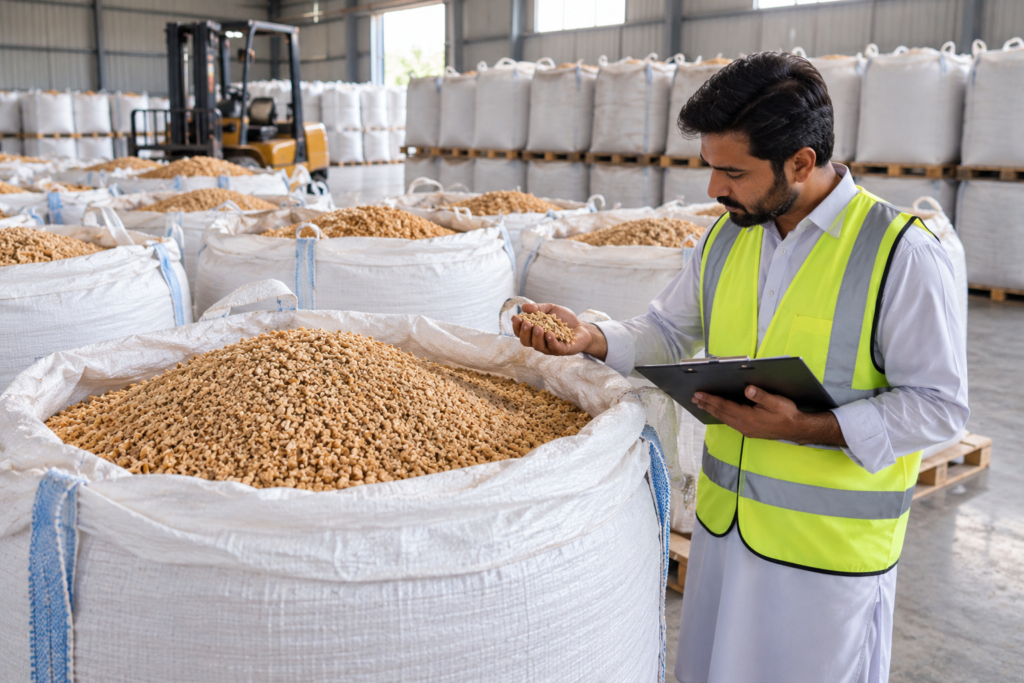
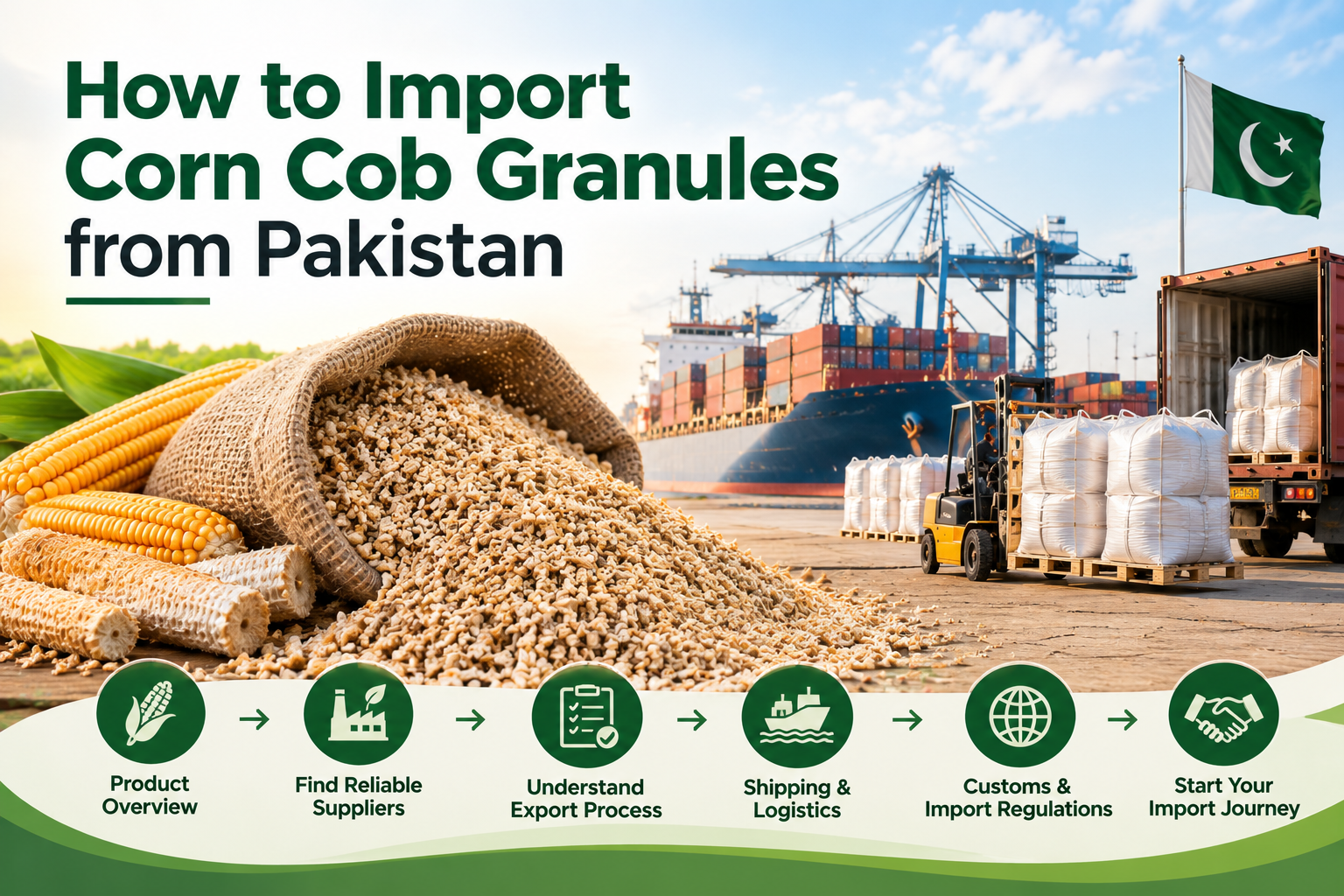
PP bags and jumbo bags are standard. Ask about bag weights and container loading, and how moisture protection is handled.
Matching Supplier Capability to Your Use
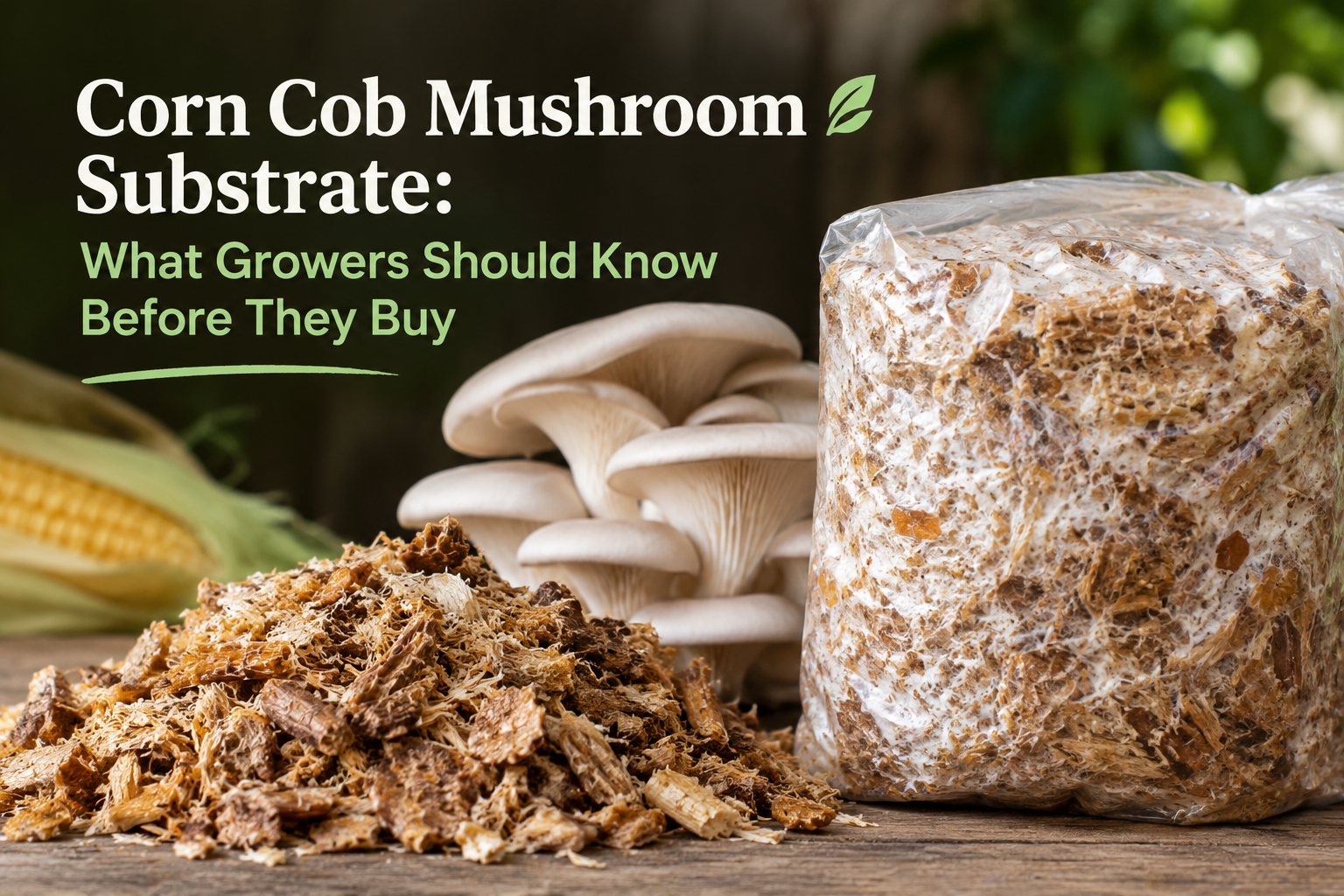
Your application should guide supplier selection. Corn cob granules are used in absorbent applications, blended with growing media and substrates, and, with care, as fibre in livestock feed. A literature review in the Journal of Microbiology, Biotechnology and Food Sciences notes that reported nutritive values for corn and cob meal are inconsistent, so feed buyers should ask for lot analysis and professional nutritional advice. Substrate buyers should trial the granules in their own recipe.
Questions to Put to Every Supplier
- What fraction of the cob is in the granules?
- What size range is available, and what is the tolerance?
- What is the maximum moisture, and how is it tested?
- How are the cobs cleaned before grinding?
- What are your minimum order quantity and lead time?
- Can you send a sample before the first order?
- What documents accompany each shipment?
- How do you handle claims if goods miss the agreed specification?
Seasonality and Continuity
Cobs follow the maize harvest, so continuity depends on planning. Ask how a supplier collects and stores material across the year and what lead times to expect. Daa Agri Limited’s company profile highlights reliable year-round raw material availability through structured seasonal sourcing as one of its selling points.
Commercial Terms and Logistics
Settle an Incoterm at the start. The Trade Development Authority of Pakistan notes that terms such as FOB and CIF are common business custom and set out each party’s costs and risks. Your freight forwarder or customs broker should confirm destination-country requirements, which vary by market and end use. A trial order before a large commitment is sensible for most first-time buyers.
Red Flags
- No willingness to provide a sample.
- No clear answer on moisture or cleaning.
- Prices far below every other offer, without explanation.
- Specifications that change between quotation and contract.
- Reluctance to put terms in writing.
Supply from Daa Agri Limited
Daa Agri Limited is a Pakistan-based agricultural processing and export company. Its profile lists corn cob granules as a high-demand core export product: cleaned, uniform granules processed to industrial grade for absorbent applications, substrate blending and livestock fibre feed. The company also describes flexible bulk supply capacity, export-ready packing in PP and jumbo bags and containerized export handling.
Buyers can send their application, preferred size range and expected volume to discuss availability and a quotation.
Conclusion
The best corn cob granules suppliers in Pakistan make their process visible: clear specifications, honest answers about moisture, uniform screening and a willingness to send samples. Test first: start with a trial order and build volume once consistency is proven.
To discuss wholesale supply, contact Daa Agri Limited at info@daaagri.com.

Turn industry knowledge into a supply conversation.
Contact GreenCore for product availability, specifications, bulk packaging and export support.