
Corn Cob Meal Export from Pakistan: Complete International Buyer’s Guide
Once the kernels come off a maize cob, what remains is a fibrous, carbon-rich core that was long treated as […]
Once the kernels come off a maize cob, what remains is a fibrous, carbon-rich core that was long treated as […]
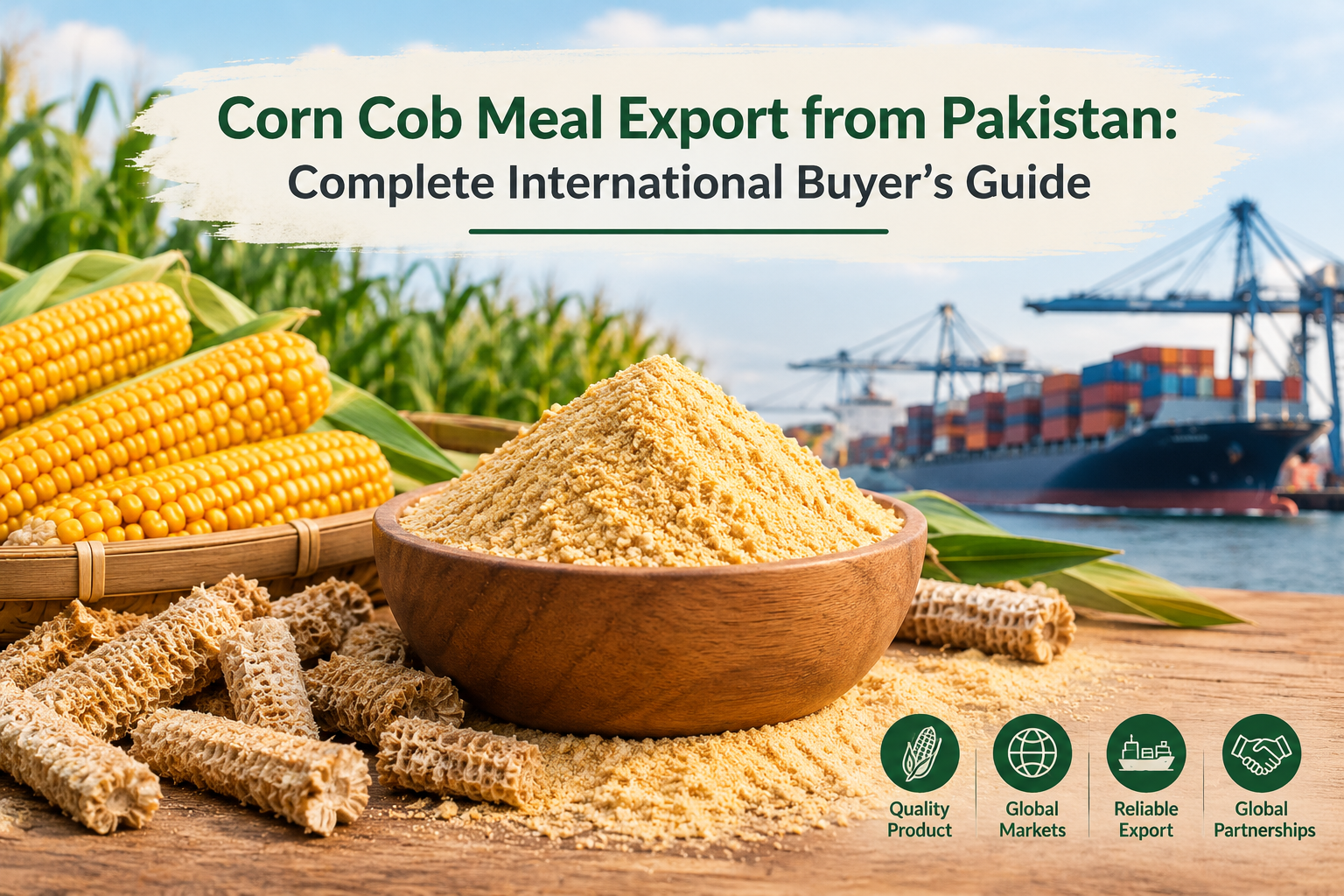
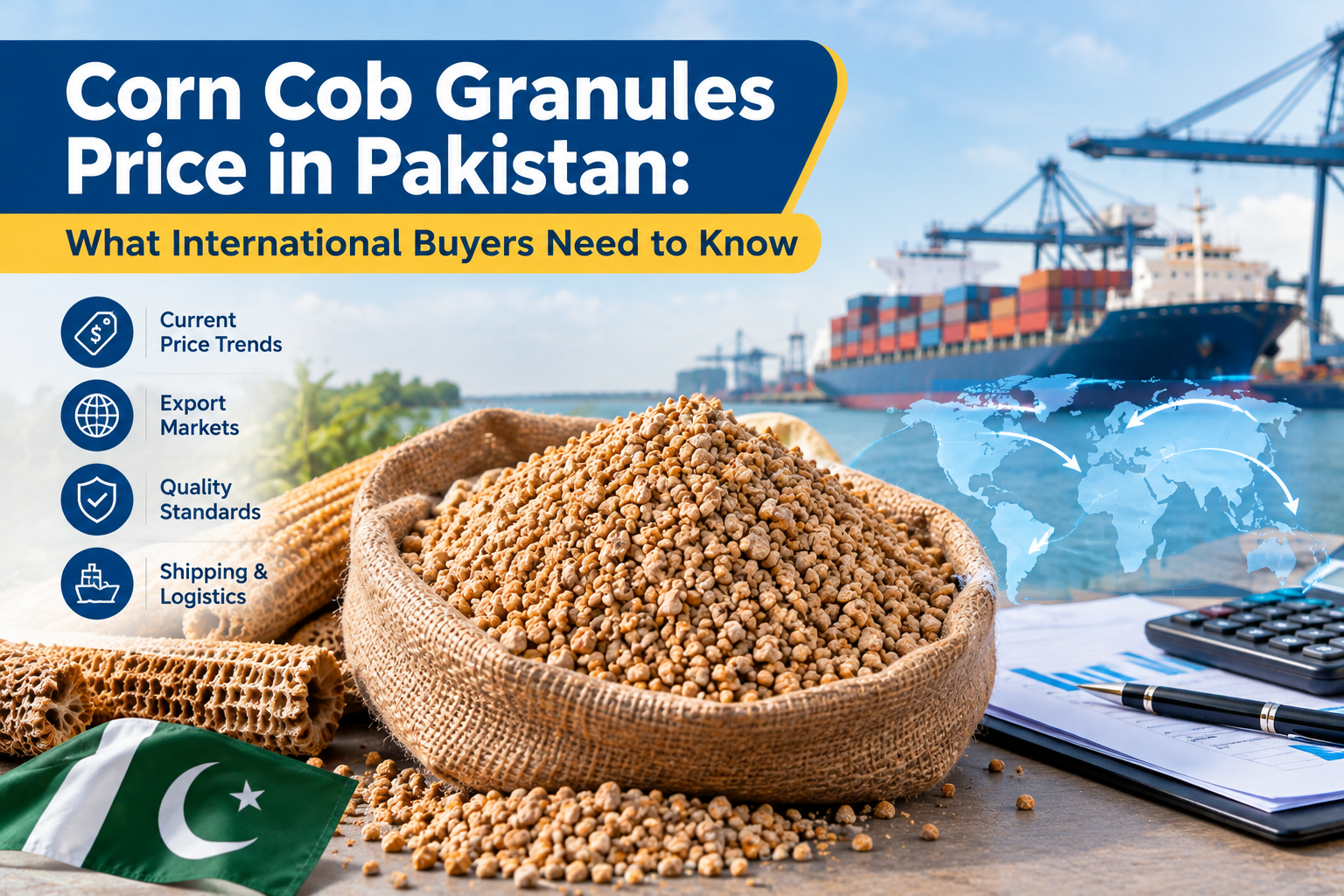
Once the kernels come off a maize cob, what remains is a fibrous, carbon-rich core that was long treated as farm waste, burned for fuel or left to rot. Today that core is ground, graded and shipped in containers to mushroom farms, feed mills and compost producers. For buyers who need a steady, affordable lignocellulosic material, corn cob meal export from Pakistan has become a practical sourcing route.
This guide walks through what corn cob meal is, where it is used, what separates a good lot from a poor one, and how a Pakistani export order actually works. If you are comparing suppliers, the checklist near the end should save you some uncomfortable surprises.
What Is Corn Cob Meal?
Corn cob meal is made by drying maize cobs and grinding them to a chosen particle size. The result ranges from coarse, chip-like material to a fine powder, depending on the screen used during milling. It is sometimes called ground corn cob, maize cob meal or corn cob powder, and buyers often use these terms interchangeably.
One point confuses the trade. The FAO’s AGROVOC vocabulary uses the closely related term corn cob mix, also called corn and cob meal, for a feed made from grain and cob together. That is a different product from pure ground cob. When you place an inquiry, clearly state that you want cob-only material and say whether you need it for feed, substrate or industrial use.
Why Buyers Look to Pakistan
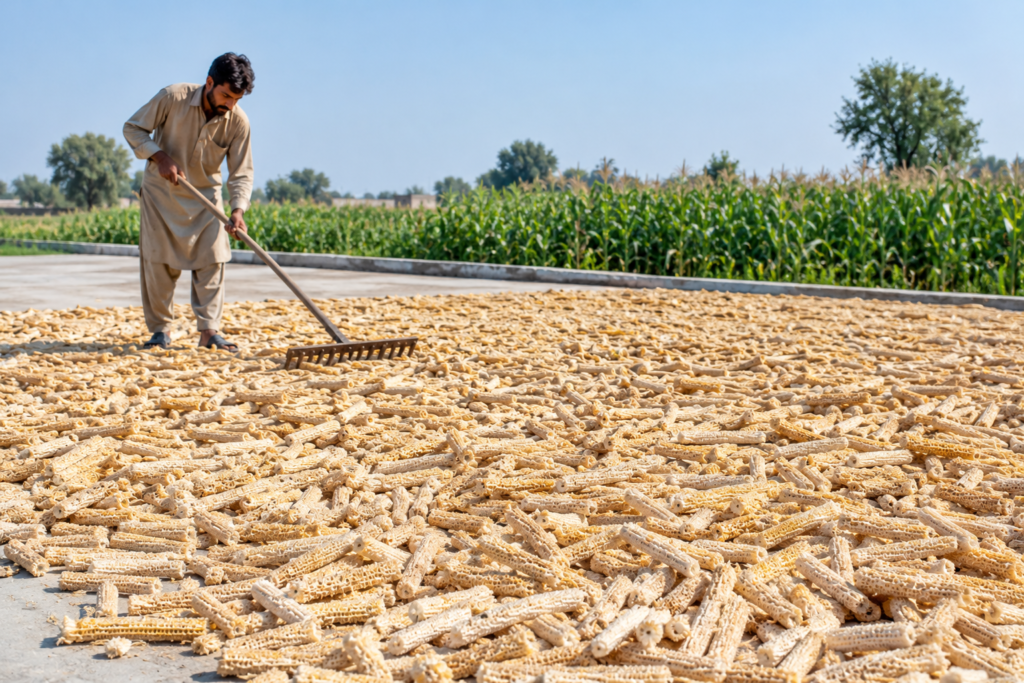
Pakistan grows maize on a large scale, mainly in Punjab, so cobs are available after every harvest season. The country’s long dry spells also suit natural sun-drying, which keeps one of the main processing costs down. A supplier that can dry cobs properly before grinding is in a much better position to control moisture, and moisture is the single biggest quality risk in this product.
Cost is the other draw. Agricultural inputs and labour in Pakistan are generally competitive against many alternative origins, which can help on landed price when freight is managed well. Pricing always moves with season, volume and specification, so treat any figure you see online as a starting point for a quotation rather than a fixed rate.
Main Uses of Corn Cob Meal
Mushroom cultivation
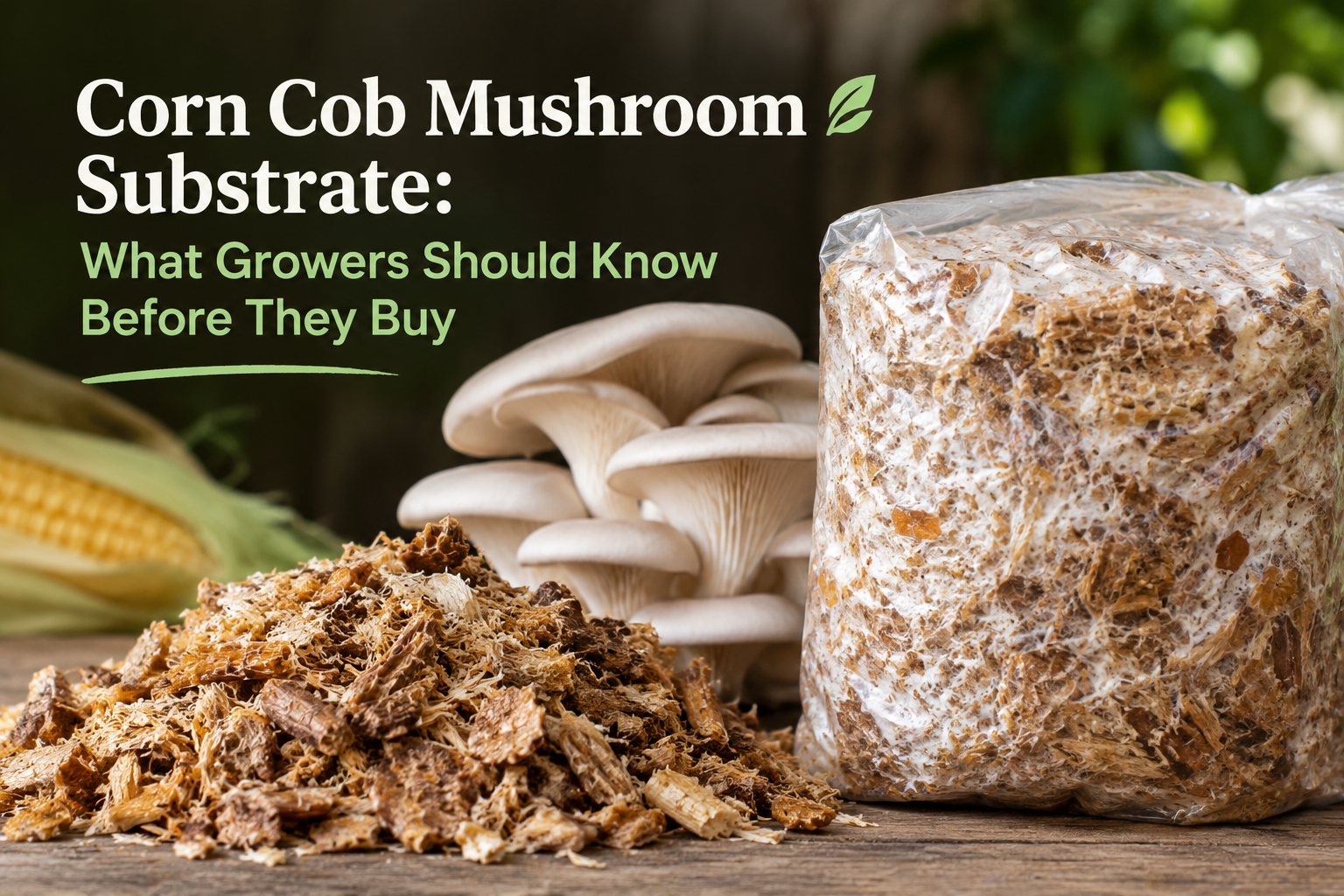
Growers use corn cob as a substrate base because it holds moisture while staying open enough for air to move through. Published research supports this. A study from Brazil examined shiitake production on corn cob substrates, and work on oyster mushrooms found that corn cob supplemented with rice bran performed well compared with other residues tested. Substrate recipes vary widely between farms, so growers usually want to specify particle size precisely.
Animal feed
In feed, ground cob serves mainly as a fibre ingredient, particularly in ruminant diets. Researchers reviewing the nutritional side have noted that cobs are widely available at low cost, but published nutrient values are inconsistent; feed buyers should therefore always request a current analysis for the lot they are buying rather than rely on generic tables.
Compost and soil conditioning
Because it is carbon-rich, cob meal is a useful bulking and balancing material in compost, and it can be used in soil conditioning programmes. Some buyers also use ground cob in absorbent and blending applications, where uniform granule size matters more than composition.
Quality Factors That Matter to Importers
Moisture and drying
Cobs that are ground while still damp can heat, develop mould and lose value in transit. Ask for the moisture level in writing, and ask how it is measured. A supplier who handles drying, cleaning and moisture checks as separate steps is generally easier to trust than one who describes the process loosely.
Particle size and mesh
Mesh size is the main specification the buyer and seller agree on. Fine material suits blending and some feed uses, while mushroom growers often prefer a coarser, more structured grind so the substrate stays aerated. Agree on a target range, request a sample, and confirm how uniform the grind will be from lot to lot.
Cleanliness
Soil, dust, stones and stray plant matter should be removed before milling. Contamination is a common source of disputes, so ask what cleaning and sorting occur before grinding and whether lots are checked before loading.
Intended use
Feed and mushroom substrate are not interchangeable. A lot suitable for one purpose may not meet the other’s needs, and import rules for feed ingredients differ by country. Confirm the destination market’s requirements for documentation and any testing before you commit.
Typical grade distinctions
| Factor | What to ask | Why it matters |
|---|---|---|
| Intended grade | Feed, mushroom or industrial? | Determines processing and handling |
| Mesh size | Target range and tolerance | Affects performance in your application |
| Moisture | Stated maximum and test method | Protects against spoilage |
| Impurities | Cleaning and sorting steps | Reduces contamination claims |
| Packing | Bag type and weight | Affects handling and freight |
How Corn Cob Meal Is Processed for Export
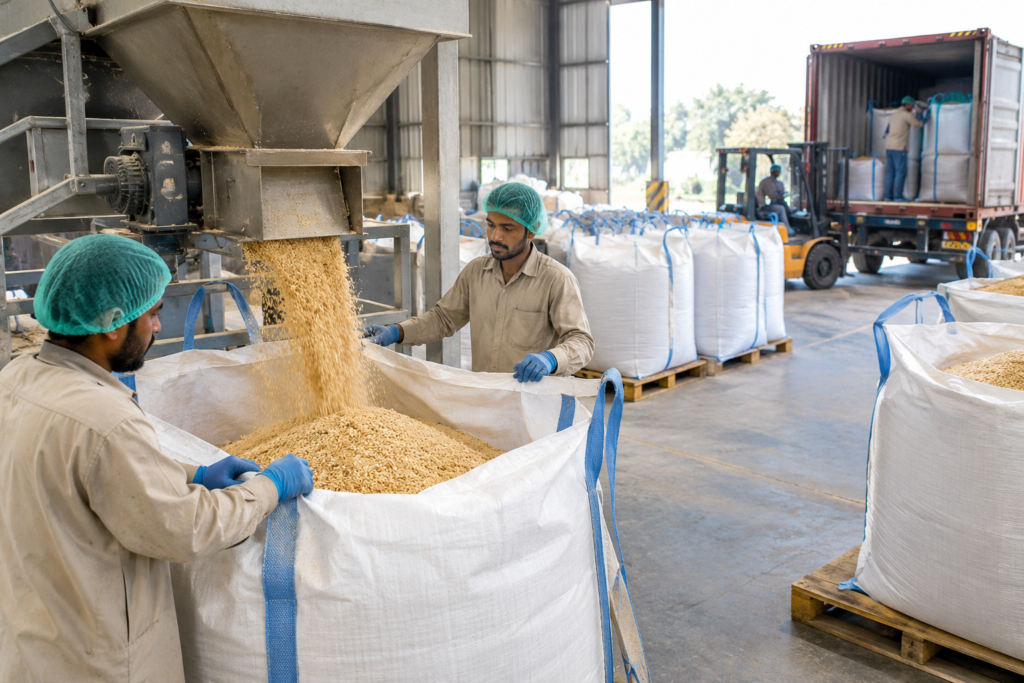
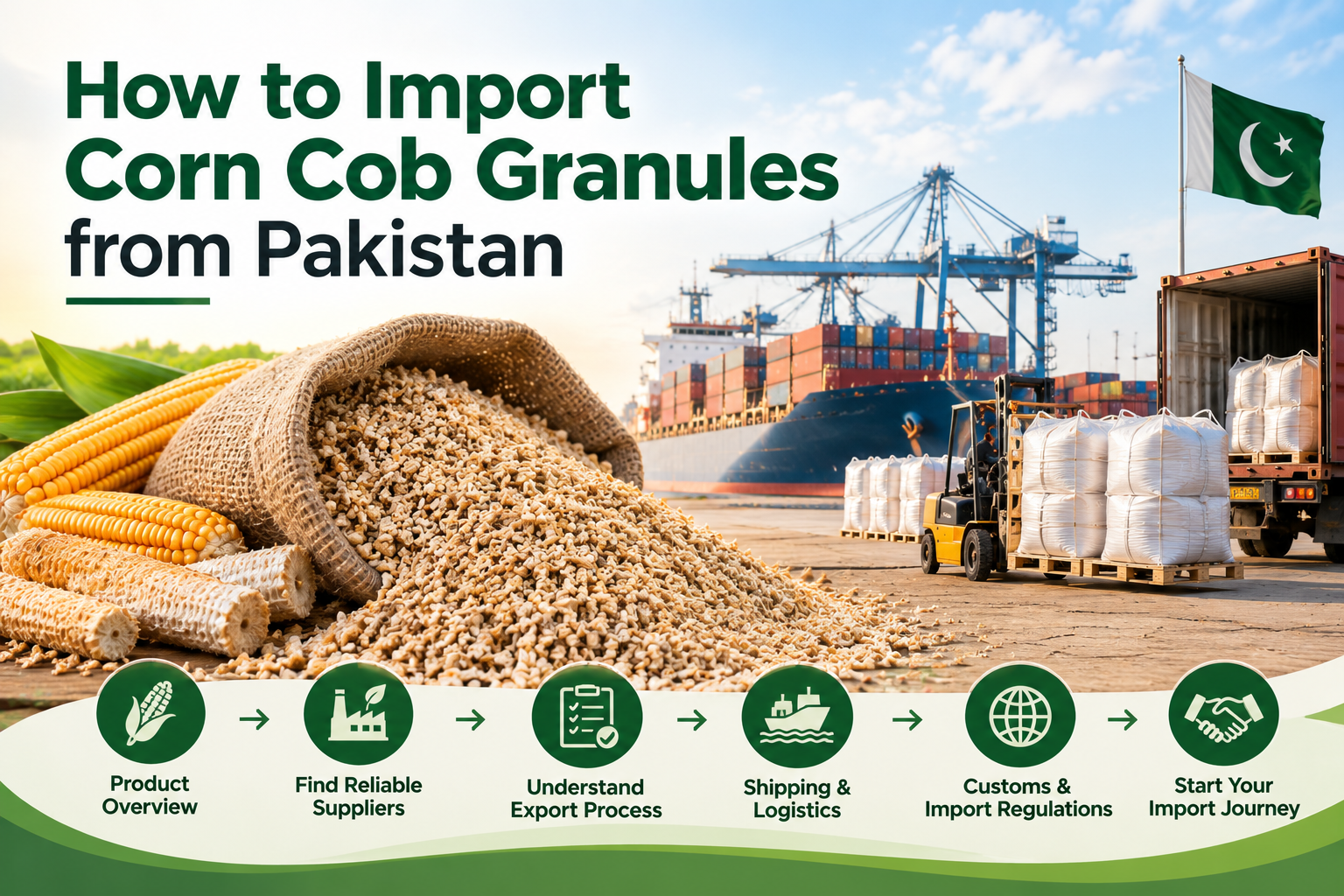
A properly run export operation follows a clear sequence. Cobs are collected from farms and local grain markets, cleaned to remove dust and foreign matter, sun-dried, then ground to the required mesh size. After grinding, the meal is moisture-checked and packed for shipment.
Daa Agri Limited describes this same chain in its company profile: direct farm and mandi sourcing across Punjab, cleaning and sorting, sun drying, size reduction to uniform mesh sizes, moisture checks and containerized export packing. The company lists corn cob meal in feed-grade and mushroom-grade forms across several mesh sizes, alongside corn cob granules and processed sugarcane residues.
Packaging, Shipping and Documentation
Corn cob meal is bulky relative to its weight, so packing choices affect freight cost. Polypropylene bags and jumbo (bulk) bags are the usual options, and the right choice depends on your receiving-end handling equipment. Daa Agri Limited lists PP and jumbo bag packaging with containerized export handling.
Keep the cargo dry throughout. Moisture ingress during shipping is a real risk for ground plant material, so ask how containers are inspected and loaded, and discuss container liners where the route or season calls for them.
On commercial terms, agree on an Incoterm early. The Trade Development Authority of Pakistan explains that FOB, CIF and similar terms are standard in international trade and define who carries cost and risk at each stage. Exporters can also find general support and market information through TDAP. Your freight forwarder or customs broker should confirm destination-country import requirements, since these change from market to market.
Questions to Ask Any Corn Cob Meal Supplier
Before awarding an order, put these questions in writing:
- Which grade and mesh size are available, and what tolerance is acceptable?
- What is the maximum moisture level, and how is it tested?
- How are cobs cleaned and sorted before grinding?
- Can you provide a sample before the first shipment?
- What packing options and bag weights do you offer?
- What documents accompany each shipment?
- What is the minimum order quantity and the usual lead time?
- How do you handle claims if a lot does not match the agreed specification?
Clear, specific answers matter more than polished marketing. Hesitation on moisture or sampling is a warning sign.
Sourcing Corn Cob Meal from Daa Agri Limited
Daa Agri Limited is a Pakistan-based agricultural processing and export company that works with farm residues and agricultural by-products, with corn cob meal as its flagship export product. According to the company profile, supply is built around a verified supplier network across Punjab, structured seasonal sourcing, and export-ready packing in PP and jumbo bags.
For buyers, the practical value lies in having one point of contact who can discuss grade, mesh size and packing before an order is placed. Send your intended use and target specification, and the team can advise on what is available.
Conclusion
Corn cob meal export from Pakistan offers importers an affordable, renewable fibre material with real demand in mushroom cultivation, animal feed and composting. The deciding factors are rarely price alone. Moisture control, consistent mesh size, clean processing and honest communication matter far more once a container is on the water. For more information about our products, services, and export solutions, please visit Daa Trade.
If you are evaluating sources, define your use case, request a sample and ask the questions listed above. To discuss specifications, quantities or a quotation, contact Daa Agri Limited at info@daaagri.com and share your requirements.
Turn industry knowledge into a supply conversation.
Contact GreenCore for product availability, specifications, bulk packaging and export support.