
Agricultural Products Export from Pakistan: A Complete Guide for International Buyers
Pakistan does not announce itself quietly in the global agri-food market. With over 22 million hectares of cultivated land, a […]
Pakistan does not announce itself quietly in the global agri-food market. With over 22 million hectares of cultivated land, a […]
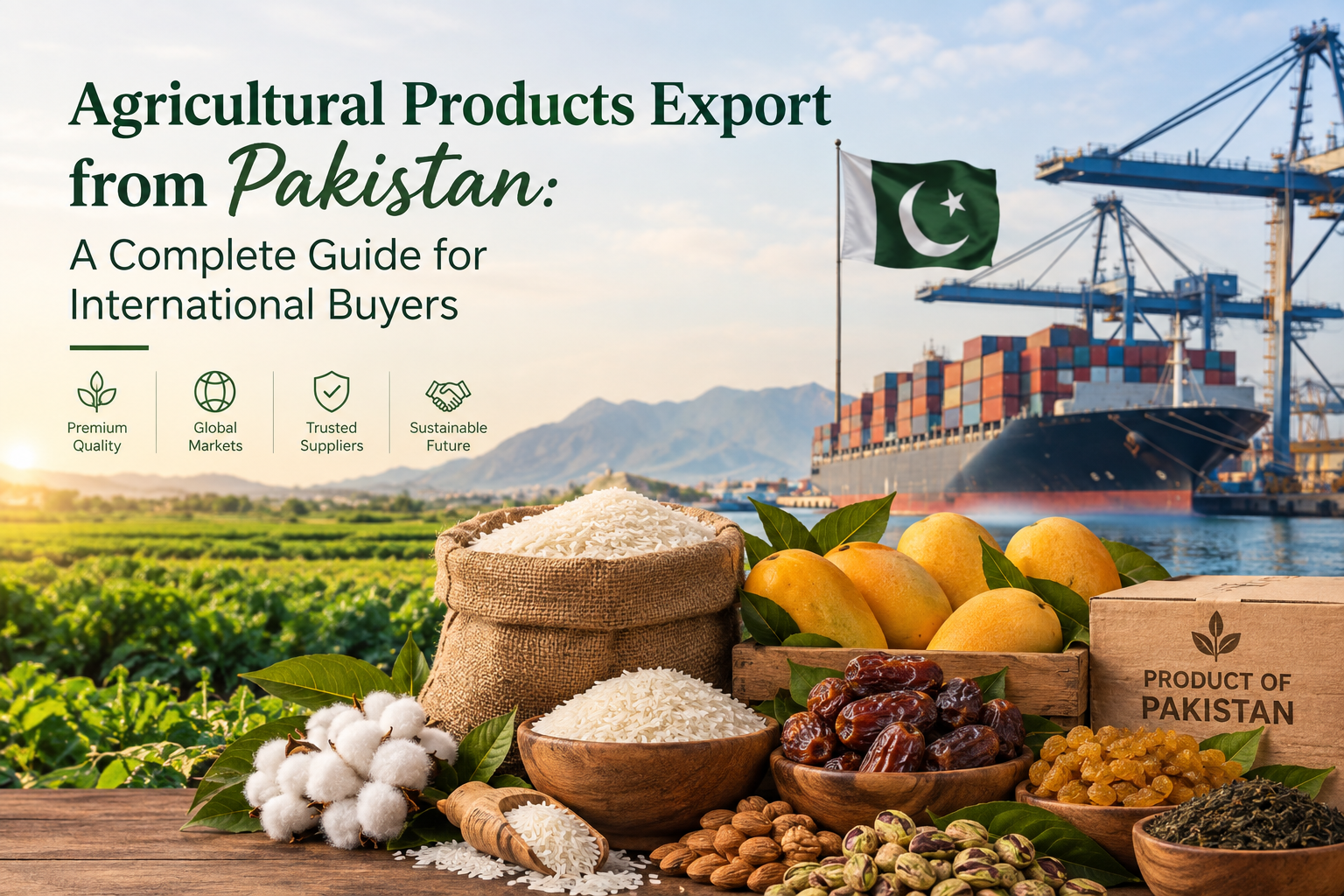
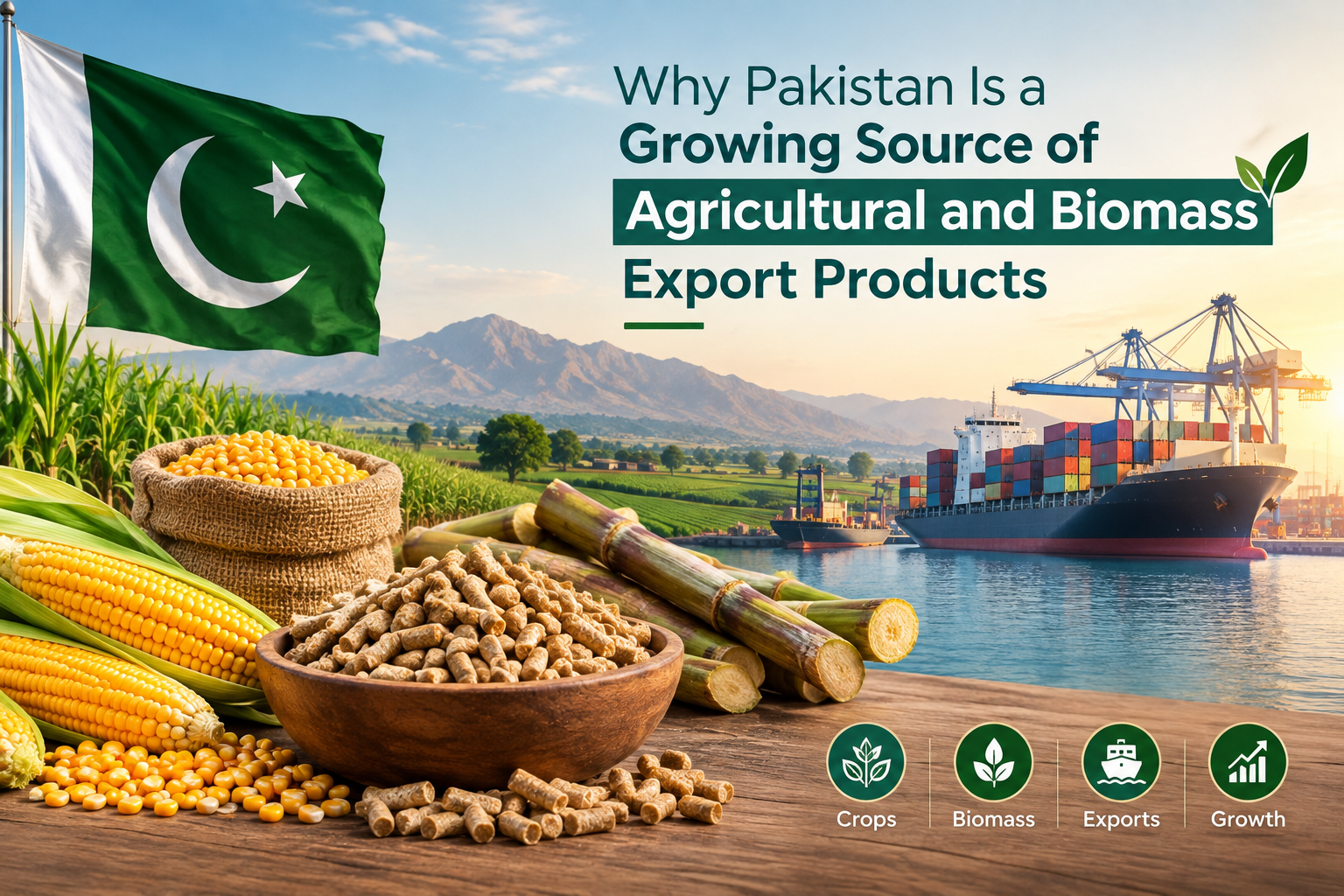
Pakistan does not announce itself quietly in the global agri-food market. With over 22 million hectares of cultivated land, a climate capable of producing both tropical and temperate crops, and a farming sector that directly employs more than a third of the national workforce, the country has been quietly building one of Asia’s more compelling agricultural export profiles. In the financial year 2023–24, Pakistani agro-food exports crossed $8 billion for the first time — a figure that represents a 37 percent increase over the previous year, driven by rice, sesame seed, meat, vegetables, and fruit.
For international buyers, importers, and procurement managers evaluating Pakistan as a sourcing destination, the opportunity is real — but so is the need to understand how the country’s export ecosystem actually works. This guide covers what Pakistan exports, which markets it serves, how the documentation and quality compliance process operates, and what buyers should evaluate before committing to a supplier relationship.
Why Pakistan Deserves Attention as an Agricultural Supplier
Several characteristics make Pakistan a serious option for buyers sourcing at scale.
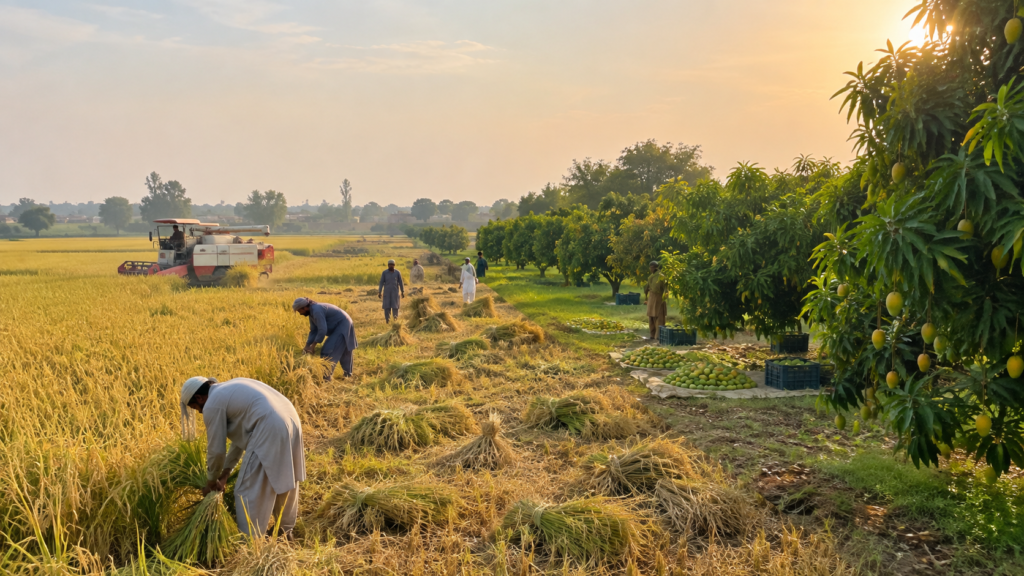
Geographic diversity of crops: The Punjab and Sindh plains produce rice, wheat, maize, and oilseeds. Khyber Pakhtunkhwa yields fruit, nuts, and specialty crops. Balochistan accounts for a significant share of the country’s apple, pomegranate, and date output. This internal geographic spread gives Pakistan year-round production across categories that few single-region suppliers can match.
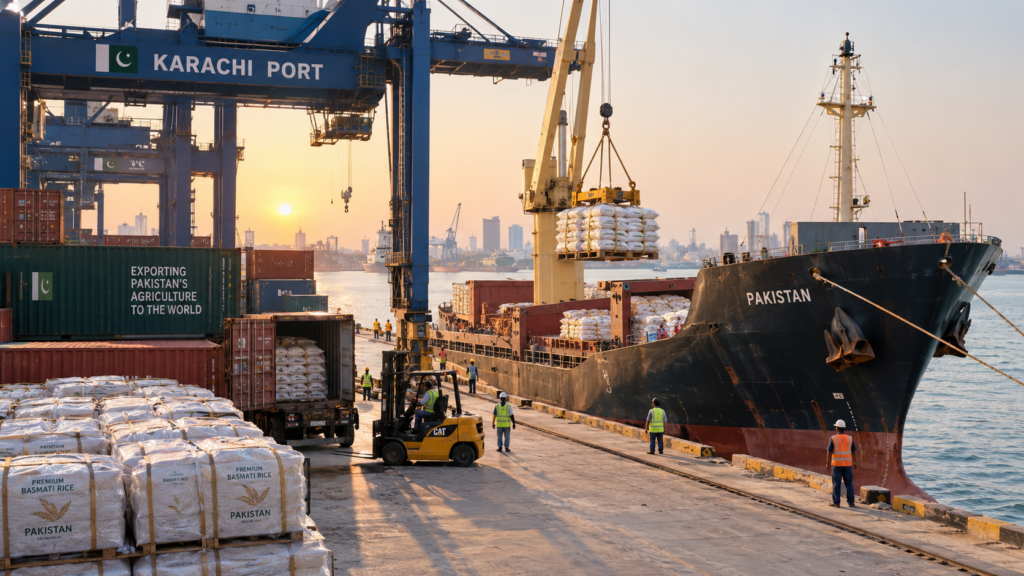
Established export infrastructure: Karachi’s port handles the majority of Pakistan’s seaborne exports, with Gwadar emerging as an additional trade gateway under CPEC-linked development. Cold-chain logistics, while still developing in some inland areas, have improved meaningfully at major processing and export hubs.
Competitive pricing: Labour costs, domestic input prices, and exchange rate positioning have historically allowed Pakistani exporters to compete on price, particularly for rice, sesame, and bulk commodities.
Growing regulatory compliance: The Trade Development Authority of Pakistan (TDAP) has been active in supporting exporters with certifications, market access work, and international exhibition participation, including the FoodAg international exhibitions that have drawn buyers from more than 75 countries. Pakistan’s rice exporters in particular have worked to meet EU pesticide residue standards, a market that now accounts for a significant share of Basmati exports.
Key Agricultural Products Exported from Pakistan
Understanding the composition of Pakistan’s agricultural export basket is the starting point for any buyer’s sourcing evaluation.
Rice
Rice is Pakistan’s single largest agricultural export. In 2023–24, rice exports generated approximately $3.88 billion, making Pakistan one of the top rice exporting nations globally. The export mix divides into two broad categories:
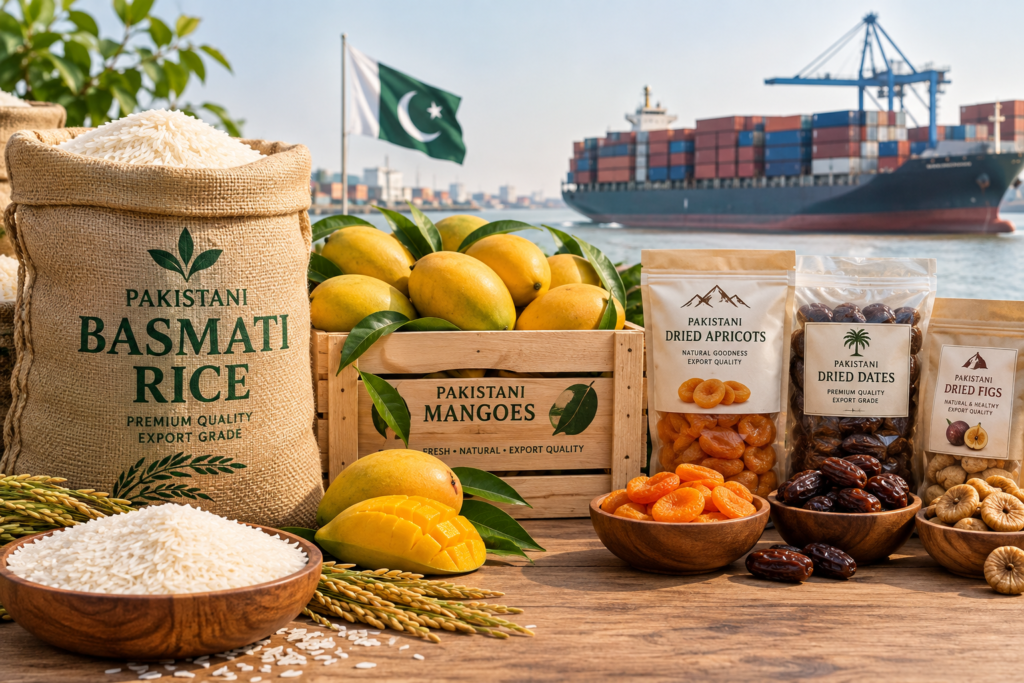
Basmati rice — long-grain, aromatic, grown primarily in the Punjab region and the foothills of the Himalayas. Pakistani Basmati is exported primarily to the Middle East, the UK, the EU, and North America, where it commands a premium in the South Asian diaspora and broader consumer market. Premium Basmati exports were valued at approximately $844 million in 2023–24.
Non-Basmati rice — including long-grain white rice (IRRI varieties), broken rice, and parboiled rice. This category accounts for the larger share of export volume and is exported to Africa, Southeast Asia, China, and parts of the Middle East. Non-Basmati exports reached approximately $2.15 billion in the same period.
For buyers, the practical distinction matters: Basmati procurement involves stricter variety authentication and aroma specifications, while non-Basmati procurement centres on moisture content, broken percentage, milling degree, and grade consistency.
Mangoes
Pakistan ranks among the world’s top mango producers, with the Sindhri, Chaunsa, and Anwar Ratol varieties drawing particularly strong demand from the UAE, UK, Saudi Arabia, and China. The mango export season runs approximately from May through September. Cold-chain integrity from orchard to port is a recurring quality concern — buyers should evaluate supplier post-harvest handling carefully and consider phytosanitary pre-clearance options where available.
Fruits and Vegetables
Beyond mangoes, Pakistan exports citrus fruits (kinnow mandarin is a major item), dates, pomegranates, apples, guavas, potatoes, and onions. Vegetable exports in FY 2023–24 were valued at approximately $399 million, with kinnow and dates also representing strong individual lines. Gulf Cooperation Council (GCC) countries are the dominant destination for fresh produce, though China and Malaysia have been growing markets.
Sesame Seed
Sesame seed has been one of Pakistan’s fastest-growing export lines in recent years. During the first half of FY 2023–24, sesame seed exports reached $364 million — a 278 percent increase on the same period the previous year — as demand from China and other Asian markets surged. Buyers in the food manufacturing and oil processing sectors have been the primary purchasers.
Meat and Poultry
Pakistan exports Halal meat — primarily beef, mutton, and poultry — to Middle Eastern markets. All meat exports require a Halal certificate for each shipment. The sector’s export value reached approximately $507 million in 2023–24, with growth potential linked to feedlot development and cold-chain investment.
Other Notable Categories
Other export lines of interest to international buyers include:
- Maize (corn): Exports of approximately $421 million in 2023–24, with growing demand from Malaysia and Vietnam for animal feed purposes
- Fish and seafood: Primarily shrimp and seafood from coastal Sindh and Balochistan, valued at approximately $406 million
- Spices: Including chilli, coriander, and cumin, valued at approximately $89 million
- Tobacco: A smaller but established category at approximately $77 million
- Oilseeds: Valued at approximately $407 million, including sesame and other oilseed varieties
Understanding Pakistan’s Export Documentation Requirements
For any buyer unfamiliar with Pakistani export procedures, the documentation framework follows internationally standard patterns with some Pakistan-specific requirements. The following are the core documents an international buyer will typically encounter.
Phytosanitary Certificate
For plant products and plant-based commodities, a Phytosanitary Certificate is issued by Pakistan’s Department of Plant Protection (under the Ministry of National Food Security and Research). This certifies that the consignment has been inspected and is free from quarantine pests as per the importing country’s requirements. Fumigation treatment — typically using aluminium phosphide — is commonly applied and noted on the certificate.
Buyers should confirm with their customs authority which specific additional declarations or import permits their country requires, as conditions vary by commodity and destination market.
Certificate of Origin
A Certificate of Origin confirming that goods were produced in Pakistan is typically issued by TDAP or a Chamber of Commerce. This document is particularly important for buyers in the US, EU, and UK where it may qualify imports for preferential duty rates under Pakistan’s active trade agreements and GSP arrangements. Buyers should verify current applicable trade preferences with their customs broker before finalising sourcing decisions.
Halal Certificate
For all meat and meat-containing products, a Halal certificate is mandatory. This is non-negotiable for exports to Muslim-majority markets and increasingly expected in other markets with Halal consumer segments. Buyers should verify the certifying body’s recognition in their destination market, as not all Halal certifiers carry equal standing globally.
Packing List and Commercial Invoice
Standard to all international shipments. These documents confirm quantities, product descriptions, HS codes, and commercial values.
Bill of Lading / Airway Bill
Issued by the carrier at port of loading — Karachi Port Trust or Port Muhammad Bin Qasim for sea freight, Jinnah International Airport for air freight.
Pakistan Single Window (PSW)
Pakistan has implemented a Pakistan Single Window system to digitise and streamline export procedures. Since 2021, the Electronic Form-E requirement for export foreign exchange declaration has been integrated into the PSW system, simplifying the process for registered exporters. International buyers working with Pakistani suppliers can ask whether the supplier is registered and active on PSW, as this is an indicator of procedural compliance.
Quality Standards and Compliance: What Buyers Need to Evaluate
Sourcing from Pakistan at scale requires a structured approach to quality verification. The country’s export performance has improved considerably, but quality consistency remains a legitimate concern in some categories and with some supplier tiers.
Pesticide Residues
The EU and UK markets in particular apply stringent maximum residue limits (MRLs) to fresh produce and rice. Pakistan’s commerce ministry and TDAP have been working with the rice export sector specifically on pesticide compliance, and Pakistan maintains a strong position in European Basmati markets — but buyers should conduct due diligence at the supplier level and not assume sector-wide compliance. Request pesticide residue test reports from accredited laboratories as part of pre-shipment documentation.
Moisture Content and Grain Quality (Rice)
For rice buyers, the key specifications to establish contractually are: moisture content (standard export grade is typically 14% or below), broken rice percentage, head rice percentage, average grain length (for long-grain varieties), and milling degree. Variations in these parameters directly affect shelf life, cooking quality, and consumer acceptance. Establish these specifications in the purchase contract and verify through independent pre-shipment inspection.
Third-Party Inspection
International inspection companies including SGS, Bureau Veritas, and Intertek operate in Pakistan and offer pre-shipment inspection services for agricultural commodities. For first-time buyers or large-value consignments, engaging an independent inspector at origin is a reasonable risk-management step that adds relatively modest cost while providing meaningful protection.
Food Safety Certifications
Larger and more established Pakistani exporters hold food safety certifications such as FSSC 22000, HACCP, or ISO 22000. While not universal, these certifications are increasingly common among exporters targeting EU, UK, and North American buyers. Request copies of current certificates and verify their validity with the issuing certification body.
Pakistan’s Key Export Markets
Understanding where Pakistan currently exports helps buyers assess existing trade relationships, logistics routes, and market acceptance.
According to TDAP data, Pakistan’s primary agricultural export destinations include:
- China: A rapidly growing market, particularly for rice (following GACC market access approvals), sesame seed, fruit, and seafood. Pakistan’s agricultural exports to China crossed $730 million in just the first eight months of 2022, with rice market access to China representing a major growth driver subsequently.
- European Union: The dominant market for Basmati rice, with Germany, the UK, the Netherlands, and Italy among the largest buyers. EU market access requires compliance with European food safety standards.
- Gulf Cooperation Council (Saudi Arabia, UAE, Kuwait, Qatar, Bahrain, Oman): A long-standing and high-volume market for rice, fresh produce, meat, and dairy. Geographic proximity and cultural affinity drive consistent demand.
- Afghanistan: A significant market for fresh vegetables, fruit, and processed food, particularly given the land border and established trade routes.
- Malaysia and Vietnam: Growing markets for Pakistani maize, seafood, and rice.
For buyers in regions not listed above, this diversity of existing markets is actually useful information: it indicates that Pakistani exporters are experienced in managing international logistics, documentation, and regulatory compliance across varied market requirements.
Evaluating Pakistani Agricultural Exporters: A Buyer’s Checklis
Not all Pakistan agricultural exporters offer the same level of capability, reliability, or compliance. The following questions help international buyers structure their supplier evaluation.
Business registration and credentials
- Is the exporter registered with TDAP and the relevant chamber of commerce?
- Do they hold an active NTN (National Tax Number) and export licence?
- Are they listed or verified through Pakistan Single Window?
Product-specific certifications
- Does the exporter hold current Halal certification (for meat and food products) from a recognised certifying body?
- Do they hold food safety management certifications (HACCP, FSSC 22000, ISO 22000)?
- Can they provide third-party pesticide residue testing reports from accredited laboratories?
Quality consistency
- Can the exporter provide samples ahead of order commitment?
- What are their internal quality control procedures at intake, during processing, and pre-shipment?
- Do they welcome third-party pre-shipment inspection?
Logistics and export experience
- Which ports and freight routes do they typically use?
- What is their track record with your target destination market?
- Can they provide references from existing buyers in comparable markets?
Financial and contractual terms
- What payment terms do they work with (LC at sight, deferred LC, advance payment, open account)?
- What is their standard contract structure for quality disputes and short delivery?
These questions do not represent an exhaustive due diligence process, but they give a structured starting point for narrowing a supplier list before committing to sampling, pilot orders, and ongoing contracts.
Practical Logistics Considerations
Port of loading. Karachi Port Trust (KPT) and Port Muhammad Bin Qasim (PMBQ) handle the overwhelming majority of Pakistan’s agricultural export volume. Most rice, sesame, and bulk commodity exports move through PMBQ. Karachi’s port connectivity covers direct and transshipment services to major global hubs including Dubai (Jebel Ali), Singapore, Rotterdam, Felixstowe, and Chinese ports.
Transit times. Approximate sea freight transit times from Karachi: 6–10 days to Dubai, 18–22 days to Rotterdam, 22–28 days to Shanghai (via transshipment), 28–35 days to US East Coast ports. Buyers should build these lead times into procurement planning alongside processing and documentation time at origin.
Cold chain for fresh produce. For temperature-sensitive products — fresh mangoes, kinnow citrus, fresh vegetables — reefer container availability, pre-cooling facilities at packhouses, and transit time management are critical variables. Buyers sourcing fresh produce should evaluate exporter facilities carefully and discuss cold-chain management procedures explicitly.
Inland logistics. Pakistan’s major growing regions (central Punjab for rice and wheat, Sindh for rice and sugarcane, Balochistan for fruit) have road access to Karachi, though infrastructure quality varies. Lead time from farm or processing facility to port should be clarified with the exporter, particularly for seasonal fresh produce where timing matters.
Common Procurement Risks and How to Manage The
Quality substitution. Particularly for commodities like Basmati rice where variety authentication matters, confirm that export lots have been tested by an accredited laboratory for variety purity. Authenticated Basmati is a protected geographical indication in Pakistan; buyers in Europe benefit from this protection but should still verify at source.
Documentation delays. Phytosanitary certificate issuance, inspection scheduling, and shipping booking can create timeline pressure. Build sufficient lead time into initial orders and discuss realistic loading schedules with exporters before finalising purchase contracts.
Currency and payment risk. Pakistani exporters typically prefer letters of credit for new buyer relationships. While open account terms may become available once trust is established, a confirmed irrevocable letter of credit protects both sides in the early stages of a relationship.
Regulatory changes. Export regulations, MRL requirements in destination markets, and phytosanitary conditions can change. Buyers and their customs brokers should stay current on applicable regulations for their specific commodity and destination combination.
Working with Daa Agri Limited
For international buyers looking for a reliable point of contact in Pakistan’s agricultural export sector, Daa Agri Limited offers sourcing and export services across Pakistan’s major agricultural product categories. Whether you are evaluating rice varieties, seasonal fresh produce, or bulk commodities for your supply chain, the team at Daa Agri can assist with product specifications, sampling, documentation guidance, and export logistics.
To discuss your sourcing requirements or request product information, contact the Daa Agri team directly through the website.
Frequently Asked Questions
What are the most commonly exported agricultural products from Pakistan?
Rice is the largest single export category, accounting for nearly $3.88 billion in the 2023–24 financial year. Other major categories include sesame seed, meat and poultry, fish and seafood, vegetables, fruits (especially mangoes and kinnow citrus), maize, spices, and oilseeds.
Does Pakistan rice meet EU food safety standards?
Pakistani Basmati rice exporters have worked substantially to comply with EU maximum residue limit (MRL) requirements, and the EU remains a major destination market. However, compliance is at the exporter and lot level, not uniformly across all suppliers. Buyers targeting the EU market should verify pesticide residue testing documentation and supplier certification status before committing to procurement.
What documentation will I receive as an international buyer importing from Pakistan?
Standard documentation includes a commercial invoice, packing list, bill of lading, certificate of origin (typically issued by TDAP or a Chamber of Commerce), phytosanitary certificate (for plant products), and — for meat and food products — a Halal certificate. Some destination markets require additional attestations; buyers should confirm requirements with their customs broker.
How do I verify a Pakistani exporter’s credentials?
Exporters registered with TDAP and operating through Pakistan Single Window can be verified through these official channels. Requesting copies of export licences, food safety certifications, and third-party inspection reports — and verifying them directly with the issuing bodies — is standard practice for international procurement.
What is the typical minimum order quantity for Pakistani rice exports?
MOQ varies by supplier and product type. For bulk commodity rice (non-Basmati IRRI varieties), exporters typically work in full container loads (20-foot or 40-foot containers). For Basmati and specialty varieties, smaller orders may be possible through trading companies. Buyers should discuss specific requirements directly with exporters or sourcing agents.
Which quality certifications should I look for in a Pakistani agricultural exporter?
For food exporters, HACCP, FSSC 22000, and ISO 22000 are the most commonly held certifications among larger and more established operations. Halal certification is essential for meat and food products. TDAP registration and a valid National Tax Number are baseline requirements for any legitimate export operation.
Turn industry knowledge into a supply conversation.
Contact GreenCore for product availability, specifications, bulk packaging and export support.