
Corn Cob Meal Export from Pakistan: Applications, Benefits & Buyer Guide
Corn cob meal has emerged as a valuable agricultural byproduct in the global livestock feed industry, and Pakistan sits at […]
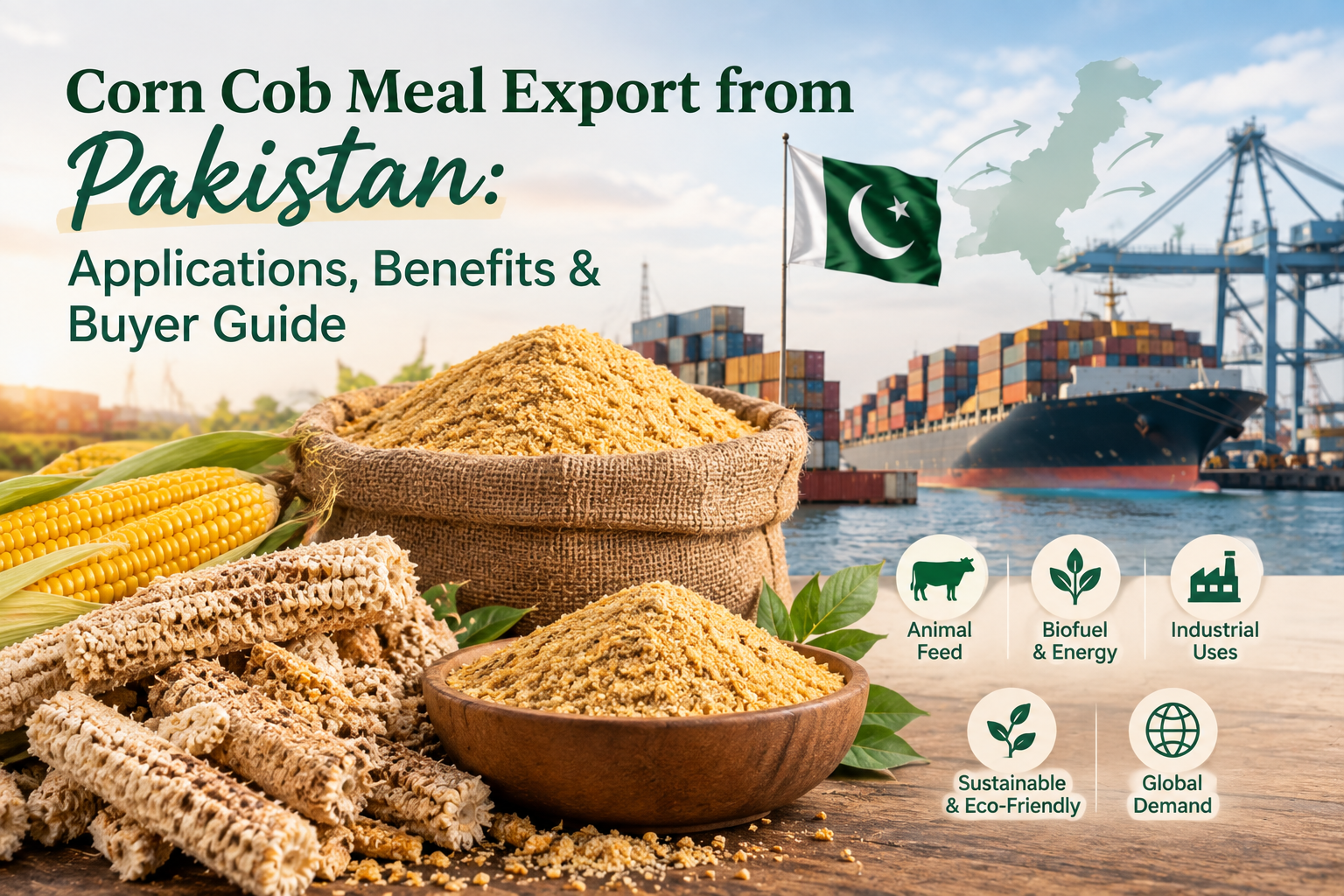
Corn cob meal has emerged as a valuable agricultural byproduct in the global livestock feed industry, and Pakistan sits at […]
Corn cob meal has emerged as a valuable agricultural byproduct in the global livestock feed industry, and Pakistan sits at a unique position to capitalize on this growing demand. As poultry, dairy, and ruminant operations worldwide seek cost-effective feed solutions, understanding the sourcing, specifications, and practical applications of corn cob meal becomes essential for importers, distributors, and livestock operators.
This guide explores what corn cob meal is, why Pakistan is becoming a recognized exporter, and what buyers need to evaluate when sourcing this commodity.
What Is Corn Cob Meal and Where Does It Come From?
Corn cob meal is the ground product of whole corn (maize) kernels and the fibrous central core of the ear—processed together through milling. Unlike corn flour, which contains only the kernel, corn cob meal retains the structural fiber from the cob, creating a feed ingredient with a balanced nutritional profile suited to livestock requirements.
Pakistan generates approximately 6 million tons of corn cobs annually as a byproduct of domestic corn production. For years, this material was underutilized or discarded. However, advancing agricultural processing techniques and growing global demand for sustainable, low-cost feed ingredients have positioned Pakistan as a potential exporter of processed corn cob meal.
The processing transforms raw cobs into a standardized meal suitable for direct feed incorporation, animal nutrition formulations, and industrial applications. This value-addition step allows Pakistani processors to capture export market opportunities that would otherwise remain untapped.
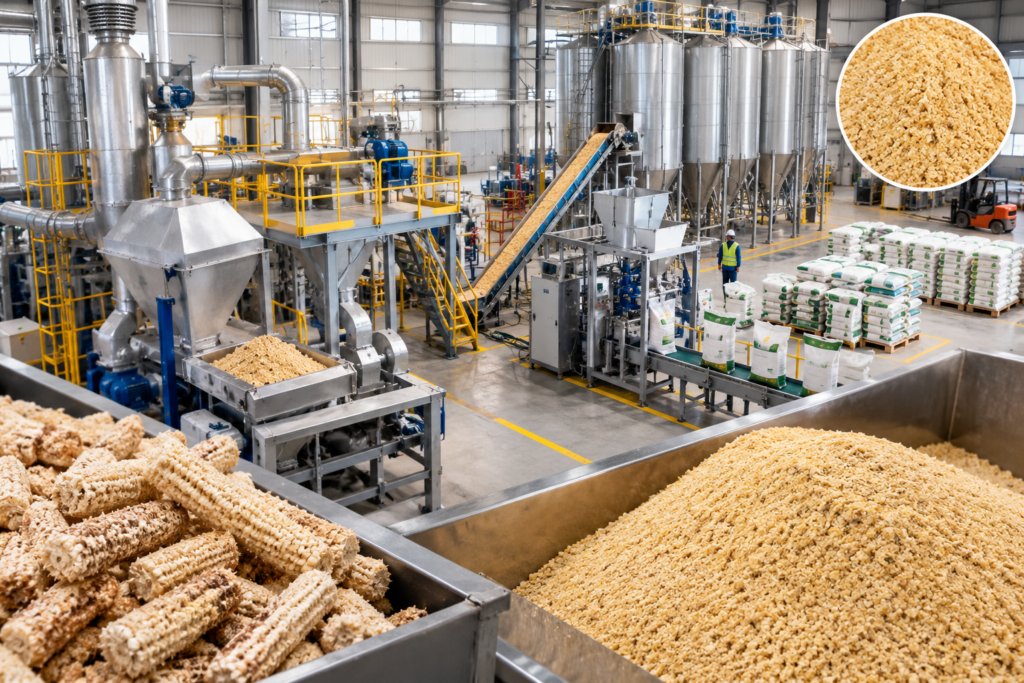
Nutritional Composition and Feed Value
The appeal of corn cob meal lies in its dual nutritional profile. The kernel component contributes digestible carbohydrates and energy—typically 65–75% starch content. The cob component supplies structural fiber, which plays a functional role in ruminant digestion and feed palatability in mixed rations.
Research from academic institutions confirms that corn and cob meal provides approximately 2.8–3.0 Mcal/kg of metabolizable energy for ruminants, making it comparable to corn silage but with higher starch availability. This energy density, combined with fiber contribution, positions corn cob meal as a practical alternative to higher-cost ingredients in balanced feed formulations.
For ruminants specifically, the fiber in corn cob meal supports natural rumen function. Cattle, sheep, and goats can convert the structural components into volatile fatty acids, which are essential for milk production and growth. The starch component ferments in the rumen, providing readily available energy for microbial protein synthesis.
Monogastric animals—poultry and swine—can also utilize corn cob meal, though typically at lower inclusion levels (15–30%) due to higher fiber digestibility constraints in their shorter digestive tracts. When processed to appropriate particle size and supplemented with enzyme products, corn cob meal can contribute meaningfully to broiler, layer, and growing pig formulations.
Primary Applications in Global Livestock Feed
Ruminant Rations
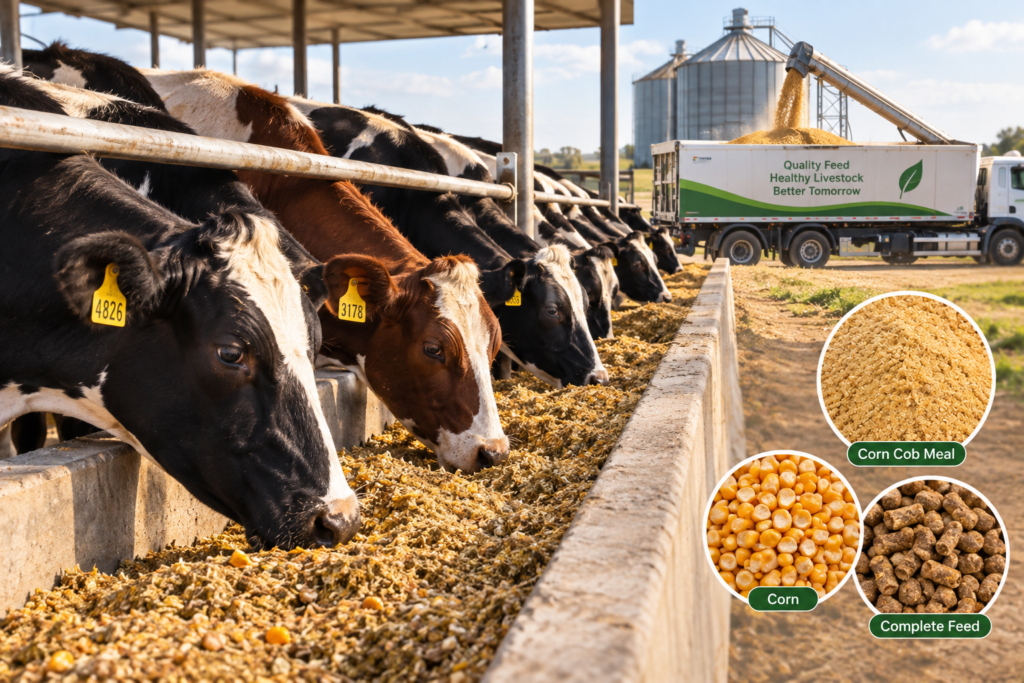
Dairy and beef operations use corn cob meal as both an energy and fiber source. In total mixed rations (TMR), it serves as a forage extender and cost-reduction ingredient when alfalfa or hay prices rise. The fiber in corn cob meal improves rumen health and reduces acidosis risk when combined with high-concentrate feeds.
Dairy farmers have reported successful inclusion of corn cob meal at 15–25% of dry matter in lactating cow rations, with maintained milk production and improved feed efficiency when properly balanced with protein and mineral supplementation.
Poultry Feed
Broiler and layer operations incorporate finely ground corn cob meal as an energy ingredient, typically at 5–15% of the diet. The particle size matters significantly—very coarse cobs can impair feed intake and performance in young birds, while appropriate grinding ensures consistent feed consumption.
Aquafeed Formulations
Fish farming operations, particularly in Asia, use corn cob meal as a binder and energy source in extruded feeds. The fiber aids pellet integrity without excessive shrinkage during processing.
Industrial and Bedding Applications
Beyond animal feed, ground corn cobs serve as absorbent bedding material for livestock facilities, industrial abrasive media, and even biofuel applications. These secondary markets provide price stability and additional demand channels for exporters.
Quality Parameters Buyers Should Evaluate
When sourcing corn cob meal from Pakistan or any exporter, several specifications determine fitness for use:
Particle Size: Feed applications require uniform grinding, typically 2–4 mm in diameter. Inconsistent particle size indicates poor processing control and can result in feed segregation in storage and feeding equipment.
Moisture Content: Export-standard corn cob meal should contain 10–12% moisture. Higher moisture increases mold and aflatoxin risk; lower moisture may indicate over-drying, which reduces nutrient availability.
Color: Uniform cream to light brown color suggests proper drying and storage. Dark or discolored meal may indicate mold contamination or storage temperature abuse.
Bulk Density: Typically 500–600 kg/m³. Lower density may suggest inadequate compaction or excessive dust; higher density can indicate over-moisture or caking.
Fiber Content: Crude fiber should range from 8–12%, depending on whether the product includes cob at the stated ratio. Fiber analysis via proximate composition (fiber, ash, protein, fat) is essential for accurate feed formulation.
Contamination: Visual inspection for foreign material (stones, metal fragments, plastic) is standard. Suppliers should demonstrate cleaning protocols and quality control procedures.
Mycotoxin Testing: This is the most critical compliance requirement. Aflatoxin contamination in corn-derived products remains a significant trade barrier, particularly for exports to the EU, North America, and Middle East. Buyers should require certificates of analysis from accredited laboratories confirming aflatoxin levels below 10 ppb (parts per billion) for animal feed applications.
Documentation and Export Requirements from Pakistan
Pakistani exporters must comply with several regulatory frameworks:
Customs and Tariff Classification: Corn cob meal typically falls under HS Code 1104.30 (Cereal meal and flour; of maize). Accurate classification on commercial invoices, packing lists, and bills of lading prevents customs delays and re-assessment.
Phytosanitary Certification: Pakistan’s Department of Plant Protection issues phytosanitary certificates (PSC) confirming the product is free from regulated pests and diseases. Buyers in many countries legally require this document.
Certificate of Analysis: Independent laboratory testing confirms nutritional content and aflatoxin compliance. Buyers should request testing from internationally recognized labs (SGS, Bureau Veritas, or local Pakistani laboratories certified to ISO 22000 standards).
Invoice and Packing Details: Clear product description, quantity, packaging type, and destination country facilitate customs clearance at both ends. Any discrepancies between documentation can trigger inspections and delays.
Shipping and Port Logistics: Bulk corn cob meal typically moves through seaports serving Karachi, with distribution inland to wholesalers, feed mills, and end-users. Freight rates and port schedules significantly influence delivered cost competitiveness.
Advantages for Import Buyers
Cost Efficiency: Corn cob meal typically costs 30–50% less than whole corn grain by weight, making it attractive when formulating price-sensitive rations.
Sustainability: Using corn cobs as feed leverages agricultural waste, reducing environmental burden and improving sustainability profiles for conscious buyers.
Supply Reliability: Pakistan’s large corn production base and underutilized cob availability make consistent supply feasible for multi-year contracts.
Functional Benefits: In mixed rations, corn cob meal improves feed texture, reduces dust, aids pellet binding, and enhances palatability compared to some alternative ingredients.
Key Questions to Ask Pakistani Suppliers
Before committing to a purchase or contract, buyers should clarify:
- What is your minimum order quantity, and what flexibility exists for smaller trial shipments?
- Can you provide references from current international buyers?
- What certifications (ISO 22000, HACCP, FSSC 22000) does your facility hold?
- How frequently can you provide fresh laboratory analysis, and which lab conducts testing?
- What is your typical lead time from order confirmation to port loading?
- Do you offer sampling for quality verification before full shipment?
- What payment terms and inspection protocols are available?
- Can you meet specific moisture, fiber, or particle size specifications customized to my feed formulation?
Common Challenges and Risk Mitigation
Storage and Humidity Management: Corn cob meal can absorb moisture during transit and storage. Proper warehousing with climate control, sealed packaging, and desiccant use prevents quality degradation.
Freight Cost Volatility: Bulk commodities are sensitive to shipping rates and fuel costs. Quote validity windows and freight term clarity (FOB vs. CIF) protect both parties from unexpected cost swings.
Regulatory Divergence: Import requirements vary by destination country. EU regulations, Middle Eastern standards, and North American specifications differ on aflatoxin limits, documentation, and packaging. Confirm all destination-specific requirements with your buyer before shipment.
Quality Consistency: Inconsistent supply of corn cobs or variable milling processes create batch-to-batch variation. Long-term contracts with defined specifications and regular testing reduce this risk.
FAQ
Q: Is corn cob meal safe for all livestock?
A: Corn cob meal is suitable for ruminants at higher inclusion levels (up to 30% of dry matter). For poultry and pigs, inclusion is typically lower (5–20%) due to higher fiber digestibility limits. Horses can also consume moderate levels. Always balance with protein and mineral sources to meet complete nutritional requirements.
Q: How should corn cob meal be stored to prevent spoilage?
A: Store in a cool, dry location with <12% moisture. Use sealed bins or bags with desiccant packs if humidity exceeds 70%. Ensure proper ventilation to prevent condensation. Inspect regularly for mold, odor, or discoloration. Bulk storage facilities should employ climate control systems.
Q: What is the typical shelf life?
A: When stored correctly (low moisture, cool temperature, protected from pests), corn cob meal maintains quality for 6–12 months. After this period, laboratory re-testing is recommended to confirm nutritional content and aflatoxin levels remain acceptable.
Q: Can corn cob meal be pelleted for animal feed?
A: Yes. The fiber in corn cob meal aids pellet binding and durability. Finely ground corn cob meal (2–3 mm) pellets well, and the product is commonly used in pelleted feed formulations for broilers, layers, and ruminants.
Q: What certifications indicate a reliable supplier?
A: Look for ISO 22000 (Food Safety Management), HACCP certification, and FSSC 22000 accreditation. Additionally, third-party testing from recognized labs and export documentation from government agencies (phytosanitary certificates) demonstrate compliance commitment.
Q: Are there any trade restrictions on corn cob meal imports?
A: Restrictions vary by destination. The EU has strict aflatoxin limits (≤5 ppb for certain applications). The US, Canada, and Middle Eastern countries have specific requirements. Verify destination-specific regulations before shipping.
Q: How does the price of corn cob meal compare to other feed ingredients?
A: Corn cob meal typically costs 30–50% less than whole corn by weight, making it economical for blended rations. However, freight costs significantly influence final landed price. Request comparative quotes from multiple suppliers.
Taking the Next Step
Sourcing reliable corn cob meal from Pakistan requires understanding product specifications, regulatory requirements, and the practical needs of your livestock operation or feed mill. The combination of cost efficiency, functional feed properties, and Pakistan’s production capacity makes it a logical sourcing destination.
When evaluating suppliers, prioritize documentation, laboratory testing, and clear communication about your specific requirements. Whether you’re formulating dairy rations, poultry feeds, or aquafeed, proper specification and quality control ensure consistent animal performance and cost predictability.
Ready to explore corn cob meal sourcing options? Visit Daa Agri’s product offerings to learn more about available supplies, or reach out directly to discuss your specific feed formulation requirements and order details.
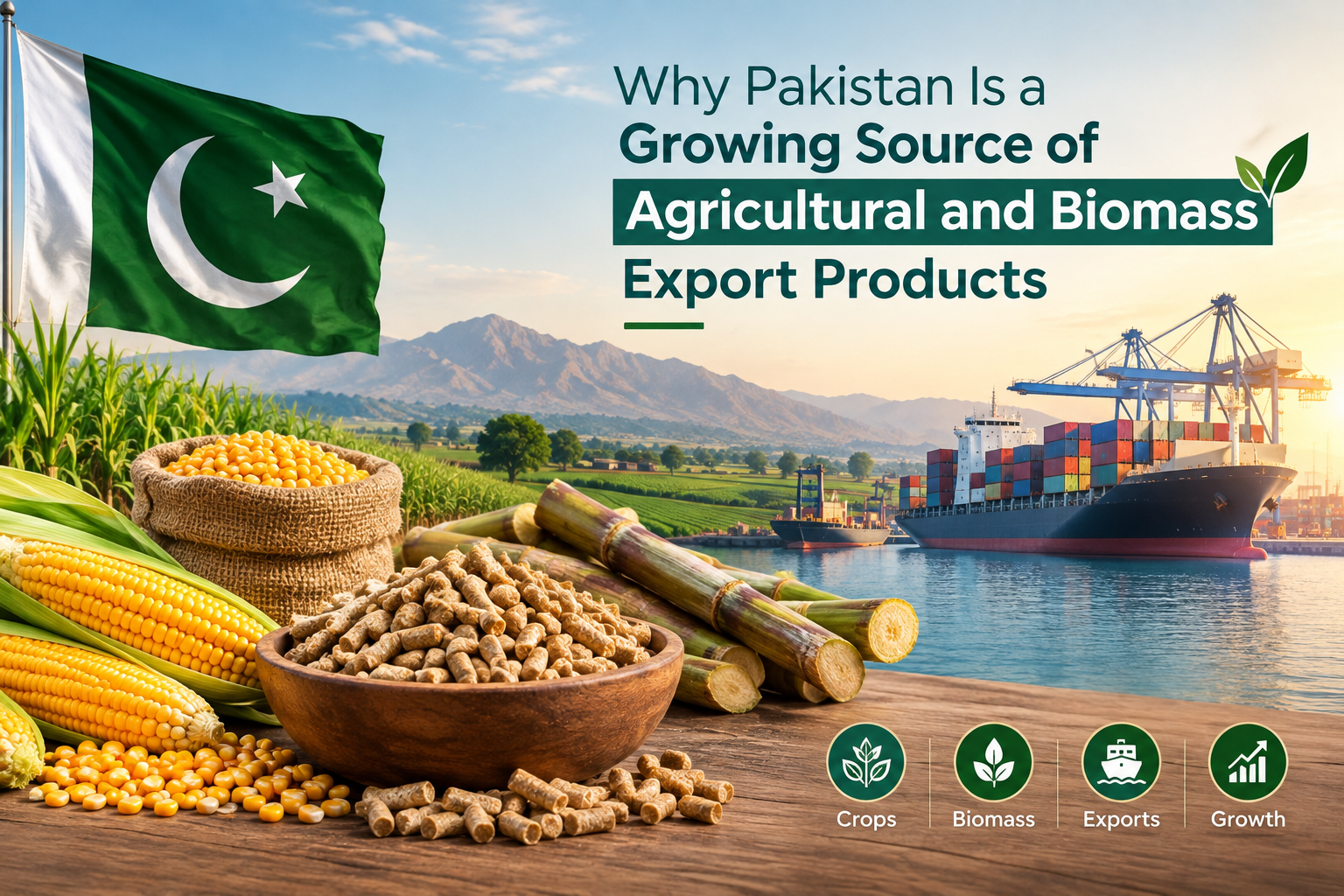

Turn industry knowledge into a supply conversation.
Contact GreenCore for product availability, specifications, bulk packaging and export support.