
Corn Cob Export from Pakistan: Uses, Quality & International Market Opportunities
The global agricultural sector continues to evolve beyond traditional commodity exports. Pakistan has emerged as a significant producer of corn, […]
The global agricultural sector continues to evolve beyond traditional commodity exports. Pakistan has emerged as a significant producer of corn, […]
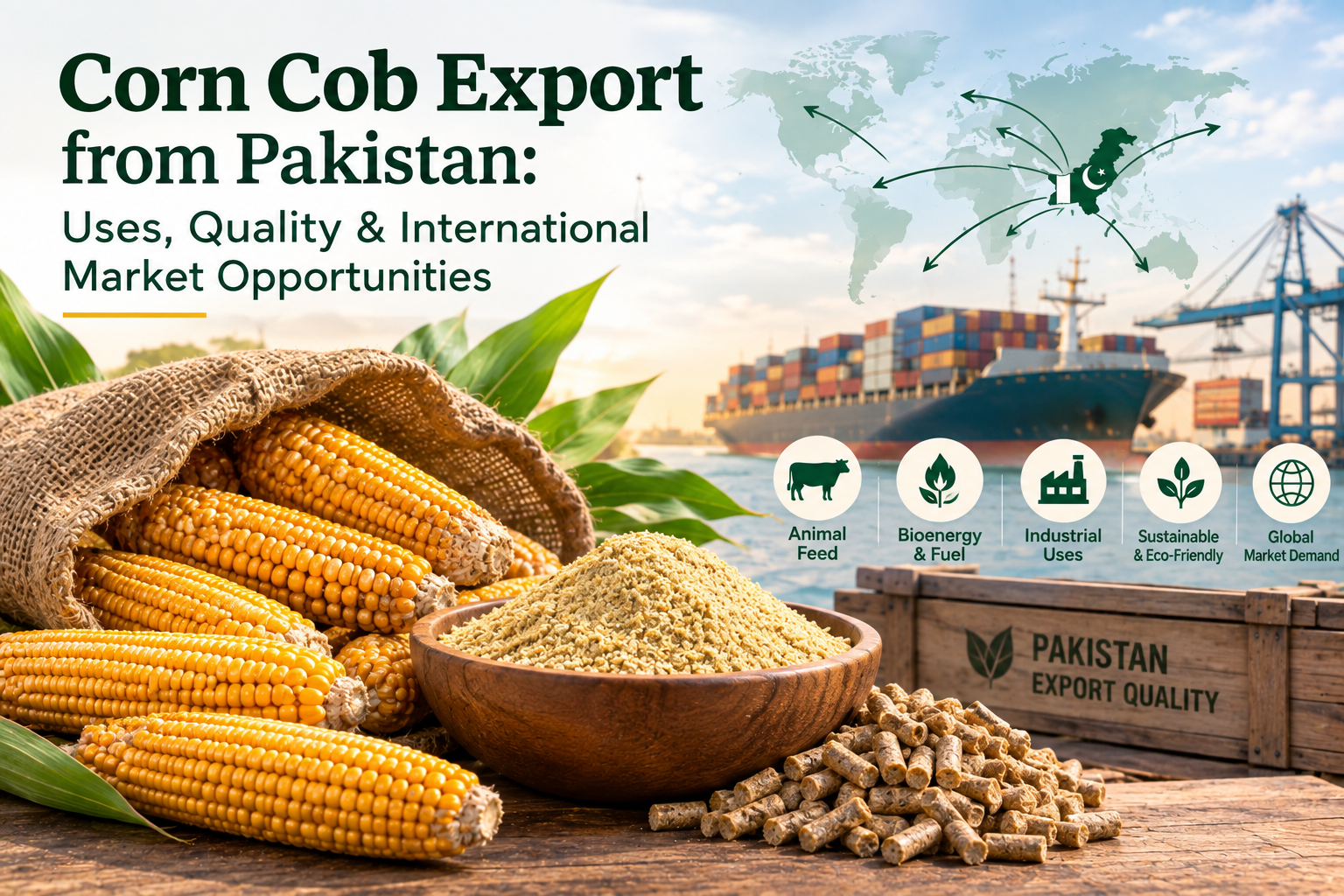
The global agricultural sector continues to evolve beyond traditional commodity exports. Pakistan has emerged as a significant producer of corn, and increasingly, the country’s corn cob industry represents an underutilized opportunity for exporters seeking to diversify into high-value agricultural by-products. Corn cobs—the woody core that remains after kernels are removed—have transformed from waste to a sought-after raw material across multiple international industries. Understanding the global demand landscape, quality requirements, and export pathways is essential for Pakistani exporters looking to tap into this growing market.
Understanding Corn Cob: Structure and Commercial Importance
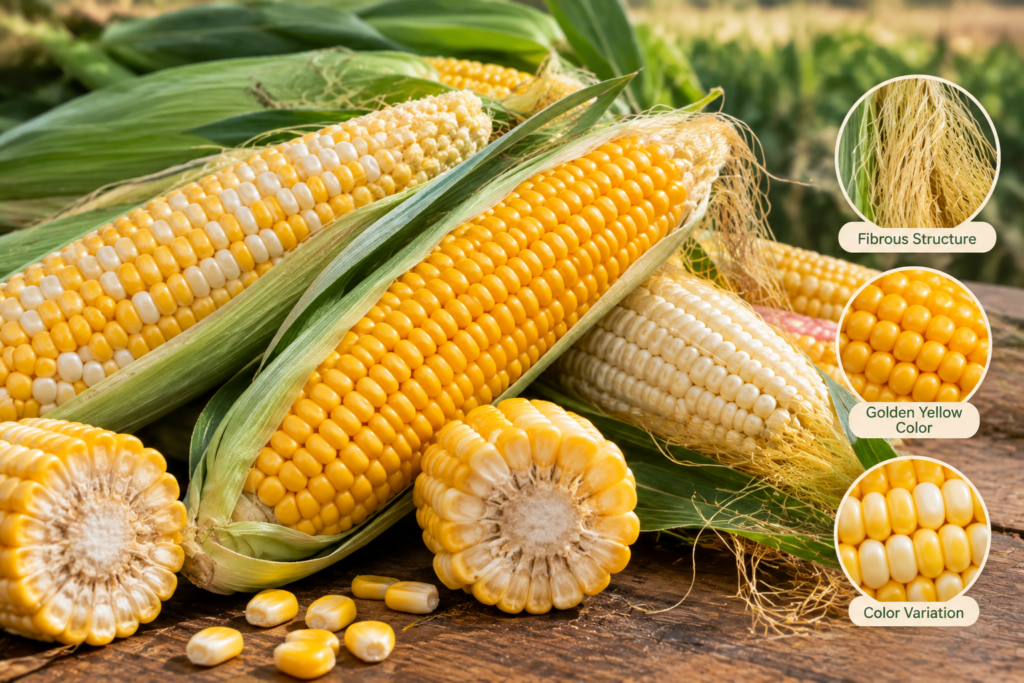
Corn cobs are the fibrous central cores of maize ears. During harvest and milling, when corn kernels are separated, the cob remains as an abundant agricultural residue. This material has undergone a remarkable transition from disposal problem to industrial commodity, driven by advances in processing technology and growing demand for sustainable materials.
The economic value of corn cobs stems from their unique properties. The material contains cellulose, hemicellulose, and lignin—compounds that manufacturers can process into diverse products. Its natural porosity, low density, and biodegradability make it particularly attractive to industries seeking sustainable alternatives to synthetic materials. Unlike virgin natural resources, corn cobs represent a circular agriculture model, where agricultural by-products are recovered and repurposed rather than discarded.
Pakistan’s agricultural sector produces substantial corn volumes. The country’s climate, irrigation infrastructure, and farming expertise position it well to capture a share of the growing international corn cob export market. For producers and exporters, this represents a direct opportunity to increase profitability from existing agricultural operations.
Primary Applications Driving Global Demand
Corn cob demand is not concentrated in a single industry. The diversity of end-uses explains why international buyers consistently source this material across continents.
Animal Bedding and Livestock Management
The animal agriculture sector represents one of the largest end-markets for corn cobs. Producers of poultry, cattle, and swine use processed corn cob as bedding material. The product offers excellent moisture absorption, odor control, and dust-free properties—characteristics that directly impact animal health and farm hygiene. A consistent supply of premium-grade corn cob helps livestock operations maintain biosecurity standards while managing operational costs. This sector drives consistent, year-round demand across North America, Europe, and emerging Asian markets.
Biomass Energy and Biofuel
The renewable energy sector has become increasingly important for corn cob utilization. The material’s calorific value—approximately 16–17 MJ/kg when properly dried—makes it suitable for biomass power generation, heating applications, and biofuel production. Industrial facilities, power plants, and commercial heating systems increasingly turn to corn cob as a renewable fuel source that reduces fossil fuel dependency. According to research examining biomass sustainability, corn cob represents an efficient agricultural by-product that can be harvested without compromising soil health or future crop yields.
Industrial Processing and Manufacturing
Beyond energy and bedding, manufacturers use processed corn cob in multiple industrial applications. The abrasive properties of crushed cob make it useful for polishing, dry cleaning, and metal finishing. Finely ground corn cob serves as filler in industrial products, including brake linings, cosmetics, and specialty chemicals. The cellulose and lignin content supports production of furfural—a platform chemical used in pharmaceuticals, resins, and specialty manufacturing. This industrial diversification creates stable demand from sectors that are less price-sensitive than commodity markets.
Mushroom Cultivation
Agricultural producers in Asia, particularly China and Vietnam, utilize corn cob as a growing medium for mushroom cultivation. The material’s structure provides ideal conditions for mycelium development while maintaining proper moisture levels. As global demand for specialty mushrooms increases, this segment continues expanding, creating reliable export opportunities.
Quality Standards and Export Requirements for Pakistani Corn Cob
International buyers expect consistent quality. Meeting these standards determines market access and price positioning.
Moisture Content and Drying
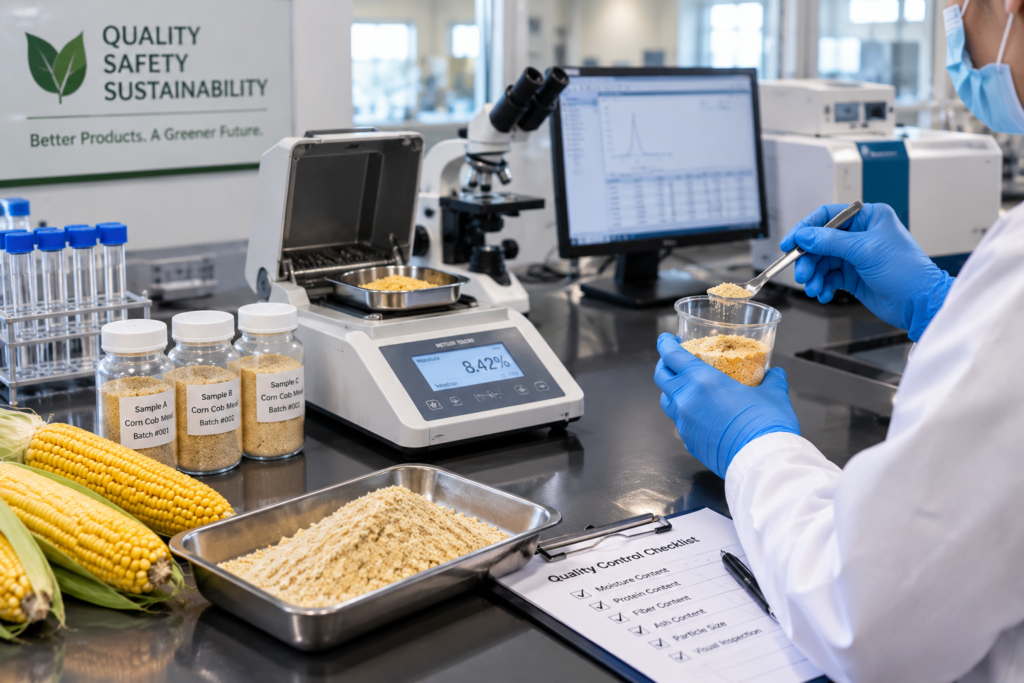
Moisture management is fundamental. Corn cob intended for biomass energy or industrial use typically requires moisture levels below 12–15%, depending on the end application. For animal bedding, slightly higher moisture tolerance (up to 18%) may be acceptable. Proper drying prevents mold development, maintains calorific value, and ensures material stability during storage and transport. Pakistani exporters utilizing mechanized drying facilities can achieve these specifications reliably. The investment in drying infrastructure directly translates to premium pricing in international markets.
Contamination Control and Cleanliness
Foreign material—such as soil, metal, stone, or kernel fragments—disqualifies shipments or significantly reduces their market value. International quality standards place limits on contamination levels, typically requiring no more than 1–2% foreign matter depending on the buyer’s specifications. This requires rigorous cleaning during processing. Suppliers using mechanical screening and air classification systems consistently meet these requirements and build long-term buyer relationships.
Particle Size and Grading
Different applications demand specific particle sizes. Animal bedding typically uses whole or slightly crushed cob (10–50 mm). Industrial abrasive applications require finer material (1–5 mm). Biomass energy applications may accept broader size ranges but perform better with uniform sizing. Exporters who invest in sizing equipment and offer multiple grades capture broader buyer bases. The Trade Development Authority of Pakistan (TDAP) encourages exporters to develop value-added processing capabilities as a differentiation strategy in competitive markets.
Aflatoxin and Mycotoxin Testing
Although corn cobs contain no kernels, any residual kernel fragments must be free from aflatoxins. International buyers—particularly those supplying animal feed industries—require laboratory certification. Pre-shipment testing by accredited laboratories ensures compliance with importing country food safety regulations. This certification, while adding cost, becomes non-negotiable for access to premium markets.
International Markets and Buyer Geography
Understanding where demand is concentrated helps exporters target their efforts effectively.
Southeast Asia: Largest Consumption Region
Vietnam, Indonesia, the Philippines, and Thailand account for substantial global corn cob consumption. Vietnam, in particular, has developed a significant animal bedding industry and serves as a regional distribution hub. Buyers in this region appreciate proximity to production sources and competitive pricing. Pakistani suppliers can offer delivery times and logistics advantages comparable to Chinese competitors while maintaining cost competitiveness. The region’s growth in intensive livestock production continues driving bedding demand.
European and North American Markets
Developed markets in the European Union and North America demand premium-grade material meeting strict quality and environmental certifications. Buyers in these regions prioritize consistency, traceability, and sustainability credentials. While these markets offer higher per-unit prices, they also require more rigorous documentation, certifications (such as Sedex or HACCP compliance), and sometimes long-term contract commitments. Pakistani exporters with established quality systems and export experience can successfully access these segments.
Middle East and Central Asia
Oil-importing economies in the Middle East and Central Asian countries represent emerging opportunities. These regions increasingly develop livestock industries and biomass energy sectors. Local buyers often source through trading companies and distributors rather than direct purchases. Building relationships with regional distributors can open consistent market pathways.
China and Regional Supply Chain Integration
China remains both a competitor and a potential buyer. While China produces substantial domestic corn cob volumes, demand from specific industrial sectors and regional processing centers can exceed local supply. Some Chinese manufacturers prefer sourcing from multiple countries to diversify supply risk. This represents an opportunity for Pakistani exporters offering price advantages or quality differentiation.
Export Documentation and Regulatory Requirements
Successful export requires attention to regulatory details.
Plant Health and Phytosanitary Certification
Pakistan’s Department of Plant Protection issues phytosanitary certificates confirming that shipped material is pest-free and complies with agricultural import regulations of destination countries. This documentation is mandatory for entry into most markets. Exporters should initiate the certification process early, as inspections require advance scheduling. Reliable documentation prevents delays and rejection at destination ports.
Certificate of Origin
This document confirms the product’s Pakistani origin and is required for tariff classification, trade agreement benefits, and buyer verification. The Chamber of Commerce issues these certificates for registered exporters.
Commercial Documentation
Standard shipping documents include commercial invoices, bills of lading, packing lists, and—depending on buyer requirements—quality test certificates. Detailed packing lists documenting weight, moisture content, particle size, and contamination test results provide transparency and build buyer confidence.
Import Permits
Individual destination countries maintain their own import regulations. Some require advance import permits; others conduct inspection upon arrival. Exporters should verify destination requirements before shipment. Working with experienced freight forwarders familiar with agricultural product requirements minimizes compliance issues.
Practical Considerations for Buyers and Importers
Potential buyers should evaluate several factors when sourcing corn cob.
Quality Consistency
Reliable suppliers maintain consistent specifications across shipments. Batch-to-batch variation in moisture, particle size, or contamination creates problems for industrial users. Evaluate suppliers’ quality management systems and request multiple sample shipments before committing to large orders.
Logistics and Minimum Order Quantities
Corn cob is relatively low-value per unit, making logistics efficiency critical. Most exporters establish minimum order quantities (typically 10–20 containers) to make shipping economical. Understand total landed costs, including freight, insurance, documentation, and import duties, when comparing supplier quotes.
Sampling and Inspection
Request pre-shipment samples and arrange third-party inspection. Major trading companies use SGS or similar inspection services to verify quality before loading. This protects both buyer and seller.
Supplier Communication and Support
Long-term supplier relationships reduce risk. Reliable suppliers respond to questions about specifications, handle logistics professionally, and address issues promptly. Evaluate responsiveness during the initial inquiry phase.
Sustainability and Traceability
Increasingly, international buyers want confirmation that products come from verified sources and that suppliers follow responsible agricultural practices. Daa Agri Limited’s emphasis on circular agriculture and structured sourcing networks reflects this market trend. Suppliers demonstrating sustainability credentials command premium pricing.
Pakistan’s Competitive Position in Global Corn Cob Trade
Pakistan holds natural advantages in corn cob export.
The country produces substantial volumes of corn annually, ensuring consistent supply potential. Labor costs and operational expenses are lower than in developed nations, supporting competitive pricing. Pakistan’s strategic location between South Asia and the Middle East reduces shipping distances to key markets. The country’s established agricultural export infrastructure, including port facilities, freight forwarding networks, and export procedures, reduces barriers to entry for new suppliers.
However, competition exists. India produces comparable volumes, and China dominates global supply through sheer production scale. Vietnam has developed specialized processing infrastructure. Success for Pakistani exporters depends on differentiation through quality consistency, competitive pricing, service reliability, and—increasingly—sustainability credentials.
Building an Export Strategy
Exporters considering corn cob should evaluate several strategic points.
Invest in Processing Infrastructure
Quality begins with drying and cleaning. Facilities with mechanized drying, screening, and sizing equipment achieve premium results. While requiring upfront capital, this investment directly translates to higher prices and market access.
Establish Quality Assurance Procedures
Implement testing protocols for moisture, contamination, and particle size. Maintain documentation demonstrating compliance. This builds buyer confidence and justifies premium positioning.
Develop Multiple Market Channels
Relying on a single buyer or market creates vulnerability. Diversifying across geographic markets and end-applications (bedding, energy, industrial) provides stability and opportunity for growth.
Secure Phytosanitary Approvals Early
Register with the Department of Plant Protection and maintain compliance with all export requirements. Begin building relationships with export verification agencies.
Network with Industry Organizations
Pakistan’s agricultural export community benefits from coordination through associations and organizations like the Trade Development Authority of Pakistan. These networks provide market information, regulatory guidance, and buyer connections.
Future Outlook for Corn Cob Export
The global market for agricultural by-products continues expanding. Sustainability pressures, renewable energy investments, and circular economy principles all support continued growth in corn cob demand. Processing technologies are improving, enabling higher-value conversions of raw material into specialty products. This creates opportunities not just for export of raw cob, but for value-added processing and conversion.
Pakistan’s position is strengthening. The country’s commitment to agricultural sustainability and export diversification aligns with global market trends. As international supply chains adapt to geopolitical realities and companies seek supply chain resilience, new sourcing relationships with established suppliers (Daa Agri Limited) like Pakistan become increasingly attractive.
For procurement managers, the opportunity is clear: corn cob represents a sustainable, economical material addressing real industrial needs across multiple sectors. For Pakistani exporters and farmers, this commodity offers a direct path to increased agricultural revenues from materials currently underutilized.
Frequently Asked Questions
What exactly is corn cob and where does it come from?
Corn cob is the fibrous woody core that remains after corn kernels are removed during grain harvesting and milling. It’s an agricultural by-product that every corn-producing region generates. Pakistan produces substantial corn volumes annually, making corn cob readily available for processing and export.
What are the main uses for exported corn cob?
The primary applications are animal bedding for livestock operations, biomass fuel for energy generation, industrial abrasive and polishing media, and growing medium for mushroom cultivation. The diversity of uses creates stable, diversified demand globally.
How does quality affect pricing?
Quality directly determines market price. Corn cob with consistent moisture content, minimal contamination, and appropriate particle sizing commands premium prices. Investment in processing quality yields significant returns through higher selling prices and access to better-paying markets.
What is the typical minimum order quantity?
Most exporters establish minimums of 10–20 containers (20-foot containers holding approximately 18–22 tons each) to make logistics economical. Some suppliers may accept smaller quantities at higher per-unit costs.
How long does the export process take from order to delivery?
Timeline varies by destination. Domestic processing and documentation typically requires 3–4 weeks. Ocean freight from Pakistan to Southeast Asia takes 7–14 days; to Europe, 30–45 days. Air freight, though expensive, is available for urgent orders.
What certifications are required for export?
Phytosanitary certificates from the Department of Plant Protection are mandatory. Quality test certificates (moisture, contamination, particle size) are typically requested by buyers. ISO 9001 certification or equivalent quality management systems add credibility, particularly for exports to developed markets.
Are there environmental or sustainability concerns with corn cob export?
Corn cob export represents the circular economy in practice—converting agricultural residue that would otherwise be discarded into valuable commercial product. This creates value without requiring additional land use or resource inputs. Many international buyers specifically seek corn cob for its sustainability profile compared to virgin materials.
Turn industry knowledge into a supply conversation.
Contact GreenCore for product availability, specifications, bulk packaging and export support.