
Biomass Sawdust Export from Pakistan: A Guide for International Buyers
Pakistan has a substantial wood-processing base that many international procurement teams have not yet considered. With hundreds of active sawmills […]
Pakistan has a substantial wood-processing base that many international procurement teams have not yet considered. With hundreds of active sawmills […]
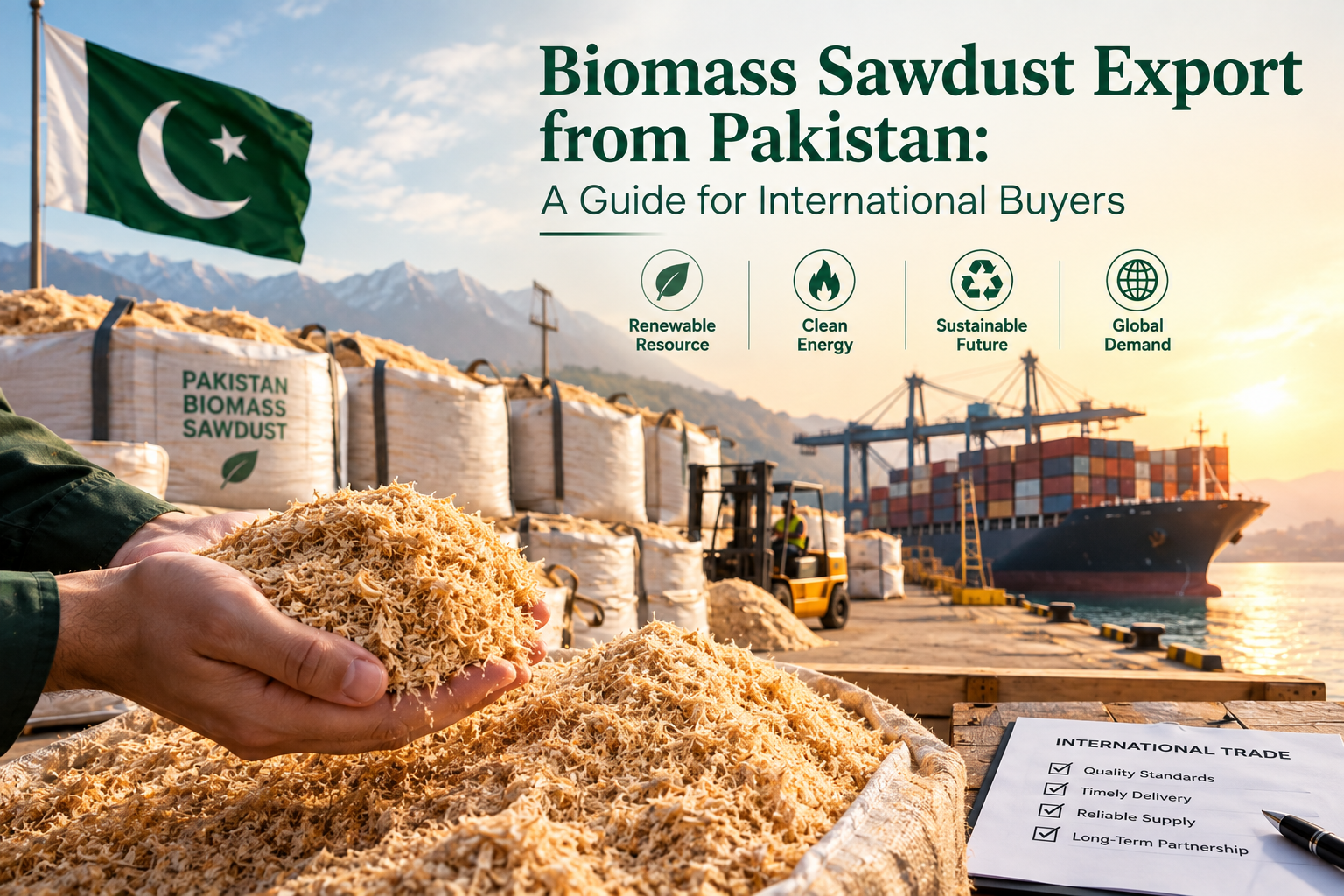
Pakistan has a substantial wood-processing base that many international procurement teams have not yet considered. With hundreds of active sawmills concentrated across Punjab and Khyber Pakhtunkhwa, the country generates significant volumes of sawdust as a direct byproduct of its timber and furniture industries. For buyers sourcing biomass fuel, animal bedding, mushroom cultivation substrate, or raw material for pellet manufacturing, Pakistani sawdust deserves a close look — and this guide explains what you actually need to know before placing an inquiry.
Where Pakistan’s Sawdust Supply Comes From
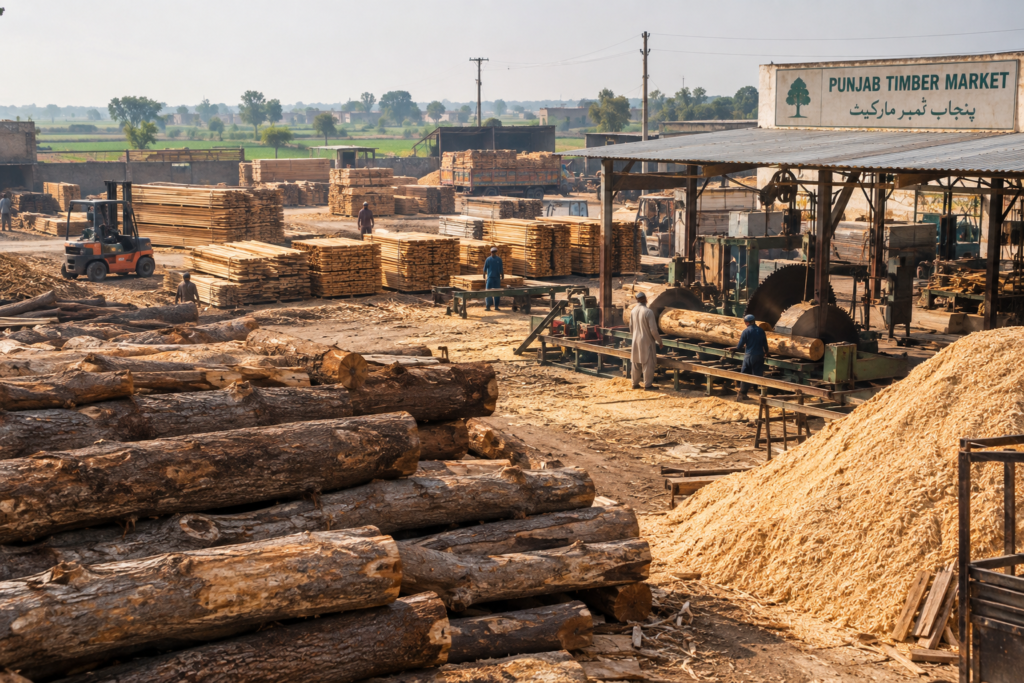
Pakistan’s wood sector is substantially larger than most buyers assume. According to research published by the Pakistan Institute of Development Economics, annual wood production on farmlands reached approximately 32.6 million cubic metres by 2021, with Punjab accounting for the largest share at around 55%, followed by Khyber Pakhtunkhwa at 20%. This is almost entirely plantation-sourced timber, not commercially logged forest — a distinction that matters for buyers with sustainability or procurement policies around deforestation.
The furniture manufacturing clusters in Chiniot, Gujranwala, and Lahore, along with construction timber markets across Rawalpindi, Faisalabad, and Multan, collectively process large volumes of wood every day. Sawdust is the unavoidable byproduct. Historically, sawmills have disposed of it locally — sold cheaply as fuel for brick kilns, used by small poultry farms as bedding, or stockpiled. The shift in recent years is that international buyers, particularly in the Gulf and parts of Europe, have started approaching Pakistani suppliers directly, looking to tap supply that hasn’t yet been formalised for export at scale.
This creates an interesting situation for importers: the raw material exists in volume, but the export supply chain is still developing. Sourcing here requires more supplier-side diligence than buying from a mature exporter market, but that’s also where the pricing advantage lies.
How Biomass Sawdust Is Classified for Export
Understanding the relevant customs classification saves you from documentation problems at the port of destination.
Raw sawdust — unprocessed, not agglomerated — generally falls under HS Code 4401.40 (sawdust and wood waste and scrap, whether or not agglomerated). If the sawdust has been processed into pellets, the applicable code shifts to 4401.31 (wood pellets). If it’s been compressed into briquettes, look at 4401.39. Getting this right matters because import duty rates, phytosanitary requirements, and customs treatment at destination vary by sub-heading. Buyers should confirm the applicable code with their customs broker before issuing a purchase order, since the same physical product described slightly differently on paperwork can be classified differently depending on destination country.
For Pakistan-origin goods, the exporter will file through the Pakistan Single Window portal, which consolidates export documentation. The Trade Development Authority of Pakistan (TDAP) is the relevant body for exporters looking to formalise international trade relationships.
What Drives International Demand for Biomass Sawdust
Buyers come from several distinct end-use categories, and knowing which one you represent matters when you’re specifying product requirements.
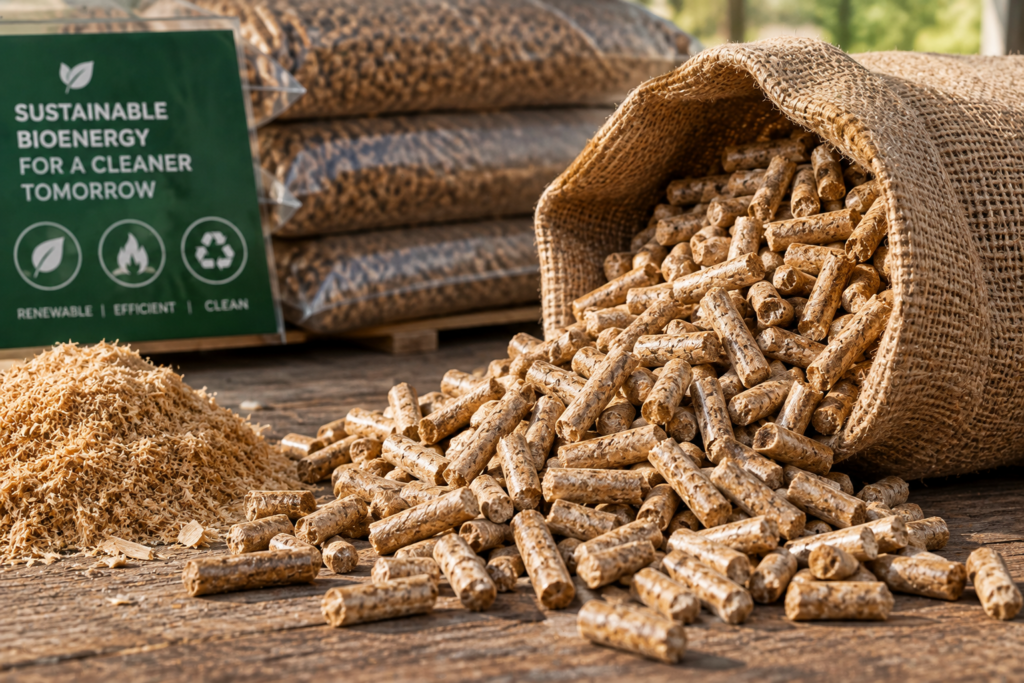
Biomass energy and pellet manufacturing is the largest driver. European and Asian industrial energy producers have developed substantial demand for wood pellets as a coal-substitution fuel, driven by renewable energy mandates. According to data from the USDA Foreign Agricultural Service, EU wood pellet consumption was projected to reach approximately 23.45 million metric tons in 2025, with imports expected to rise to around 4.68 million metric tons. While the major established suppliers are North American and Eastern European, regional sourcing from South Asia is of growing interest for pellet manufacturers seeking to diversify their feedstock base. Sawdust is one of the primary feedstocks for pellet production — it compresses cleanly, has relatively consistent calorific value when dried properly, and is easier to handle than coarser wood chips.
Mushroom cultivation substrate is a meaningful niche. Hardwood sawdust — oak, sheesham (Indian rosewood), and similar species — is a preferred growing medium for oyster, shiitake, and other high-value edible mushrooms. Buyers in China, Vietnam, and parts of the Middle East have sourced Pakistani sawdust for this purpose. The key requirement here is species specificity: not all sawdust is suitable, and buyers need to know what tree species the material came from.
Animal bedding is another established end use, particularly for horse stables and poultry farms in Europe and the Gulf. Moisture content and dust levels are the primary specifications here.
Particleboard and MDF manufacturing uses sawdust as a core input. However, this tends to demand consistent particle size and very low contamination levels that many informal Pakistani suppliers cannot yet reliably guarantee.
Key Product Specifications Buyers Should Confirm
This is where most first-time buyers run into problems. Pakistani sawdust supply is heterogeneous — material from a furniture cluster in Chiniot may come from sheesham and mango wood, while sawdust from a Rawalpindi timber market may include pine, poplar, and eucalyptus. These have different moisture content, ash content, and calorific values. Before placing any order, the following specifications need to be confirmed in writing:
Moisture content: Raw sawdust as it comes off a saw can have moisture content ranging from 25% to well above 50%, depending on the wood species and how recently it was processed. Most energy buyers require moisture content below 15% for direct use or pelletising. Buyers should specify the acceptable range and ask suppliers how drying is handled — whether air-dried, kiln-dried, or supplied wet with drying left to the buyer.
Wood species: Mixed-species sawdust is common and may be acceptable for some applications (brick kiln fuel, basic bedding). Still, buyers sourcing for mushroom cultivation, premium animal bedding, or specific energy specifications need to know what’s in the material. Ask for the source mill’s primary wood species before anything else.
Ash content: For biomass energy applications, ash content is a standard specification. Lower ash content generally translates to higher-quality pellet fuel. Buyers should request an independent laboratory test from a third-party accredited lab — not just a supplier’s verbal assurance.
Particle size: Uniform particle size matters for pellet manufacturing and particleboard production. Coarse, mixed-size material is fine for bedding or simple combustion but inadequate for most manufacturing applications.
Contaminants: Sawdust from construction timber yards may contain nails, paint residue, adhesives, or treated wood. These are problematic for almost every end use. Ask specifically whether the source material is virgin, untreated wood.
Bulk density and packaging: Sawdust can be shipped in bulk containers, jumbo bags (typically 1,000 kg), or standard 25–50 kg woven polypropylene sacks. The right choice depends on your downstream handling equipment and port facilities. Bulk shipping is cheaper per tonne but requires appropriate off-loading at destination.
Export Documentation for Biomass Sawdust from Pakistan
Pakistani exporters working through formal channels will typically provide:
- Commercial invoice (with detailed product description, HS code, unit price, and Incoterms)
- Packing list (weights, dimensions, package count)
- Bill of lading (for sea freight) or air waybill
- Certificate of Origin issued by the relevant trade body (TDAP or relevant Chamber of Commerce)
- Phytosanitary Certificate issued by the Department of Plant Protection under Pakistan’s Ministry of National Food Security and Research — this is particularly important for wood-based products going to the EU, Gulf countries, and many Asian markets, as importing countries often require proof that the wood product is free of specific pests and pathogens
- Quality analysis/test report from an accredited laboratory, especially if the destination country has energy product standards
Some destination markets have additional requirements. EU imports of certain biomass products may need to meet sustainability criteria under the EU Renewable Energy Directive (RED II/III), which affects documentation around the chain of custody and feedstock origin. If you’re sourcing for EU energy applications, clarify this with your legal or compliance team before finalising supplier arrangements.

Ports and Logistics
Pakistan’s main export port for bulk commodities is Karachi, specifically Port Muhammad Bin Qasim (also known as Port Qasim), which handles the bulk of the country’s dry commodity exports. Karachi Port handles general cargo and containerised freight. For buyers importing into the Gulf, sea transit times are relatively short — typically 3 to 7 days from Karachi to UAE or Saudi Arabian ports. European buyers face transit times of 20 to 30 days depending on routing.
Sawdust — even when bagged — is classified as a bulk dry material and is subject to normal container weight limits. A standard 20-foot container typically handles around 22 to 25 metric tons of bagged sawdust depending on bulk density, which is lower than denser commodities like minerals or grain. This affects your cost-per-tonne calculations. Buyers should factor in the lower packing density relative to, for example, mineral exports from Pakistan.
One practical consideration: sawdust is a hygroscopic material, meaning it absorbs ambient moisture during transit. Buyers sourcing for applications where moisture content is critical should discuss container lining, desiccant packs, and packaging specifications with the supplier before shipment.
What to Evaluate in a Pakistani Sawdust Supplier
Pakistan’s sawdust export supply chain ranges from established agri-commodity exporters who have added sawdust to their portfolio, through to small traders who aggregate from multiple mills with inconsistent quality control. The difference matters considerably for a first shipment.
Questions worth asking prospective suppliers before proceeding:
- Do they source from specific mills, or aggregate from multiple sources? If aggregating, how do they control for species mix and contamination?
- Can they provide independent laboratory test results for moisture content, ash content, and calorific value?
- What drying infrastructure, if any, do they have access to?
- Have they exported this product before, and can they provide references or previous shipping documents?
- What packaging options can they offer, and what’s the lead time from order to container loading?
- Are they registered with TDAP or any relevant trade body?
Starting with a sample order — even a single container — before committing to a bulk contract is standard practice and advisable here. Sample testing at a third-party accredited laboratory in your country is worth the cost.
Daa Agri Limited: A Pakistani Supplier Worth Contacting
Daa Agri Limited is a Pakistan-based agri-commodity company operating in the export space. If you’re an international buyer looking for a Pakistani partner with an export focus, the Daa Agri team can help you discuss biomass sawdust availability, specifications, packaging options, and shipment logistics from Pakistan’s major ports.
If you’re at the inquiry stage — evaluating whether Pakistan is a viable sourcing origin for your biomass requirements — reaching out directly is the most practical next step.
FAQ
What species of wood is Pakistani sawdust typically from?
The wood species depends on the source region and type of mill. Punjab’s furniture industry primarily uses sheesham (Dalbergia sissoo) and poplar, while construction timber markets may include eucalyptus, pine, and a mix of imported species. Mixed-species sawdust is common in aggregated supply. Buyers with species-specific requirements should request confirmation in writing before purchase.
Is Pakistani sawdust suitable for biomass pellet manufacturing?
It can be, subject to proper specification and testing. The main variables are moisture content, species mix, and absence of treated wood or contaminants. Buyers sourcing for pellet production should request a laboratory analysis covering moisture content, ash content, calorific value, and particle size distribution before committing to a shipment.
What is the typical minimum order quantity for sawdust export from Pakistan?
This varies by supplier. In practice, a full 20-foot container (roughly 20–25 metric tons of bagged sawdust) is the minimum practical shipment for export economics to make sense. Some suppliers will consider smaller trial shipments for new buyers. Confirm directly with your supplier.
What certifications or compliance requirements should EU buyers be aware of?
EU buyers importing biomass for energy use should review the sustainability criteria under the EU Renewable Energy Directive, which may impose feedstock origin documentation requirements. Additionally, a phytosanitary certificate from Pakistan’s Department of Plant Protection will be required. Buyers with specific compliance obligations should consult their sustainability or legal team before committing to supply arrangements.
How do I verify sawdust quality before shipment?
The most reliable approach is to request a sample, test it at an independent, accredited laboratory in your country, and have the results confirm the specification agreed with the supplier before the main shipment is loaded. Third-party pre-shipment inspection services operating in Pakistan can also be engaged to oversee loading.
What Incoterms are typically used for Pakistani commodity exports?
FOB (Free on Board) Karachi is the most common starting point for first-time transactions, as it gives the buyer control over freight and insurance arrangements. Some established exporters offer CFR (Cost and Freight) or CIF (Cost, Insurance, and Freight) to major destination ports in the Gulf or elsewhere, particularly once a trading relationship is established.
Conclusion
Pakistan isn’t the first country buyers associate with biomass exports. The supply base is real, pricing is competitive relative to established markets, and for buyers who do proper supplier qualification, it can be a productive sourcing origin. The key is going in with clear product specifications, a willingness to run a trial shipment before a volume commitment, and a solid understanding of the documentation requirements at your destination port.
For procurement teams at the inquiry stage, contacting Daa Agri Limited directly is a practical first step to understand what’s available, at what specifications, and at what lead times.
Turn industry knowledge into a supply conversation.
Contact GreenCore for product availability, specifications, bulk packaging and export support.