
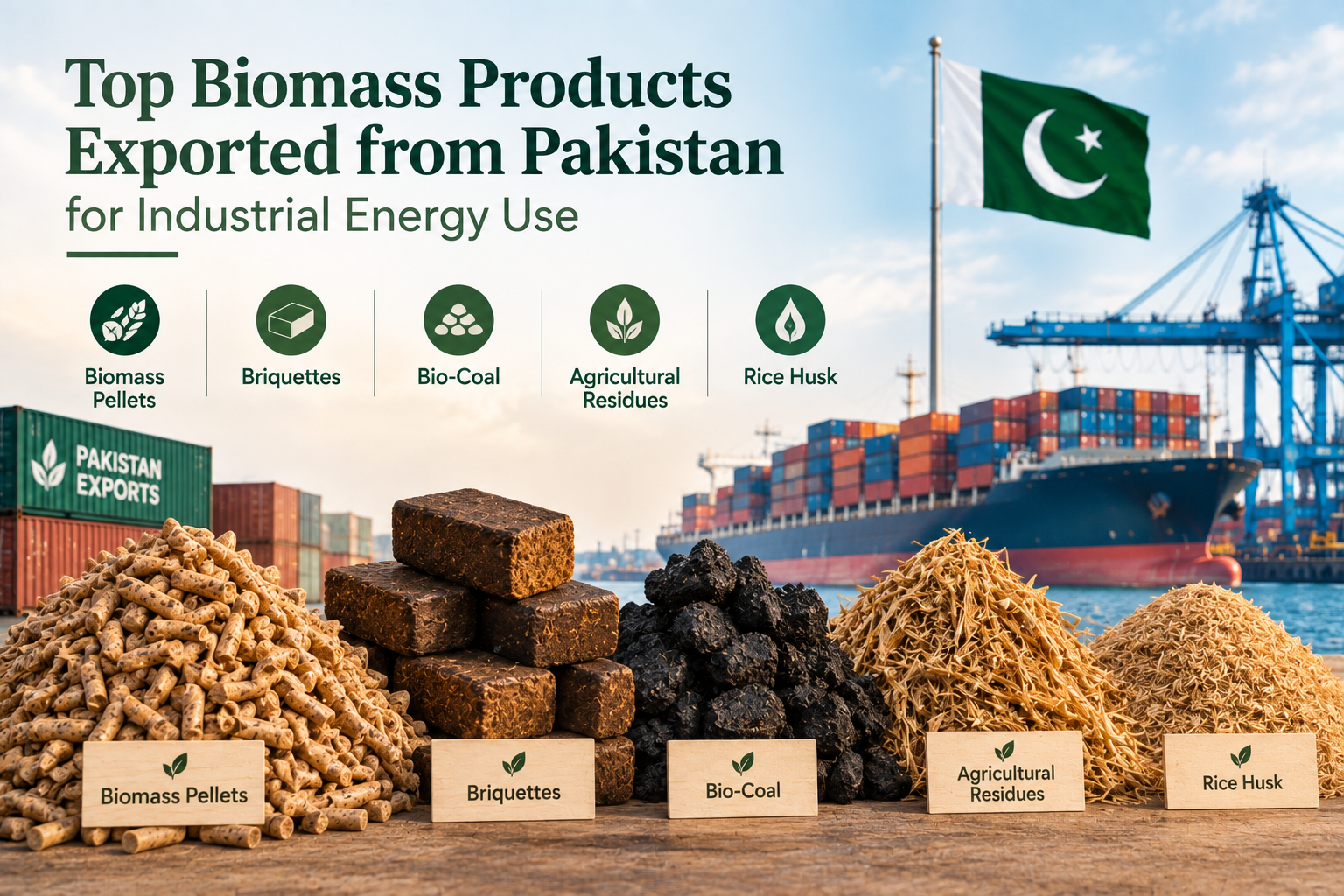
Top Biomass Products Exported from Pakistan for Industrial Energy Use
Pakistan generates enormous quantities of agricultural residue every year — most of it either burned in fields or left to […]
Pakistan generates enormous quantities of agricultural residue every year — most of it either burned in fields or left to […]
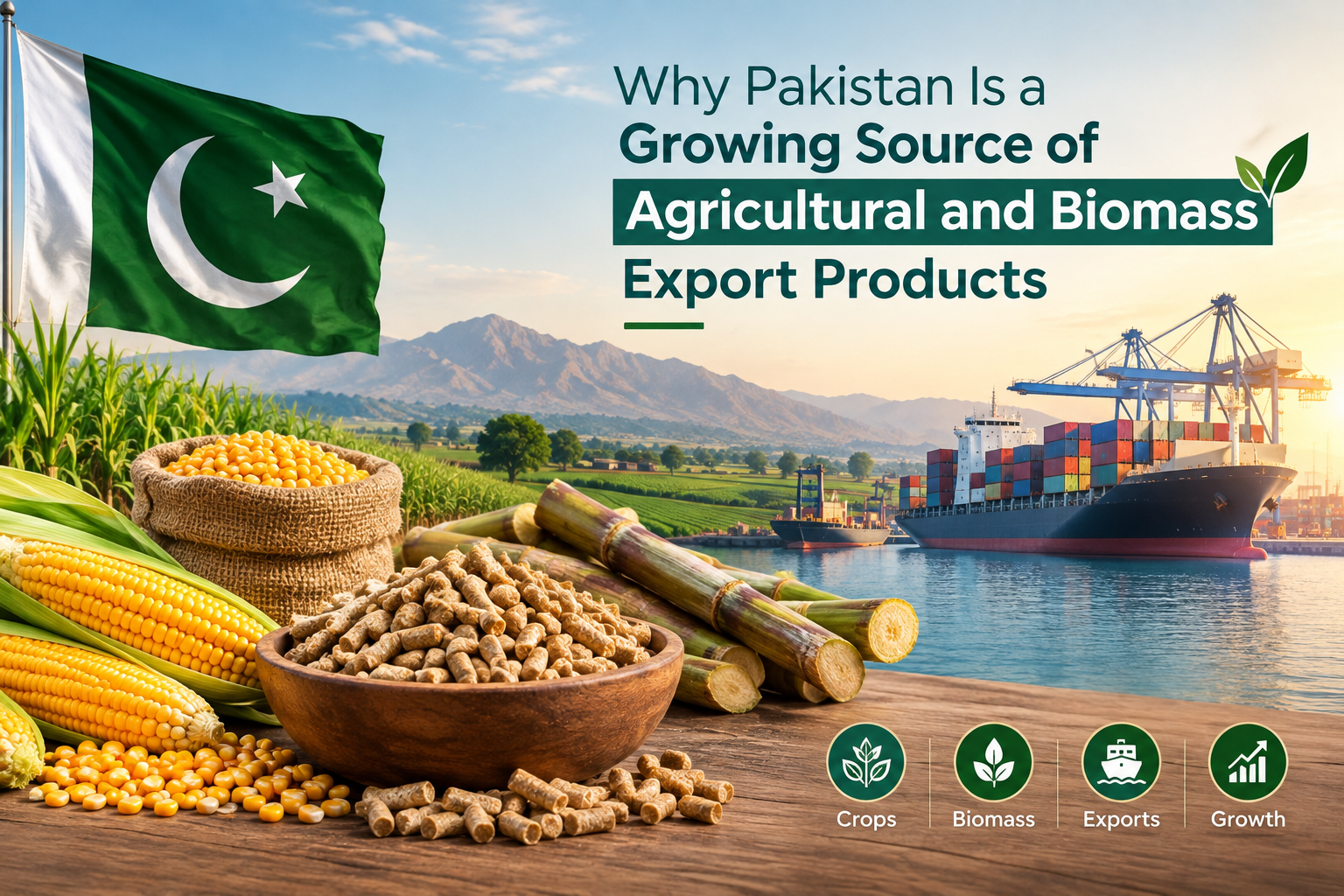
Pakistan generates enormous quantities of agricultural residue every year — most of it either burned in fields or left to decompose. For industrial energy buyers in Europe, the Middle East, and Asia, that residue represents something quite different: a low-carbon, competitively priced fuel source that can replace coal in boilers, kilns, and power plants.
This article covers the top biomass products exported from Pakistan that are attracting serious attention from industrial buyers — what each product is, why it matters as a fuel, and what procurement teams should understand before placing an order.
Why Pakistan Is a Significant Source of Industrial Biomass
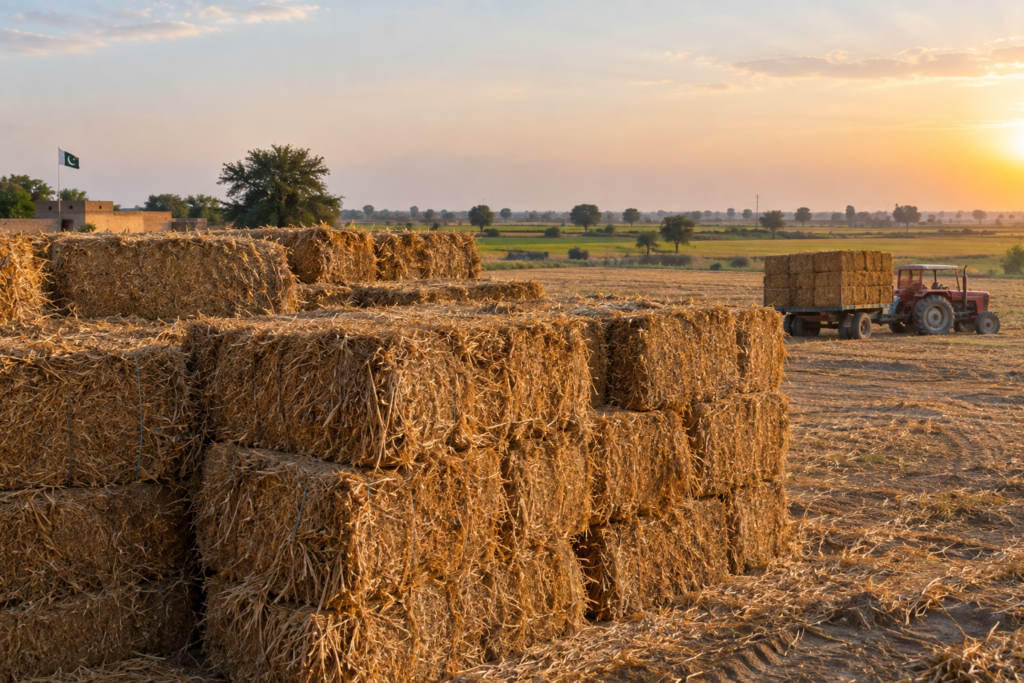
Agriculture accounts for roughly 21% of Pakistan’s GDP, and the country’s major crops — rice, wheat, sugarcane, cotton, and maize — collectively generate hundreds of millions of metric tons of residue annually. According to research published in Frontiers in Chemical Engineering, wheat, rice, sugarcane, and corn together produce approximately 112.1 million tons of residue per year in Pakistan. That figure makes Pakistan one of South Asia’s largest potential suppliers of agricultural biomass for energy use.
Much of this residue has historically been burned in fields after harvest — a practice that wastes energy, contributes to seasonal air pollution, and represents a missed opportunity for both farmers and international buyers. As industrial demand for renewable fuel alternatives has grown, more of this material is being collected, processed, and exported as industrial biomass fuel.
The World Bank’s Energy Sector Management Assistance Program (ESMAP) has mapped Pakistan’s biomass feedstock availability across districts, identifying wheat straw, rice husk, rice straw, cotton stalks, maize cobs, maize stalks, sugarcane trash, and bagasse as the country’s primary exportable biomass categories.
For industrial buyers, the relevance is straightforward: Pakistan offers a large, geographically concentrated supply of agricultural biomass at competitive prices, with existing export infrastructure through the ports of Karachi and Port Qasim.
The Main Biomass Products Exported from Pakistan
1. Rice Husk
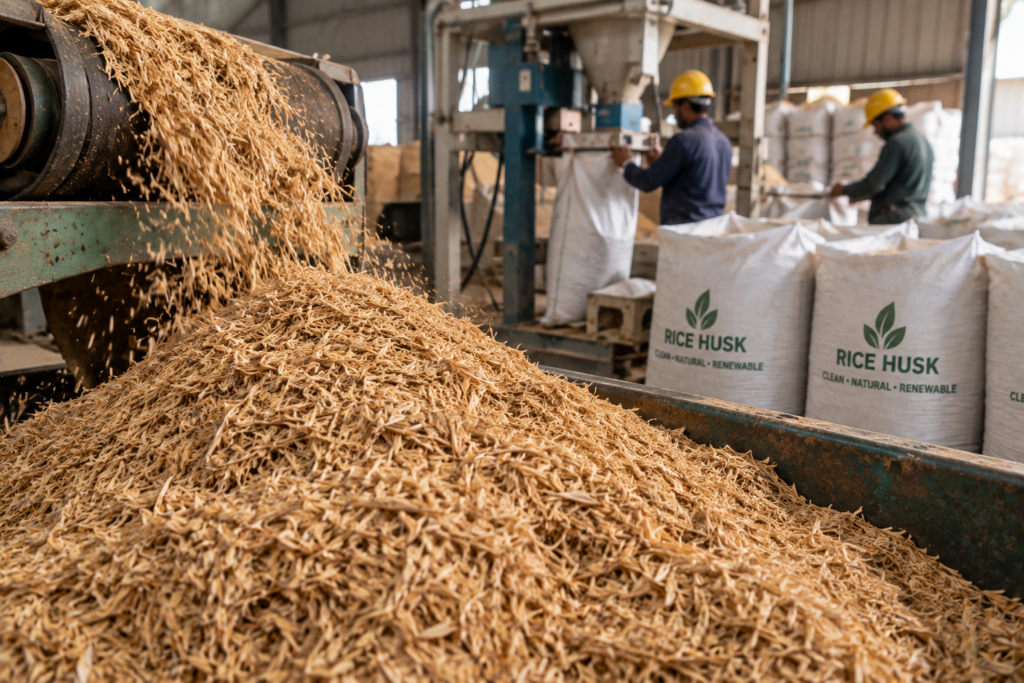
Rice husk is one of the most actively traded biomass products from Pakistan. It is the dry outer shell separated from the rice grain during milling — a by-product that Pakistan produces in significant volumes given its position as a major rice-growing and rice-exporting nation.
For industrial energy use, rice husk is valued for its relatively consistent calorific value and low moisture content when properly stored. It is used directly as a fuel in biomass boilers and can also be processed into rice husk pellets for more efficient combustion and easier logistics.
What buyers should evaluate when sourcing rice husk from Pakistan:
- Moisture content: Should ideally be below 15% for efficient combustion. Husk stored improperly can absorb moisture from ambient humidity.
- Ash content: Rice husk has a higher silica-based ash content than woody biomass. Industrial boilers handling rice husk should be equipped or adapted for this.
- Form: Loose husk, baled husk, and pelletized husk are all available, with different bulk densities and shipping implications.
- HS Code: Rice husk typically falls under HS Code 1213 (cereal straw and husks) for customs and documentation purposes.
Procurement teams sourcing rice husk should request laboratory analysis certificates confirming moisture, ash, and calorific value (net and gross) before confirming large shipments.
2. Sugarcane Bagasse
Bagasse is the fibrous material that remains after sugarcane stalks are crushed to extract juice. Pakistan has approximately 85 sugar mills in operation, and bagasse is generated as a direct co-product of every processing season.
As a fuel, bagasse has a well-established track record in industrial energy applications — it has been used for decades in co-generation setups within sugar mills themselves. When dried to an appropriate moisture level, bagasse can be compressed into briquettes or pellets for export, or shipped in loose form for facilities capable of handling it directly.
Key points for buyers:
- Fresh vs. dried bagasse: Freshly pressed bagasse has a moisture content that can exceed 45–50%, making direct export in that form energy-inefficient and costly. Buyers should specify dried or briquetted bagasse.
- Calorific value: Varies depending on moisture content. Dry bagasse typically delivers a lower heating value in the range of 7–9 MJ/kg. When compressed into densified pellets or briquettes, handling and shipping efficiency improve considerably.
- Availability window: Bagasse availability is tied to the sugarcane crushing season. Buyers planning year-round supply programs need to account for storage requirements or seasonal gaps.
Pakistan’s sugarcane trash — the dried leaves and tops removed before crushing — is a related material with similar energy characteristics. Research by the Alternative Energy Development Board of Pakistan estimates the bioenergy potential of Pakistani cane trash alone at approximately 9,475 GWh per year, most of which is currently not utilized for export.
3. Cotton Stalks
Pakistan is one of the world’s major cotton producers, and cotton stalks — the woody stems remaining after cotton is picked — represent one of its largest volumes of crop residue.
Cotton stalks are a useful industrial biomass fuel because of their relatively woody composition, which gives them a higher calorific value than lighter straws. They can be chipped or shredded for direct combustion or densified into pellets or briquettes for export.
According to a research review published through the Hong Kong Polytechnic University, cotton stalk production in Pakistan reaches approximately 50.6 million metric tons per year — the largest single crop residue category in the country.
Buyer considerations:
- Processing state: Loose stalks are bulky and low in bulk density, making shipping expensive relative to energy content. Chipped or pelletized cotton stalk is more practical for international export.
- Contaminants: Stalks must be reasonably free of soil, stones, and non-biomass debris before export.
- Seasonality: Availability is concentrated in the months following the cotton harvest. Buyers planning continuous supply should confirm storage and processing arrangements with their supplier.
4. Wheat Straw
Wheat is Pakistan’s most widely grown crop, and wheat straw is generated in very large volumes across Punjab and Sindh. Straw collection and baling have improved considerably in recent years, and baled wheat straw is now exported in meaningful quantities.
Wheat straw has a relatively lower calorific value compared to woody biomass. Still, its sheer volume, low cost, and growing availability in baled and pelletized forms make it a practical fuel choice for industrial users willing to adapt their handling systems.
It is worth noting that Pakistan’s Competition Commission has previously examined the use of wheat straw as an energy feedstock, recognizing both its potential and the need to balance competing industrial uses (including the pulp and paper sector). Buyers seeking long-term supply security should assess this policy context when planning sourcing strategies.
For export, wheat straw is typically available as:
- Rectangular bales (for buyers with direct combustion capability)
- Pellets (most suitable for long-distance export due to higher energy density and ease of handling)
5. Maize Cobs and Maize Stalks
Maize cultivation has expanded in Pakistan, particularly in the KPK and Punjab provinces. Maize cobs and stalks are both usable biomass fuels, with corn cobs in particular performing well in gasification and combustion applications.
Research published in Frontiers in Chemical Engineering found that corn cobs produce hydrogen at a rate of approximately 6.4 wt.% during gasification — performing comparably to rice husk and outperforming sugarcane bagasse — making them a technically attractive feedstock for advanced energy conversion systems.
Maize cobs are denser than straw-type residues and have a relatively high calorific value, which helps with shipping economics when exported in bulk or pelletized form.
6. Biomass Pellets and Briquettes (Processed Forms)
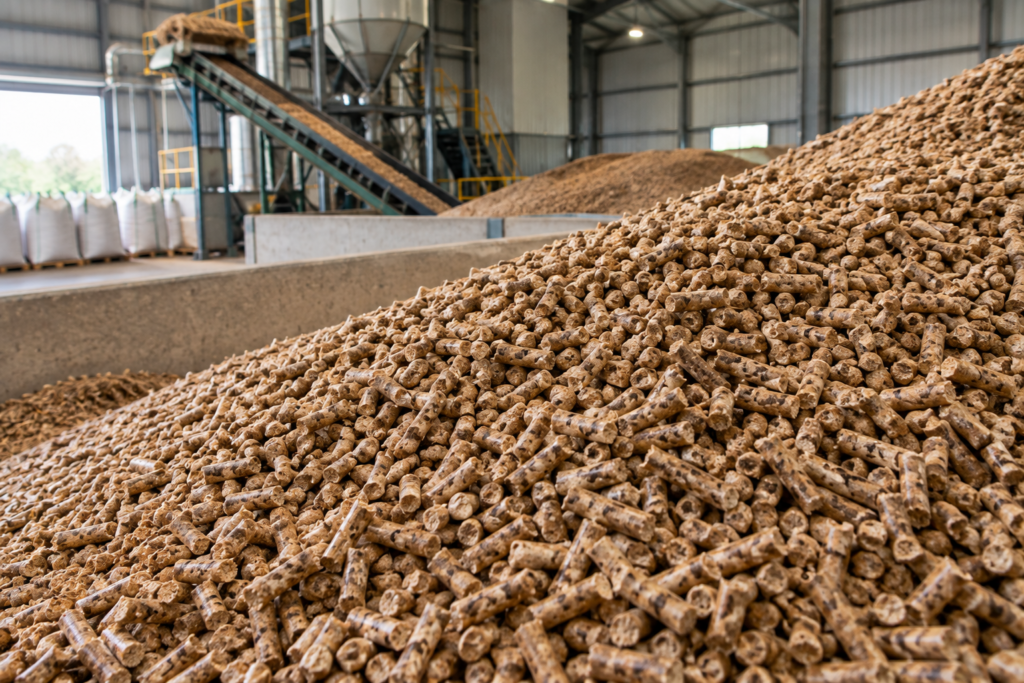
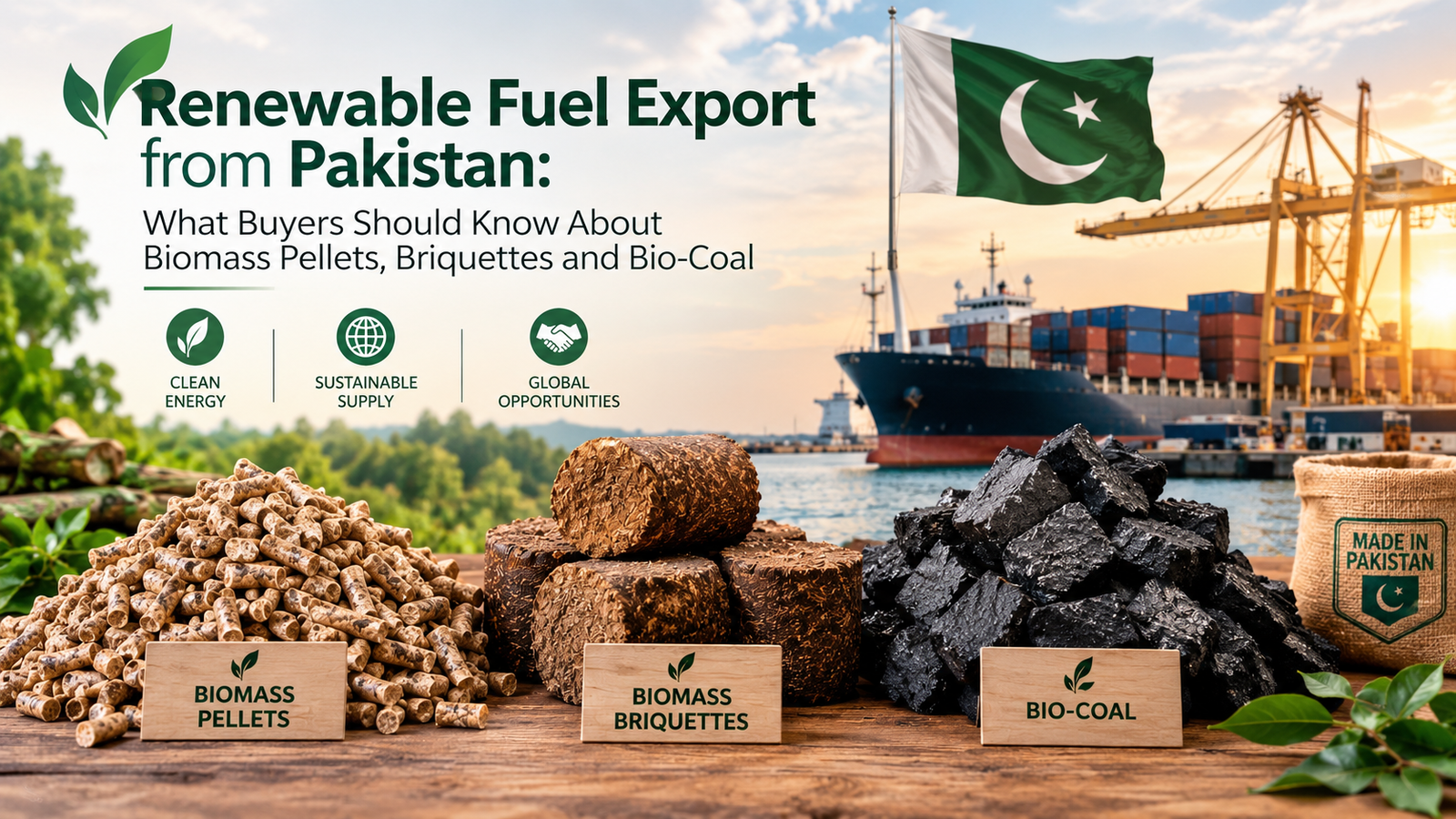
Across all of the above feedstocks, the processed form — pellets or briquettes — is increasingly what international industrial buyers actually procure. Pakistan has a growing number of pelletizing and briquetting units that convert raw agricultural residues into standardized, denser fuel products.
The advantages of sourcing processed biomass from Pakistan rather than raw residue:
- Standardized dimensions: Pellets are typically 6–8 mm in diameter, allowing use in standard biomass boilers without modification
- Lower moisture content: Typically below 10%, compared to 15–45% for raw residues
- Higher bulk density: Easier and more cost-efficient to ship
- Consistent calorific value: Easier to plan energy output
When evaluating Pakistani biomass pellet suppliers, buyers should request the following documentation:
- Proximate analysis (moisture, ash, volatile matter, fixed carbon)
- Ultimate analysis (C/H/N/S/O content)
- Net and gross calorific value (NCV/GCV) in MJ/kg or kcal/kg
- Pellet dimensions and bulk density
- Phytosanitary certificate (required by most importing countries)
- Certificate of Origin
What Industrial Buyers Should Know Before Sourcing Biomass from Pakistan
Documentation for Export
Pakistan has established export procedures through the Pakistan Single Window system and the Trade Development Authority of Pakistan (TDAP). For biomass products, relevant documentation typically includes:
- Commercial invoice and packing list
- Bill of Lading
- Certificate of Origin (issued through relevant chambers of commerce)
- Phytosanitary Certificate (issued by the Department of Plant Protection)
- Analysis/quality certificates from accredited laboratories
Buyers importing into the EU under the Renewable Energy Directive (RED II/RED III) sustainability framework will require additional documentation proving the biomass meets sustainability criteria — including land use, greenhouse gas savings calculations, and chain-of-custody records. Buyers in this category should discuss compliance documentation with their Pakistani supplier before committing to volumes.
Logistics and Port Access
The majority of biomass exports from Pakistan depart from Karachi Port or Port Qasim. Both are capable of handling bulk agricultural commodities. Most biomass products are shipped in 20-foot or 40-foot standard containers, or in bulk breakbulk shipments for very large industrial orders.
Lead times between order confirmation and vessel loading vary depending on processing requirements. Still, buyers should account for 3–6 weeks from order to shipment for processed pellets, and potentially shorter windows for raw or pre-baled material already in stock.
Quality Consistency
One of the common challenges with agricultural biomass sourcing globally — including from Pakistan — is batch-to-batch consistency. Raw crop residues vary in calorific value, moisture, and ash depending on crop variety, region, harvest year, and storage conditions.
Buyers managing industrial boilers or energy plants with strict fuel specifications should:
- Request samples from multiple lots before committing
- Specify quality tolerances contractually (acceptable ranges for moisture, ash, and NCV)
- Include inspection rights or third-party inspection clauses in purchase agreements
Daa Agri Limited: Agricultural Exports from Pakistan
Daa Agri Limited is a Pakistan-based agricultural company operating in the export sector. If you’re an importer or industrial buyer looking to source biomass products from Pakistan, please reach out directly to discuss product availability, specifications, and export documentation.
Whether you are evaluating rice husk, cotton stalks, processed biomass pellets, or other agricultural residue products for industrial energy applications, speaking with a supplier who understands Pakistan’s agricultural supply chains and export procedures makes the procurement process considerably more straightforward.
Frequently Asked Questions
Q: What is the most commonly exported biomass product from Pakistan for industrial energy use?
Rice husk is among the most actively exported biomass materials from Pakistan, partly because rice processing generates it as a consistent by-product year-round at milling facilities. Cotton stalks and processed biomass pellets are also significant export categories.
Q: Are Pakistani biomass products suitable for EU markets?
Agricultural biomass from Pakistan can meet EU energy market requirements, but exporters and buyers need to work through the sustainability documentation required under the EU’s Renewable Energy Directive (RED). This includes greenhouse gas savings calculations and land-use compliance records. Buyers should confirm this documentation chain with their supplier before placing orders.
Q: What quality certifications should I request from a Pakistani biomass exporter?
At minimum, request a proximate analysis and calorific value certificate from an accredited laboratory, a phytosanitary certificate, and a Certificate of Origin. For pelletized products, also request pellet dimension and bulk density specifications.
Q: How is biomass typically shipped from Pakistan?
Most biomass exports leave through Karachi Port or Port Qasim in containerized or bulk form. Pellets are typically shipped in 20- or 40-foot containers with the product in big bags or bulk. Raw residues such as straw bales may be shipped in breakbulk depending on volume.
Q: Does Pakistan have enough biomass supply for long-term industrial contracts?
Pakistan’s four major crop residue categories — cotton stalks, wheat straw, rice straw, and sugarcane bagasse — together represent hundreds of millions of metric tons of annual production. Supply availability is not the principal constraint; collection, processing, and logistics infrastructure are the more meaningful factors for consistent long-term supply programs.
Explore Biomass Export Opportunities with Daa Agri Limited
If you are an industrial energy buyer, procurement manager, or importer evaluating biomass product exports from Pakistan, Daa Agri Limited works in the Pakistani agricultural export sector and can discuss product availability and specifications.
Visit daaagri.com to learn more or to get in touch with the team.
Turn industry knowledge into a supply conversation.
Contact GreenCore for product availability, specifications, bulk packaging and export support.