
Sustainable Biomass from Pakistan: Turning Agricultural Waste into Export Products
Pakistan’s farms don’t stop producing once the grain leaves the field. Every corn harvest leaves behind cobs and stalks. Every […]
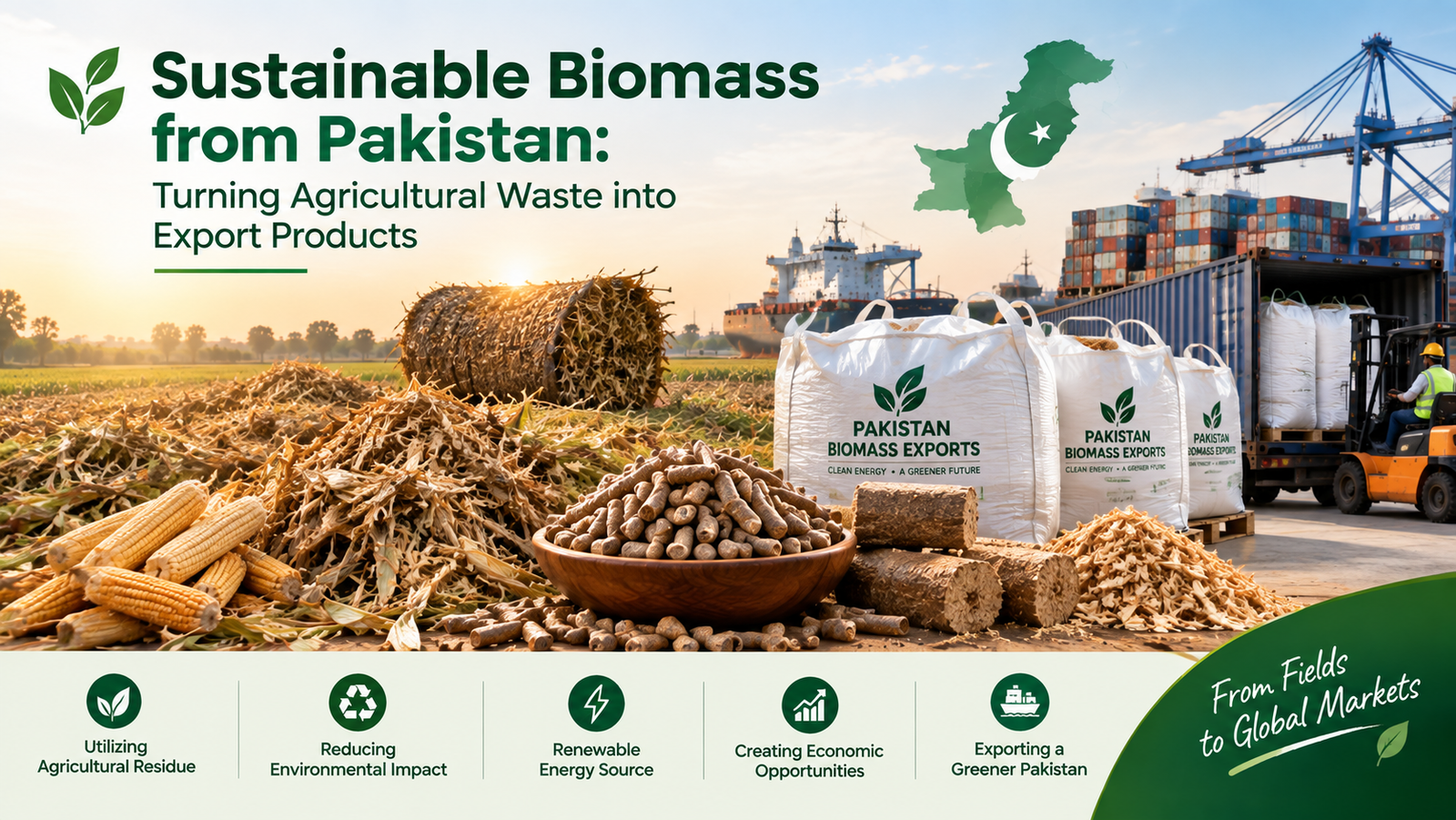
Pakistan’s farms don’t stop producing once the grain leaves the field. Every corn harvest leaves behind cobs and stalks. Every […]
Pakistan’s farms don’t stop producing once the grain leaves the field. Every corn harvest leaves behind cobs and stalks. Every sugarcane crushing season leaves behind fibrous residue. For decades, much of this material has either been burned in the field or left to rot — a habit that costs farmers money, degrades air quality, and wastes a resource that industries overseas are actively looking for.
That’s starting to change. A growing number of processors are collecting, cleaning, and grading these residues into export-grade raw materials, and international buyers — from feed manufacturers to industrial users — are increasingly sourcing biomass and agricultural by-products from Pakistan instead of pricier alternatives elsewhere. If you’re a procurement manager, importer, or distributor researching sustainable biomass from Pakistan, this guide walks through what these materials actually are, why Pakistan is positioned to supply them, and what to check before you commit to a supplier.
Why Pakistan Generates So Much Usable Agricultural Waste
Agriculture is not a side sector in Pakistan — it accounts for roughly a fifth of the country’s GDP. It employs a large share of the rural population, with the sector contributing about 21% to Gross Domestic Product and providing livelihoods for over 45% of the population. That scale of farming naturally produces a large volume of leftover plant material once the harvest is done.
Researchers who have studied crop residue volumes in the country put annual output of major residues — corn stalk, sugarcane trash, rice straw, wheat straw, and cotton stalk — in the tens of millions of tonnes each year, with corn stalk, sugarcane trash, rice straw, wheat straw, and cotton stalks totaling roughly 6.4, 8.9, 17.9, 35.6, and 50.6 million tonnes respectively. More recent estimates suggest the total pool of agricultural residue available across the country each year has continued to grow, with one 2025 analysis estimating that Pakistan had access to around 54 million tonnes of agricultural waste in 2023.
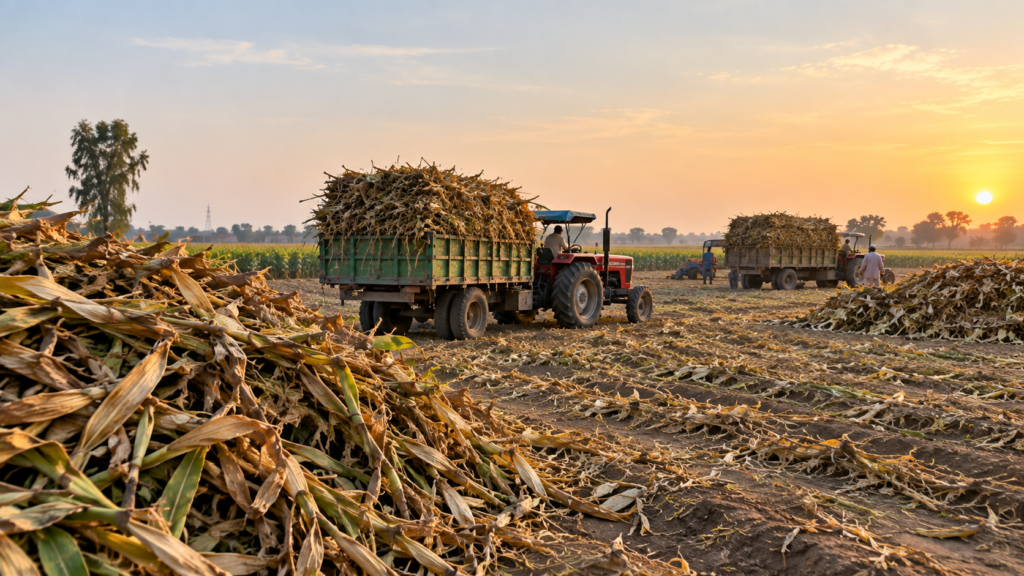
Historically, a large share of this material has been burned. During the rice harvest window alone, several million tonnes of residue are set alight in the fields each year to clear land quickly for the next planting cycle, with roughly 8.5 million tonnes of rice residue produced each year, an estimated 3.6 to 5 million tonnes burnt to make way for wheat sowing. That practice has drawn attention from international bodies as well — the Food and Agriculture Organization ran a technical assistance project with Punjab’s agriculture department to study the link between crop residue burning and seasonal smog in the province. For an importer, this context matters: it explains why residues are inexpensive at the farm gate, and why a properly organized collection-and-processing supply chain — rather than open burning — creates both an environmental and a commercial opportunity.
What “Agricultural Waste” Actually Becomes as an Export Product
“Agricultural waste” is a broad term, but from an import standpoint it usually breaks down into a few distinct categories, each suited to different end uses:
- Corn cob and corn stalk material — once cleaned, dried, and ground, this becomes a feedstock used in animal bedding, biomass fuel, composting inputs, and certain industrial filler applications.
- Sugarcane-derived residue (bagasse and trash) — a fibrous by-product left after cane crushing, used in composting, biomass energy, and as an agricultural input in some markets.
- Rice husk and straw — used for biomass fuel, board manufacturing, and soil amendment, though not every processor handles this stream.
- Cotton stalk and other field residues — lower-volume but still relevant to certain biomass and industrial buyers.
Turning any of these from field waste into an export-ready product involves several processing steps most buyers should understand before evaluating a supplier: contaminant and soil removal, moisture reduction (Pakistan’s dry season climate helps here), grinding or sizing to a consistent specification, and final moisture and quality checks before the material is bagged for containerized shipment. This is essentially the structure Daa Agri Limited describes as its own process. In this circular agricultural value chain, we collect, clean, process, and convert farm residues into export-grade raw materials for international industries. Our processing focuses on corn cobs and sugarcane residues, which we supply to buyers who need consistent, clean agricultural inputs.
What Buyers Should Evaluate Before Ordering
If you’re sourcing biomass or agricultural by-products from Pakistan for the first time, a few practical questions will tell you more than a supplier’s marketing copy will:
How is the material sourced and aggregated? Biomass supply chains depend on collecting residue from many small and mid-sized farms. Ask whether the supplier has a direct sourcing relationship with growers or works through intermediaries, since this affects both consistency and price stability across seasons.
What does quality control actually look like? Moisture content is the single biggest variable in biomass quality — too high, and the material is prone to mold, weight loss in transit, and reduced calorific value if it’s headed for energy use. Ask what moisture range the supplier targets and how it’s verified before loading.
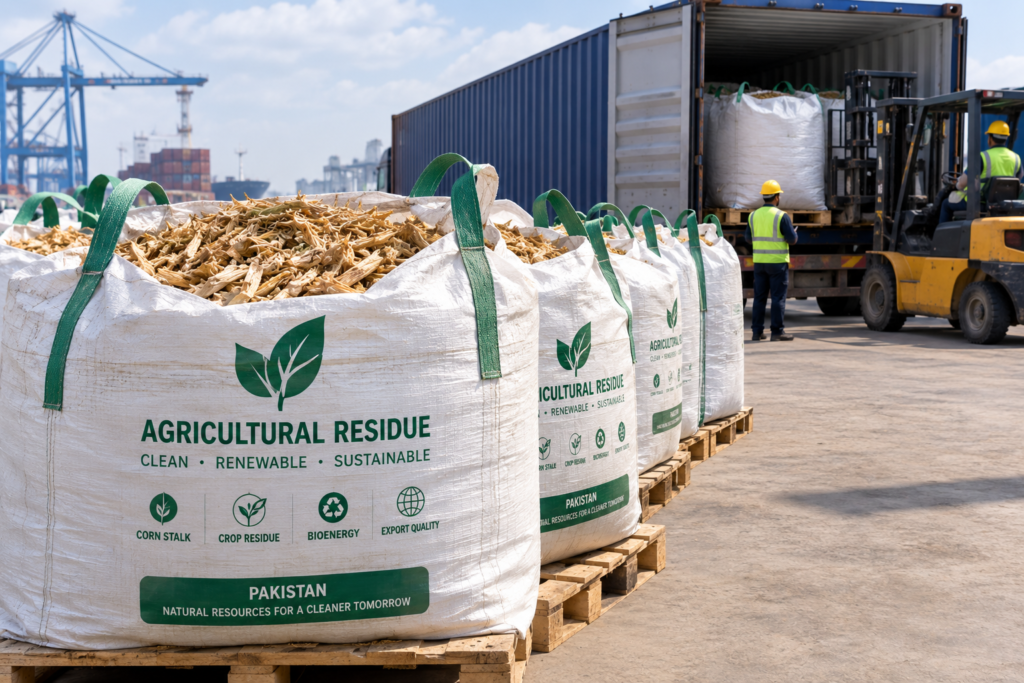
What packaging is used, and does it suit your logistics chain? Export-grade agricultural residue is typically shipped in polypropylene (PP) bags or jumbo bags for containerized handling. Confirm bag specifications, weight per unit, and whether the packaging is suited to your destination port’s handling equipment.
Can the supplier scale with your order size? Because these materials are aggregated seasonally, ask directly what quantities can be supplied reliably and during which harvest windows, rather than assuming year-round availability at any volume.
What documentation will accompany the shipment? At minimum, expect a commercial invoice, packing list, and bill of lading; depending on the product and destination country, phytosanitary or quality certificates may also apply. Confirm this with your supplier and your own customs broker rather than assuming standard paperwork covers every biomass category, since requirements vary by product type and importing country.
Why Sourcing Biomass from Pakistan Appeals to International Buyers
Two structural factors work in Pakistan’s favor for this category. First, cost: labor and land-adjacent processing costs remain lower than in many established biomass-exporting markets, which shows up directly in landed cost for the buyer. Second, climate: Pakistan’s extended dry season naturally supports sun-drying of residues, cutting the energy cost of moisture reduction compared with processors in more humid regions.
There’s also a supply-side argument that’s easy to overlook. Because so much residue is currently burned or wasted rather than commercialized, the volume of agricultural waste theoretically available for productive use continues to be substantial year over year, which means well-organized processors have room to grow supply without straining the underlying farm base. For a buyer building a long-term supply relationship rather than a one-off order, that’s a meaningful signal of durability. Companies working this space, including Daa Agri Limited’s export process, typically structure their supply chain around exactly this seasonal cycle — from farm collection through cleaning, grading, and containerized dispatch.
Environmental and Trade Value of Converting Waste Into Export Products
Beyond the commercial case, there’s a genuine sustainability argument here that’s worth understanding rather than treating as a marketing line. Redirecting residue away from open-field burning reduces particulate emissions and the seasonal smog that affects parts of Punjab, where crop burning has been identified by a 2018 FAO source-apportionment study as responsible for roughly a fifth of the country’s air pollutant emissions during peak burning periods. It also gives farmers an additional revenue stream from material they would otherwise have to dispose of or burn at their own cost. For an import-side buyer, this means the sourcing decision carries a defensible sustainability story — genuinely reducing waste and emissions — rather than an unverifiable one.
Frequently Asked Questions
What is “biomass” in the context of Pakistani agricultural exports?
It generally refers to organic plant material left over after crop harvesting or processing — corn stalks and cobs, sugarcane residue, rice husk and straw, and similar by-products — that’s been cleaned, dried, and sized for use in energy, composting, feed, or industrial applications.
Is agricultural residue from Pakistan suitable for both feed and energy applications?
It depends on the specific material and how it’s processed. Corn cob and maize by-products are commonly used across feed, composting, and industrial applications, while sugarcane and rice residues are more typically used for biomass energy or composting. Always confirm with your supplier which grade matches your intended end use.
What packaging is standard for exported biomass from Pakistan?
PP bags and jumbo bags are the standard packaging formats for containerized export handling, though exact specifications should be confirmed directly with the supplier for your order.
Do I need special certifications to import agricultural biomass?
Requirements vary by destination country and product category. Some biomass and agricultural by-product categories may require phytosanitary certification; others may not. This should be confirmed with your customs broker and supplier before finalizing an order rather than assumed.
How do I evaluate whether a supplier’s biomass will be consistent order to order?
Ask about their moisture control process, sourcing structure (direct farm relationships versus aggregators), and whether they can share specification sheets or samples before a full order is placed.
Sourcing Biomass and Agricultural By-Products
If you’re evaluating suppliers for corn cob or sugarcane-derived residue exports from Pakistan, it’s worth looking closely at how a company sources, processes, and packages its material before requesting a quote. Daa Agri Limited works within this circular agricultural value chain, sourcing from growers across Punjab and processing residues into export-ready raw materials. You can share your product requirements, quantity, and destination directly through the company’s inquiry process if you’d like to discuss a specific order.
Turn industry knowledge into a supply conversation.
Contact GreenCore for product availability, specifications, bulk packaging and export support.