
Agricultural Biomass from Pakistan: Types, Uses and Export Opportunities
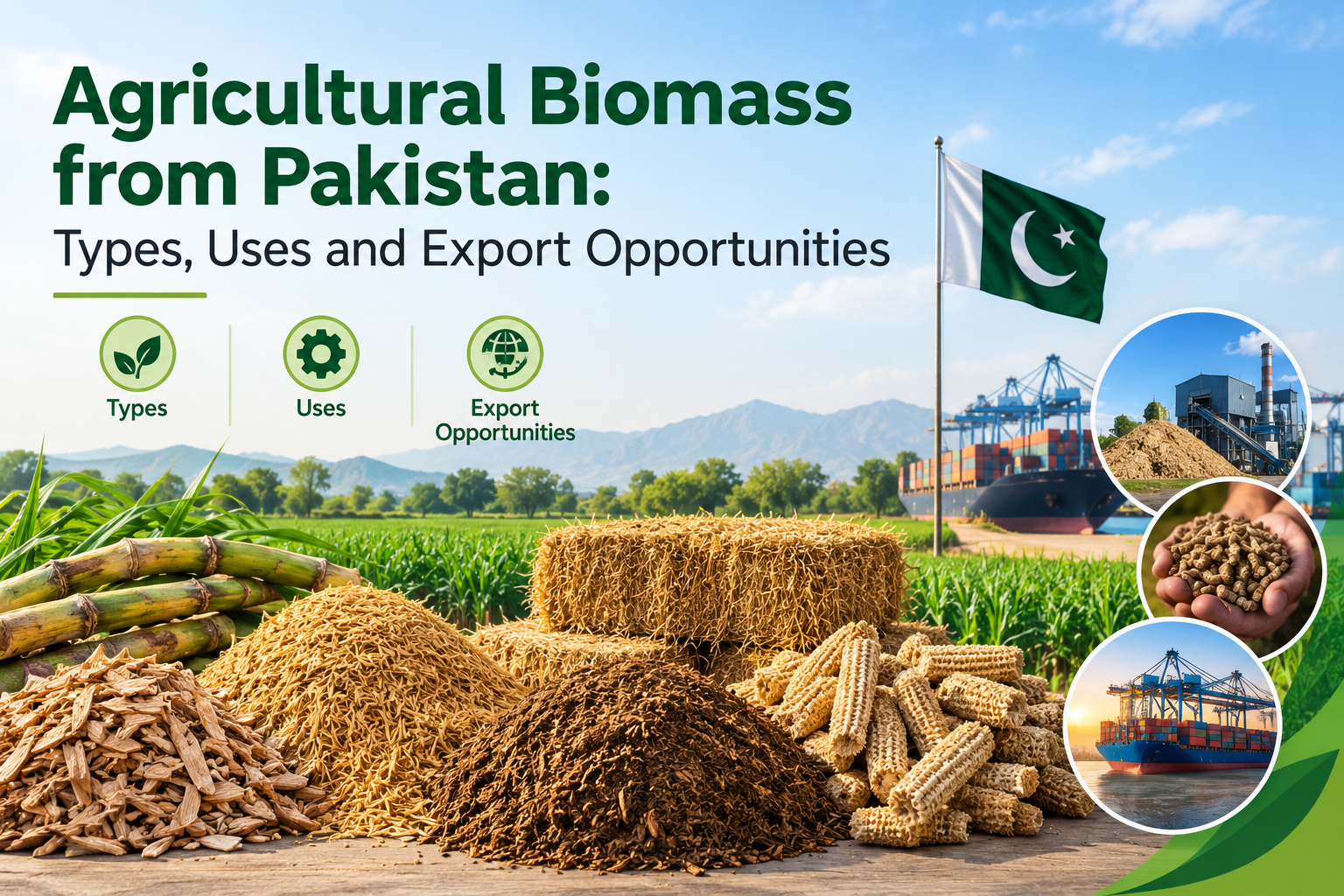
Every crop leaves something behind. In Pakistan, where wheat, rice, maize, cotton and sugarcane are all grown at scale, the […]
Every crop leaves something behind. In Pakistan, where wheat, rice, maize, cotton and sugarcane are all grown at scale, the […]
Every crop leaves something behind. In Pakistan, where wheat, rice, maize, cotton and sugarcane are all grown at scale, the leftovers add up to a large and varied pool of material. Agricultural biomass in Pakistan is the name given to this pool, and it is attracting growing attention from buyers who need affordable plant fibre for feed, cultivation, composting and industry.
This article breaks the subject down by residue type, explains Agricultural Biomass from Pakistan, how each is used and sets out what separates a genuine export opportunity from a theoretical one.
What Agricultural Biomass Includes
Agricultural biomass covers crop residues left in the field (stalks, tops, straw), by-products created during harvest handling (cobs, husks) and by-products from processing (bagasse, hulls). A World Bank-supported mapping project hosted on ENERGYDATA.info assessed wheat straw, cotton stalk, rice straw and husk, maize stalk, cob and husk, sugarcane trash and bagasse across Pakistan, which gives a useful picture of the main categories.
The same project separates theoretical potential from availability once existing uses and farmers’ willingness to supply are factored in. That distinction is central to export: material that is technically present may already be used as livestock fodder, household fuel or mill fuel.
Main Types and Their Typical Uses
Corn (maize) residues
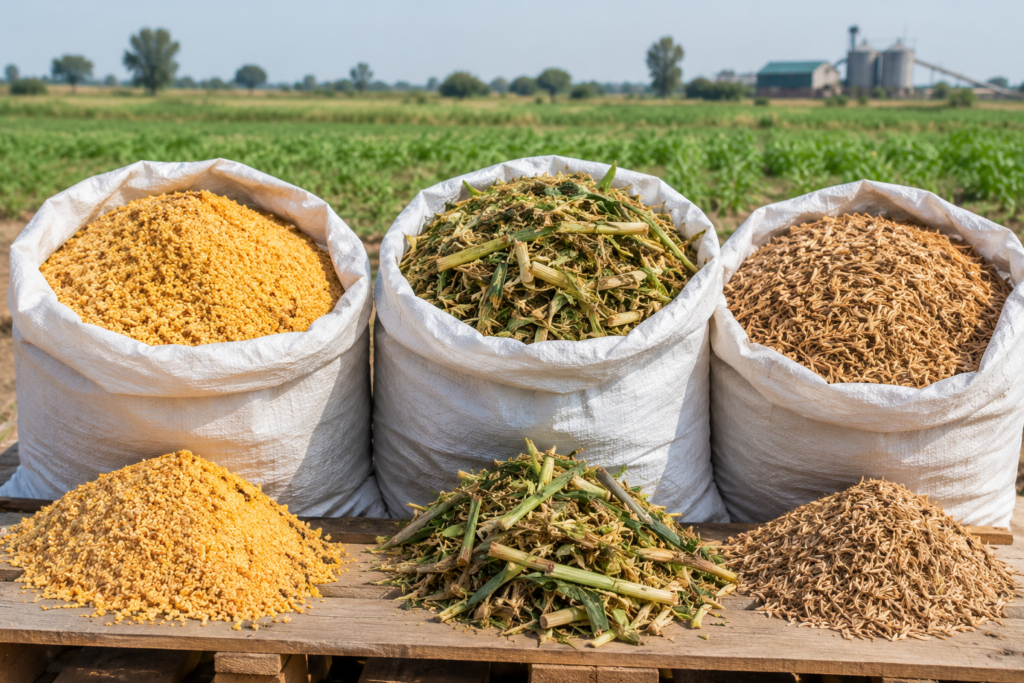
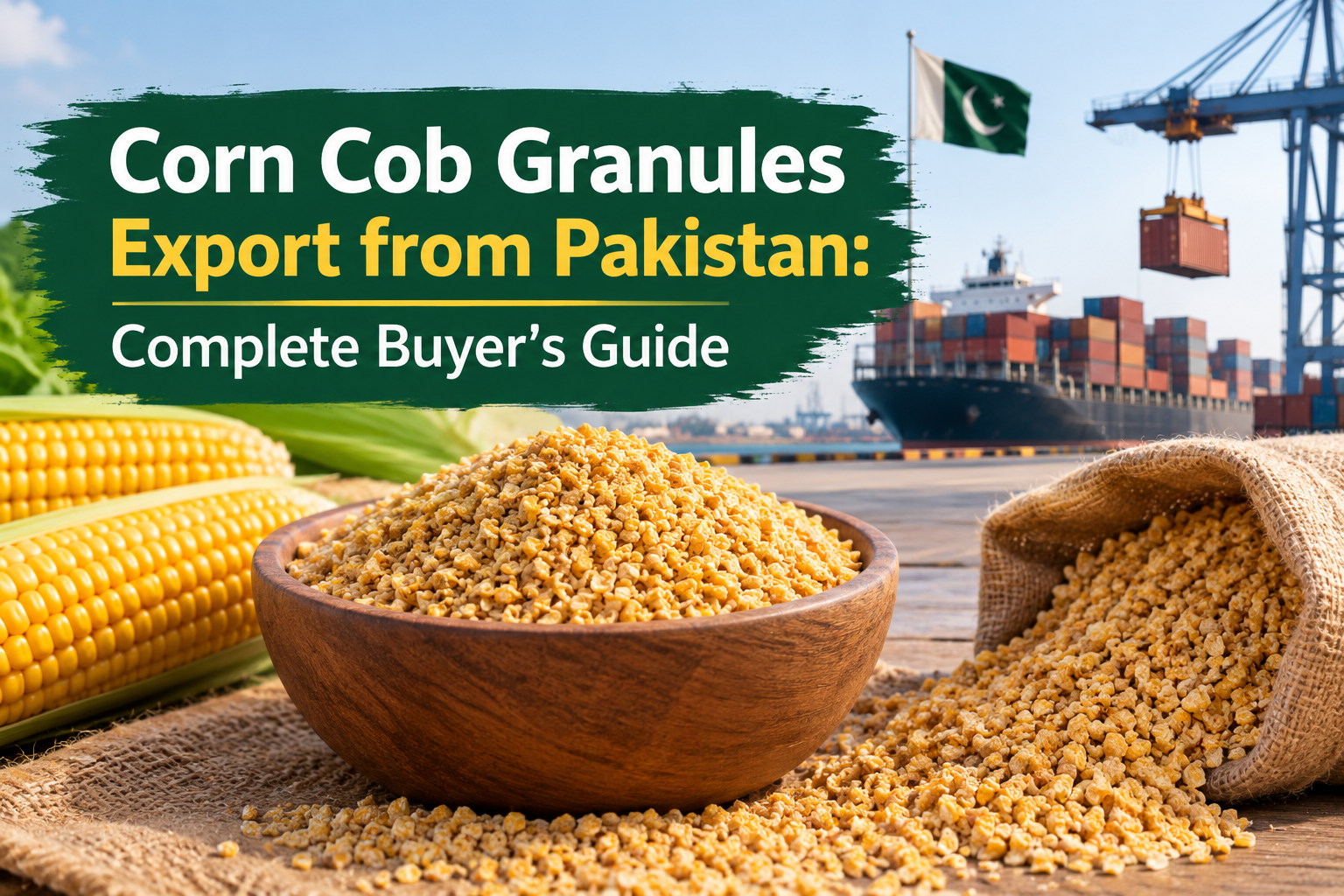
Cobs are the most commercially developed maize residue for trade. Ground or granulated cob is used as mushroom substrate, feed fibre and in absorbent and blending applications. Research supports the substrate use: a Brazilian study examined shiitake production in corn cob substrates, and a Nepalese trial found that corn cob supplemented with rice bran performed best among the residues it compared for oyster mushrooms.
Sugarcane residues
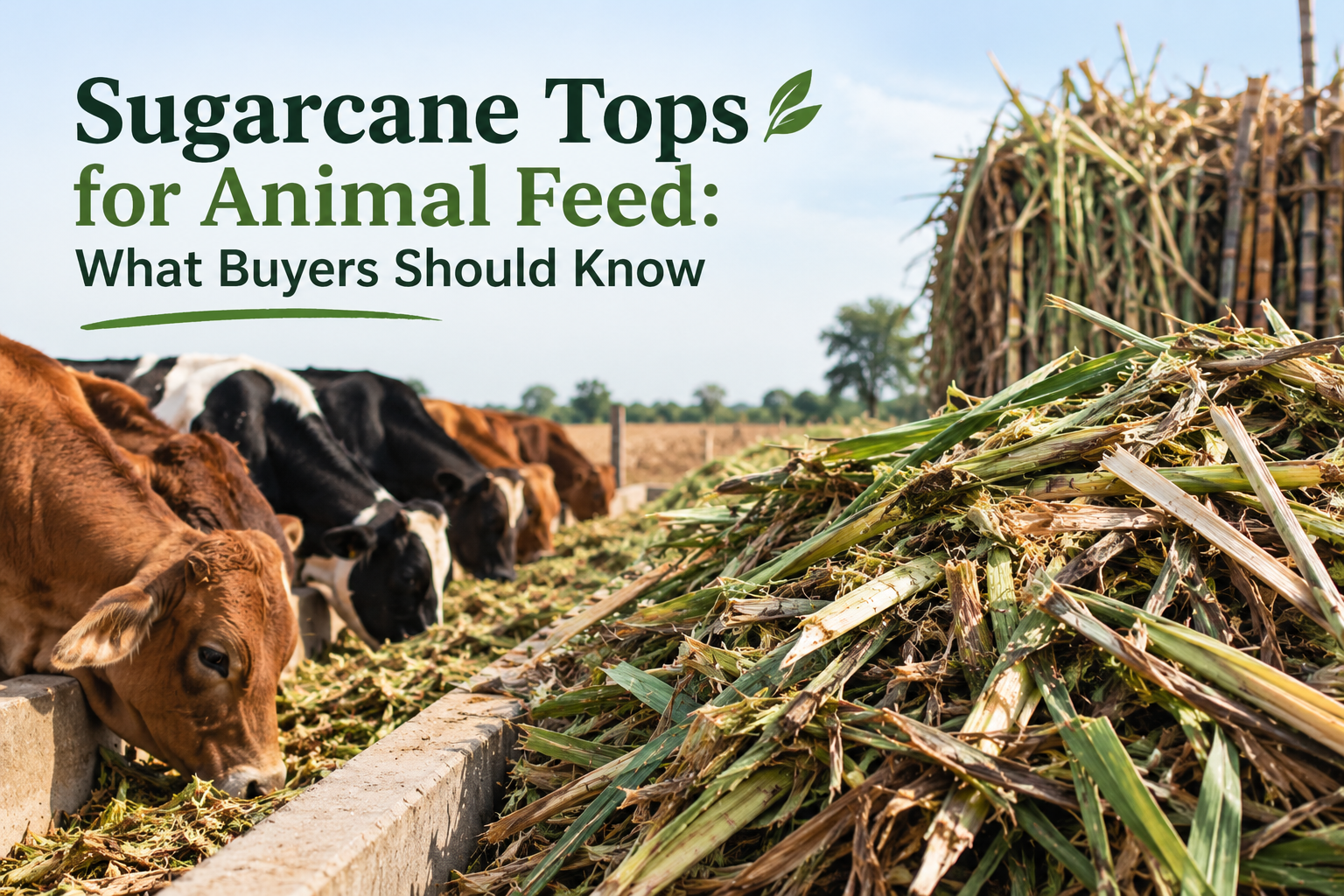
Tops and leaves remain in the field at harvest. FAO’s Feedipedia reports that tops make up roughly 15 to 25 percent of the plant’s above-ground portion and are used fresh, dried or ensiled for livestock. Bagasse, produced at the mill, is mainly burned for steam and power. Dawn has reported that almost all of Pakistan’s sugar mills run in-house bagasse cogeneration plants.
Rice, wheat and cotton residues
Rice husk, rice and wheat straw and cotton stalks serve fuel, fibre and industrial uses. Many already have strong local demand. One industry source notes that most cotton sticks are used as domestic fuel in rural areas, which narrows what is truly available.
Applications Beyond Energy
Biomass is often equated with fuel, but much of the trade in agricultural residues serves other markets:
- Animal feed fibre: tops and processed residues contribute roughage, though nutritional value is modest and varies, so lot-specific analysis is advisable.
- Mushroom cultivation: cob and other lignocellulosic residues serve as substrate.
- Compost and soil enrichment: carbon-rich residues act as bulking agents.
- Industrial raw material: uniform, clean, dry residues can supply blending and absorbent applications.
Why Pakistan Is Positioned for Export
Three features stand out. Crop diversity means several residues are produced across overlapping seasons. A dry climate favours natural sun-drying, which supports moisture control. And a rural network of farms and local markets can feed aggregation. A sugarcane-focused USDA report notes that Punjab and Sindh account for about 93 percent of cane production, so some residues cluster geographically, which can simplify collection.
What Turns Residue into an Export Product
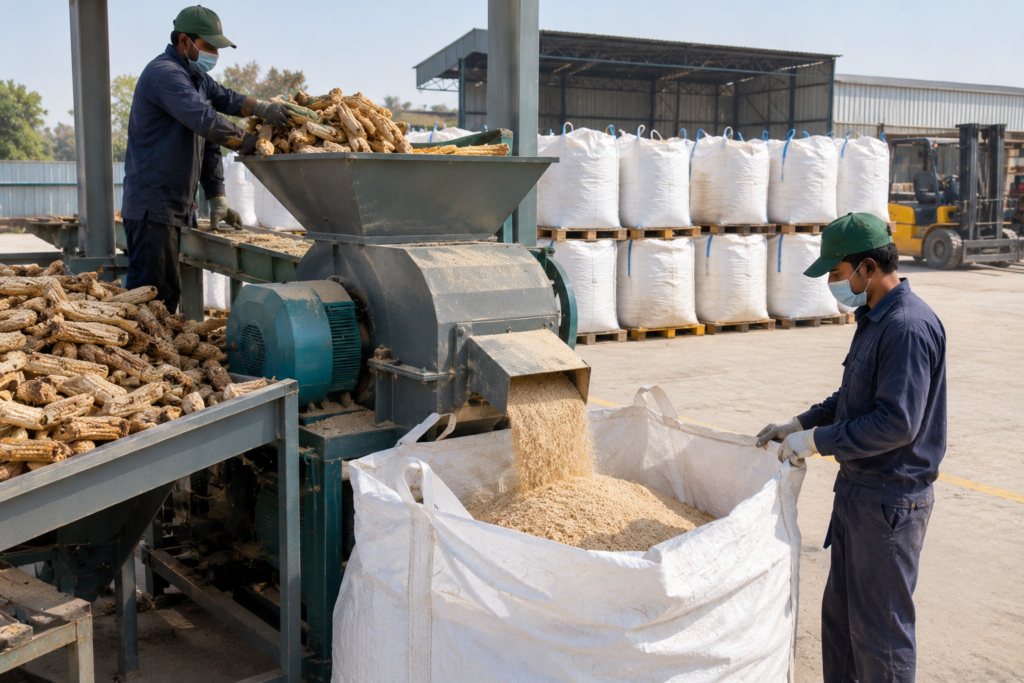
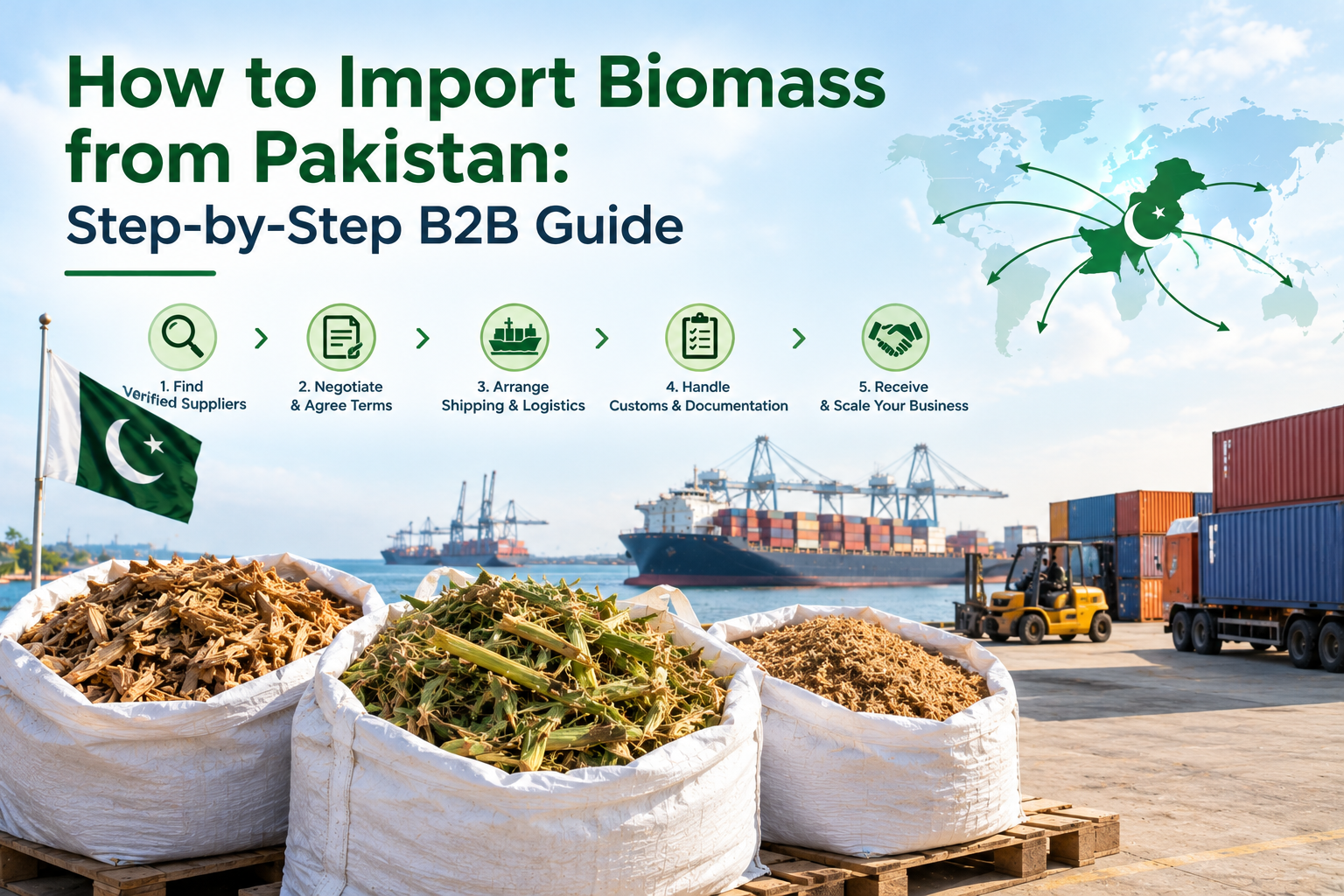
Raw field residue cannot simply be loaded into a container. A dependable export process typically includes:
- Collection from farms and local markets.
- Cleaning to remove soil, stones and debris.
- Drying to a safe moisture level.
- Size reduction or processing to a consistent form.
- Moisture checking.
- Packing in PP or jumbo bags and dry container loading.
Quality Factors That Matter to Buyers
| Factor | Why it matters |
|---|---|
| Moisture | Prevents heating, mould and weight disputes |
| Cleanliness | Soil and debris reduce usability |
| Form and size | Must suit the buyer’s process |
| Consistency | Uniform lots are easier to use |
| Packing | Protects goods and affects freight |
Buyers whose use is energy should add laboratory analysis of ash and calorific value, since agricultural residues generally differ from wood in these respects.
Daa Agri Limited and Agricultural Biomass
Daa Agri Limited is a Pakistan-based agricultural processing and export company. Its profile describes a circular agricultural value chain in which farm residues are sourced responsibly and converted into export-grade raw materials. The company lists corn cob meal (in feed-grade and mushroom-grade forms across various mesh sizes), corn cob granules and processed sugarcane tops and field residues as core export products, and names mushroom cultivation, animal feed and organic agriculture as the industries it serves.
The profile also describes sourcing across Punjab, cleaning and sorting, sun drying, size reduction, moisture checks and containerized export in PP or jumbo bags.
Conclusion
Agricultural biomass in Pakistan is a diverse resource, and the best export opportunities lie where a residue is both abundant and practical to collect, dry and standardise. Buyers should define their use first, ask direct questions about moisture and cleanliness and test samples before committing to volume.
To discuss specifications or request a quotation, contact Daa Agri Limited at info@daaagri.com.
Turn industry knowledge into a supply conversation.
Contact GreenCore for product availability, specifications, bulk packaging and export support.