
Sugarcane Tops for Animal Feed: What Buyers Should Know
At harvest, cane cutters trim the leafy top off each stalk because the upper part holds little sugar. In much […]
At harvest, cane cutters trim the leafy top off each stalk because the upper part holds little sugar. In much […]
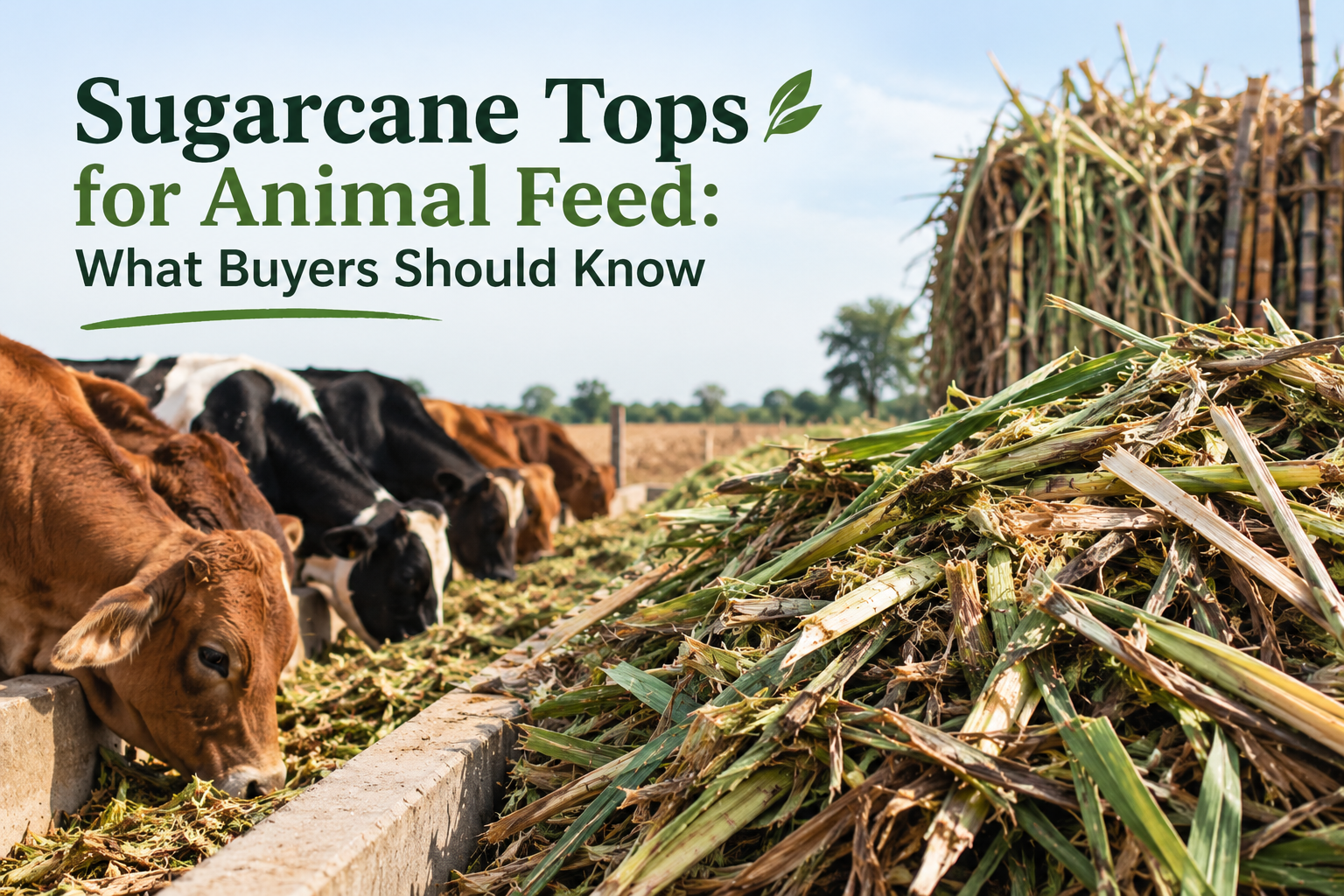
At harvest, cane cutters trim the leafy top off each stalk because the upper part holds little sugar. In much of the world’s cane country, those tops are left in the field, burned or fed informally to nearby animals. Yet livestock nutritionists have studied them for decades, and sugarcane tops remain a useful, low-cost fibre source for animal feed when handled with realistic expectations.
This guide explains what tops are, how they are fed, what the research says about their value and limits, and what a feed buyer should check before sourcing processed sugarcane residues.
What Sugarcane Tops Are
Tops are the green leaves, the leaf sheaths and a variable amount of immature stalk cut from the top of the cane. An FAO document notes that there is no single agreed cutting point, and tops therefore vary in composition. FAO’s Feedipedia adds that tops represent about 15 to 25 percent of the plant’s above-ground portion, which explains why so much of the material is left behind after each harvest.
Sugarcane is concentrated in particular regions of Pakistan. A USDA Foreign Agricultural Service report states that Punjab and Sindh account for about 93 percent of national cane production, so tops are generated in volume in those provinces during the crushing season.
How Tops Are Fed
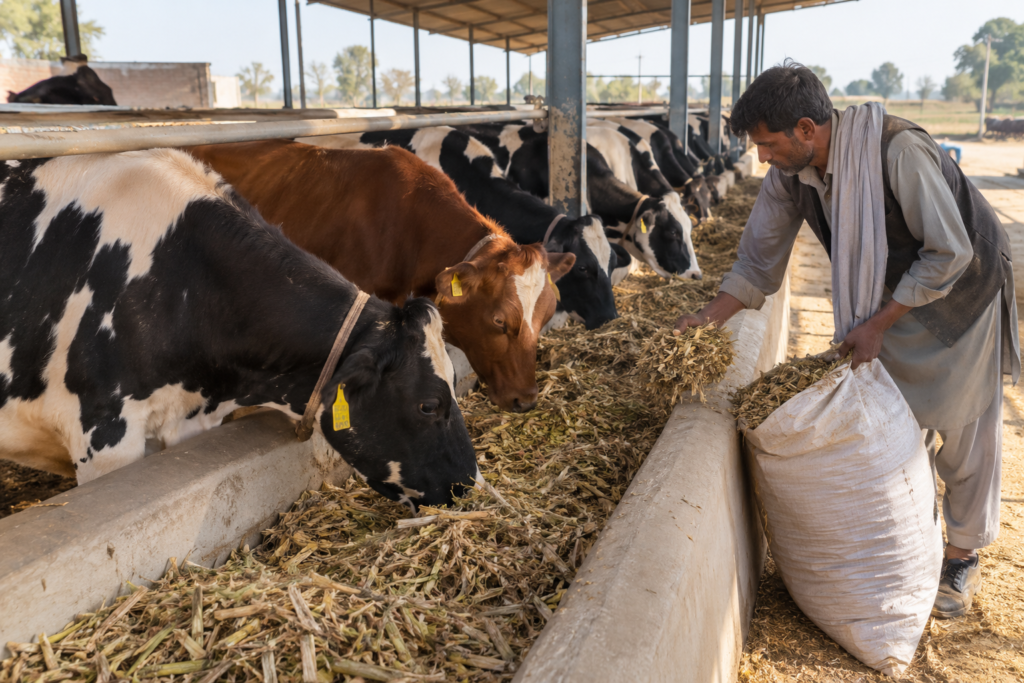
Feedipedia explains that tops are used fresh, dried or ensiled. Each route has trade-offs.
Fresh. Fed shortly after cutting, usually near the field. It is simple but only available around harvest.
Dried. Sun-drying allows storage and transport. Dry processing, chopping and pelleting can improve handling, and it is the form most relevant to trade.
Ensiled. Feedipedia notes that chopped tops ensile readily, which lets farmers preserve them for the dry season. The same source cautions that adding extra leaves to the silage tends to reduce digestibility.
What the Research Says About Feeding Value
Honest expectations matter here. Tops are a fibrous, roughage-type feed, not a concentrate.
- Feedipedia states that as the sole feed, tops allow animals to meet their maintenance energy needs, but not much beyond that, and that supplementation should use low-fill ingredients.
- It also notes that selective grazing or removing dry leaves raises the feeding value.
- Alkali and urea treatments have not produced the same improvement in tops that they deliver for cereal straws, according to the same source, which cautions against assuming that chemical treatment will fix the nutritional limits.
- A Thai trial compared dried-chopped and pelleted tops in beef cattle and found that pelleting increased voluntary feed intake while dried-chopped tops gave higher nutrient digestibility, and that pelleted tops at the largest diameter performed similarly to dried-chopped.
- An FAO-hosted study on goats examined sugarcane tops combined with the forage legume Leucaena as a protein supplement, reflecting the common practice of pairing tops with a protein source.
A review of sugarcane and its by-products in ruminant feeding reports that these materials have been made into flours, silage and supplementary blocks, showing the range of formats available.
The takeaway: tops are best treated as a fibre component in a balanced ration, supported by protein and energy sources. A qualified nutritionist should set inclusion rates based on your species and production goals.
The Collection Problem
Tops are bulky and mostly in fields. An FAO document points out that collecting them is labour-intensive and that burning the field before harvest reduces their value. That explains why a reliable supply of clean, dry, processed tops depends on a supplier who has organised collection, drying and handling rather than on informal gathering.
What to Check When Sourcing Processed Residues
Exactly what is in the bag
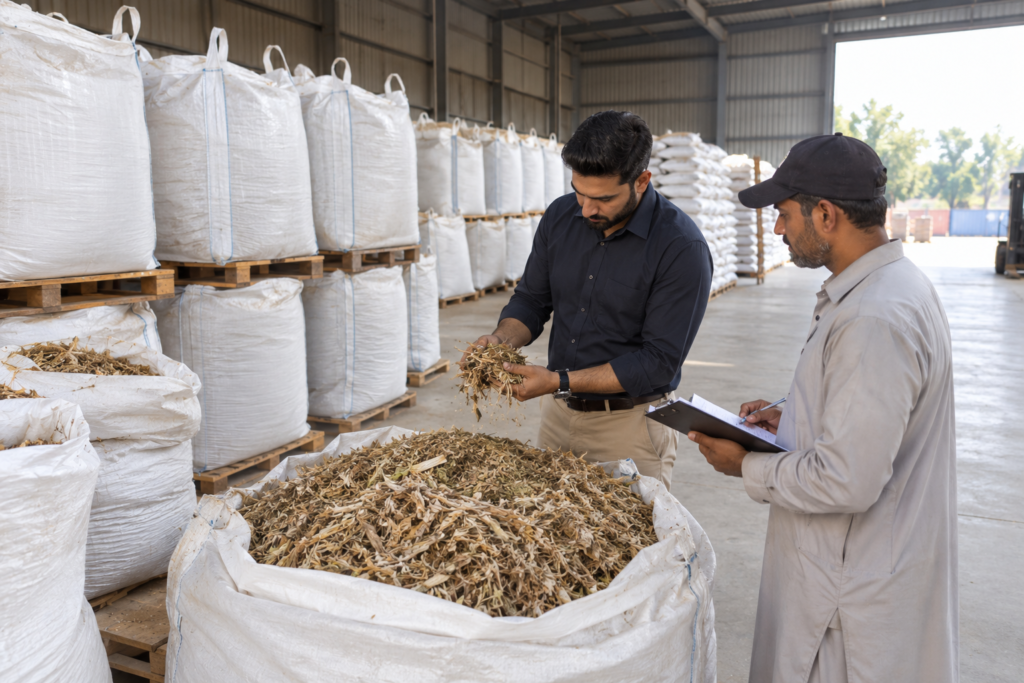
Ask whether the material is tops only or includes dry trash and other field residues, and in what form (chopped, ground, pelleted).
Moisture
Wet residue heats, moulds and loses value. Request the maximum moisture level and the test method.
Cleanliness
Soil and debris raise ash and can contaminate feed. Ask how material is cleaned before processing.
Consistency
Tops vary naturally. Ask how the supplier keeps lots uniform and whether retained samples are kept.
Lot analysis
Request laboratory analysis for each lot you intend to feed, rather than relying on generic tables.
Packing and storage
PP and jumbo bags are common. Store dry and off the floor.
| Check | Why it matters |
|---|---|
| Material definition | Tops differ from mixed field trash |
| Moisture limit | Prevents spoilage and mould |
| Cleanliness | Protects feed quality |
| Lot analysis | Basis for ration formulation |
| Packing | Preserves quality in transit and storage |
Trade and Logistics
Plant residues are bulky, so freight is a major cost driver. Agree on an Incoterm early. The Trade Development Authority of Pakistan explains that FOB, CIF and related terms define who bears cost and risk at each stage. Import rules for feed ingredients differ between countries, so confirm requirements with your customs broker and feed authority before ordering.
Sugarcane Residues from Daa Agri Limited
Daa Agri Limited is a Pakistan-based agricultural processing and export company working across a circular agricultural value chain. Its company profile lists processed sugarcane tops and field residues as core export products for animal feed fibre, agricultural composting inputs and industrial raw material supply chains, and names animal feed as one of the industries it serves, with applications in livestock fibre balancing.
The profile describes cleaning and sorting, drying, moisture checks and export packing in PP or jumbo bags with containerized export handling. The profile does not state nutritional composition, so feed buyers should request a sample and lot analysis before formulating.
Conclusion
Sugarcane tops are not a miracle feed, but as a low-cost fibre source in a balanced ration, they have a long track record. The difference between a useful ingredient and a disappointing one lies in the details: how the material is dried and cleaned, how consistently it is processed and how well it is matched with protein and energy supplements. For more information about our products, services, and export solutions, please visit Daa Trade.
To request a sample or quotation for processed sugarcane residues, contact Daa Agri Limited at info@daaagri.com.
Turn industry knowledge into a supply conversation.
Contact GreenCore for product availability, specifications, bulk packaging and export support.