
How to Buy Corn Cob Meal from Pakistan in Bulk
Most buying mistakes happen before the purchase order is signed. A buyer asks for “corn cob meal,” receives a price, […]
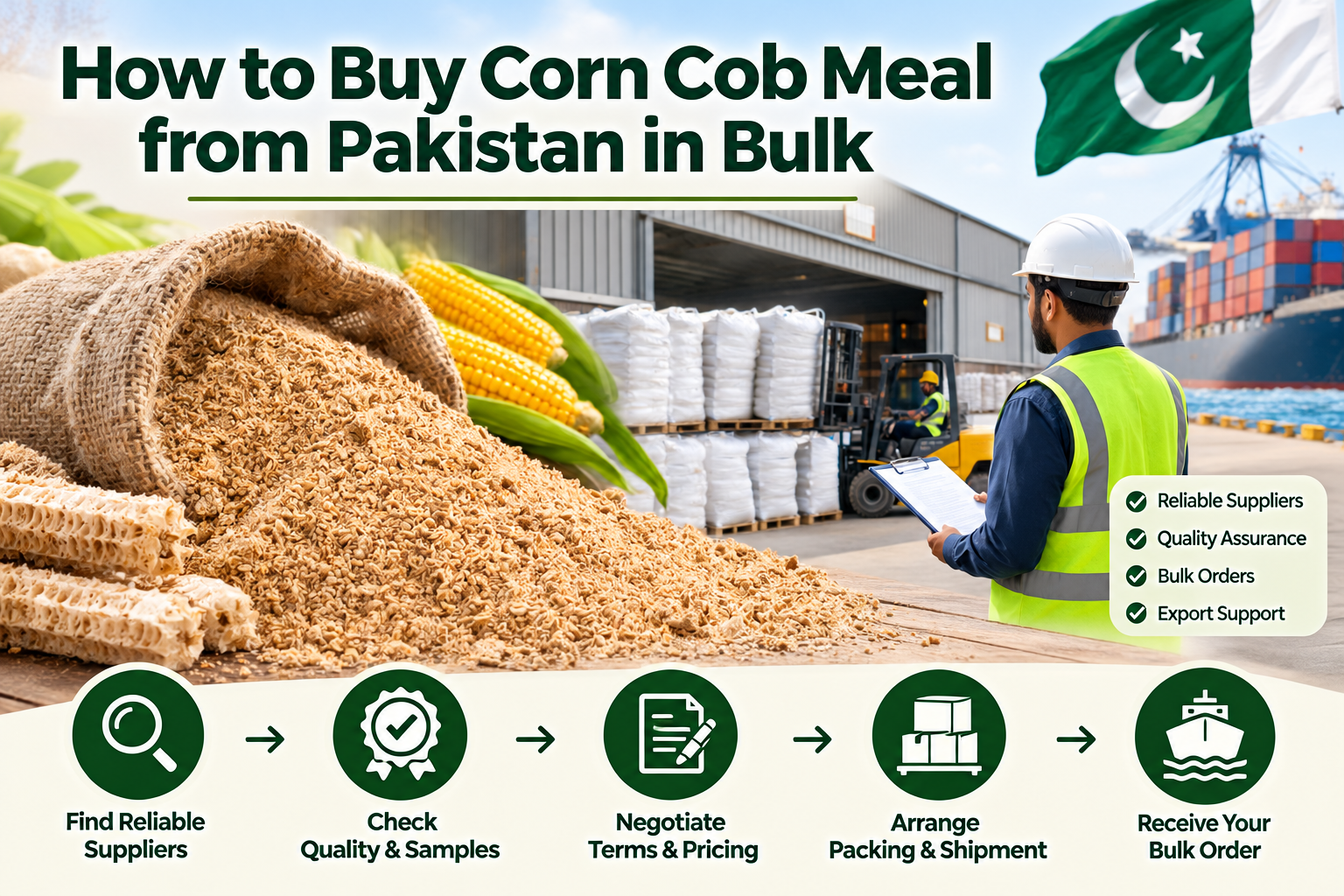
Most buying mistakes happen before the purchase order is signed. A buyer asks for “corn cob meal,” receives a price, […]
Most buying mistakes happen before the purchase order is signed. A buyer asks for “corn cob meal,” receives a price, and only later discovers that the mesh size, moisture level or packing was never properly agreed. Whether you plan to buy corn cob meal from Pakistan once or build a regular supply line, a clear process protects your money and your application.
This guide follows How to Buy Corn Cob Meal from Pakistan in Bulk by walking you through a real bulk purchase: defining what you need, approaching suppliers, testing samples, agreeing terms and receiving the shipment.
Step 1: Define What You Actually Need
Corn cob meal serves different purposes, so start with your use rather than price. Mushroom growers, feed manufacturers and compost producers usually need different grades and particle sizes. Write down:
- The intended use (substrate, feed fibre, compost or industrial blending).
- Preferred mesh size or particle range.
- Maximum acceptable moisture.
- Monthly or per-shipment volume.
- Preferred packing (PP bags or jumbo bags).
- Destination port and delivery terms.
Be precise about the product itself. The FAO’s AGROVOC vocabulary lists corn cob mix as a feed made from grain and cob together, which is not the same as cob-only meal—state clearly which one you want.
Step 2: Understand Why Pakistan Is Worth Considering
Maize is widely grown in Punjab, so cobs are available after each harvest, and the dry climate supports natural sun-drying, which helps control moisture. Local agricultural costs are also competitive against many other origins. These advantages help, but they do not replace careful supplier selection.
Step 3: Shortlist Suppliers and Ask the Right Questions
Contact several suppliers and send the same written requirements to each so quotes can be compared fairly. Pay attention to how they respond. Good suppliers ask about your application, because it affects the grind and grade.
Ask each one:
- Which grades and mesh sizes do you offer?
- How is moisture measured, and what is the maximum?
- How are cobs cleaned before grinding?
- What packing and loading practices do you use?
- What is the minimum order quantity and typical lead time?
- Can you send a sample?
Clear answers matter more than polished brochures.

Step 4: Test a Sample in Your Own Process
A sample is the cheapest insurance you can buy. Test it in your actual application: a small substrate batch, a feed blend trial or a compost mix. Published research shows why trials matter. Studies on shiitake grown in corn cob substrates and on oyster mushrooms grown on corn cob with rice bran reached different results depending on recipe and supplements, so your own conditions decide the outcome.
For feed, ask for lot analysis rather than relying on generic figures. A review in the Journal of Microbiology, Biotechnology and Food Sciences notes that reported nutritive values for corn and cob meal are inconsistent.
Step 5: Lock the Specification in Writing
Once the sample passes, put every key term into the quotation or contract:
- Product name and grade.
- Mesh size range and tolerance.
- Maximum moisture.
- Packing type and bag weight.
- Quantity and tolerance.
- Delivery terms and shipment window.
- Documents to be supplied.
- What happens if the delivered goods differ from the agreed specification.
Vague terms are where most disputes begin.
Step 6: Agree Commercial Terms
Choose an Incoterm early, because it decides who pays for freight and bears risk at each stage. The Trade Development Authority of Pakistan notes that terms such as FOB and CIF are standard in international trade. Payment terms, inspection rights and documentation should be negotiated at the same time. Your bank, freight forwarder or customs broker can advise on payment methods and destination-country import requirements, which vary by market and by whether the cargo is feed or substrate.
For a first order, many buyers prefer a smaller trial shipment to verify consistency before scaling up.
Step 7: Plan Packing and Logistics
Corn cob meal is light and bulky, so packing choices influence freight efficiency. PP bags and jumbo bags are the usual options, and the right one depends on how you handle the material. Keep cargo dry at every stage and ask how containers are inspected, loaded and sealed.

Step 8: Inspect on Arrival
When the goods arrive, check moisture, particle size, cleanliness and packing condition against your written specification and your retained sample. Report any differences promptly and in writing.
Buying from Daa Agri Limited
Daa Agri Limited is a Pakistan-based agricultural processing and export company that lists corn cob meal as its flagship product, offered in feed-grade and mushroom-grade forms across various mesh sizes. Its company profile describes direct farm and mandi sourcing across Punjab, cleaning and sorting, sun drying, grinding to uniform mesh sizes, moisture checks and containerized export in PP or jumbo bags.
Buyers can send their application, target mesh size and expected volume, and the team can advise on availability and quote accordingly.
Conclusion
To buy corn cob meal from Pakistan with confidence, follow these steps: define your need, compare suppliers on equal terms, test a sample, fix the specification in writing, and inspect the shipment on arrival. Price matters, but a documented specification matters more.
To request specifications, samples or a quotation, contact Daa Agri Limited at info@daaagri.com with your requirements.

Turn industry knowledge into a supply conversation.
Contact GreenCore for product availability, specifications, bulk packaging and export support.