
Corn Cob Meal from Pakistan: Uses, Quality and Applications
Corn Cob Meal from Pakistan: Uses, Quality and Applications A maize cob may seem like a poor trade commodity. It […]
Corn Cob Meal from Pakistan: Uses, Quality and Applications A maize cob may seem like a poor trade commodity. It […]
Corn Cob Meal from Pakistan: Uses, Quality and Applications
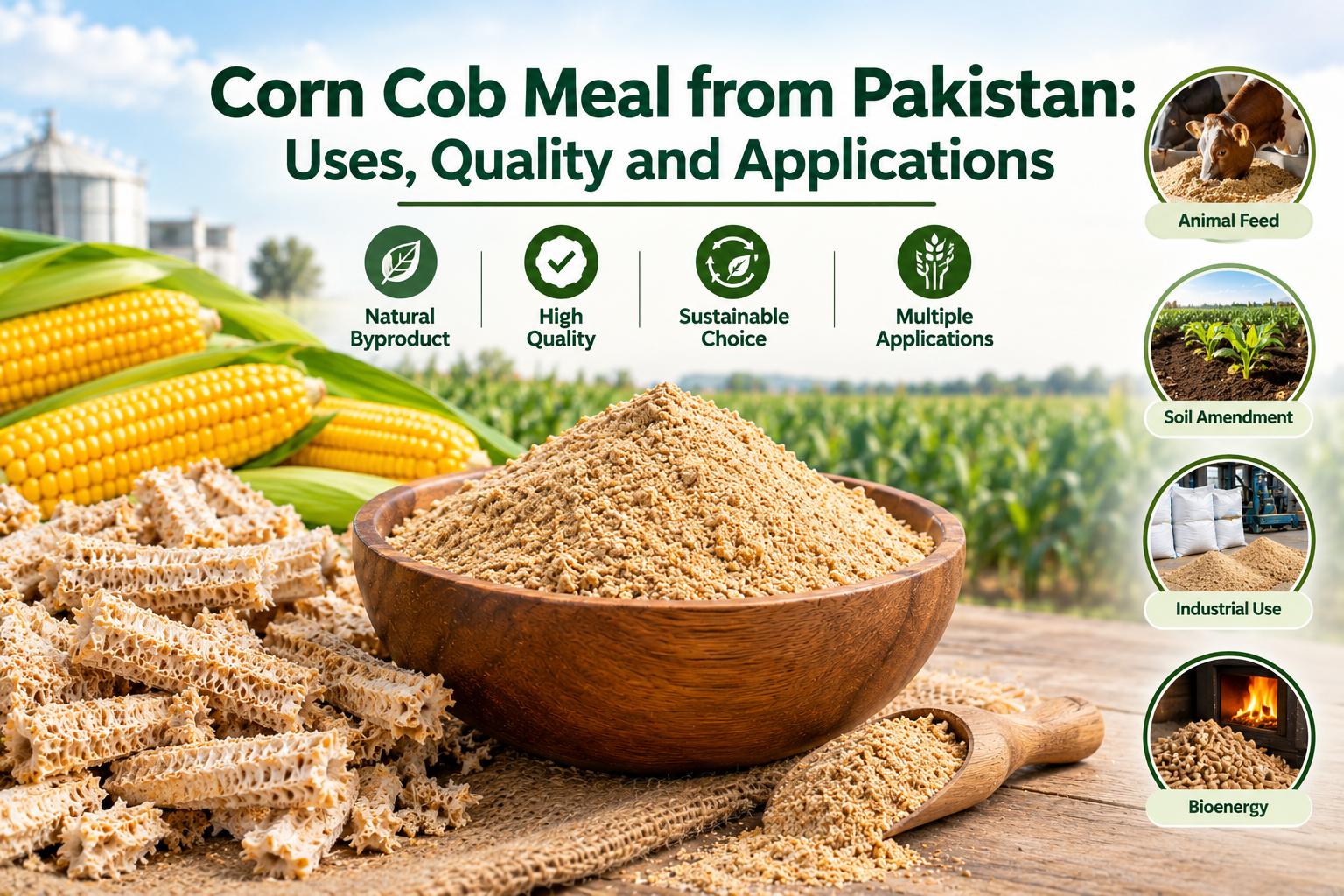
A maize cob may seem like a poor trade commodity. It is hard, pale and mostly fibre. Yet ground into a consistent meal, it becomes a useful raw material for growers, feed manufacturers and compost producers. Corn cob meal from Pakistan is now part of that picture, supported by large maize production and a climate that suits natural drying.
This article focuses on what the product does, how its quality is judged and which grade suits which job. It is intended for buyers who want to understand the material before requesting a quotation.
What Corn Cob Meal Is and How It Is Made
Corn cob meal is the ground core of the maize ear, left after the kernels are removed. Processing usually follows a simple order: cobs are collected, cleaned, dried, ground to a set mesh size, checked and packed.
Naming can be confusing. In feed science, the term corn and cob meal usually means grain and cob ground together, a related but different product. The FAO’s AGROVOC vocabulary records this as corn cob mix. When talking to suppliers, say plainly that you want cob-only meal.
Mushroom Cultivation
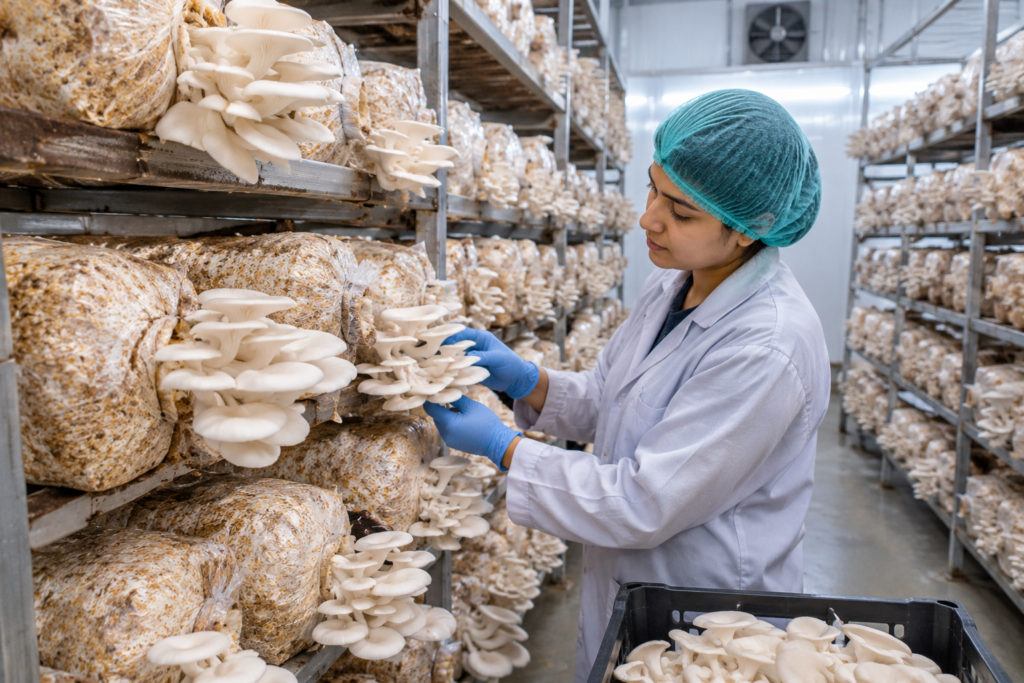
Mushroom growers value corn cob as a substrate because it is lignocellulosic, meaning it contains the cellulose and lignin that many cultivated fungi can break down. It also holds moisture while keeping a structure that lets air through.
Researchers have tested it across several species. A Brazilian study examined shiitake production in corn cob substrates. A Nepalese trial reported that corn cob supplemented with rice bran gave the best results among the residues compared for oyster mushrooms. Work from China found that corn cob could replace part of the sawdust in substrates for the edible and medicinal mushroom Grifola frondosa. Italian researchers have also examined corn cobs as a medicinal mushroom substrate.
Results depend heavily on recipe, supplements and sterilisation method, so growers should trial any new supply on a small scale first.
Animal Feed
In feed, cob meal is mostly a fibre source rather than a high-energy or protein ingredient. A review in the Journal of Microbiology, Biotechnology and Food Sciences notes that maize cobs are abundant but published nutritive values for corn and cob meal vary widely, mainly because of differences in fibre content and processing.
For feed buyers, the lesson is practical. Do not rely on generic composition tables. Request a current analysis for each lot, and have a qualified nutritionist decide inclusion rates for your species and diet.
Compost, Soil Conditioning and Other Uses
Because corn cob meal is carbon-rich, it is used in compost as a bulking material that helps balance nitrogen-heavy inputs and keeps piles aerated. In soil conditioning programmes, it adds organic matter. Some industrial buyers use ground cob or granules where absorbency and uniform particle size matter more than nutrition.
How Quality Is Judged
Moisture
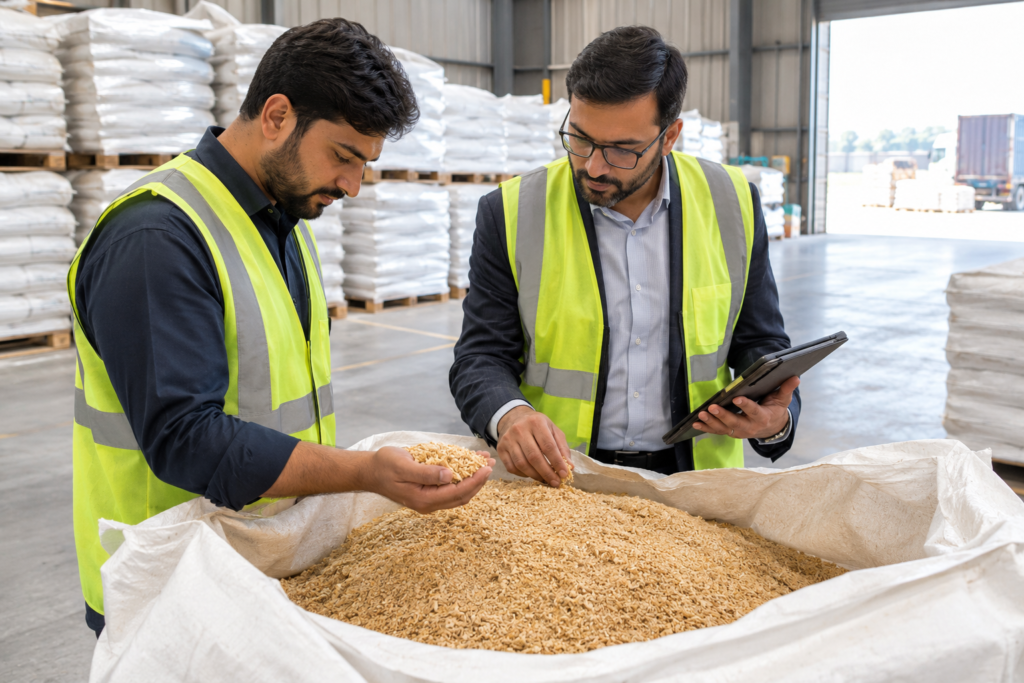
Moisture is the first thing to check. Damp meal can heat, mould and spoil during storage and transit. A supplier should be able to state the moisture limit and explain how it is tested.
Particle size
Mesh size determines how the meal behaves. Coarser material gives more air space and is usually preferred for substrate. Finer meal blends more easily in some feed and industrial uses. Consistency matters as much as the target size, so ask how uniform the grind is across lots.
Cleanliness
Meal should be free of soil, stones, dust and foreign plant matter. Cleaning before grinding is the usual way to achieve this, and buyers should ask what checks happen before loading.
Grade for intended use
Feed use and mushroom use have different needs, and destination countries apply their own import rules, especially for feed ingredients. Confirm requirements with your authorities or customs broker before you order.
| Application Key | quality concern Sensible | request to supplier |
|---|---|---|
| Mushroom substrate | Particle size, cleanliness | Sample for a small trial |
| Animal feed | Moisture, fibre analysis | Lot analysis from a laboratory |
| Compost | Dryness, absence of contaminants | Moisture level and cleaning method |
| Industrial blending | Uniform size | Mesh range and tolerance |
Storage and Handling
Keep corn cob meal dry, off the floor and away from moisture sources. Polypropylene and jumbo bags are common packing formats, and stacked bags need ventilation. If stored long-term, check periodically for dampness and odours.
Why Source Corn Cob Meal from Pakistan
Pakistan produces maize at scale, mostly in Punjab, which keeps raw cobs available through the year’s crop cycles. Its dry climate supports sun-drying, which helps manage processing costs. Together with competitive local costs, these factors make Pakistani cob meal an attractive option for many importers, though pricing and availability always depend on season and specification.
Corn Cob Meal from Daa Agri Limited
Daa Agri Limited is a Pakistan-based agricultural processing and export company working with agricultural by-products. Its profile lists corn cob meal as a flagship product in feed-grade and mushroom-grade forms across various mesh sizes and describes a process of farm and mandi sourcing across Punjab, cleaning and sorting, sun drying, grinding, moisture checks and containerized export in PP or jumbo bags. The company also lists corn cob granules for absorbent applications, substrate blending and livestock fibre feed.
The company profile names the mushroom cultivation, animal feed and organic agriculture sectors as the industries it serves, which matches the main applications covered in this article.
Conclusion
Corn cob meal from Pakistan is a practical, renewable input for mushroom growers, feed manufacturers and compost producers. Its value depends on matching grade, mesh size and moisture to the job. Test samples in your own process, request lot-specific data where it matters and keep every specification in writing.
To discuss grades, mesh sizes, packing or a quotation, contact Daa Agri Limited at info@daaagri.com with your application and volume.

Turn industry knowledge into a supply conversation.
Contact GreenCore for product availability, specifications, bulk packaging and export support.