
Sugarcane Waste from Pakistan: Biomass, Energy and Industrial Uses
Walk through Punjab or Sindh during the cane harvest, and you will notice how much material is left behind: leafy […]
Walk through Punjab or Sindh during the cane harvest, and you will notice how much material is left behind: leafy […]
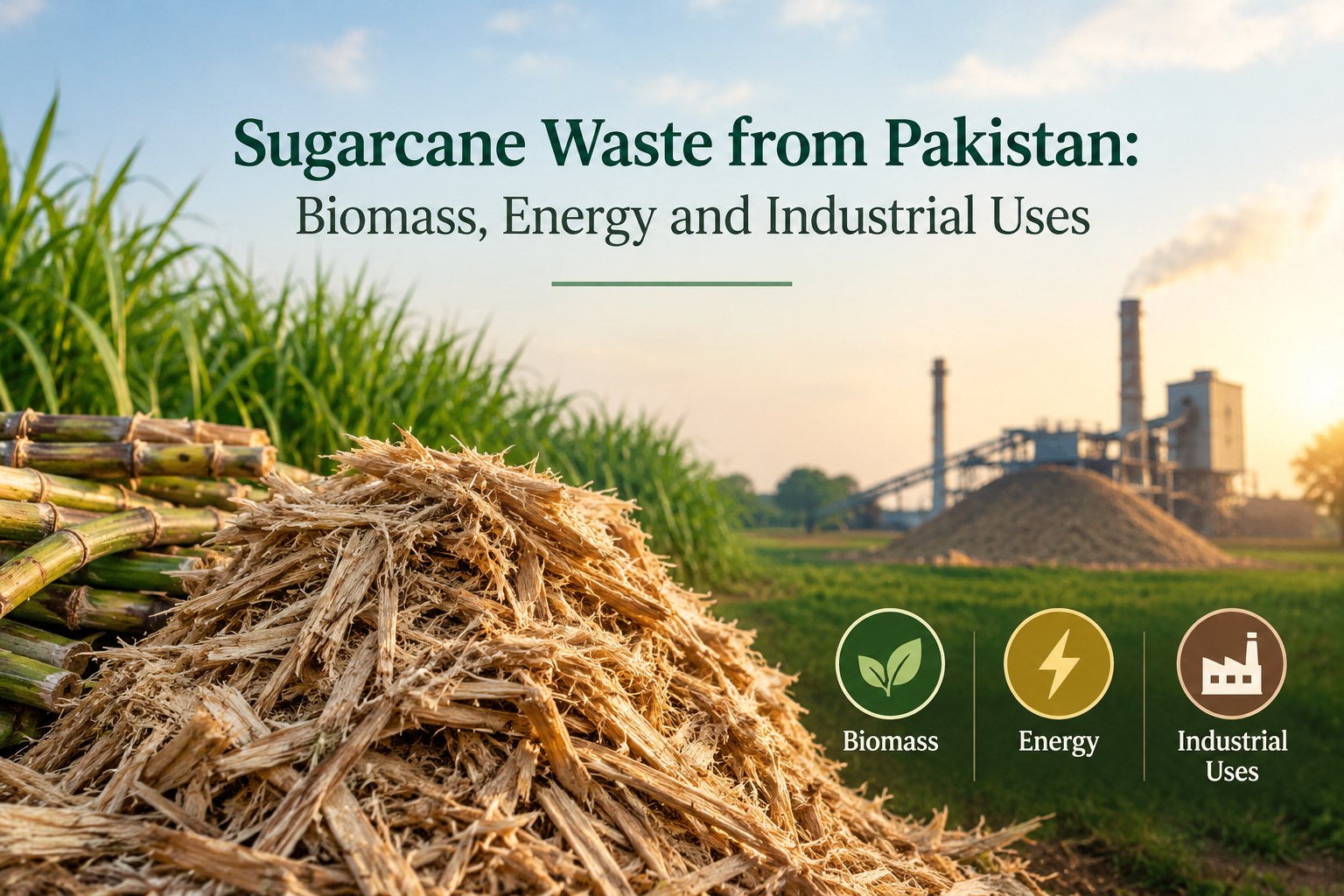
Walk through Punjab or Sindh during the cane harvest, and you will notice how much material is left behind: leafy tops, dry trash in the field, and, at the mill, mountains of crushed fibre. For a long time, people burned or discarded much of this. Sugarcane waste in Pakistan is now increasingly treated as a resource, feeding boilers, livestock, compost heaps and industrial supply chains.
This article explains Sugarcane Waste from Pakistan, how it is used and what buyers should consider when sourcing it.
Why Pakistan Has So Much Sugarcane Residue
Sugarcane is one of Pakistan’s major crops, and its production is concentrated in two provinces. A USDA Foreign Agricultural Service report describes how Punjab and Sindh account for about 93 percent of sugarcane production, with key growing zones in southern Punjab and Sindh. Where there is that much cane, there is a matching volume of by-products.
The Main Types of Sugarcane Waste
Sugarcane residues are not one material. Each type behaves differently and suits different uses.
Bagasse. The fibrous material left after juice is extracted at the mill. A case study on Pakistan’s sugar industry notes that about one tonne of bagasse is produced for every three tonnes of cane processed.
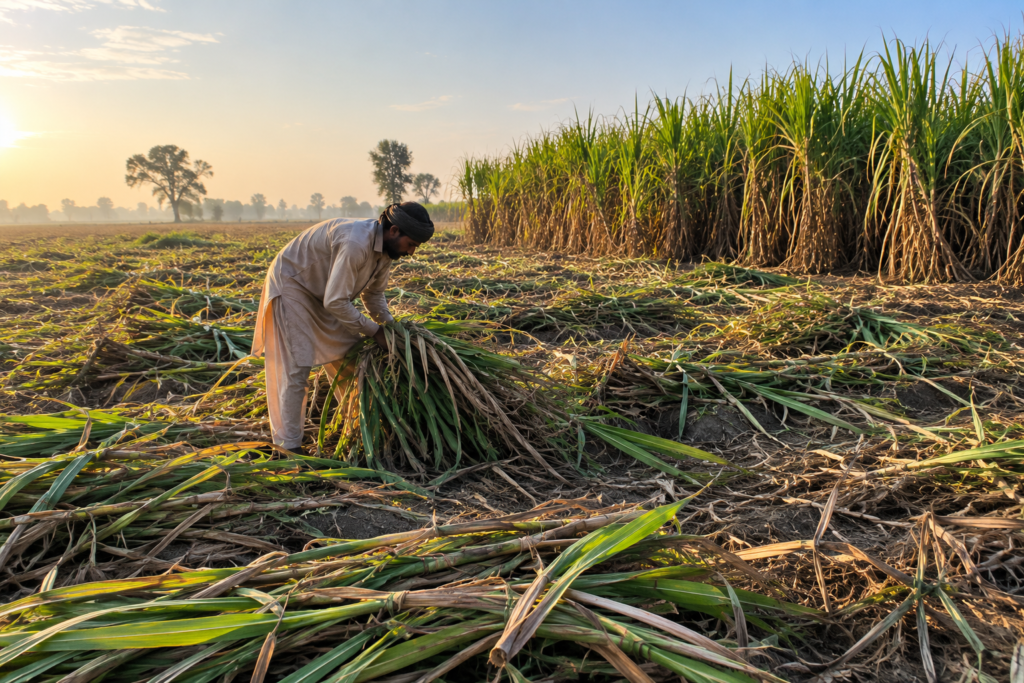
Tops and leaves. The upper part of the plant, cut off at harvest and usually left in the field. FAO’s Feedipedia notes that sugarcane tops make up roughly 15 to 25 percent of the plant’s above-ground portion.
Field trash and dry leaves. Dried leaf material and stubble remaining after harvest.
Press mud (filter cake). A mill by-product often used on farmland as an organic amendment.
Biomass and Energy Uses
The best-known use is bagasse-fired power. Sugar mills burn bagasse to produce steam and electricity, largely for their own operations. Dawn reports that almost all of Pakistan’s sugar mills have bagasse-based cogeneration plants, mostly built to meet internal needs, though some supply surplus power to the grid.
Researchers at UET Taxila argue that bagasse accounts for under one percent of Pakistan’s energy production, and that high-pressure boiler retrofits could raise its contribution considerably. The same body of work points to a practical constraint: bagasse is generated only during the crushing season, which is much shorter than the full year, so plants either rely on stored fuel or need additional biomass during the off-season.
That seasonal gap is also one reason biomass buyers look beyond mills to field residues and other agricultural by-products.
Animal Feed
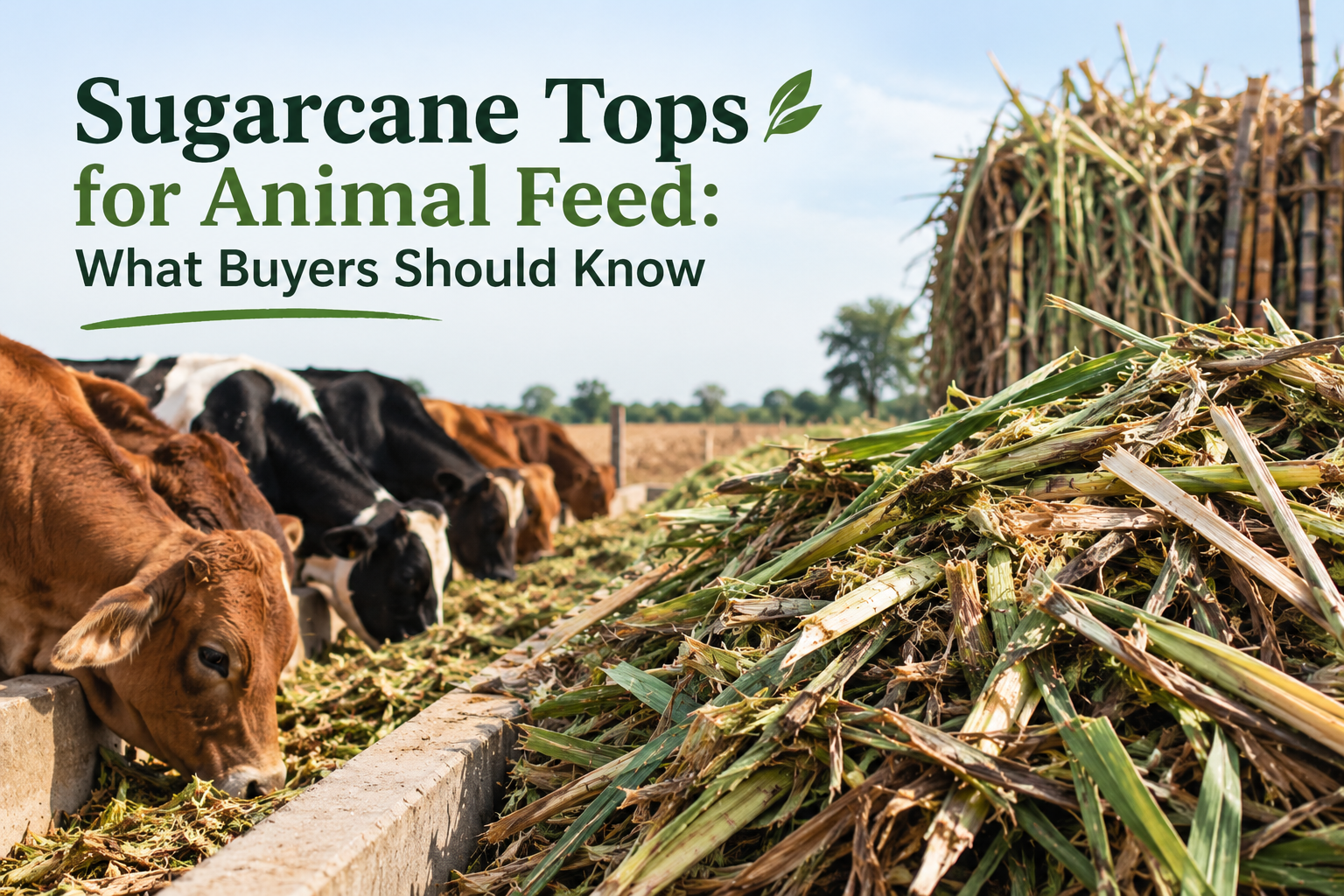
Sugarcane tops are a long-established roughage for ruminants. Feedipedia notes that they are used fresh, dried or ensiled, and that chopped tops ensile readily. FAO material on sugarcane tops also describes the challenges of collection, including heavy labour in the field. Their feed value is modest, so they typically serve as a fibre source or are supplemented with other ingredients. Buyers should rely on a lot-specific analysis and professional nutritional advice rather than generic figures.
Compost, Soil Enrichment and Industrial Raw Material
Cane residues are carbon-rich, which makes them useful as compost inputs and for soil enrichment programmes. Processed residues also serve as raw material in industrial supply chains, depending on particle size, dryness and cleanliness. In each case, a consistent, well-prepared material is worth more than a cheap, contaminated one.
What Makes Residue Export-Ready
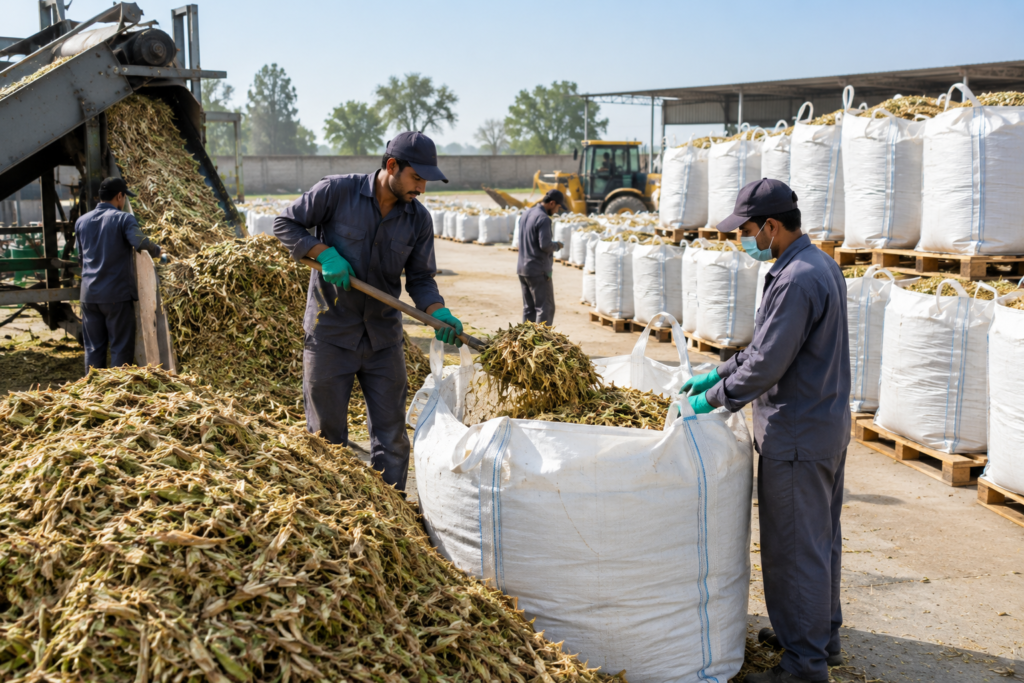
Raw field residue cannot simply be loaded into a container. For export, material generally needs:
- Cleaning to remove soil, stones and foreign matter.
- Drying to bring moisture down to a level suitable for storage and shipping.
- Size reduction or processing to a consistent form.
- Packing suited to the cargo, such as PP or jumbo bags.
- Dry loading to prevent moisture damage in transit.
Quality Questions Buyers Should Ask
| Question | Why it matters |
|---|---|
| What exactly is the material (tops, trash, bagasse)? | Each behaves differently |
| What is the moisture level and how is it checked? | Protects against spoilage |
| How is it cleaned and processed? | Affects purity and consistency |
| What is the intended use? | Determines the right form |
| What packing is offered? | Influences handling and freight |
Sugarcane Residues from Daa Agri Limited
Daa Agri Limited is a Pakistan-based agricultural processing and export company that works across a circular agricultural value chain, sourcing farm residues and converting them into export-grade raw materials. Its company profile lists processed sugarcane tops and field residues among its core export products, positioned for animal feed fibre, agricultural composting inputs and industrial raw material supply chains.
The profile describes cleaning and sorting, drying, moisture checks and export packing in PP or jumbo bags, with containerized export handling. Buyers interested in sugarcane residues can share their intended use and specifications to discuss availability.
Conclusion
Sugarcane waste in Pakistan is far more than discarded leftovers. From bagasse-fired power at mills to tops and field residues for feed, compost and industry, these materials form a significant and growing part of the country’s biomass picture. For buyers, the keys are clarity about the type of residue, attention to moisture and cleanliness, and a supplier who can document how the material is prepared.
To discuss specifications or request a quotation, contact Daa Agri Limited at info@daaagri.com.
Turn industry knowledge into a supply conversation.
Contact GreenCore for product availability, specifications, bulk packaging and export support.