
Sugarcane Residues Export from Pakistan: A Practical Guide for Global Biomass Buyers
Anyone sourcing biomass on a recurring basis eventually runs into the same problem: agricultural residue markets look simple from a […]
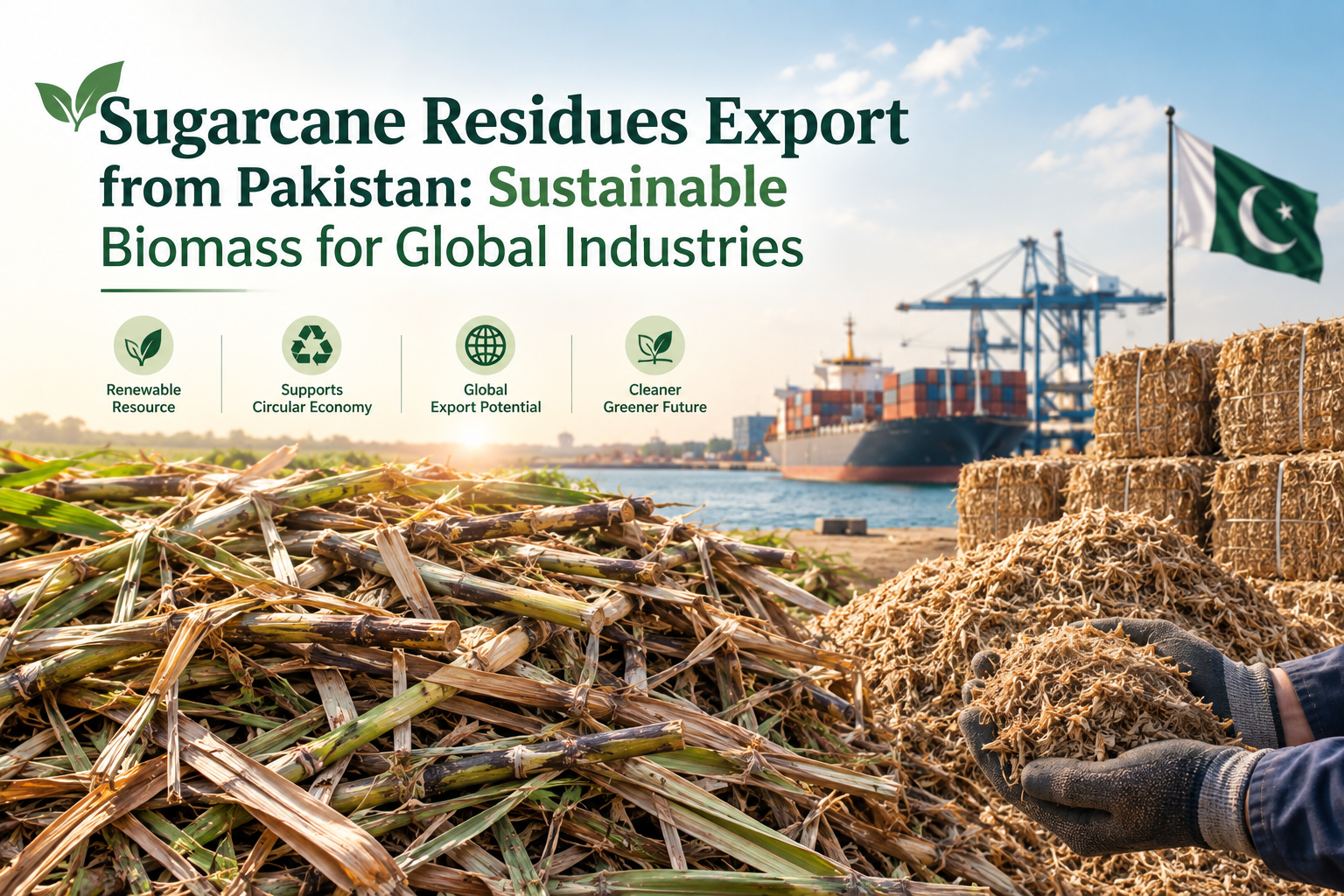
Anyone sourcing biomass on a recurring basis eventually runs into the same problem: agricultural residue markets look simple from a […]
Anyone sourcing biomass on a recurring basis eventually runs into the same problem: agricultural residue markets look simple from a distance and get complicated fast once you start asking real questions. What moisture level counts as “dry”? Does the supplier bale it, bag it, or ship it loose? Is the material actually sugarcane residue, or a mixed load padded with whatever field waste was available that week?
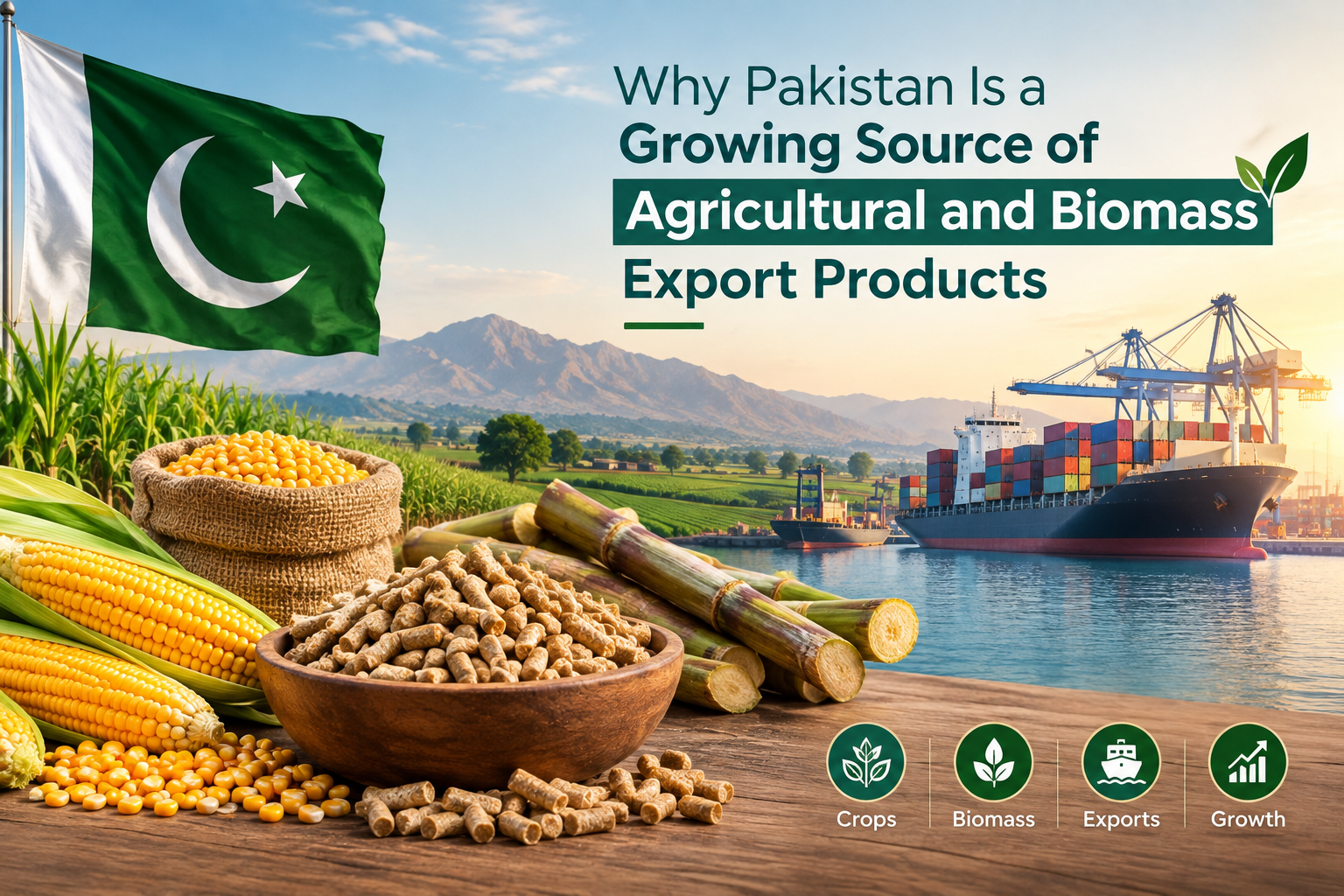
Pakistan has quietly become a relevant answer to that sourcing problem. The country grows one of the largest sugarcane crops in the world, which means it also generates a correspondingly large volume of leftover plant material every crushing season — leaves, tops, and trash that sugar mills and farms don’t need for their core business. For buyers in cement plants, biomass power projects, briquette and pellet manufacturers, and composting or soil-input companies, that surplus is exactly the kind of raw material worth investigating.
This guide walks through what sugarcane residue actually is, why Pakistan is positioned to supply it, and what a buyer should check before committing to an order — without the vague claims that usually pad this kind of content.
What “Sugarcane Residue” Actually Means
The term gets used loosely, so it’s worth separating out what’s being talked about, because the differences affect price, handling, and end use.
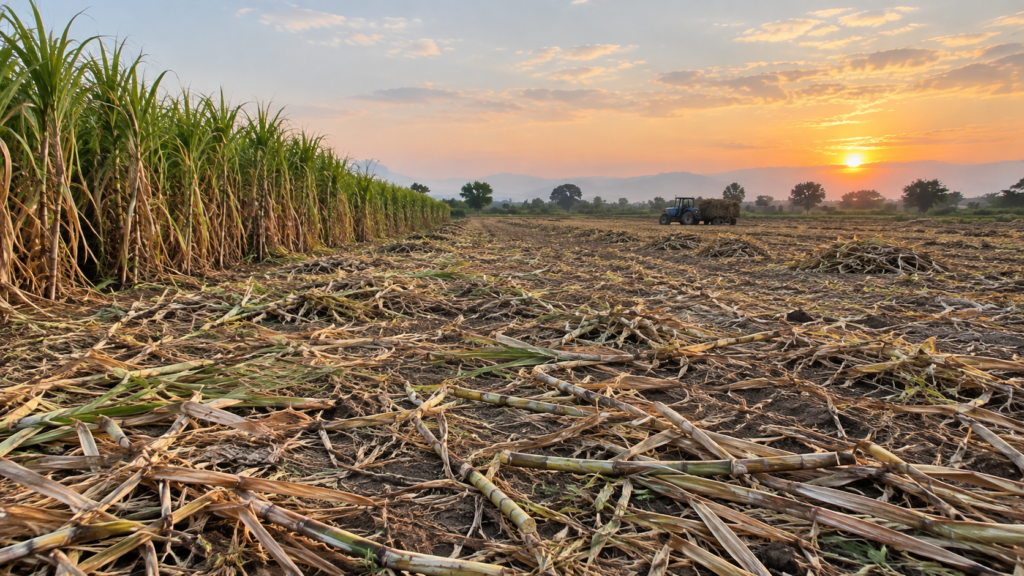
Cane trash (leaves and tops) is the field-level leftover — the leafy material and tops that get separated from the stalk during and after harvest. It stays on or near the field rather than going through the mill. This is the material most often meant when a buyer asks about “sugarcane residue” for biomass fuel, mulching, or composting.
Bagasse is a different product entirely. It’s the fibrous pulp left after the cane stalk has been crushed at the mill to extract juice. Bagasse is generated inside the sugar mill, not the field, and in Pakistan — as in most sugar-producing countries — mills typically use their own bagasse internally as boiler fuel for power and steam generation, which limits how much is genuinely available for outside export.
Buyers researching this category should confirm early in a conversation with any supplier which of the two they’re actually being offered, since “sugarcane residue” and “bagasse” are sometimes used interchangeably in casual trade correspondence even though they come from different points in the production chain and have different availability.
Why Pakistan Has Meaningful Supply
Pakistan’s sugarcane crop is large by any measure. National output has run in the range of roughly 84 to 89 million tonnes in recent seasons, according to provisional estimates reported through Pakistan’s National Accounts Committee, with Punjab as the largest producing province, followed by Sindh. U.S. Department of Agriculture’s Foreign Agricultural Service has also tracked Pakistan’s sugarcane production near the mid-80-million-tonne range in its recent Sugar Annual reporting for the country.
A crop of that scale generates a correspondingly large amount of field residue every crushing season, which typically runs from roughly November through April depending on the region. Three factors specific to Pakistan make that residue practical to work with commercially:
- Concentrated growing regions. Because cultivation is concentrated in Punjab and Sindh, sourcing networks don’t need to cover the entire country — collection can be organized around a smaller number of established agricultural belts.
- A dry climate for processing. Extended dry periods in much of Pakistan’s cane-growing area support natural sun-drying of residue material, which reduces the energy and cost that would otherwise go into mechanical drying before export.
- Existing export infrastructure. Pakistan already has functioning container-export logistics out of its southern ports, built up over decades of textile, rice, and other agricultural exports, which biomass exporters can plug into rather than build from scratch.
None of this means supply is unlimited or automatically export-ready — raw field residue still has to be collected, cleaned of soil and contamination, dried to a workable moisture level, and packed before it’s usable by an overseas buyer. But the underlying volume and the seasonal, repeatable nature of the crop are real advantages over sourcing from smaller or less consistent sugarcane-growing regions.
What International Buyers Actually Use This Material For
The demand side varies more than most sourcing guides let on, and the intended use should shape almost every other decision a buyer makes about specification and packaging.
Solid biomass fuel. Dried, processed cane residue can be used as a feedstock for briquettes, pellets, or direct combustion in industrial boilers — an alternative to coal or wood-based solid fuel. This is one of the more established uses, particularly for cement kilns and industrial heat applications looking to blend in agricultural biomass.
Composting and soil inputs. Because it’s organic plant matter, cane residue is used as a bulking agent or carbon source in composting operations, and in some cases as a mulch or soil-conditioning input for agriculture.
Research into higher-value products. Academic literature on sugarcane residue points to a wider range of possible uses — bioethanol feedstock, animal feed supplementation, and various fermentation-based chemical products — though these applications generally require more specialized processing than raw or lightly processed export material, and a substantial body of recent research is specifically focused on biotechnological approaches to unlocking that additional value from sugarcane agro-industrial residues.
Buyers should be direct with suppliers about their intended end use early in the conversation. A composting operation and a briquette manufacturer need the same raw material handled in almost opposite ways — one prioritizes retained moisture and organic content, the other prioritizes low moisture and consistent particle size for combustion.
Specifications a Buyer Should Actually Ask About
Generic biomass sourcing checklists tend to repeat the same short list of questions. For sugarcane residue specifically, a few points matter more than others.
Moisture content. This is the single biggest driver of both usability and shipping economics. Wet residue is heavier to ship, more prone to mold and self-heating in transit, and less consistent as a fuel. Ask for the moisture percentage at load time, not a general assurance that the material is “dry.”
Contamination and foreign matter. Field-collected residue can carry soil, stones, plastic twine, or mixed crop waste if collection isn’t tightly controlled. Ask specifically how the supplier screens for contamination — mechanical sieving, manual sorting, or both — and whether they can share inspection photos or a sample before a full container is loaded.
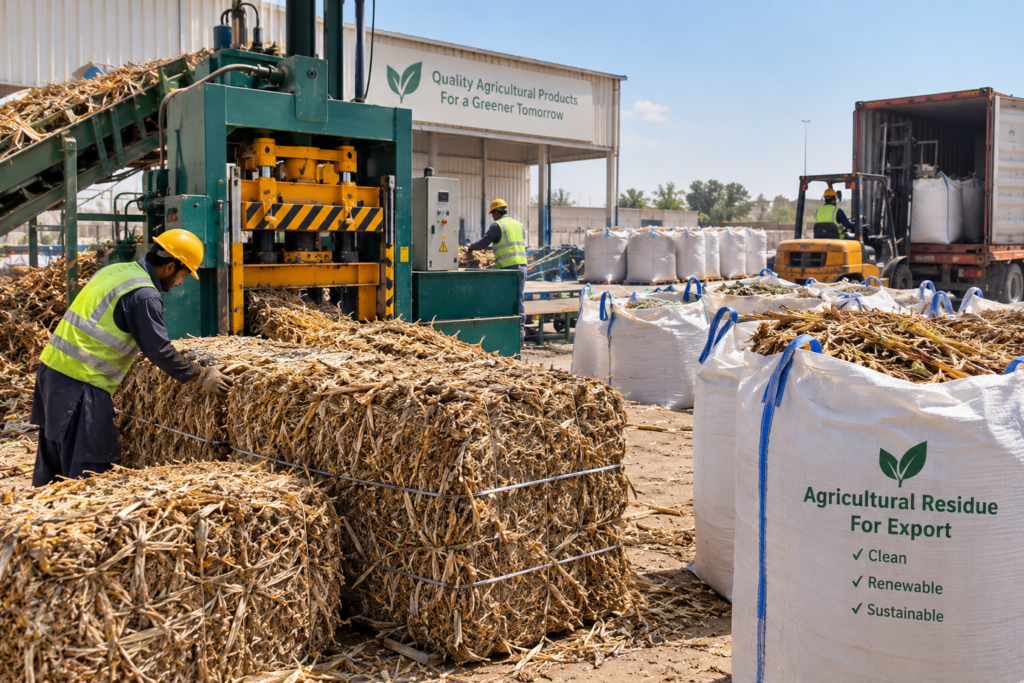
Particle form and consistency. Loose trash, chopped material, and baled material behave very differently in transit and at the receiving end. Confirm which form is being quoted, since pricing that looks attractive for loose material may not hold once baling or additional processing is added.
Packaging. Bulk loose loading, PP (polypropylene) woven bags, or jumbo bags are the common options for this category, and the right choice depends on the receiving facility’s handling equipment and the shipping distance involved.
Documentation. International buyers should expect standard commercial export documentation — commercial invoice, packing list, and bill of lading at minimum — and, where relevant to the destination country’s import rules, phytosanitary certification for plant-based material. Pakistan’s export administration runs largely through the Pakistan Single Window platform, which consolidates import, export, and transit-related regulatory requirements into a single electronic system used across the country’s cross-border trade process, so serious exporters should be able to speak to how their shipments move through it.
None of these specifications are unique to Pakistan, but they’re the practical checklist that separates a smooth first order from a frustrating one, regardless of origin country.
Questions Worth Asking Before Placing an Order
A short, direct list a buyer can genuinely use in supplier conversations:
- What exact material is being offered — cane trash, bagasse, or a mix — and from which stage of production?
- What is the current moisture content, and how was it measured?
- How is the material collected and cleaned before packaging?
- What packaging formats are available, and what’s the difference in price between them?
- Can a pre-shipment sample or inspection photos be provided?
- What is the realistic lead time from order confirmation to container loading, given the seasonal nature of cane harvesting?
- What export documentation will accompany the shipment?
Suppliers that can answer these clearly and specifically, without vague reassurances, are generally easier to build a repeat relationship with than ones that respond only with price per tonne.
Where Daa Agri Limited Fits
Daa Agri Limited is a Pakistan-based agricultural processing and export company built around this exact category of material. The company’s stated focus is on corn cob processing and sugarcane-derived residues, sourced through farming regions in Punjab and Sindh and processed for cleaning, drying, and export-ready packaging before shipment to international buyers.
According to the company’s about page, its sourcing model is built around a decentralized network reaching directly into farm-level and mandi (agricultural market) collection points, with processing steps covering moisture checks, contamination control, and grading ahead of export packaging in PP or jumbo bags. That structure lines up with the specification checklist above — it’s worth any prospective buyer confirming these details directly rather than taking marketing copy at face value, which is good practice with any supplier, not just this one.
Frequently Asked Questions
Is sugarcane residue the same thing as bagasse? No. Cane trash (leaves and tops left in the field after harvest) and bagasse (the fibrous pulp left after milling the stalk) come from different stages of sugarcane processing. Bagasse is usually consumed internally by sugar mills as boiler fuel, which limits how much is available for export compared to field-collected trash.
What is sugarcane residue typically used for by importers? The two most common uses are as a solid biomass fuel (for briquettes, pellets, or direct industrial combustion) and as an organic input for composting. Some buyers also explore it as a feedstock for bioethanol or other value-added chemical products, though that generally requires more specialized processing.
When is sugarcane residue available from Pakistan? Availability follows the country’s crushing season, which generally runs from around November through April, though this varies somewhat by region and year-to-year weather conditions.
What documentation should I expect for an export shipment? At minimum, a commercial invoice, packing list, and bill of lading. Depending on the destination country’s import requirements for plant-based agricultural material, phytosanitary certification may also apply.
Can I request a sample before placing a full order? This is standard practice in biomass sourcing and a reasonable request to make of any supplier. If a supplier is unwilling to provide a sample or inspection photos, treat that as a signal to ask more questions before committing to volume.
How should I compare pricing between suppliers? Price per tonne alone is not a useful comparison unless moisture content, packaging format, and contamination levels are specified consistently across quotes. A lower price for wetter or less-processed material can end up costing more once shipping weight and usability losses are accounted for.
Sourcing agricultural biomass reliably comes down to specificity — knowing exactly what material you’re buying, how it was processed, and how it will hold up between the supplier’s yard and your facility. If you’re evaluating sugarcane residue or related agricultural by-products for import, Daa Agri Limited is one Pakistan-based option worth including in that research, and their company background is a reasonable starting point for understanding how their sourcing and processing chain works before reaching out with specific requirements.
Turn industry knowledge into a supply conversation.
Contact GreenCore for product availability, specifications, bulk packaging and export support.