
Biomass from Pakistan: Agricultural Waste, Energy and Industrial Applications
Pakistan is an agricultural country in the most literal sense. Wheat, rice, maize, cotton and sugarcane are grown across millions […]
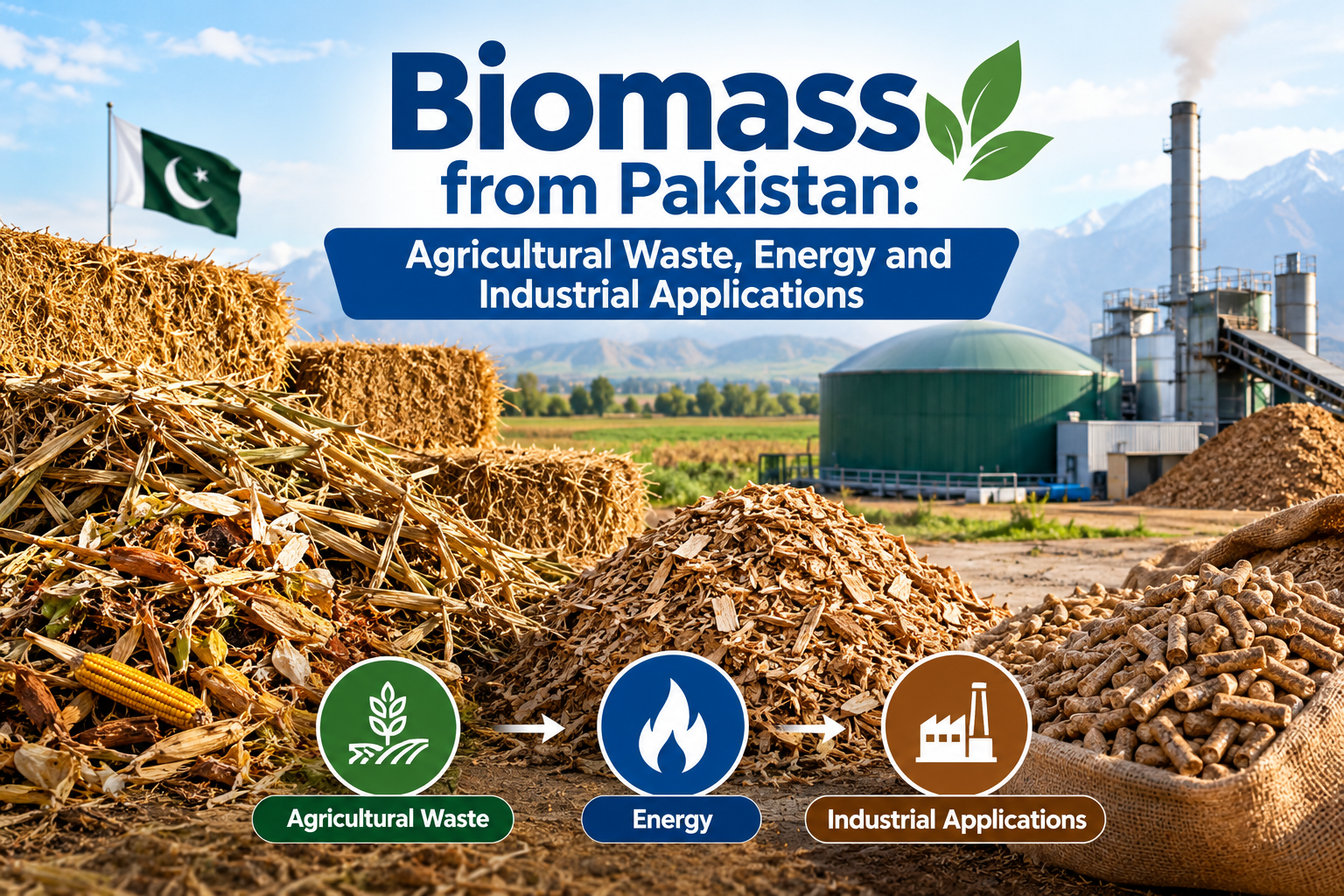
Pakistan is an agricultural country in the most literal sense. Wheat, rice, maize, cotton and sugarcane are grown across millions […]
Pakistan is an agricultural country in the most literal sense. Wheat, rice, maize, cotton and sugarcane are grown across millions of hectares, and each harvest leaves stalks, husks, cobs and fibre behind. Collectively, this material is biomass, and biomass in Pakistan has become a topic of interest for energy planners, farmers, feed producers and international buyers alike.
This article explains Biomass from Pakistan, what the term covers, which residues the country produces, how they are used and what separates a promising feedstock from a practical one.
What Counts as Biomass
Biomass is plant or animal material that can be used as a resource. In agriculture, it mainly means crop residues and processing by-products. Some end up as fuel. Others become livestock fibre, mushroom substrate, compost or industrial raw material. The same residue can serve very different markets depending on how it is prepared.
The Main Agricultural Residues
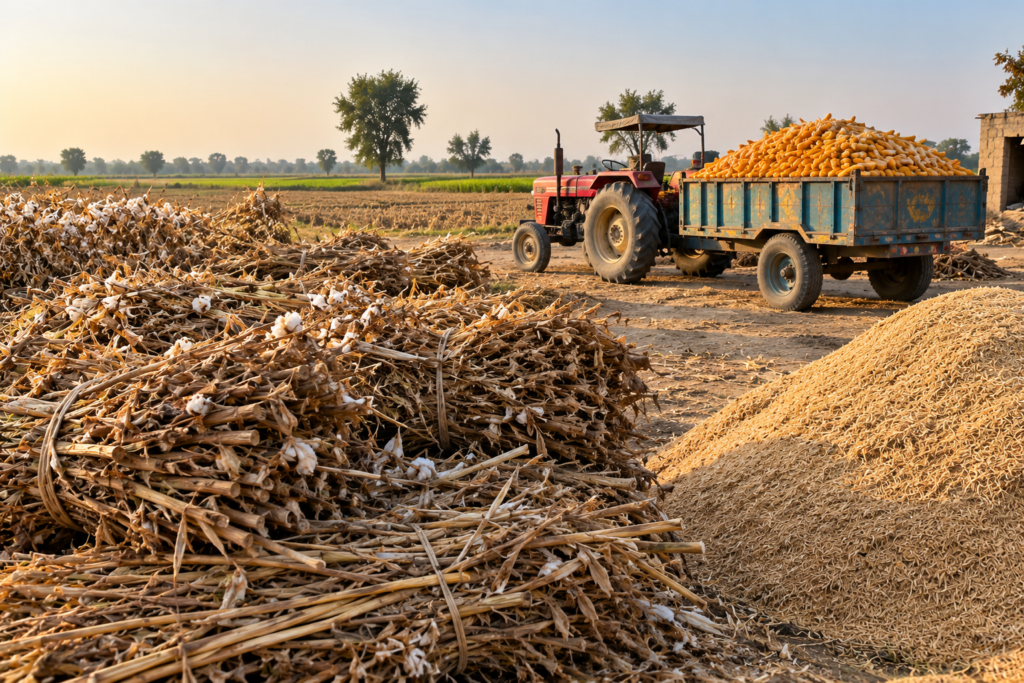
A World Bank-supported biomass mapping project, published on ENERGYDATA.info, assessed residues including wheat straw, cotton stalk, rice straw and husk, maize stalk, cob and husk, sugarcane trash and bagasse. The dataset separates theoretical potential from what is technically available once current uses and farmers’ willingness to supply are considered. That distinction is worth remembering: tonnes that exist in a field are not automatically tonnes that can be collected, dried and shipped.
Some residues have long-established competing uses. A bioenergy industry site notes that most cotton sticks are used as domestic fuel in rural areas, so only a fraction is realistically available for other purposes.
Biomass for Energy
Sugar mills are the most visible energy users. Bagasse, the fibre left after cane crushing, is burned to raise steam and power. Dawn has reported that almost all of Pakistan’s sugar mills have in-house bagasse cogeneration plants, mostly serving the mills’ own needs, while some sell surplus electricity to the grid. A case study on the sugar industry notes that about one tonne of bagasse is produced for every three tonnes of cane.
Researchers at UET Taxila argue that bagasse contributes only a small share of national energy production and that more efficient high-pressure boilers could raise its role. A government policy document on sugar-industry cogeneration also points to a structural limit: bagasse is available mainly during the crushing season and is uneconomic to store, leaving plants idle or dependent on other fuel in the off-season. That gap is why planners keep returning to other residues as supplementary feedstock.
Biomass Beyond Energy
Animal feed fibre
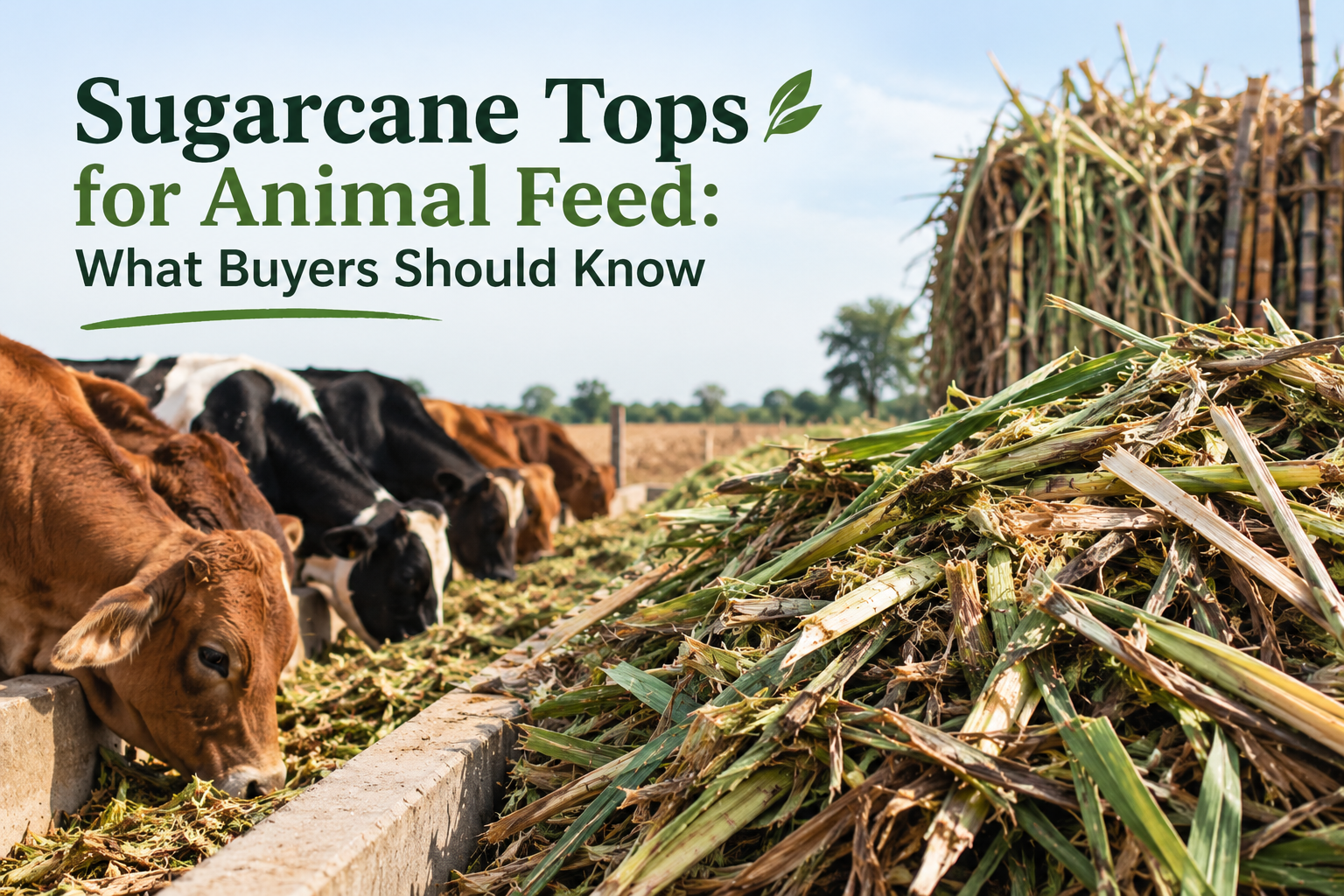
Sugarcane tops are a traditional ruminant roughage. FAO’s Feedipedia notes they are used fresh, dried or ensiled. Nutritional value is modest, so tops are usually blended, and feed buyers should insist on lot-specific analysis.
Mushroom substrate
Corn cob is a recognised substrate material. Research from Brazil, for example, examined shiitake production on corn cob substrates.
Compost and soil enrichment
Carbon-rich residues work as bulking agents in compost and as soil conditioners.
Industrial raw material
Where size, dryness and cleanliness are controlled, processed residues can supply industrial uses such as blending and absorbent applications.
From Field Residue to Export Product
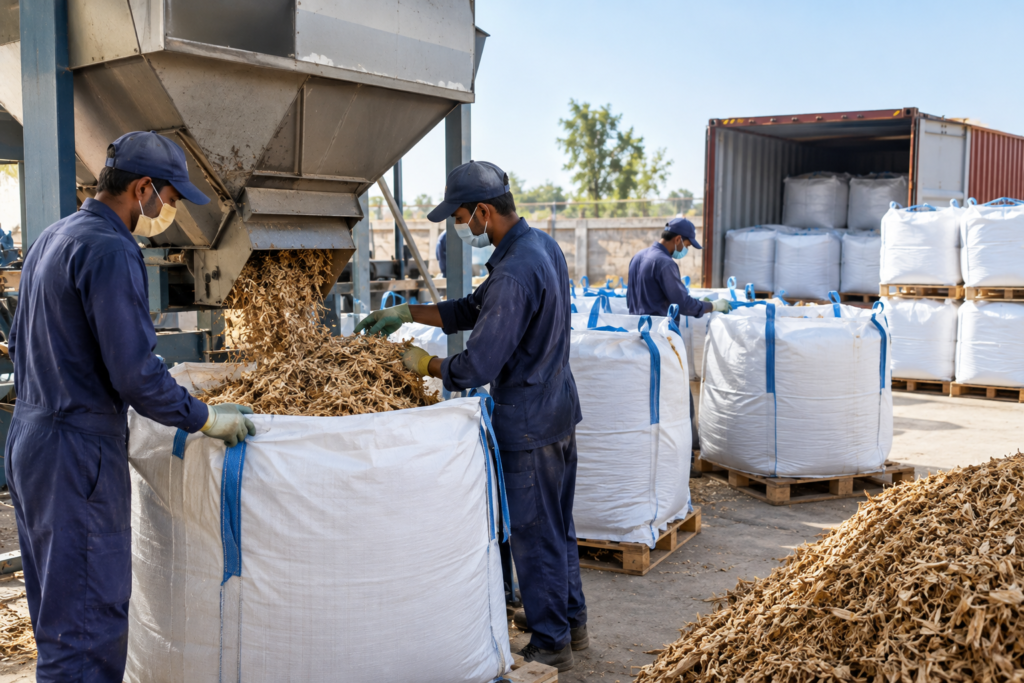
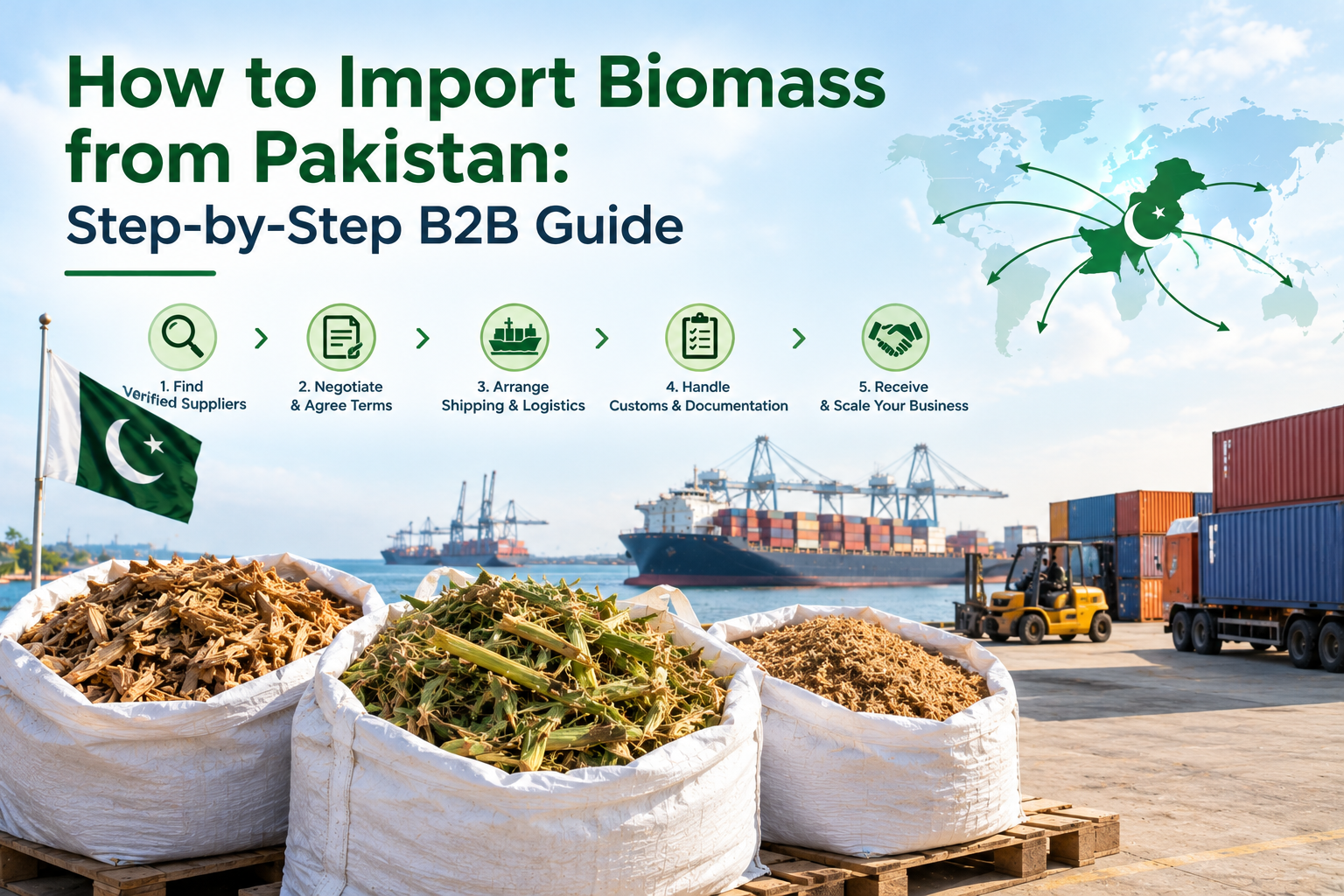
Raw residue is rarely export-ready. Typical preparation includes collection, cleaning to remove soil and debris, drying, size reduction and moisture checks, followed by packing in PP or jumbo bags. Each step affects consistency, and buyers pay for consistency.
| Residue | Common uses |
|---|---|
| Corn cob | Mushroom substrate, feed fibre, absorbent blending |
| Sugarcane tops and field residues | Feed fibre, compost input, industrial supply |
| Bagasse | Mill fuel, some industrial uses |
| Rice husk and straw | Energy and industrial uses |
What Buyers Should Look For
- A clear definition of the residue and its form.
- A stated moisture limit and test method.
- Cleaning steps before grinding or packing.
- Consistent size and appearance across lots.
- Packing that suits your handling equipment.
- A willingness to provide samples before an order.
Biomass and By-Products from Daa Agri Limited
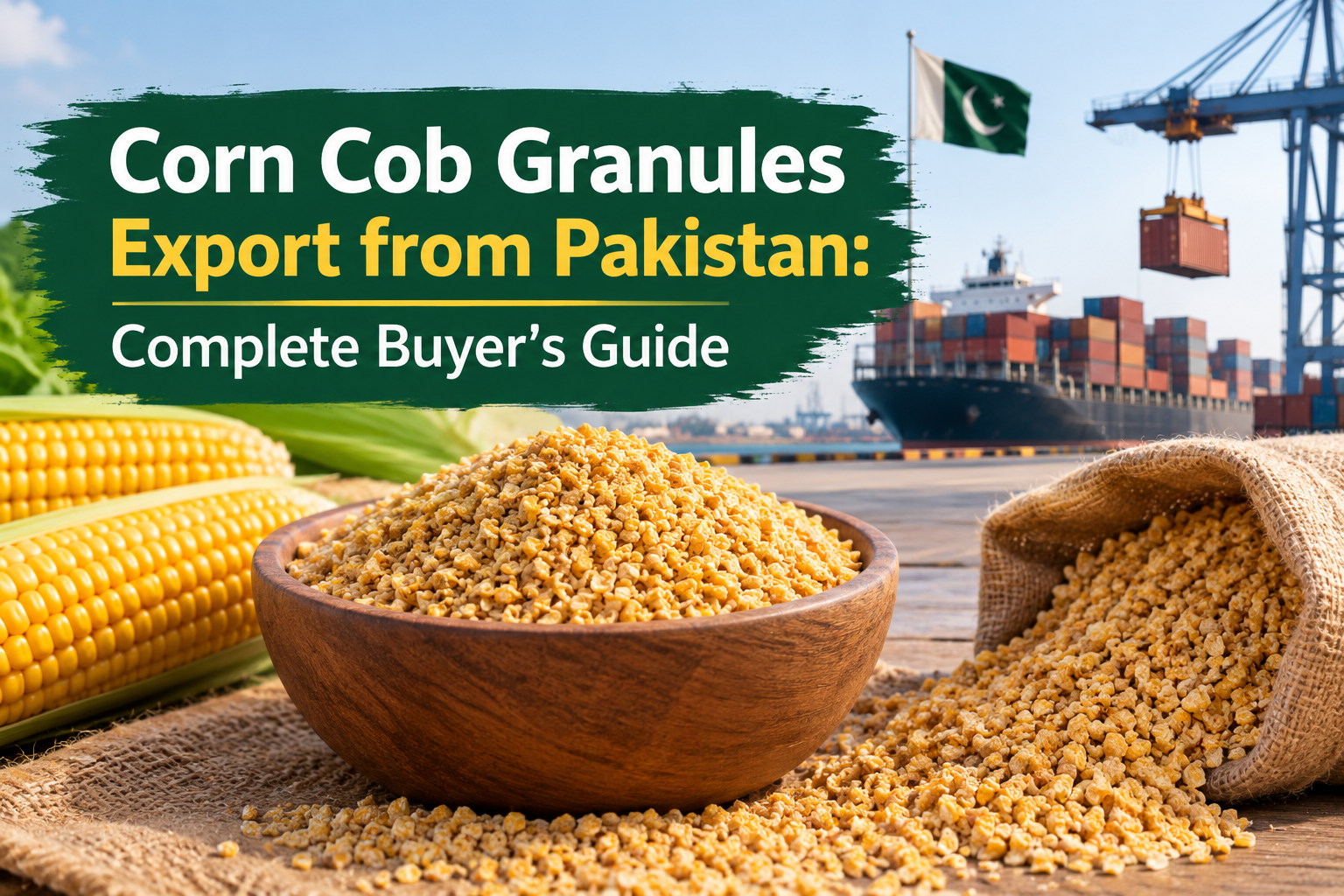
Daa Agri Limited is a Pakistan-based agricultural processing and export company whose profile describes a circular agricultural value chain: farm residues are sourced responsibly and converted into export-grade raw materials. Its listed core export products are corn cob meal, corn cob granules and processed sugarcane tops and field residues, with applications in mushroom cultivation, animal feed and organic agriculture.
The profile describes cleaning and sorting, sun drying, size reduction, moisture checks and export packing, with containerized export handling. Buyers can share their application and specifications to discuss availability.
Conclusion
Biomass in Pakistan is an abundant but uneven resource. Some residues are tied up in existing uses, others are seasonal, and all need preparation before they become dependable trade goods. Buyers who clearly define their use, ask direct questions about moisture and cleanliness, and test samples early are best positioned to benefit.
For specifications or a quotation, contact Daa Agri Limited at info@daaagri.com.
Turn industry knowledge into a supply conversation.
Contact GreenCore for product availability, specifications, bulk packaging and export support.