
Sugarcane Residues from Pakistan: Types, Uses and Industrial Applications
A sugarcane crop produces more than sugar. At harvest and at the mill, several distinct by-products emerge, each with its […]
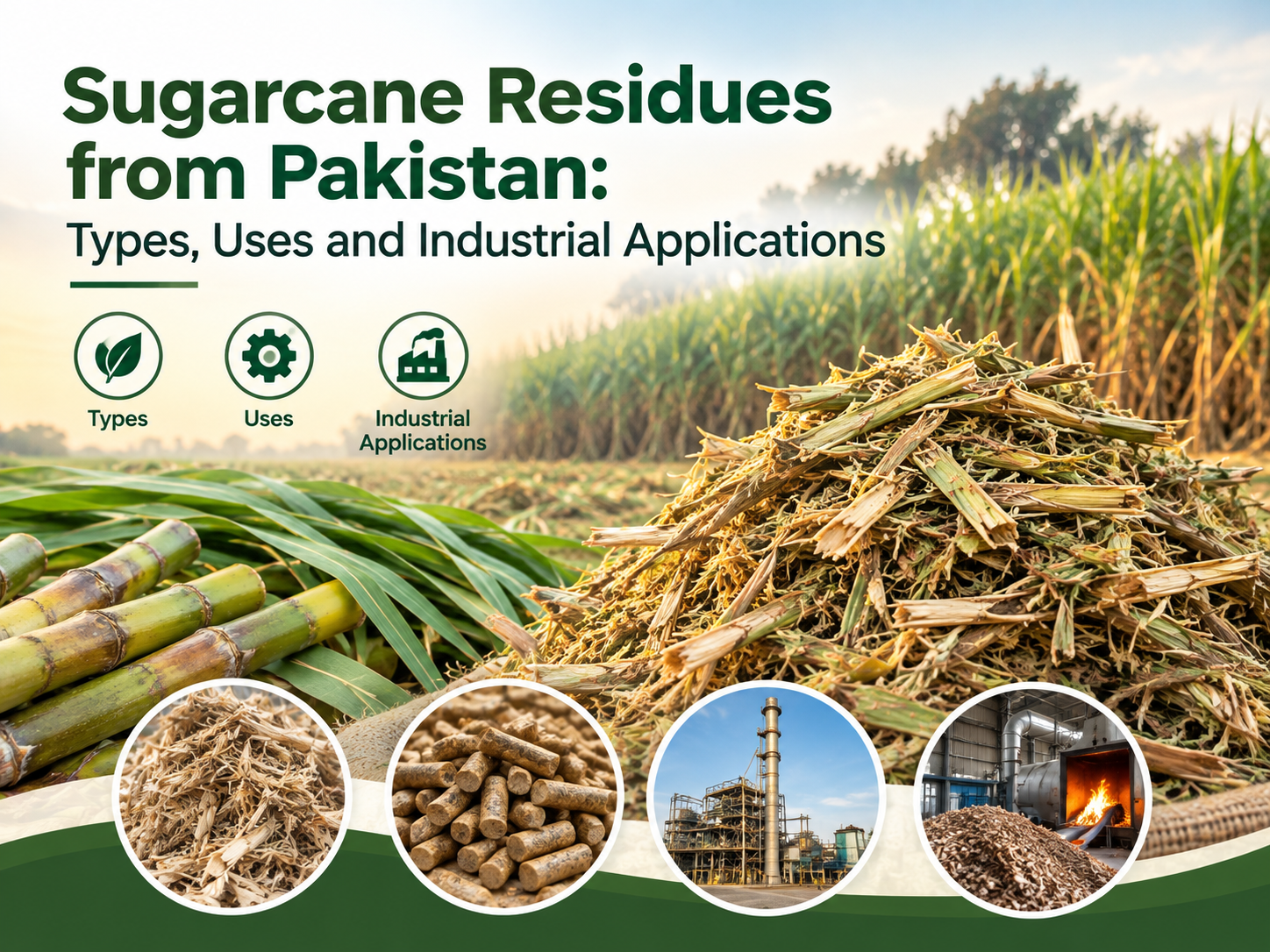
A sugarcane crop produces more than sugar. At harvest and at the mill, several distinct by-products emerge, each with its […]
A sugarcane crop produces more than sugar. At harvest and at the mill, several distinct by-products emerge, each with its own character, uses, and handling needs. Understanding sugarcane residues in Pakistan starts with telling them apart, because a buyer who asks for “residue” without specifying which kind may receive something quite different from what was intended.
This article covers the main types, how each is used and what makes them suitable for feed, compost, biomass and industrial supply chains.
Where Sugarcane Residues Come From
Sugarcane in Pakistan is grown mainly in Punjab and Sindh. The USDA Foreign Agricultural Service reports that these two provinces account for about 93 percent of sugarcane production. Residues arise at two points: at harvest in the field and at the sugar mill during crushing.
The Main Types of Sugarcane Residues
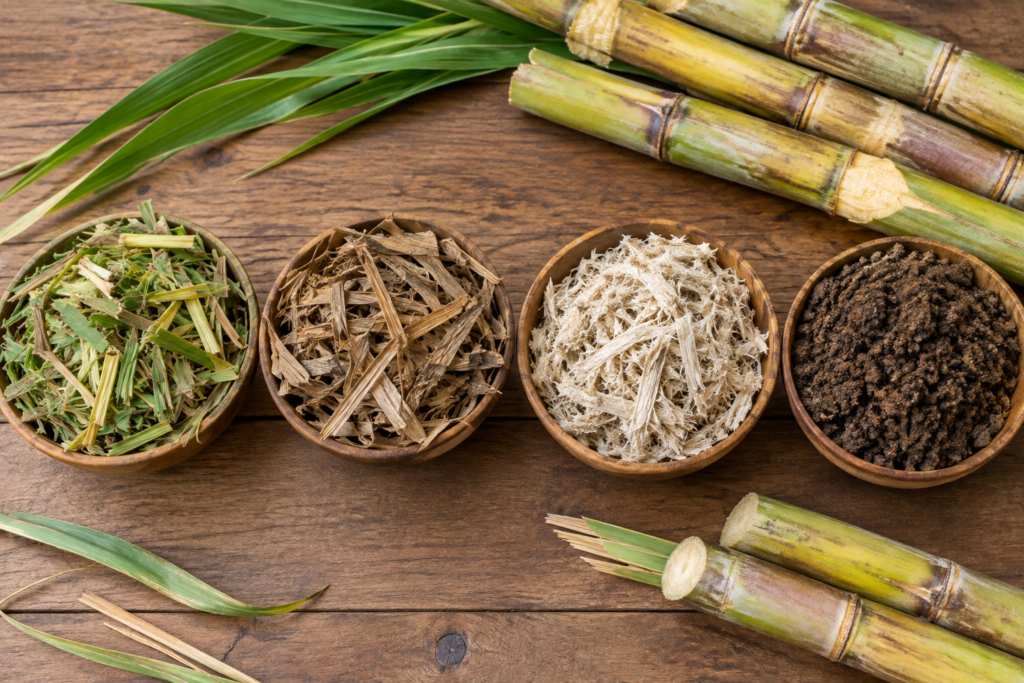
Tops and leaves
These are cut from the upper part of the plant at harvest. Feedipedia, FAO’s feed resource database, explains that tops represent about 15 to 25 percent of the plant’s above-ground portion. They are usually found in the field and are used fresh, dried or ensiled.
Dry trash and field residues
Dead leaves, sheaths and stubble remain after cutting. This material is fibrous and often bulky, and in many places, people burn it. When collected and processed, it becomes a raw material for compost and industrial uses.
Bagasse
Bagasse is the fibrous solid left after cane juice is extracted at the mill. A study of Pakistan’s sugar industry notes that roughly one tonne of bagasse is produced from every three tonnes of cane processed.
Press mud
Also called filter cake, this mill by-product is often applied to land as an organic amendment.
Biomass and Energy
Bagasse is the best-known energy residue. Dawn has reported that almost all Pakistani sugar mills have in-house bagasse cogeneration plants, mainly for their own needs. Researchers at UET Taxila note that bagasse contributes under one percent of national energy production and argue that more efficient boilers could increase its role. A recurring limit is seasonality, since bagasse appears only during crushing, so energy users often look for additional biomass beyond the mill.
Animal Feed
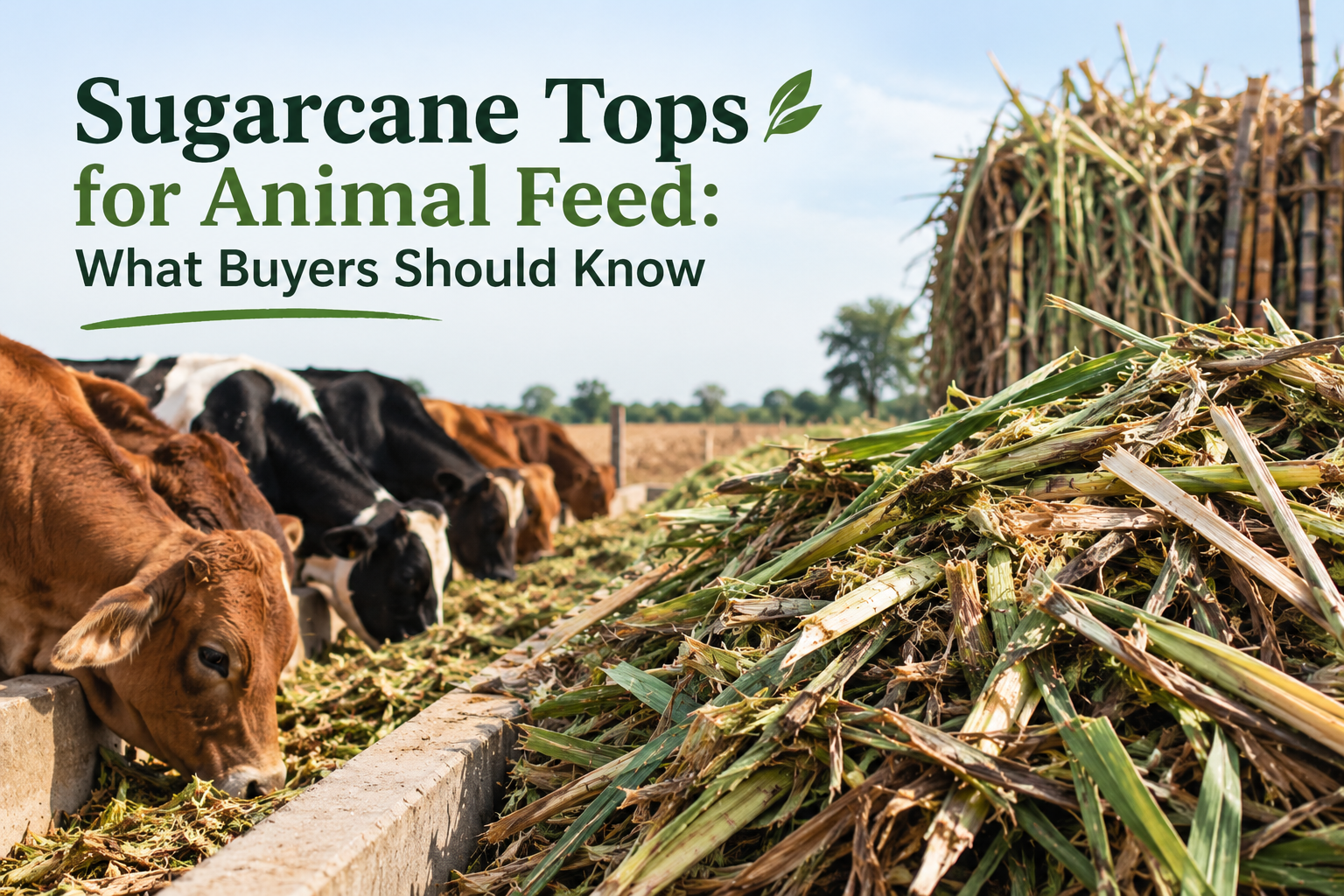
Sugarcane tops are a traditional roughage for ruminants. According to Feedipedia, they are used fresh, dried or ensiled, and an FAO document on tops also highlights the labour involved in collecting them from the field. Because their nutritional value is moderate, they are typically combined with other ingredients. A published review of sugarcane co-products in ruminant feeding describes their use in flours, silage and supplement blocks. As with any feed material, request lot-specific analysis and nutritional advice before formulating diets.
Compost and Soil Enrichment
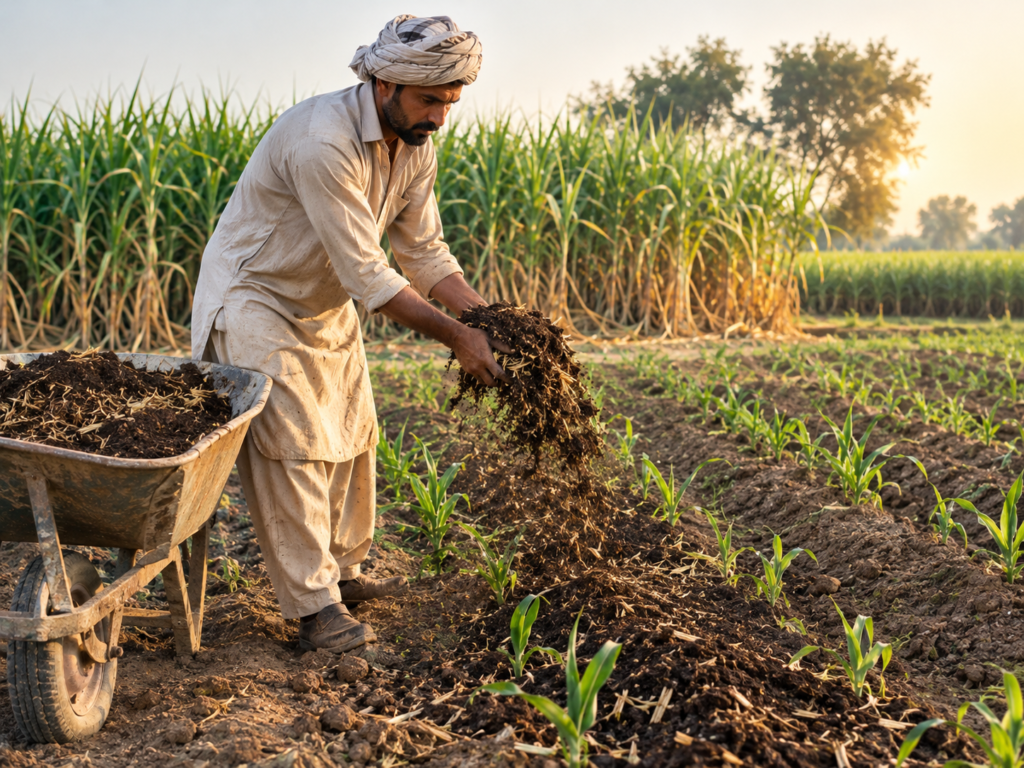
Because residues are rich in carbon, they work well as bulking material in composting, helping balance nitrogen-rich inputs and improve pile structure. Press mud and processed field residues are also used in soil enrichment programmes.
Industrial Raw Material
Where particle size and cleanliness are controlled, processed residues can supply industrial raw material chains. What matters in these uses is consistency, so buyers should specify form, moisture and size from the start.
What Determines Quality
| Factor | Why it matters |
|---|---|
| Moisture | Prevents heating and spoilage in storage and shipping |
| Cleanliness | Soil and debris reduce usefulness and cause disputes |
| Processing form | Chopped, ground or loose material suits different uses |
| Consistency | Uniform lots are easier to formulate and handle |
| Packing | Protects the material and affects freight efficiency |
Choosing the Right Residue for Your Use
- Feed fibre: processed tops and field residues, with lot analysis.
- Compost input: dry, clean residues or press mud.
- Biomass: bagasse or dried residues, depending on the system.
- Industrial supply: a defined form with specified size and moisture.
Sugarcane Residues from Daa Agri Limited
Daa Agri Limited is a Pakistan-based agricultural processing and export company working across a circular agricultural value chain. Its company profile lists processed sugarcane tops and field residues as a core export product for animal feed fibre, agricultural composting inputs and industrial raw material supply chains, with cleaning, drying, moisture checks and export packing in PP or jumbo bags.
Buyers can share their application and specifications to discuss availability.
Conclusion
Sugarcane residues in Pakistan are a family of materials rather than a single product, and their value depends on matching the right type to the right use. Tops and field residues suit feed fibre and compost, bagasse suits mill energy, and processed material can serve industrial chains when quality is controlled.
For specifications or a quotation, contact Daa Agri Limited at info@daaagri.com.

Turn industry knowledge into a supply conversation.
Contact GreenCore for product availability, specifications, bulk packaging and export support.