
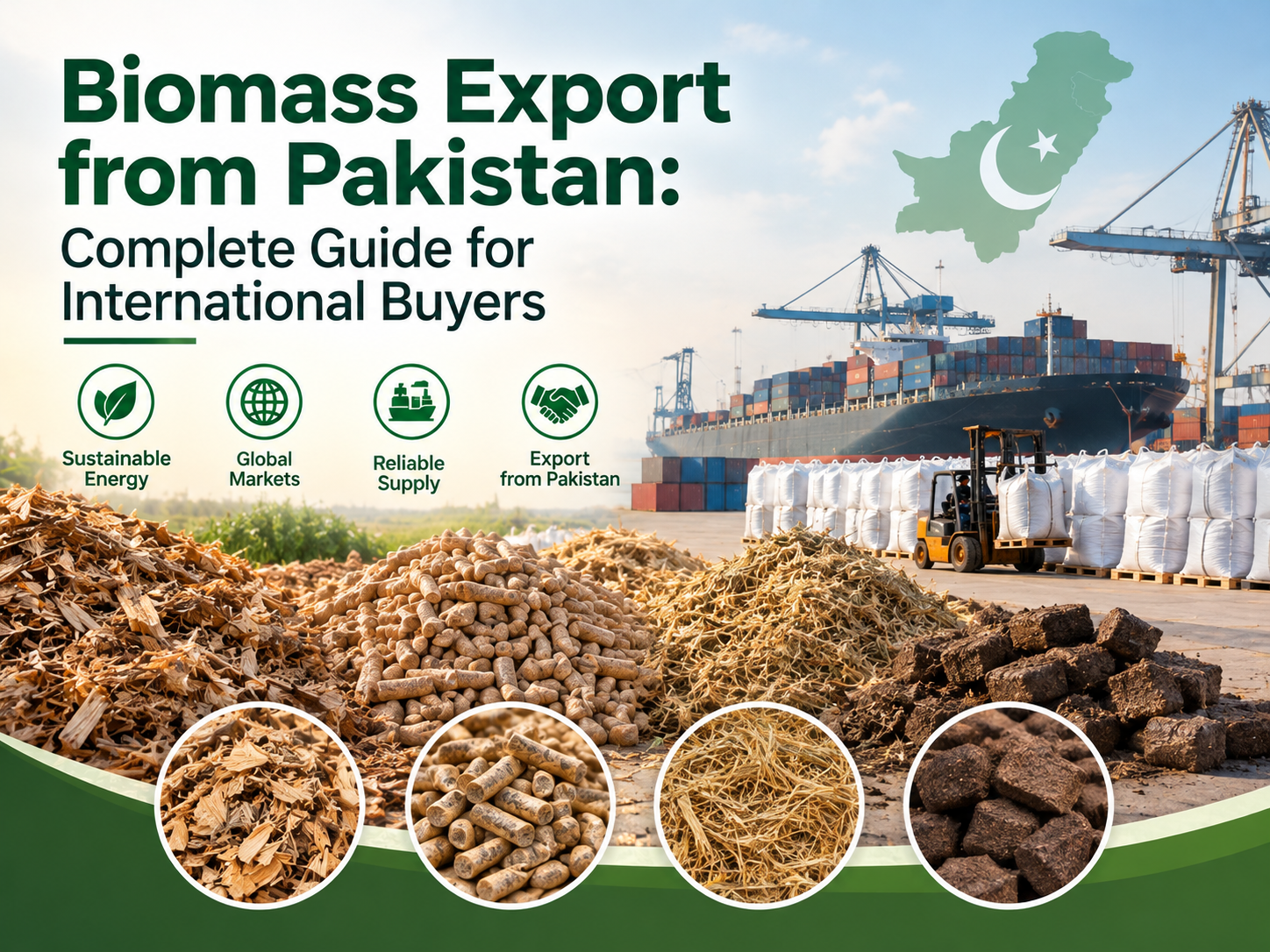
Biomass Export from Pakistan: Complete Guide for International Buyers
Pakistan grows wheat, rice, maize, cotton and sugarcane on a large scale, and each crop leaves something behind: stalks, husks, […]
Pakistan grows wheat, rice, maize, cotton and sugarcane on a large scale, and each crop leaves something behind: stalks, husks, […]
Pakistan grows wheat, rice, maize, cotton and sugarcane on a large scale, and each crop leaves something behind: stalks, husks, cobs, trash, fibre. People have traditionally burned much of it or used it as household fuel. Increasingly, though, it is being collected, dried and processed as raw material, and biomass export from Pakistan is part of that shift.
The word “biomass” is broad, however, and buyers who use it loosely often end up comparing unlike products. This guide explains Biomass Export from Pakistan, what biomass means in an export context, which residues Pakistan produces, what quality questions matter and how a shipment should be arranged.
What “Biomass” Means in Trade
In the strict energy sense, biomass is organic material used as fuel. In agricultural trade, buyers use the term more widely for plant-derived residues and by-products, some destined for energy, others for livestock feed, mushroom substrate, composting or industrial use. A cob that becomes mushroom substrate in one market and a fuel input in another is the same plant material with different quality requirements.
So the first step in any inquiry is to state your end use. A supplier cannot recommend the right form, size or moisture level without it.
The Residues Pakistan Produces
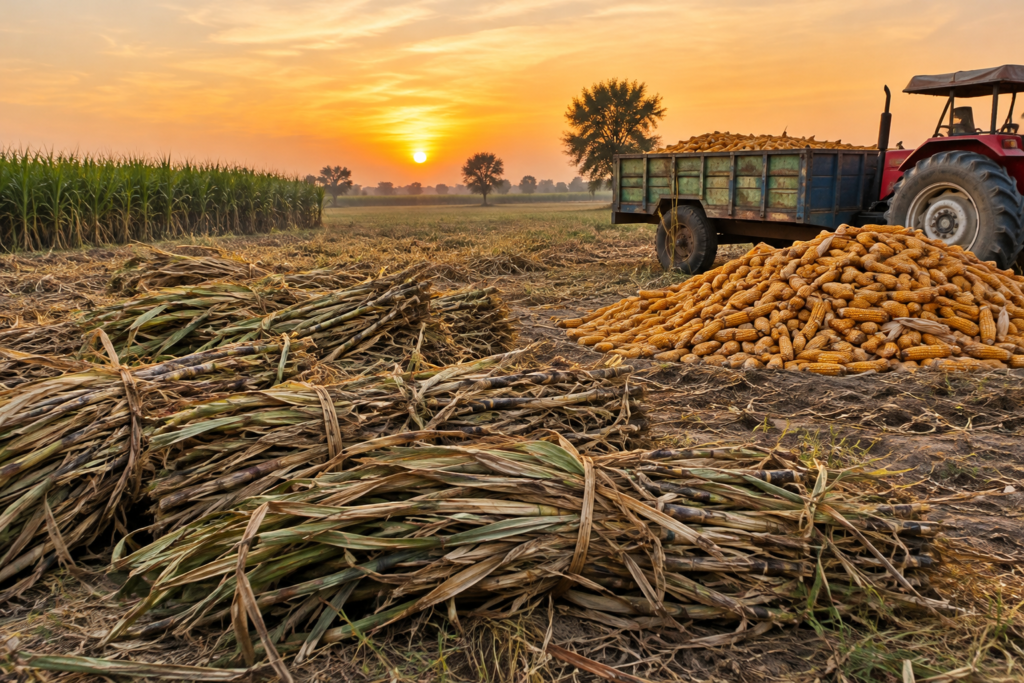
A World Bank-supported biomass mapping project for Pakistan, hosted on ENERGYDATA.info, assessed a range of residues including wheat straw, cotton stalk, rice straw and husk, maize stalk, cob and husk, sugarcane trash and bagasse. It also distinguishes between theoretical potential and what is actually available once existing uses and farmer participation are considered, which is a helpful reminder: a large residue volume on paper does not equal a reliable export supply.
Sugarcane is concentrated in two provinces. The USDA Foreign Agricultural Service reports that Punjab and Sindh account for about 93 percent of Pakistan’s cane production, so cane residues cluster in those regions.
Why Pakistan Works as a Source
Three factors stand out. First, crop diversity: several major crops produce residues in overlapping seasons. Second, climate: long dry spells support natural sun-drying, which keeps one of the main preparation costs down. Third, a rural collection network of farms and local markets that can feed aggregation. None of these guarantees quality, but together they explain why Pakistan attracts buyers of agricultural by-products.
Competing demand exists, too. Sugar mills burn bagasse for steam and power. Dawn has reported that almost all of the country’s sugar mills operate their own bagasse-based cogeneration plants, so mill bagasse is largely absorbed domestically. Field residues, cobs and other by-products sit in a different supply chain.
Quality: What Buyers Should Specify
Moisture
Wet biomass heats, moulds and loses value in transit. Agree a maximum moisture level, ask how it is measured and make sure the supplier dries material before packing.
Cleanliness
Soil, stones and foreign matter should be removed. Contamination causes disputes and, for energy users, can raise ash content.
Form and size
Chopped, ground, granulated or loose: each suits different uses. Specify target particle size and tolerance.
Fuel-specific properties
If your use is energy, standards matter. The ISO 17225 series sets out fuel specifications and classes for solid biofuels, and its part on non-woody pellets notes that non-woody biomass generally carries higher ash, chlorine, nitrogen and sulfur than wood. Energy buyers should therefore ask for lab analysis against their own requirements rather than assume that any residue is fuel-grade.
| Buyer need | Key property to confirm |
|---|---|
| Mushroom substrate | Particle size, cleanliness |
| Animal feed fibre | Moisture, lot analysis |
| Compost input | Dryness, absence of contaminants |
| Energy use | Moisture, ash, calorific value |
Packing, Shipping and Documentation
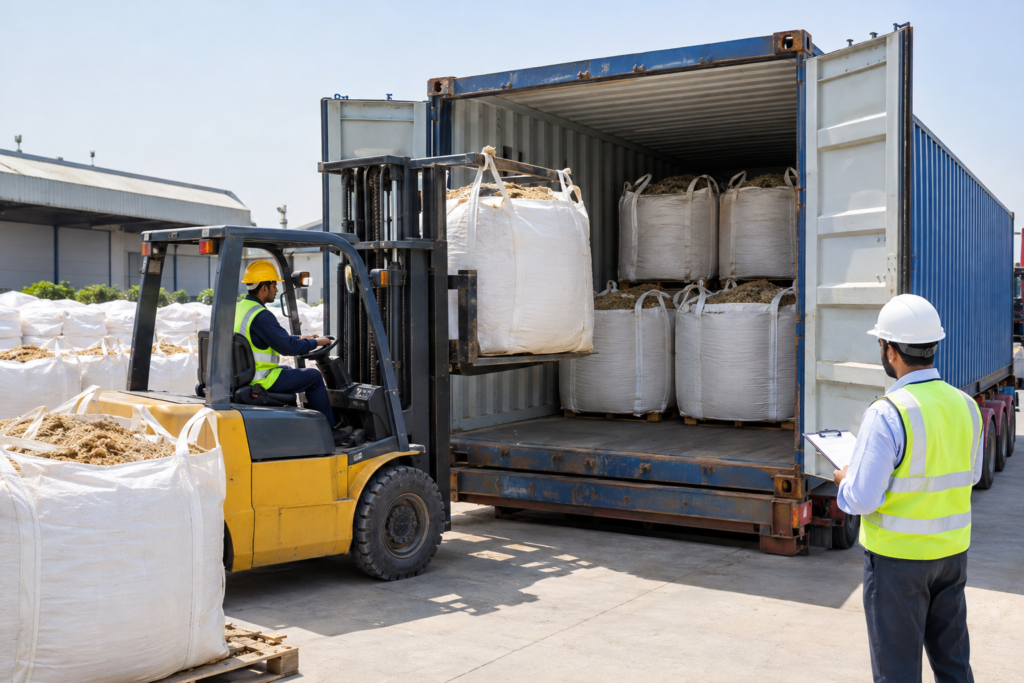
Biomass is bulky relative to weight, so container utilisation strongly affects freight cost per tonne. PP bags and jumbo bags are the common formats. Whatever you choose, keep the cargo dry from loading to unloading and ask how containers are inspected and sealed.
Settle pricing terms early. The Trade Development Authority of Pakistan notes that FOB, CIF and similar Incoterms are standard practice and define who bears cost and risk at each stage. Exporters and buyers can find general trade information through TDAP. Your customs broker should confirm your country’s import rules, which often differ for feed, plant-derived and fuel materials.
A Sensible Buying Sequence
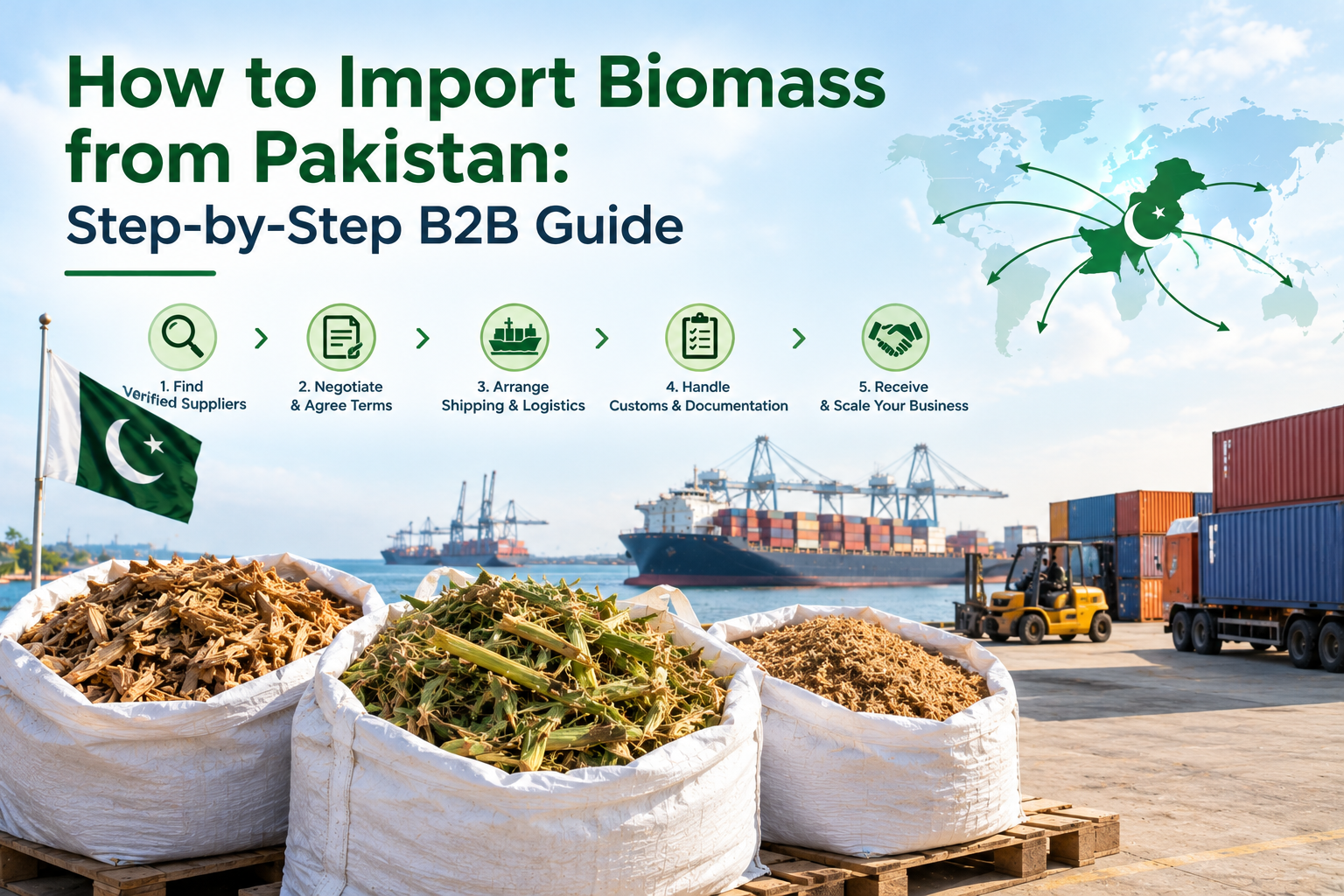
- State your end use, preferred form, volume and destination port.
- Request a sample and test it in your own process.
- Put the specification in writing: moisture, size, cleanliness, packing.
- Agree on Incoterms, payment terms and shipment window.
- Start with a trial shipment if possible.
- Inspect on arrival and report discrepancies promptly.
Biomass and By-Product Export with Daa Agri Limited
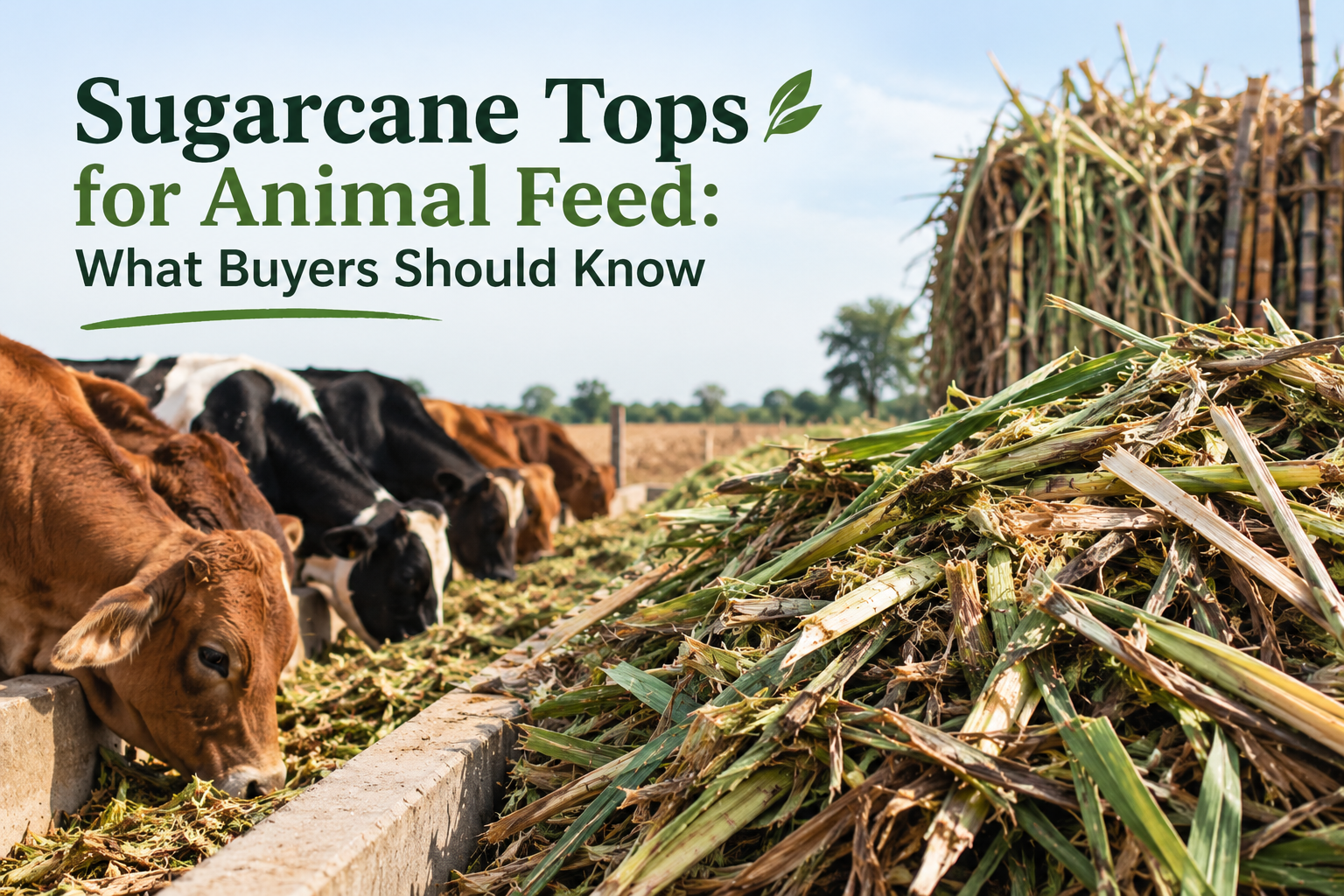
Daa Agri Limited is a Pakistan-based agricultural processing and export company. Its profile describes a circular agricultural value chain that responsibly sources farm residues and converts them into export-grade raw materials. The company lists corn cob meal, corn cob granules and processed sugarcane tops and field residues among its core export products.
The profile describes cleaning and sorting, sun drying, size reduction, moisture checks and export packaging in PP or jumbo bags, with containerized export handling. It names applications in mushroom cultivation, animal feed and organic agriculture. Buyers using it for energy should discuss their specific fuel requirements directly with the team, since the profile does not state fuel-grade specifications.
Conclusion
Biomass export from Pakistan works best when both sides are precise: which residue, which form, what moisture, which use. Treat volume estimates with caution, insist on written specifications and test samples before committing. For more information about our products, services, and export solutions, please visit Daa Trade.
To discuss your requirements or request a quotation, contact Daa Agri Limited at info@daaagri.com.
Turn industry knowledge into a supply conversation.
Contact GreenCore for product availability, specifications, bulk packaging and export support.